


Turo allows car owners to earn money by renting out their vehicles to travelers and local drivers through a peer-to-peer car-sharing platform. However, one of the biggest concerns for new hosts is:
“What happens if my car gets damaged while someone else is driving it?”
If you’re wondering how does Turo host insurance actually work, the answer depends on the protection plan you choose, the type of damage, and whether you follow Turo’s hosting requirements.
Unlike traditional rental car companies, Turo does not operate like a conventional rental business. Instead, it connects vehicle owners (hosts) with guests (renters). Because you’re allowing someone else to drive your personal vehicle, insurance and protection can be more complex than a standard auto insurance policy.
Turo offers host protection plans that may help cover physical damage, liability claims, theft, and certain other costs that occur during an eligible guest trip. However, the level of protection varies based on the plan selected, the circumstances of the incident, and whether the host complies with Turo’s rules and procedures.
Understanding how does Turo host insurance actually work before listing your vehicle can help you choose the right protection plan, reduce financial risk, and avoid costly surprises if an accident or claim occurs.
What Is Turo Host Insurance?
Turo host insurance is actually part of Turo’s host protection plans, which are designed to protect vehicle owners when their car is rented through the platform.
When a guest books a vehicle on Turo:
- The guest receives permission to drive the vehicle during the reservation period
- The host’s personal auto insurance usually does not provide coverage for the rental activity
- Turo’s protection plan may provide coverage during the trip
The protection plan is not exactly the same as a traditional insurance policy. Instead, it is a contractual protection program offered through Turo and its insurance partners.
Coverage can include:
- Physical damage to the vehicle
- Liability protection
- Theft-related losses
- Certain costs associated with claims
However, the amount of protection depends on the plan chosen by the host.
How Does Turo Host Insurance Actually Work During a Guest Trip
The basic process looks like this:
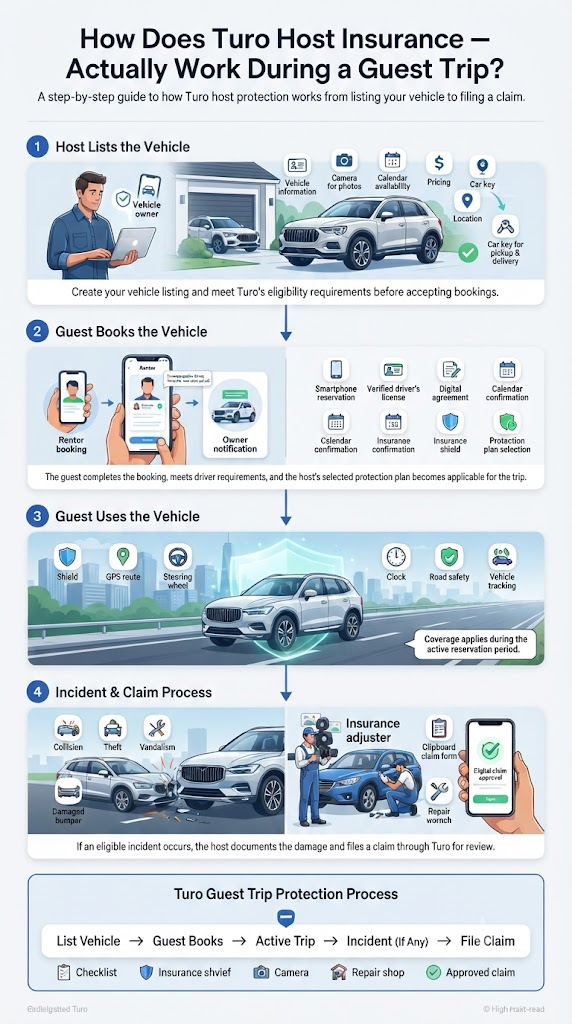
Host Lists the Vehicle
A vehicle owner creates a Turo listing by providing:
- Vehicle information
- Photos
- Availability
- Pricing
- Location
- Pickup and delivery options
Before approval, Turo requires the vehicle to meet eligibility requirements.
Guest Books the Vehicle
A guest selects the vehicle and makes a reservation.
During the booking process:
- The guest agrees to Turo’s terms
- The guest must meet driver requirements
- The trip is covered under Turo’s protection structure
The host chooses a protection plan that determines how much they earn and what coverage applies.
Guest Drives the Vehicle
During the active reservation period, the vehicle is being used under the Turo platform.
If something happens, such as:
- Accident
- Theft
- Collision damage
- Vandalism
the host may file a claim through Turo.
What Does Turo Host Insurance Cover?
Coverage varies depending on the host protection plan, but generally includes several important areas.
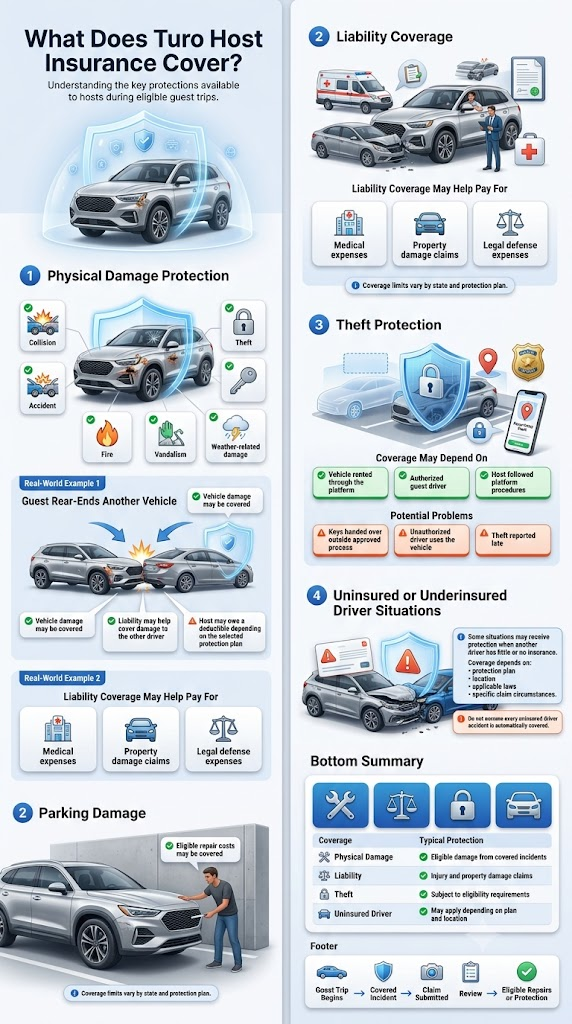
Physical Damage Protection
Physical damage protection is one of the biggest reasons hosts choose Turo protection plans.
It may cover damage caused by:
- Collisions
- Accidents
- Theft
- Fire
- Vandalism
- Weather-related events
Examples:
Example 1: Guest Hits Another Vehicle
A guest accidentally rear-ends another car.
Possible outcomes:
- Damage to your Turo vehicle may be covered
- The other driver’s damages may fall under liability coverage
- The host may pay a deductible depending on their protection plan
Example 2: Guest Damages the Bumper While Parking
A guest scrapes the bumper against a wall.
Depending on the plan:
- Repair costs may be covered
- The host may be responsible for a deductible
- Minor wear may not qualify
Liability Coverage
Liability coverage protects against claims if a guest causes injury or property damage to others.
For example:
A guest driving your vehicle causes an accident that injures another driver.
Liability coverage may help pay for:
- Medical expenses
- Property damage claims
- Legal expenses
However, liability limits vary and hosts should understand the specific limits available in their state.
Theft Protection
If a guest steals the vehicle during an active trip, Turo protection may provide coverage.
However, situations matter.
Coverage generally depends on:
- Whether the vehicle was properly rented through Turo
- Whether the guest was authorized
- Whether the host followed platform rules
A host may face problems if:
- They hand over keys outside the approved process
- They allow unauthorized drivers
- They fail to report the theft promptly
Uninsured or Underinsured Driver Situations
Some accidents involve drivers who do not have enough insurance.
Depending on the protection arrangement and location, certain situations may receive protection, but hosts should not assume every accident involving an uninsured driver is automatically covered.
How Turo Host Protection Plans Work
Turo offers different protection options for hosts.
Generally:
- Higher earnings plans provide less protection
- Lower earnings plans provide more protection
A host must balance:
- Monthly income
- Deductible amount
- Risk tolerance
- Vehicle value
For example:
A host with a $35,000 SUV may prefer stronger protection because a major accident could create a large financial loss.
A host with an older vehicle may choose a different plan to maximize earnings.
What Is the Turo Deductible?
The deductible is the amount the host may need to pay before protection applies.
Example:
- Your vehicle suffers $5,000 in covered damage.
- Your protection plan has a $1,500 deductible.
- You may need to pay: $1,500
- Turo protection may cover the remaining eligible amount.
- The deductible depends on the protection plan selected.
Does Personal Car Insurance Cover Turo Rentals?
Usually, personal auto insurance policies do not cover commercial vehicle sharing activities.
Many personal policies exclude:
- Renting your vehicle to others
- Peer-to-peer car sharing
- Business use
This means a host who rents through Turo should not assume their regular insurance will protect them.
Before becoming a host, it is important to:
- Review your insurance policy
- Ask your insurer about peer-to-peer rentals
- Understand exclusions
What Happens If a Turo Guest Damages Your Car?
The typical claim process involves:
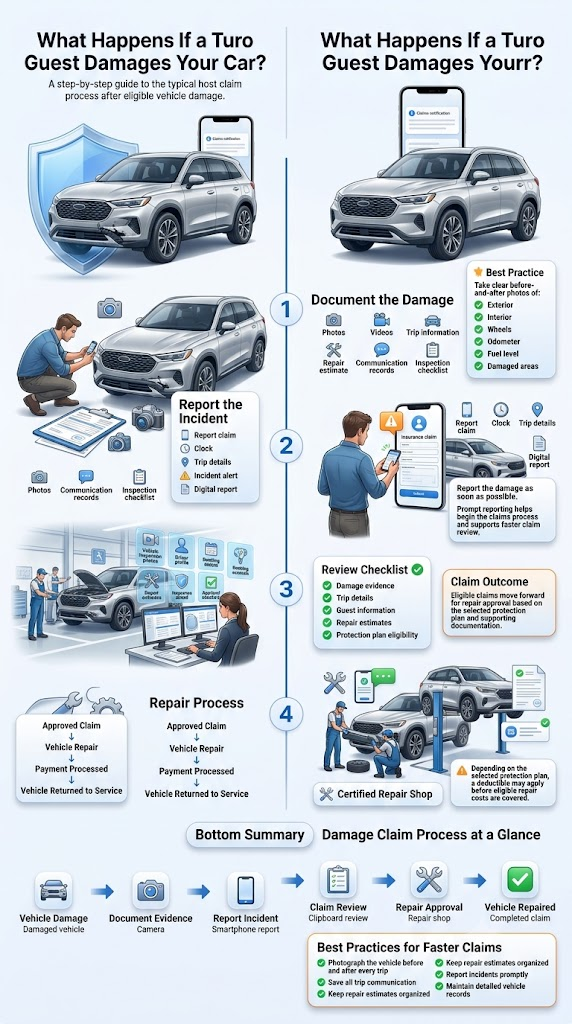
Step 1: Document the Damage
Hosts should collect:
- Photos
- Videos
- Trip information
- Repair estimates
- Communication records
Taking before-and-after photos of the vehicle is highly recommended.
Step 2: Report the Incident
The host should report damage through Turo as soon as possible.
Delays can make claims more difficult.
Step 3: Claim Review
Turo reviews:
- Damage evidence
- Trip details
- Guest information
- Repair estimates
The claim decision depends on whether the damage qualifies under the protection plan.
Step 4: Repair Process
If approved:
- Repairs may be arranged
- Payment is processed according to coverage terms
- Deductibles may apply
What Does Turo Host Insurance NOT Cover?
While Turo protection plans can help protect hosts from major losses, they do not cover every possible problem.
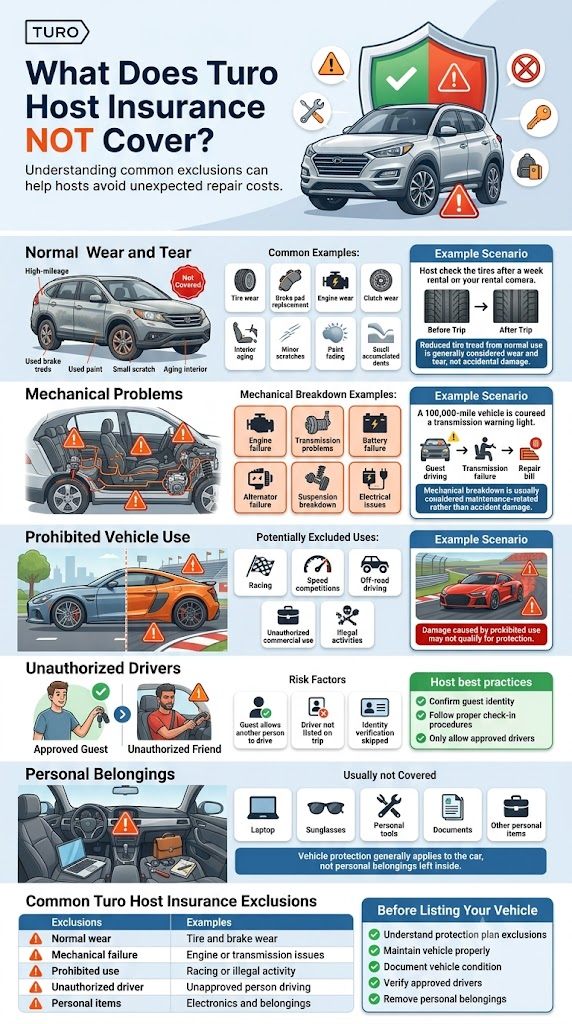
Understanding exclusions is just as important as understanding coverage.
Normal Wear and Tear Is Usually Not Covered
Turo protection is designed for unexpected damage, not regular vehicle aging.
Normal wear and tear may include:
- Tire wear
- Brake pad replacement
- Engine wear
- Clutch wear
- Interior aging
- Minor scratches from regular use
- Paint fading
- Small dents accumulated over time
Example
A guest rents your vehicle for a week. After returning it, you notice the tires have less tread.
This is usually considered normal wear and is not covered.
Mechanical Problems Are Usually Not Covered
Many new Turo hosts assume that if something breaks while a guest is driving, Turo will pay for repairs.
That is generally not how host protection works.
Mechanical failures such as:
- Engine failure
- Transmission problems
- Battery failure
- Alternator failure
- Suspension breakdown
- Electrical problems
are usually considered maintenance issues.
Example
A guest rents your 100,000-mile vehicle. During the trip, the transmission fails.
Even though the guest was driving, the repair may not qualify as covered damage because the failure was caused by mechanical breakdown.
Damage Caused by Prohibited Use May Not Be Covered
Turo has rules about how vehicles can be used.
Protection may not apply if the guest uses the vehicle for prohibited activities, such as:
- Racing
- Off-road driving
- Speed competitions
- Commercial use not allowed by Turo
- Illegal activities
Example
A guest rents a sports car and takes it to a racetrack.
If damage occurs, the claim may be denied because the vehicle was used outside permitted conditions.
Unauthorized Drivers Can Create Insurance Problems
One of the biggest risks for hosts is allowing someone who is not listed on the trip to drive.
Turo generally requires that only approved drivers operate the vehicle.
Example
A guest books your car.
During the trip:
- The guest allows a friend to drive
- The friend causes an accident
The claim may become complicated because the driver was not authorized.
Hosts should always:
- Confirm the guest’s identity
- Follow Turo’s check-in rules
- Avoid handing keys to anyone not approved
Personal Belongings Are Usually Not Covered
Turo protection generally applies to the vehicle, not personal items left inside.
Examples:
A guest damages your car and your:
- Laptop
- Sunglasses
- Tools
- Personal documents
are stolen.
These items may not be covered under Turo protection.
Does Turo Cover Lost Rental Income?
A common question among hosts is:
“If my car is damaged and cannot be rented, will Turo pay me for lost earnings?”
The answer depends on the circumstances and protection plan terms.
In many situations, hosts should not assume they will receive full compensation for:
- Cancelled future bookings
- Lost rental opportunities
- Days the vehicle is unavailable
Example
- Your vehicle is damaged during a trip and stays in a repair shop for three weeks.
- You lose $900 in expected rental income.
- That lost income may not automatically be reimbursed.
- Hosts should consider this risk when calculating profitability.
Does Turo Cover Cleaning Fees?
Turo has separate processes for certain cleaning-related issues.
Normal cleaning after a trip is generally considered part of hosting.
However, serious cleaning situations may qualify for reimbursement.
Examples that may be considered excessive:
- Large spills
- Smoke odor
- Pet damage
- Significant interior mess
Hosts should:
- Take clear photos
- Document the condition before and after trips
- Submit evidence quickly
What Happens If a Guest Gets a Traffic Ticket?
Traffic violations are usually the responsibility of the guest who was driving.
Examples
- Speeding tickets
- Parking violations
- Toll charges
- Traffic fines
Hosts should keep documentation showing:
- Rental dates
- Guest information
- Vehicle use period
Does Turo Insurance Cover Theft?
Theft coverage depends heavily on the situation.
A major factor is whether the theft occurred during an approved Turo trip.
Possible covered situation: A verified guest takes the vehicle during an active reservation and fails to return it.
Possible problem situation: A host gives the vehicle to someone outside Turo or ignores platform procedures.
Hosts should:
- Report theft immediately
- Contact authorities
- Provide trip documentation
How Turo Handles Accident Claims
When a guest damages a vehicle, the process usually involves several steps.
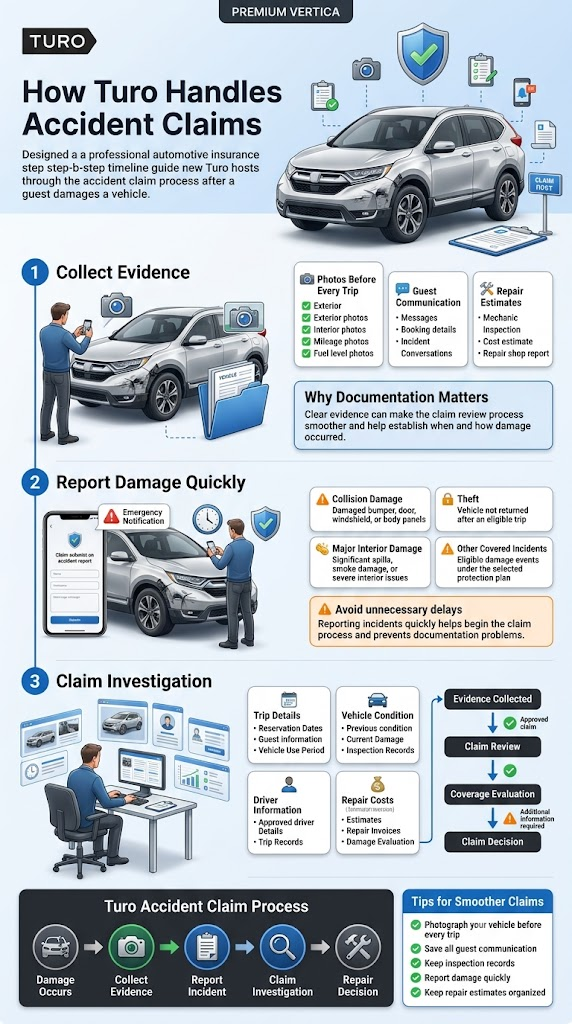
Collect Evidence
Hosts should keep:
- Photos before every trip
- Photos after every trip
- Vehicle inspection records
- Guest communication
- Repair estimates
Good documentation can make claim processing easier.
Report Damage Quickly
Waiting too long can create problems.
Hosts should report:
- Collision damage
- Theft
- Major interior damage
- Other covered incidents
as soon as possible.
Claim Investigation
Turo may review:
- Trip details
- Vehicle condition
- Damage evidence
- Driver information
- Repair costs
The final decision depends on the circumstances.
Common Insurance Mistakes Turo Hosts Make
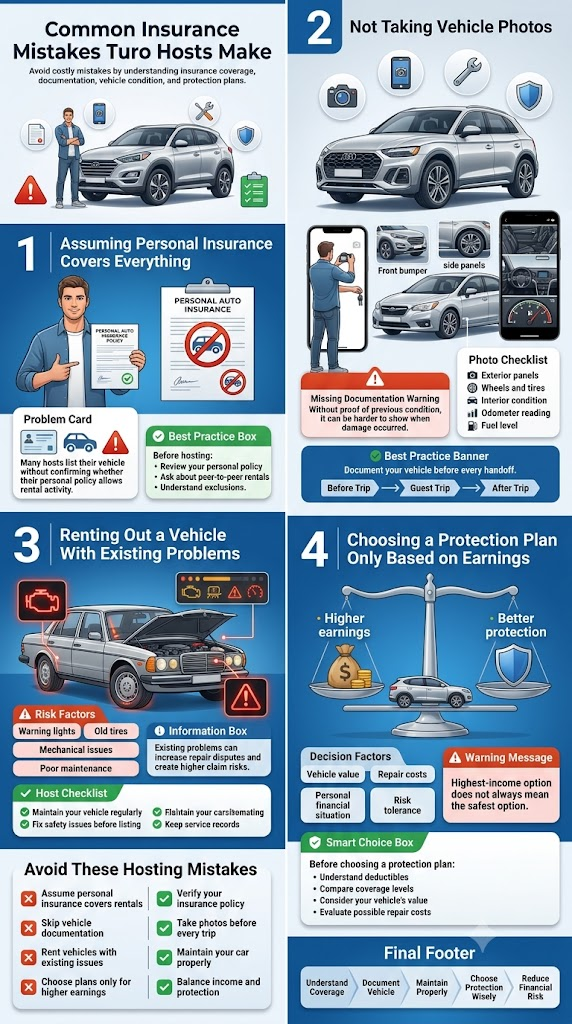
Mistake 1: Assuming Their Personal Insurance Covers Everything
Many hosts list their car without checking their personal policy.
Problem:
Their insurer may exclude peer-to-peer rentals.
Mistake 2: Not Taking Vehicle Photos
Without proof of previous condition, it can be harder to show that damage occurred during a specific trip.
Best practice:
Take photos of:
- Exterior panels
- Wheels
- Interior
- Odometer
- Fuel level
before every handoff.
Mistake 3: Renting Out a Vehicle With Existing Problems
A vehicle with:
- Warning lights
- Old tires
- Mechanical issues
- Poor maintenance
creates higher claim risks.
Mistake 4: Choosing a Protection Plan Only Based on Earnings
The highest-income option is not always the safest.
Hosts should consider:
- Vehicle value
- Repair costs
- Personal financial situation
- Risk tolerance
How to Reduce Insurance Risks as a Turo Host
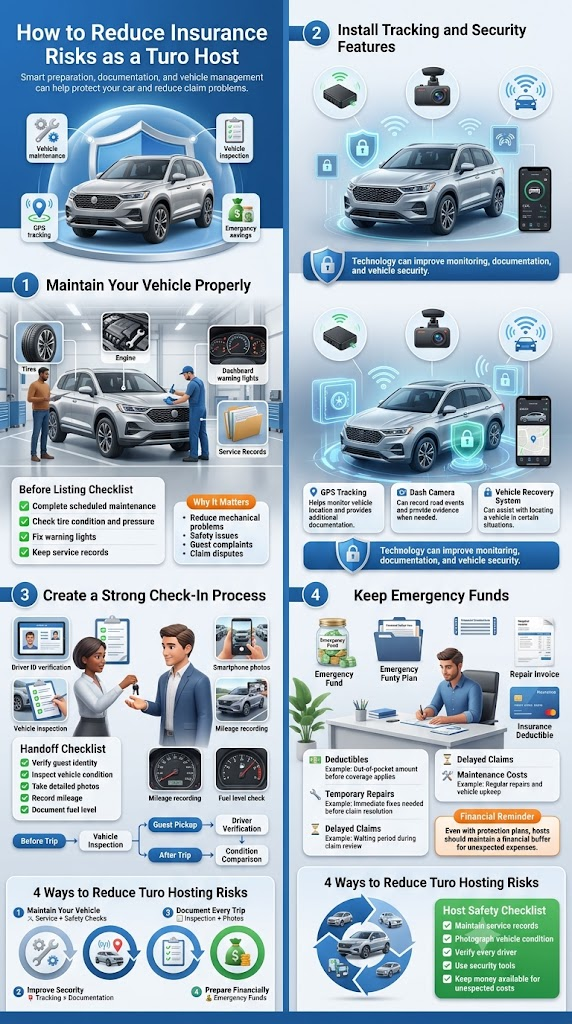
Maintain Your Vehicle Properly
Before listing:
- Complete maintenance
- Check tires
- Fix warning lights
- Keep service records
Install Tracking and Security Features
Helpful tools may include:
- GPS tracking devices
- Dash cameras
- Vehicle recovery systems
These can help with monitoring and documentation.
Create a Strong Check-In Process
A good handoff process includes:
- Driver verification
- Vehicle inspection
- Photos
- Mileage recording
- Fuel documentation
Keep Emergency Funds
Even with protection, hosts should prepare for:
- Deductibles
- Temporary repairs
- Delayed claims
- Maintenance costs
Is Turo Host Insurance Enough Protection?
Turo protection plans can significantly reduce the financial risk of sharing a vehicle, but they are not the same as having complete insurance coverage.
A successful Turo host understands:
- What is covered
- What is excluded
- How deductibles work
- How claims are handled
- What responsibilities remain with the host
For expensive vehicles, high-mileage cars, or vehicles with loan payments, hosts should carefully evaluate whether the potential income justifies the risks.
Turo Host Insurance vs Personal Auto Insurance
Many new Turo hosts assume their regular car insurance will protect them if they rent their vehicle through the platform.
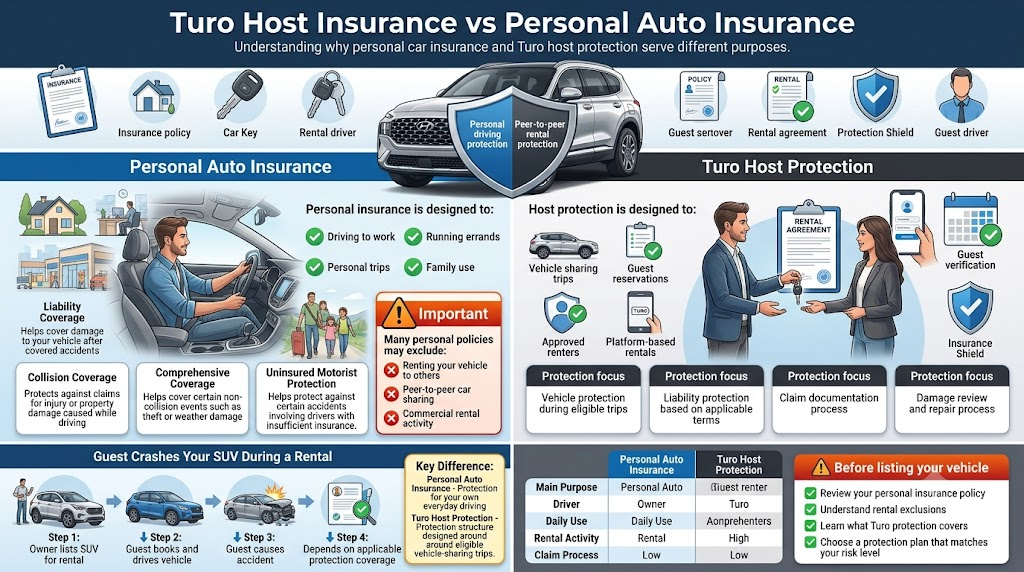
However, personal auto insurance and Turo host protection serve different purposes.
Personal Auto Insurance
Your personal car insurance is designed for normal personal vehicle use.
It generally covers situations such as:
- Driving to work
- Running errands
- Personal trips
- Family use
Common coverages include:
- Liability coverage
- Collision coverage
- Comprehensive coverage
- Uninsured motorist protection
However, many personal policies exclude:
- Renting your vehicle to others
- Peer-to-peer car sharing
- Commercial rental activity
Example:
You have a full coverage policy on your SUV.
You list the SUV on Turo.
A guest crashes the vehicle during a rental.
Your personal insurer may deny the claim because the vehicle was being used for a rental business.
Turo Protection vs Traditional Insurance
Turo protection works differently from a standard insurance policy.
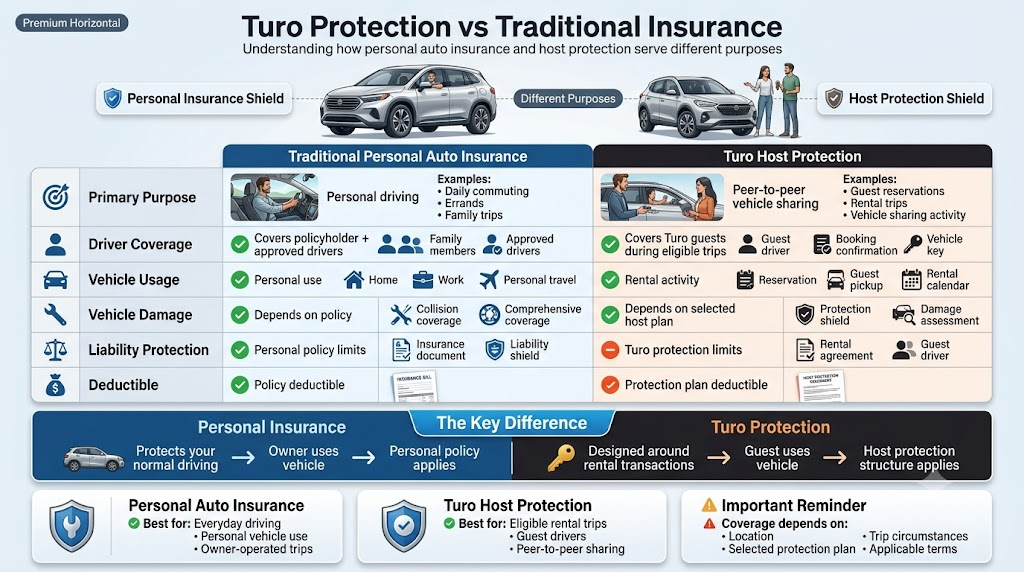
| Feature | Personal Auto Insurance | Turo Host Protection |
|---|---|---|
| Primary purpose | Personal driving | Peer-to-peer vehicle sharing |
| Covered driver | Policyholder and approved drivers | Turo guests during trips |
| Vehicle use | Personal use | Rental activity |
| Physical damage | Depends on policy | Depends on host plan |
| Liability | Personal limits | Turo protection limits |
| Deductible | Policy deductible | Protection plan deductible |
The key difference:
Your personal insurance protects your normal driving. Turo protection is designed around the rental transaction.
Turo Host Insurance vs Commercial Rental Insurance
Traditional rental companies such as large rental fleets operate differently.
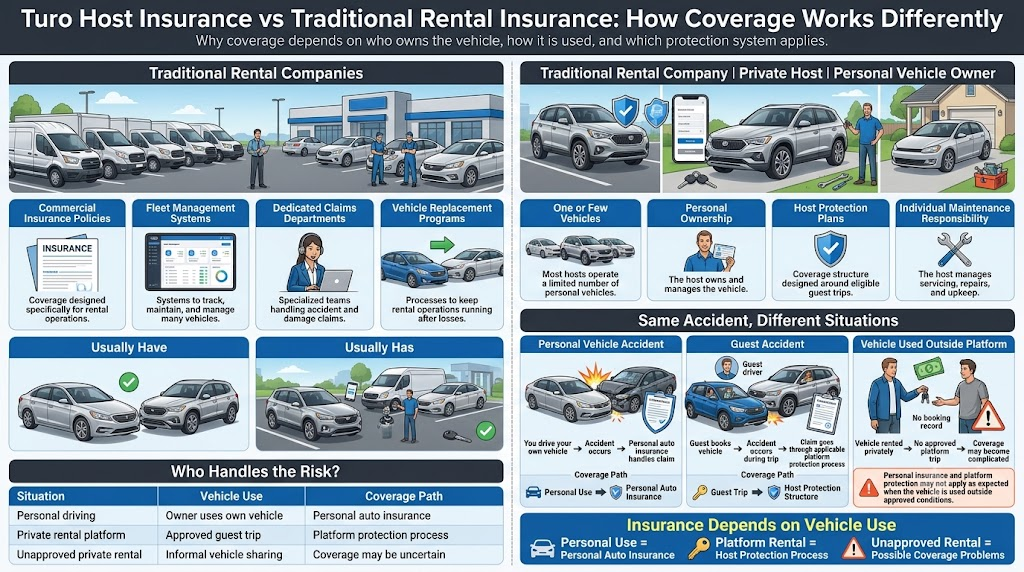
They usually have:
- Commercial insurance policies
- Fleet management systems
- Dedicated claims departments
- Vehicle replacement programs
A private Turo host usually has:
- One or a few vehicles
- Personal ownership
- Turo protection plans
- Individual responsibility for maintenance
Example: Same Accident, Different Situations
Scenario 1: Personal Vehicle Accident
You are driving your own car and hit another vehicle.
Your personal auto insurance handles the claim.
Scenario 2: Turo Guest Accident
A guest rents your vehicle and causes an accident.
The claim generally goes through Turo’s protection process.
Scenario 3: Vehicle Used Outside Turo
You lend your vehicle privately to a friend for payment.
Neither your personal insurance nor Turo protection may apply in the expected way.
How Much Do Turo Hosts Actually Make After Insurance Costs?
Many people see Turo listings and focus only on daily rental prices.
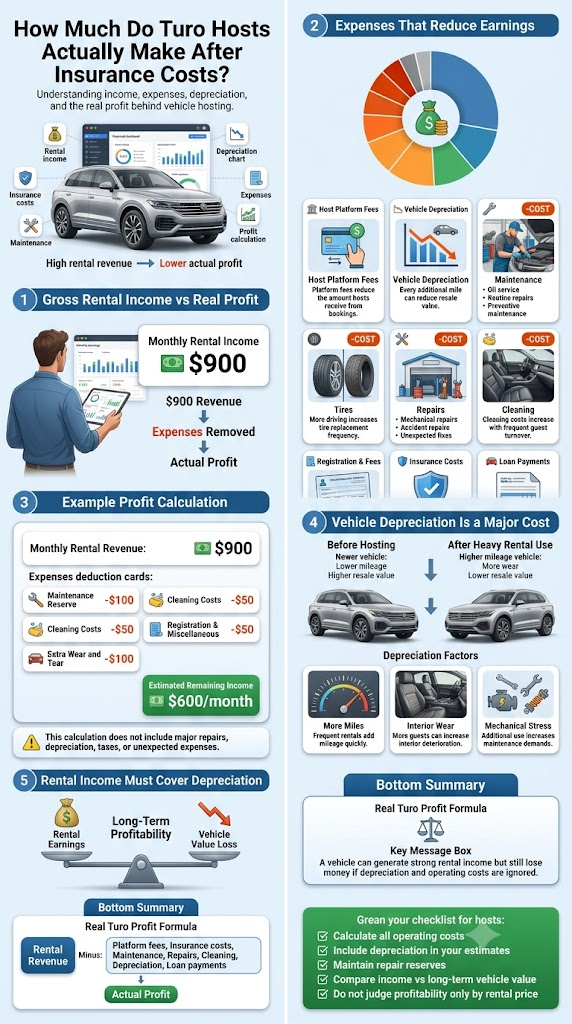
However, the actual profit depends on several expenses.
A host’s income is affected by:
- Turo’s host fee structure
- Vehicle depreciation
- Maintenance
- Tires
- Repairs
- Cleaning
- Registration
- Insurance costs
- Loan payments
Example Profit Calculation
Imagine a host rents a vehicle:
Rental income:
$900 per month
Expenses:
- Maintenance reserve: $100
- Cleaning costs: $50
- Extra wear and tear: $100
- Registration and miscellaneous costs: $50
Estimated remaining income:
$600 per month
However, this does not include major repairs or depreciation.
Vehicle Depreciation Is a Major Cost
Many hosts underestimate depreciation.
Every rental adds:
- More miles
- More interior wear
- More mechanical stress
Example:
- A three-year-old vehicle normally loses value over time.
- A vehicle with 100,000 additional rental miles may have significantly lower resale value.
- The rental income must compensate for this loss.
Best Vehicles for Turo Hosting
The ideal Turo vehicle usually has:
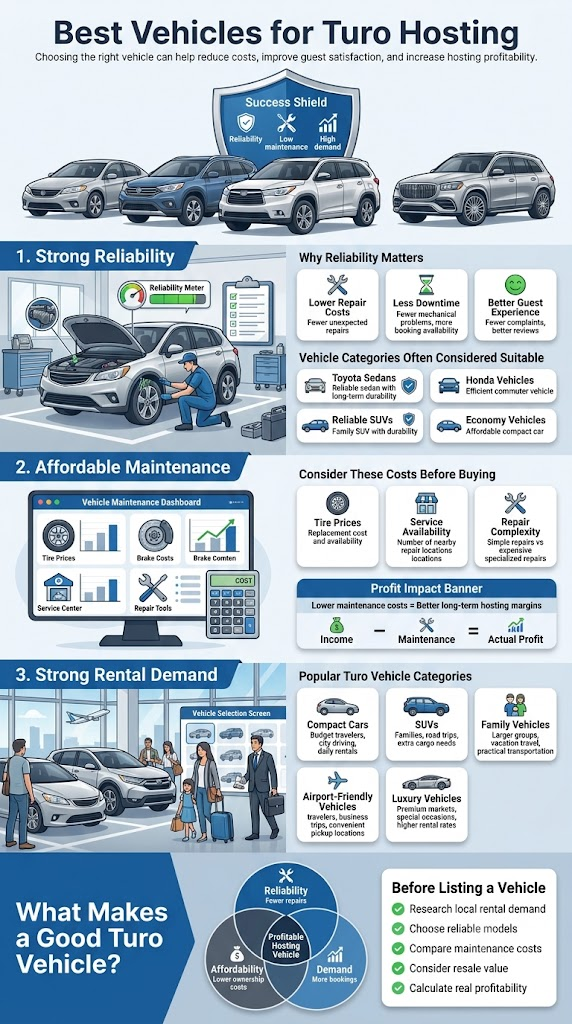
Strong Reliability
Reliable vehicles reduce:
- Repair costs
- Downtime
- Guest complaints
Examples often considered suitable:
- Toyota sedans
- Honda vehicles
- Reliable SUVs
- Economy vehicles
Affordable Maintenance
Vehicles with expensive parts can reduce profits.
Consider:
- Tire prices
- Brake costs
- Service availability
- Repair complexity
Strong Rental Demand
Demand depends on location.
Popular categories include:
- Compact cars
- SUVs
- Family vehicles
- Airport-friendly vehicles
- Luxury cars in certain markets
Example Turo Insurance Claim Scenarios
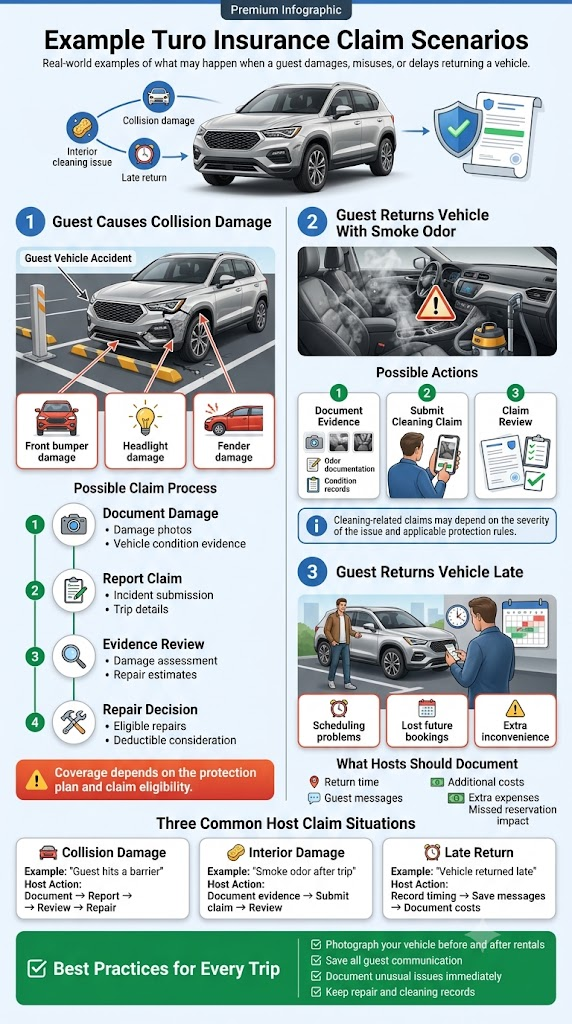
Scenario 1: Guest Causes Collision Damage
A guest hits a parking barrier.
Damage:
- Front bumper
- Headlight
- Fender
Possible process:
- Host documents damage
- Host reports claim
- Turo reviews evidence
- Repairs are approved if eligible
- Deductible may apply
Scenario 2: Guest Returns Vehicle With Smoke Odor
The guest smoked inside the vehicle.
Possible actions:
- Host documents odor and evidence
- Cleaning claim may be submitted
- Turo reviews whether it qualifies
Scenario 3: Guest Returns Vehicle Late
Late return may create:
- Scheduling problems
- Lost bookings
- Extra inconvenience
Hosts should document:
- Return time
- Messages
- Additional costs
What New Turo Hosts Should Do Before Listing Their Car
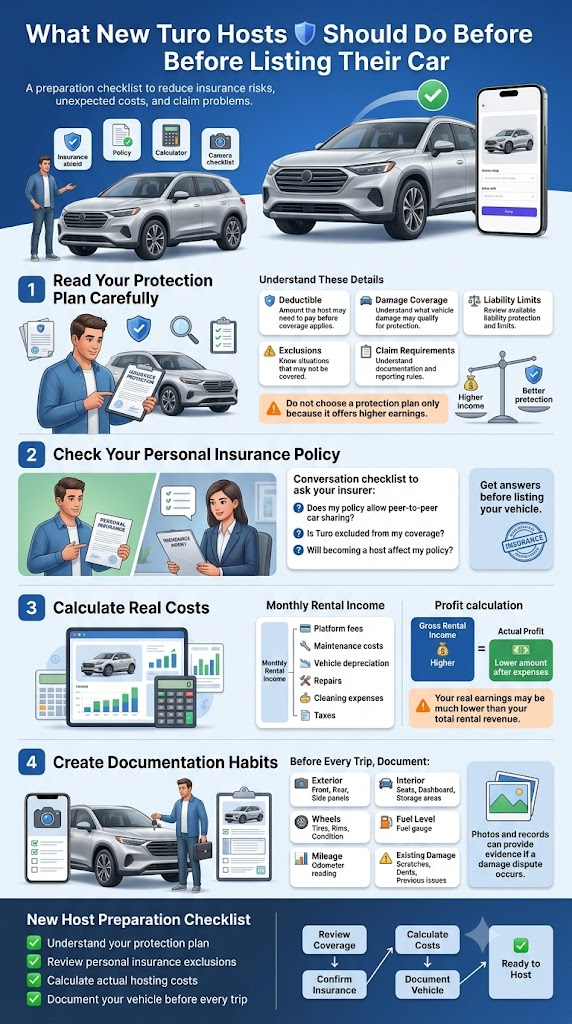
Read Your Protection Plan Carefully
Understand:
- Deductible
- Damage coverage
- Liability limits
- Exclusions
- Claim requirements
Do not choose a plan only because it offers higher earnings.
Check Your Personal Insurance Policy
Ask your insurer:
- Does my policy allow peer-to-peer car sharing?
- Is Turo excluded?
- Will my policy be affected if I become a host?
Get answers before listing.
Calculate Real Costs
Before starting, calculate:
Monthly Income
Expected rental revenue
Minus:
- Platform fees
- Maintenance
- Depreciation
- Repairs
- Cleaning
- Taxes
Your actual profit may be much lower than gross rental income.
Create Documentation Habits
Before every trip:
Take photos of:
- Exterior
- Interior
- Wheels
- Fuel level
- Mileage
- Existing damage
This creates evidence if a dispute occurs.
Turo Host Insurance Checklist
Before accepting your first booking:
✅ Understand your Turo protection plan
✅ Know your deductible
✅ Confirm your vehicle qualifies
✅ Review personal insurance exclusions
✅ Take detailed vehicle photos
✅ Maintain service records
✅ Track mileage
✅ Keep emergency funds available
✅ Understand claim procedures
Is Turo Hosting Worth the Insurance Risk?
Turo can be a good way to generate income from an underused vehicle, but it is not completely risk-free.
It works best for owners who:
- Understand insurance limitations
- Maintain vehicles carefully
- Choose vehicles with strong demand
- Accept additional mileage and wear
- Have realistic profit expectations
The biggest mistake is treating Turo like passive income.
A successful host manages it like a small vehicle rental business.
Final Thoughts
Turo host insurance provides an important layer of protection when renting out a vehicle, but it does not replace careful planning.
The protection plan you choose, your vehicle condition, documentation habits, and understanding of exclusions all affect your financial risk.
Before becoming a host, evaluate:
- How much you can realistically earn
- How much your vehicle may depreciate
- How comfortable you are with strangers driving your car
- Whether the protection level matches your risk tolerance
For many owners, Turo can be profitable. But the best hosts succeed because they understand both the income opportunity and the insurance responsibilities.