
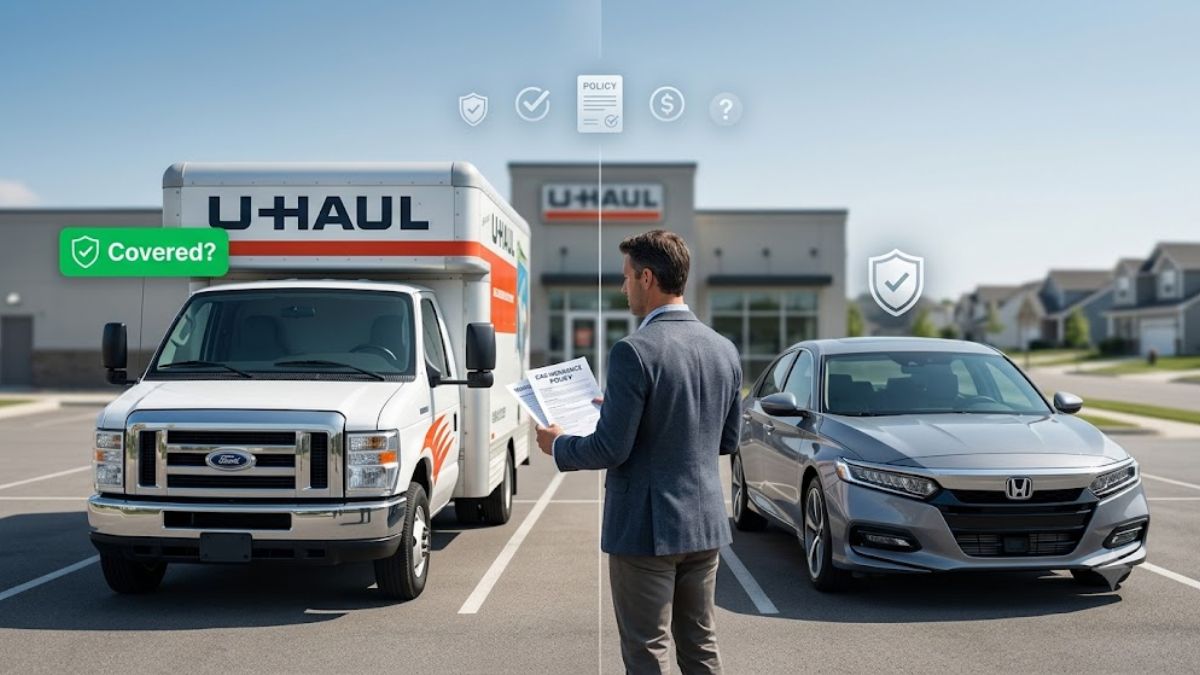

Moving to a new home, transporting furniture, or handling a large project often requires renting a truck. Companies like U-Haul provide convenient options for moving vehicles, trailers, and trucks, but many renters wonder:
Does my car insurance cover a U-Haul rental truck?
The answer depends on several factors, including your existing auto insurance policy, the type of U-Haul vehicle you rent, your coverage limits, and the reason for the damage.
In some cases, your personal car insurance may provide coverage for a U-Haul rental truck. However, this coverage is not guaranteed, and many standard auto policies have limitations when it comes to large rental trucks.
Unlike renting a regular passenger car, renting a moving truck can involve different risks. A U-Haul truck is larger, heavier, and often more difficult to drive, which can increase the chance of accidents or damage.
Before picking up a rental truck, it is important to understand:
- Whether your auto insurance covers U-Haul trucks
- What types of damage may be covered
- What your policy may exclude
- Whether U-Haul insurance options are worth buying
- What happens if you damage the truck or cause an accident
This guide explains how insurance works with U-Haul rentals and what protection you may need before your move.
Does My Car Insurance Cover a U-Haul Rental Truck?
In many cases, your personal auto insurance policy may provide some coverage for a U-Haul rental truck, but it depends on your specific policy terms.
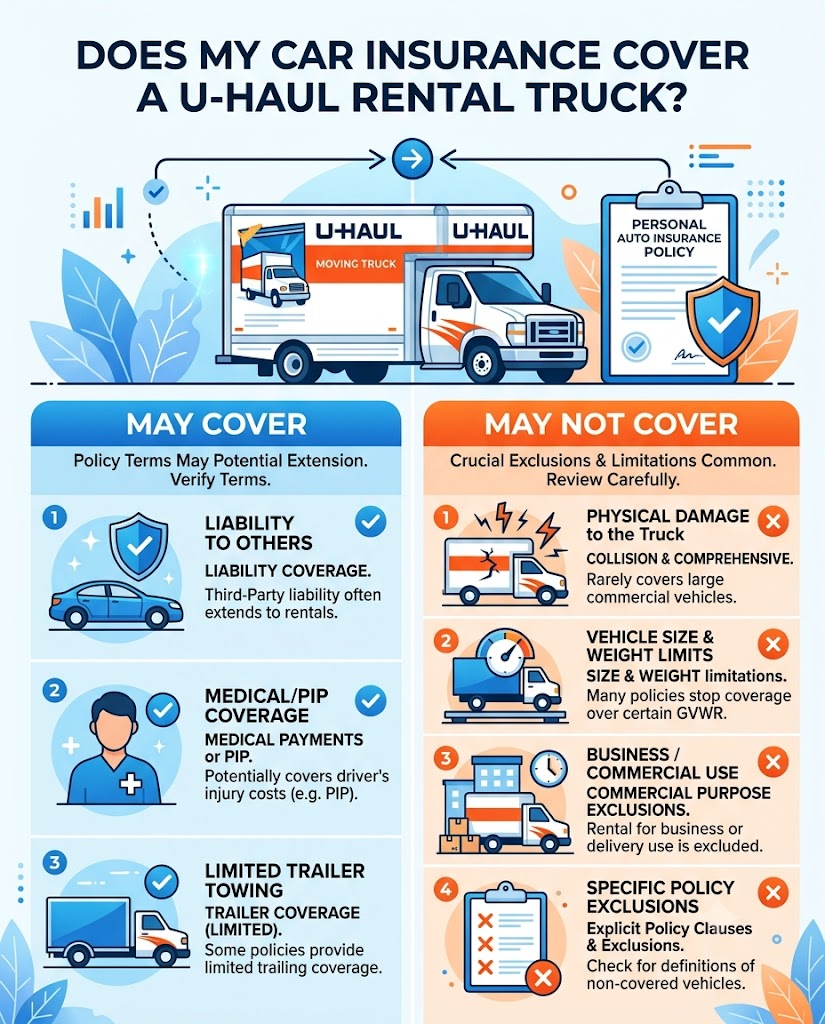
Most personal auto insurance policies include coverage that may extend to rental vehicles. However, this extension is usually designed for vehicles similar to your own, such as rental cars.
A moving truck may be treated differently.
Your insurance company may consider factors such as:
- The size and weight of the truck
- The rental vehicle type
- The purpose of the rental
- Your existing coverage limits
- Policy exclusions
For example, if your policy covers collision and comprehensive damage on your personal vehicle, those protections may extend to a rental vehicle in some situations.
However, some insurers exclude:
- Large box trucks
- Commercial-style vehicles
- Vehicles above certain weight limits
- Moving trucks used for business purposes
Because policies vary, it is important to check with your insurance provider before assuming your coverage applies.
What Types of U-Haul Damage May Be Covered by Car Insurance?
If your personal auto insurance extends to a U-Haul rental truck, certain types of damage may be covered depending on your policy.
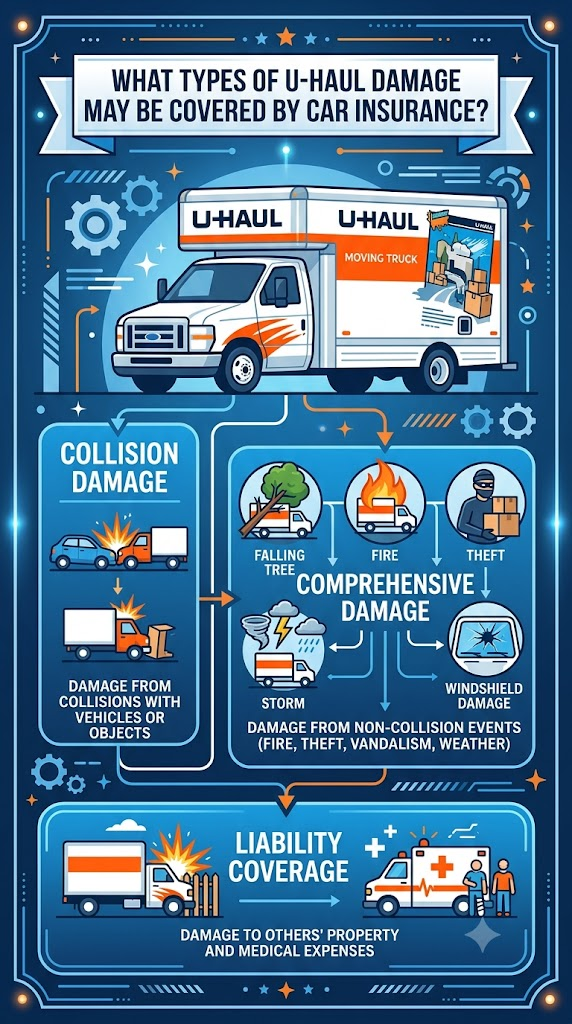
Collision Damage
Collision coverage may help pay for damage to the U-Haul truck if you are involved in an accident.
Examples include:
- Hitting another vehicle
- Backing into a building
- Damaging the truck in a parking lot
- Losing control and hitting an object
Example:
You are driving a U-Haul truck and accidentally hit a pole while turning. The truck’s side panel is damaged.
If your policy extends collision coverage to the rental truck, your insurer may help pay for repairs after your deductible.
Comprehensive Damage
Comprehensive coverage may apply to certain non-collision events.
Examples include:
- Theft
- Fire
- Vandalism
- Falling objects
- Severe weather damage
Example:
A tree branch falls on a parked U-Haul truck during a storm and damages the roof.
If your coverage applies to rental trucks, comprehensive insurance may help cover the repair costs.
Liability Coverage
Liability insurance is one of the most important protections when renting a U-Haul.
If you cause an accident that damages another person’s vehicle or property, your liability coverage may help pay for:
- Vehicle repairs
- Property damage
- Medical expenses for injured parties
Example:
You are driving a U-Haul truck and accidentally hit another car at an intersection.
Your liability insurance may help cover the damage you caused to the other vehicle, depending on your policy limits.
Why U-Haul Trucks Are Different From Regular Rental Cars
Many people assume that because their insurance covers rental cars, it automatically covers a U-Haul truck.
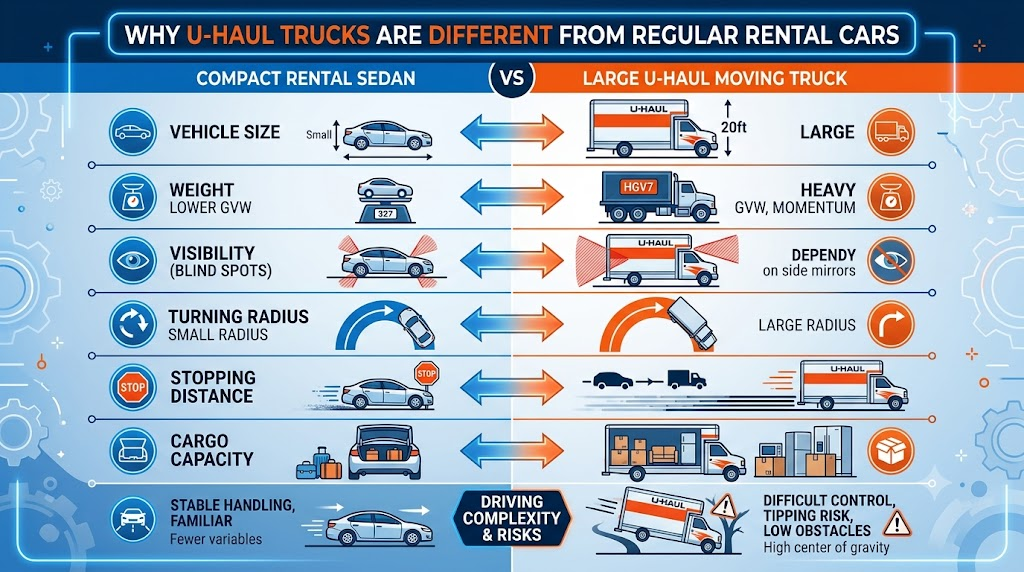
However, moving trucks are different from standard rental vehicles.
A typical rental car:
- Is similar to a personal vehicle
- Has a lower weight rating
- Is designed for everyday driving
A U-Haul truck:
- Is much larger
- Has different handling characteristics
- May weigh thousands of pounds more
- Can cause significantly more damage in an accident
Because of these differences, insurance companies may place additional restrictions on rental truck coverage.
Some policies that cover a sedan or SUV rental may not cover a 10-foot, 15-foot, or 26-foot moving truck.
What Should You Check Before Renting a U-Haul?
Before signing the rental agreement, review your insurance policy and confirm the following:
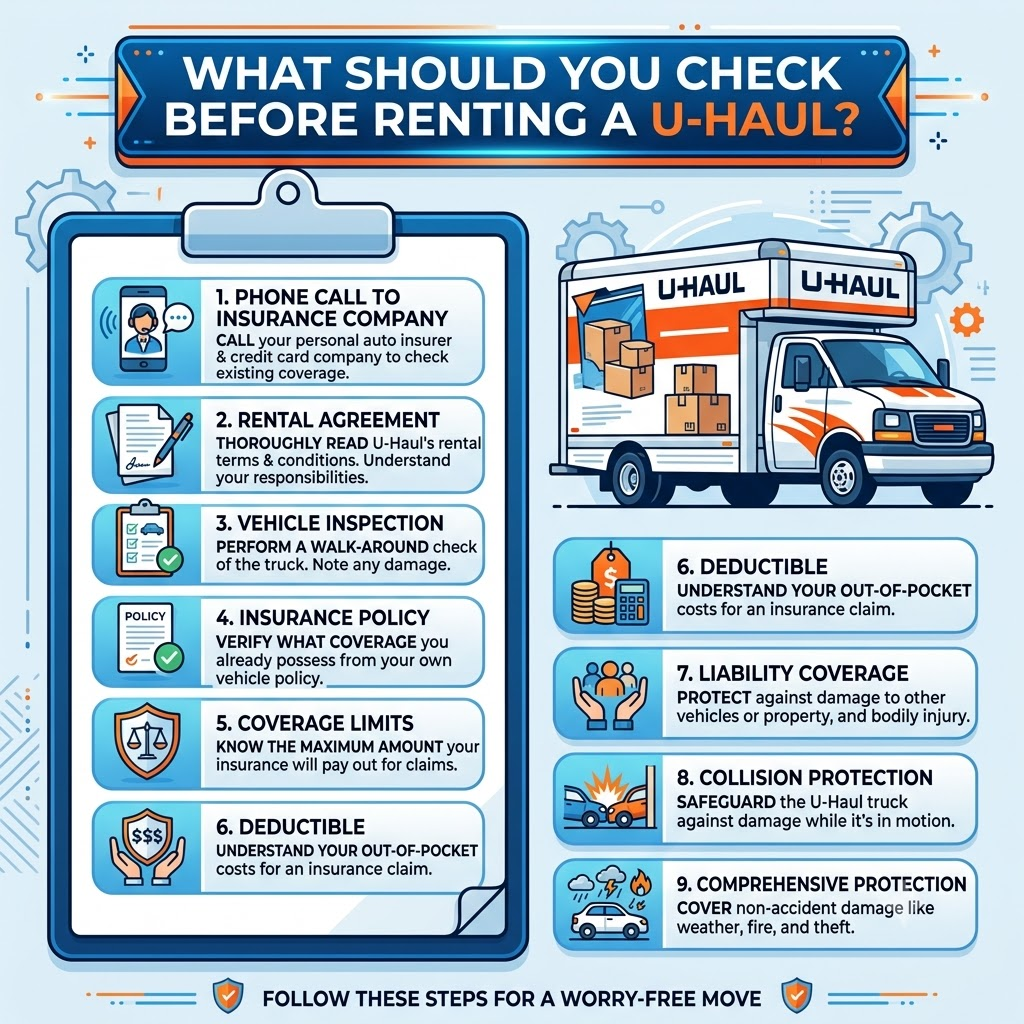
Does Your Policy Cover Rental Trucks?
Ask your insurer:
- Does my policy cover U-Haul trucks?
- Are moving trucks excluded?
- Is there a vehicle size limit?
- Does coverage apply only for personal use?
Getting confirmation beforehand can prevent unexpected expenses later.
Are Your Coverage Limits Enough?
Even if your insurance covers a U-Haul truck, your limits may not be enough for a major accident.
For example:
Your personal vehicle is worth $25,000.
Your liability coverage is designed around normal passenger vehicles.
A damaged U-Haul truck may cost significantly more to repair.
Check whether your policy provides enough protection for:
- Truck damage
- Liability claims
- Medical expenses
- Property damage
What U-Haul Insurance Options Include?
If your personal auto insurance does not fully cover a U-Haul rental truck, the rental company offers additional protection options that can reduce your financial risk.
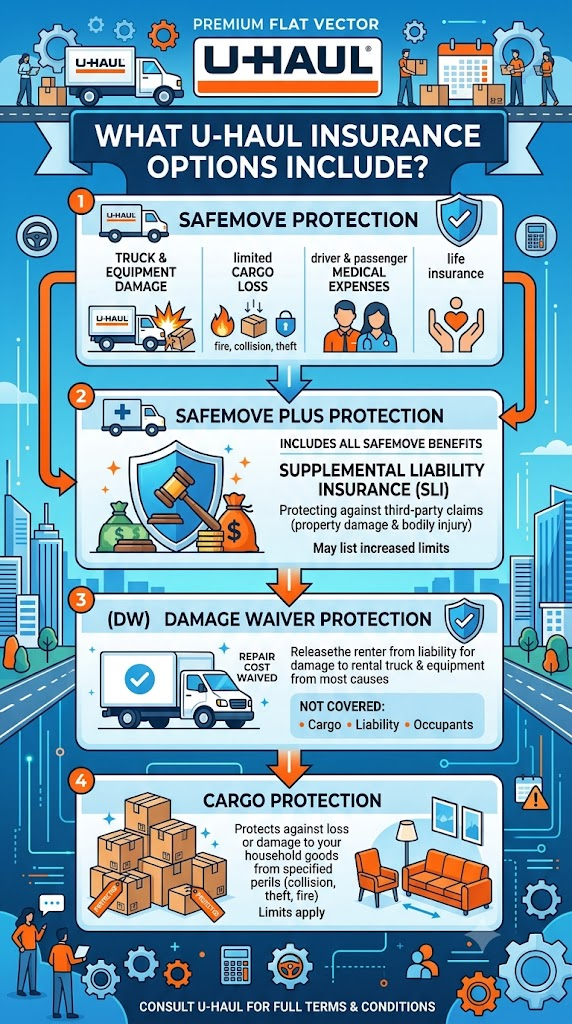
U-Haul provides different types of coverage designed specifically for rental trucks. The available options may vary depending on the location, vehicle type, and rental agreement.
Before accepting or declining these protections, understand what each option covers.
Safemove Protection
Safemove is one of U-Haul’s main protection plans for truck rentals.
It generally provides coverage for certain risks that may not be included in your personal auto insurance policy.
Depending on the rental agreement, Safemove may include:
- Damage waiver protection
- Limited cargo protection
- Accident-related coverage
- Medical and life insurance benefits
One of the biggest advantages of Safemove is that it may protect you from paying the full repair cost if the U-Haul truck is damaged during your rental period.
Example:
You rent a U-Haul truck to move furniture. While parking, you accidentally hit a wall and damage the truck’s rear section.
Without protection, you may be responsible for repair costs. With applicable Safemove coverage, some of those costs may be covered according to the terms of the agreement.
Safemove Plus Protection
Safemove Plus is a higher-level protection option that may provide broader coverage.
It generally combines physical damage protection with supplemental liability coverage.
Depending on the agreement, it may help with:
- Damage to the rental truck
- Certain accident-related expenses
- Liability protection beyond your personal policy limits
This option may be useful for renters who want additional protection, especially when driving a larger moving truck.
A U-Haul truck can be more challenging to operate than a normal car because of:
- Larger size
- Longer stopping distance
- Wider turning radius
- Reduced visibility
Additional protection can provide extra peace of mind during a move.
Damage Waiver Protection
Some rental truck protection plans include a damage waiver.
A damage waiver is different from traditional insurance.
Instead of paying for repairs through an insurance claim, the rental company may agree not to charge you for certain damage to the vehicle, depending on the agreement.
However, damage waivers usually have limitations.
They may not cover:
- Unauthorized drivers
- Driving in prohibited areas
- Intentional damage
- Improper use of the vehicle
- Damage caused by violating the rental agreement
Always read the rental terms carefully before relying on a damage waiver.
Cargo Protection for Your Belongings
Many people focus only on protecting the U-Haul truck but forget about the items inside it.
Your personal auto insurance usually does not cover damage to your belongings during a move.
Cargo protection may help cover certain items such as:
- Furniture
- Electronics
- Household items
- Personal belongings
Example:
You are moving to a new house, and a sudden accident damages your furniture inside the truck.
Your regular auto insurance may cover vehicle damage but may not cover the damaged belongings.
Cargo protection may provide additional coverage depending on the plan.
Does U-Haul Insurance Replace Your Car Insurance?
No, U-Haul protection does not replace your personal auto insurance.
Instead, it works alongside your existing coverage.
Your personal auto insurance may provide:
- Liability coverage
- Protection for certain damages
- Coverage according to your policy terms
U-Haul protection may provide additional benefits, especially for:
- Rental truck damage
- Moving-related risks
- Coverage gaps
For example:
You cause an accident while driving a U-Haul truck.
Your personal insurance may handle liability claims for damage you cause to others.
U-Haul protection may help with damage to the rental truck itself.
The exact responsibility depends on the policies involved and the terms of your rental agreement.
What Happens If You Damage a U-Haul Truck?
If you damage a U-Haul rental truck, you may be responsible for repair costs unless your insurance or rental protection covers the damage.
The process usually involves several steps.
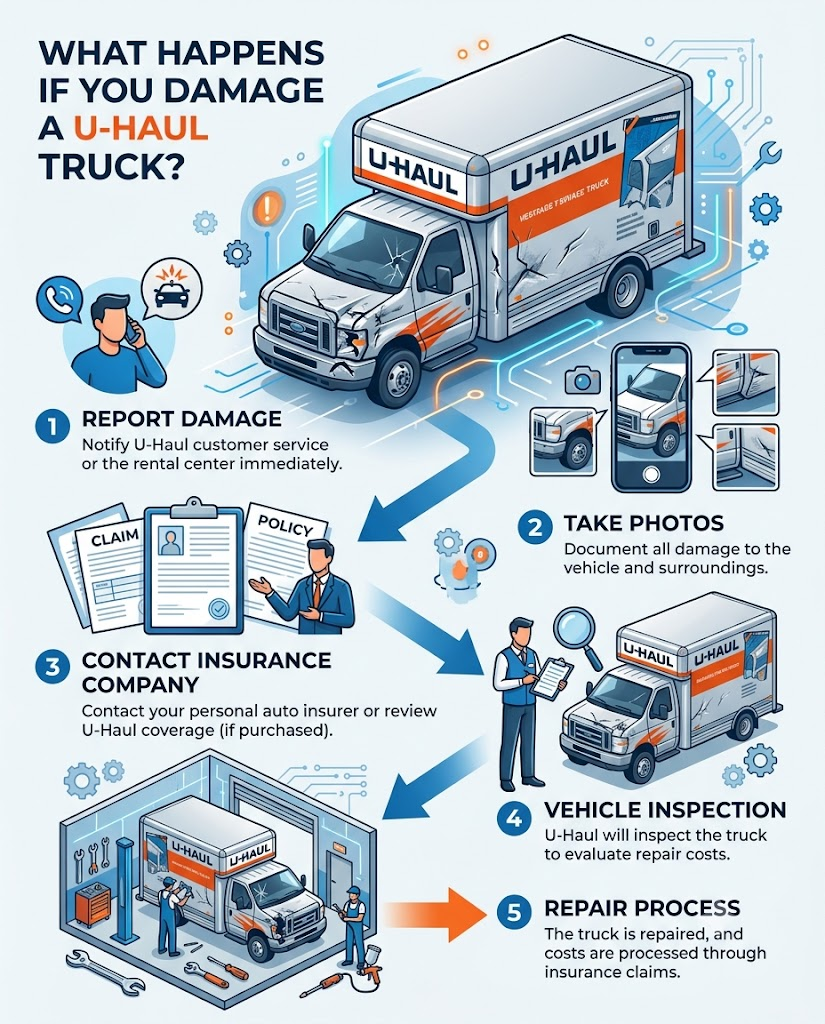
Report the Damage Immediately
If an accident or damage occurs, contact U-Haul as soon as possible.
Provide details such as:
- What happened
- Where the damage occurred
- When it happened
- Whether another vehicle was involved
Failing to report damage promptly may create problems with your claim.
Document the Damage
Take photos and videos of:
- The damaged area
- The entire vehicle
- The accident location
- Other vehicles involved
- Road conditions
Documentation can help determine what happened and support your insurance claim.
Contact Your Insurance Company
If you believe your personal insurance may cover the damage, notify your insurer.
They can explain:
- Whether your policy applies
- What deductible applies
- How the claim process works
Your insurer may investigate the accident before deciding coverage.
What If You Damage Another Vehicle While Driving a U-Haul?
If you cause an accident while driving a U-Haul truck, your liability coverage may help pay for damage to other vehicles or property.
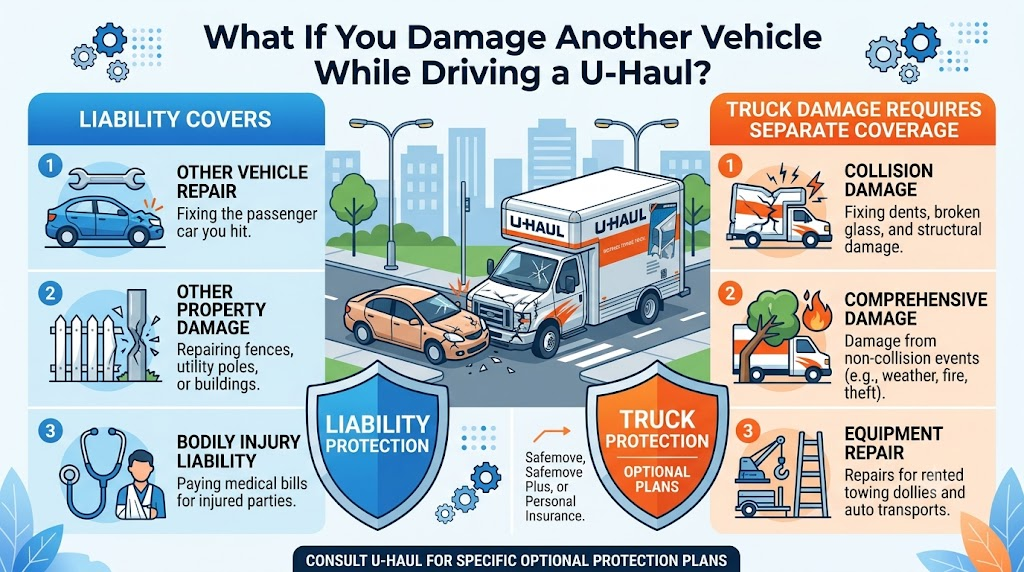
Examples:
- Rear-ending another car
- Damaging someone’s fence
- Hitting a parked vehicle
- Causing property damage while turning
However, liability coverage does not usually pay for damage to the U-Haul truck itself.
This is an important difference:
Damage you cause to others → Liability coverage
Damage to the U-Haul truck → Collision, damage waiver, or rental protection
Does Credit Card Insurance Cover a U-Haul Rental Truck?
Many credit cards offer rental car insurance as a benefit, but that coverage usually applies only to standard passenger vehicles.
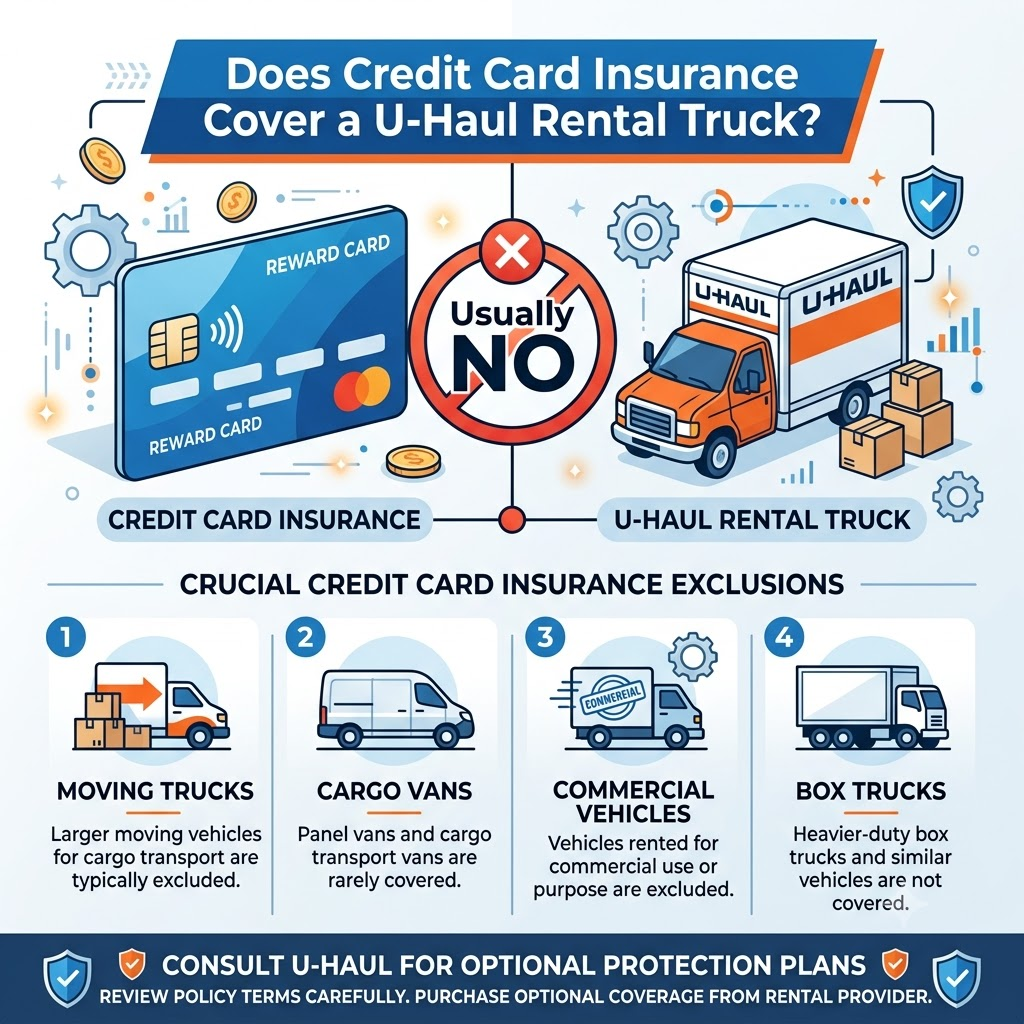
In most cases, credit card rental insurance does not cover U-Haul trucks or other moving trucks.
This is because rental truck companies are often excluded from credit card rental protection programs.
Common exclusions include:
- Moving trucks
- Cargo vans above certain weight limits
- Box trucks
- Commercial vehicles
- Large cargo vehicles
If you plan to rely on your credit card for rental protection, review your card’s benefits guide or contact the card issuer before renting.
Assuming you have coverage could leave you responsible for thousands of dollars in repair costs.
When Does Car Insurance Usually Not Cover a U-Haul Truck?
Even if you have full coverage on your personal vehicle, your insurance may not cover every U-Haul rental.
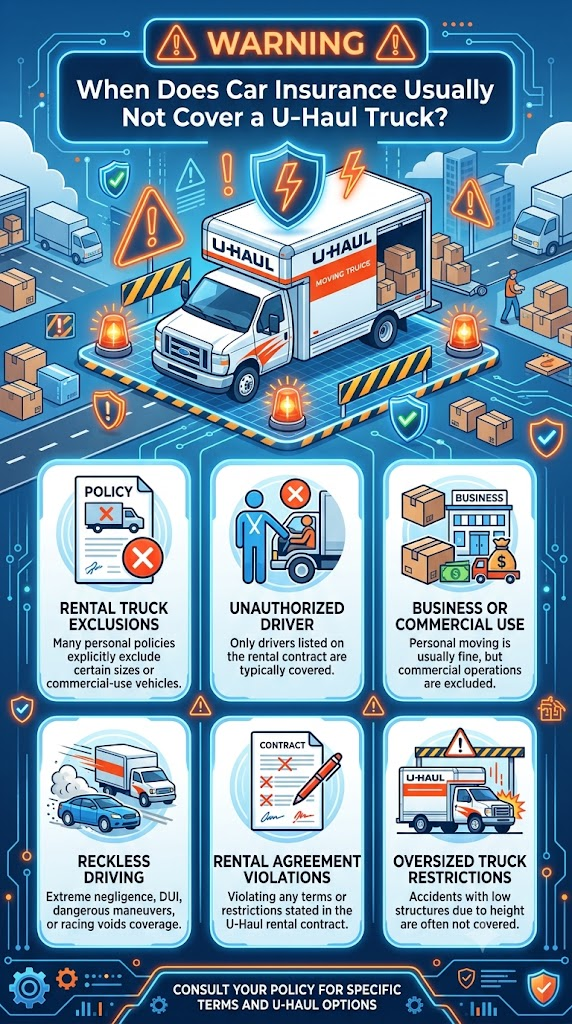
Claims are commonly denied in situations such as the following.
Your Policy Excludes Rental Trucks
Some insurers specifically exclude:
- Moving trucks
- Large commercial-style vehicles
- Trucks above certain weight limits
If your policy contains these exclusions, you may be responsible for the damage yourself.
Unauthorized Driver
Most rental agreements require that every driver be listed on the contract.
If someone not listed drives the truck and causes an accident, both your insurance company and the rental company may deny coverage.
Always make sure anyone who may drive the truck is properly authorized.
Business Use
Some personal auto insurance policies only cover rentals used for personal purposes.
If the U-Haul is being used for:
- Business deliveries
- Commercial moving services
- Company operations
your personal insurance may not apply.
Intentional or Reckless Driving
Insurance companies generally will not cover damage caused by intentional acts or reckless behavior.
Examples include:
- Driving under the influence
- Street racing
- Intentional vehicle damage
- Criminal activity
These situations may leave the renter fully responsible for repair costs.
Violating the Rental Agreement
Breaking the rental agreement can also affect coverage.
Examples include:
- Using the truck for prohibited purposes
- Driving outside approved areas
- Carrying excessive loads
- Allowing unauthorized drivers to operate the vehicle
Always review the rental agreement before driving away.
Common Mistakes People Make When Renting a U-Haul
Many renters assume they are fully protected without confirming their coverage.
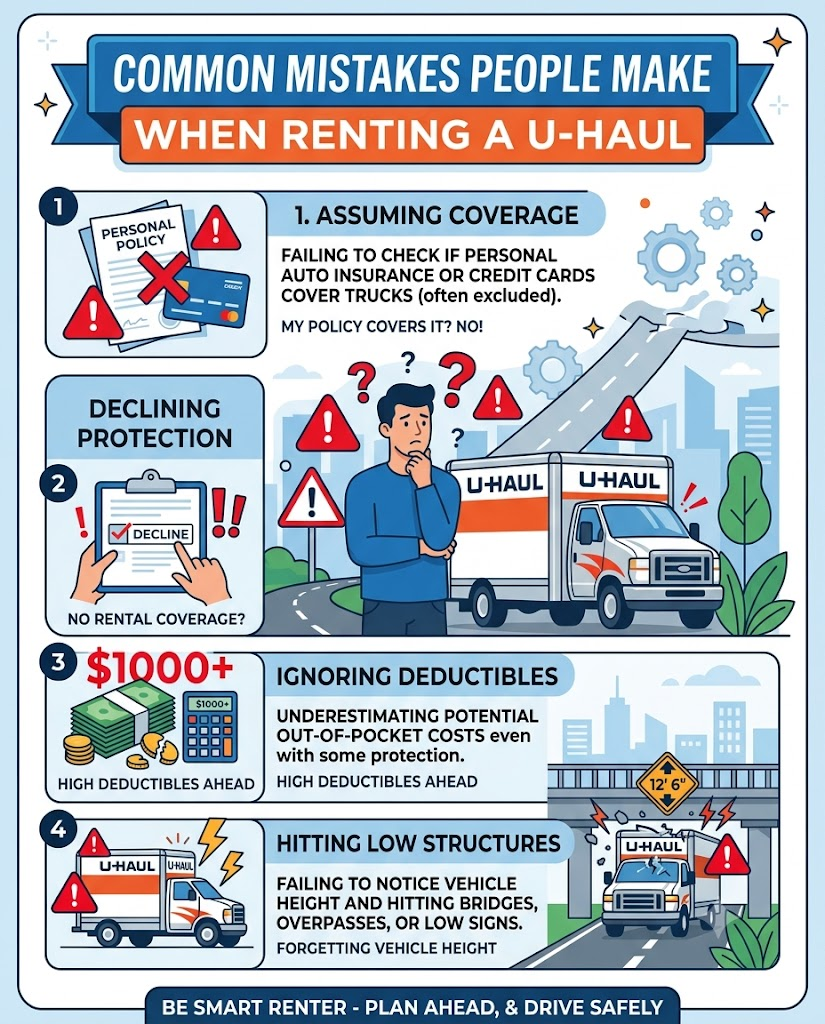
Some of the most common mistakes include:
Assuming Personal Insurance Covers Everything
Not every auto insurance policy extends coverage to rental trucks.
Verify your coverage before renting.
Declining Protection Without Checking Coverage
Some renters decline U-Haul’s protection plans to save money without knowing whether their own insurance applies.
This can become expensive if an accident occurs.
Forgetting About Deductibles
Even if your insurance covers the rental truck, you may still have to pay your deductible before insurance contributes toward repairs.
A lower-cost accident can still result in significant out-of-pocket expenses.
Ignoring Height and Size Restrictions
U-Haul trucks are much taller than most passenger vehicles.
Common accidents include:
- Hitting low bridges
- Damaging parking garage entrances
- Striking drive-through canopies
- Contacting overhead tree branches
These accidents often cause costly damage that may not always be covered.
When Should You Buy U-Haul Protection?
Buying additional protection may be a good idea in several situations.
Consider purchasing it if:
- Your insurance company excludes rental trucks.
- You only carry liability insurance.
- You are unsure about your current coverage.
- You are renting a large moving truck.
- You are moving long distances.
- You are not comfortable driving large vehicles.
- Your deductible is very high.
Although it increases the rental cost, extra protection may reduce your financial risk if something goes wrong.
Questions to Ask Your Insurance Company Before Renting
Before picking up your U-Haul, ask your insurer these important questions:
- Does my policy cover U-Haul rental trucks?
- Are moving trucks excluded?
- Does collision coverage apply?
- Does comprehensive coverage apply?
- Is liability coverage extended to rental trucks?
- What deductible would apply?
- Are there any weight or size restrictions?
- Is cargo inside the truck covered?
Getting clear answers before your move can help you avoid unexpected costs later.\
Final Checklist Before Renting a U-Haul
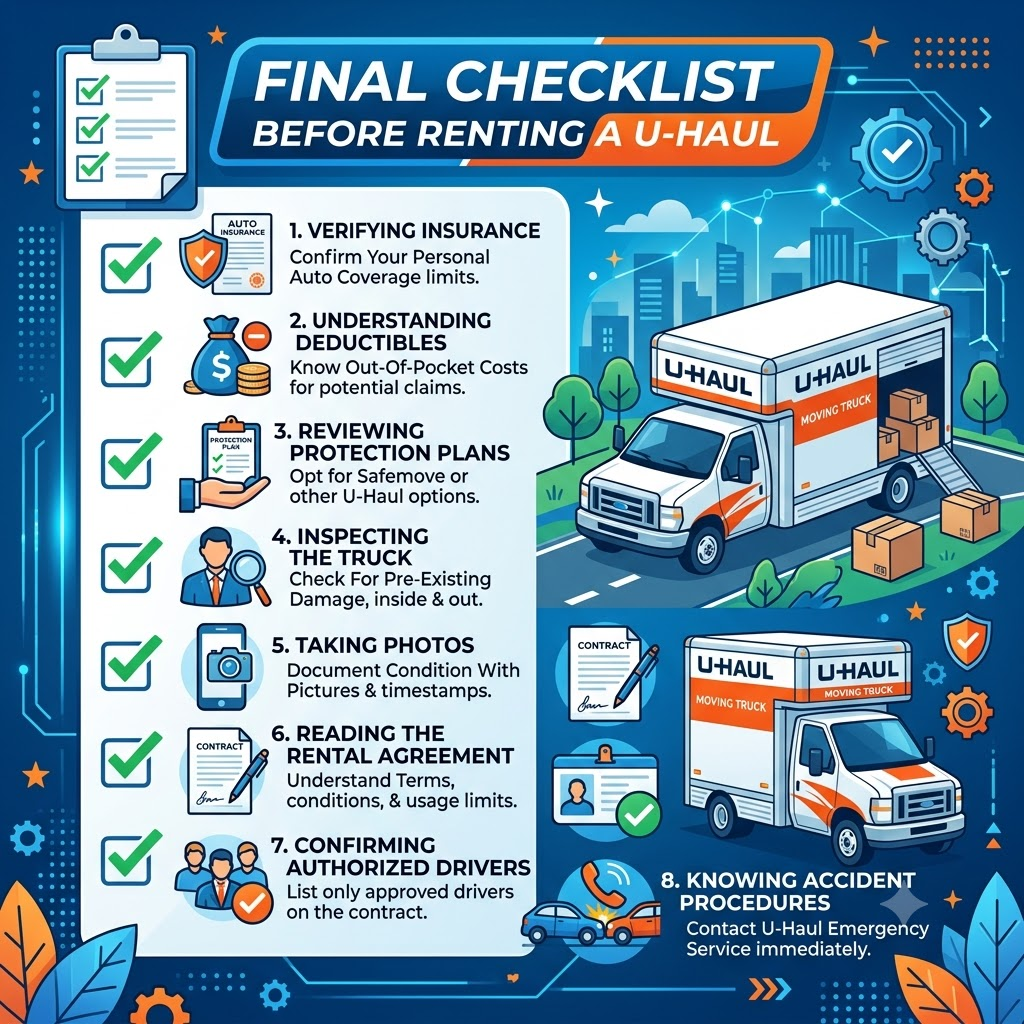
Before driving away, make sure you:
✔ Verify your personal auto insurance coverage.
✔ Understand your deductible.
✔ Review U-Haul’s protection options.
✔ Inspect the truck for existing damage.
✔ Take photos before leaving the rental location.
✔ Read the rental agreement carefully.
✔ Confirm who is authorized to drive.
✔ Know what to do if an accident occurs.
A few minutes of preparation can prevent costly surprises during your move.
The Bottom Line
So, does my car insurance cover a U-Haul rental truck?
The answer depends on your insurance policy. Some personal auto insurance policies may extend certain coverages, such as liability, collision, or comprehensive protection, to a U-Haul rental truck. However, many insurers exclude moving trucks because they are larger and present different risks than standard rental cars.
If your policy does not cover rental trucks, or if you’re unsure about your coverage, purchasing U-Haul’s optional protection may provide valuable peace of mind.
Before renting, take the time to review your insurance policy, ask your insurer about any exclusions, and understand the protection options offered by U-Haul. Knowing what is covered before your move can help you avoid unexpected expenses and make the rental process much less stressful.