
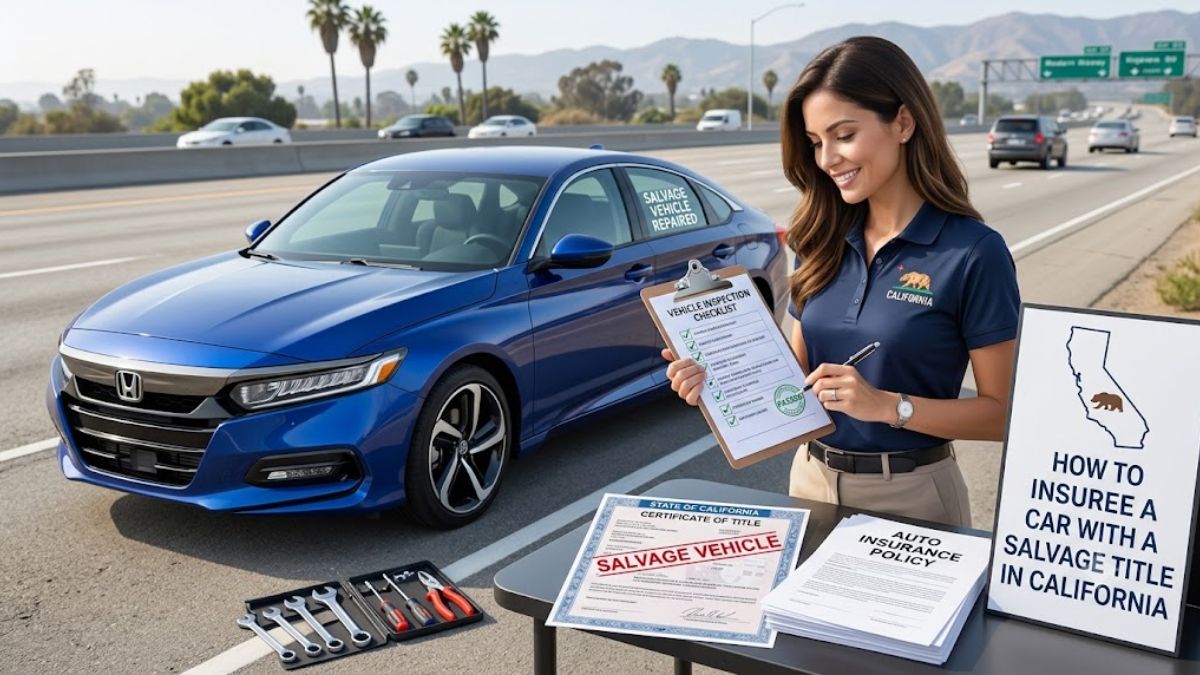

Buying a vehicle with a salvage title can be an attractive option for drivers looking for a lower-priced car. Salvage vehicles are often sold at significantly reduced prices compared to clean-title vehicles, making them appealing to budget-conscious buyers.
However, knowing how to insure a car with a salvage title in California can be more complicated than insuring a standard vehicle. Insurance companies view these cars differently because they have previously been declared a total loss due to major damage, theft recovery, flooding, or other serious issues.
Before purchasing a salvage vehicle, it is important to understand how California salvage titles work, what insurance coverage is available, which companies may insure these vehicles, and what steps you need to take to get coverage.
This guide explains everything you need to know about how to insure a car with a salvage title in California, including insurance requirements, coverage options, inspection procedures, costs, and tips for getting approved.
What Is a Salvage Title Car in California?
A salvage title is a special vehicle title designation that indicates the car was declared a total loss by an insurance company or owner.
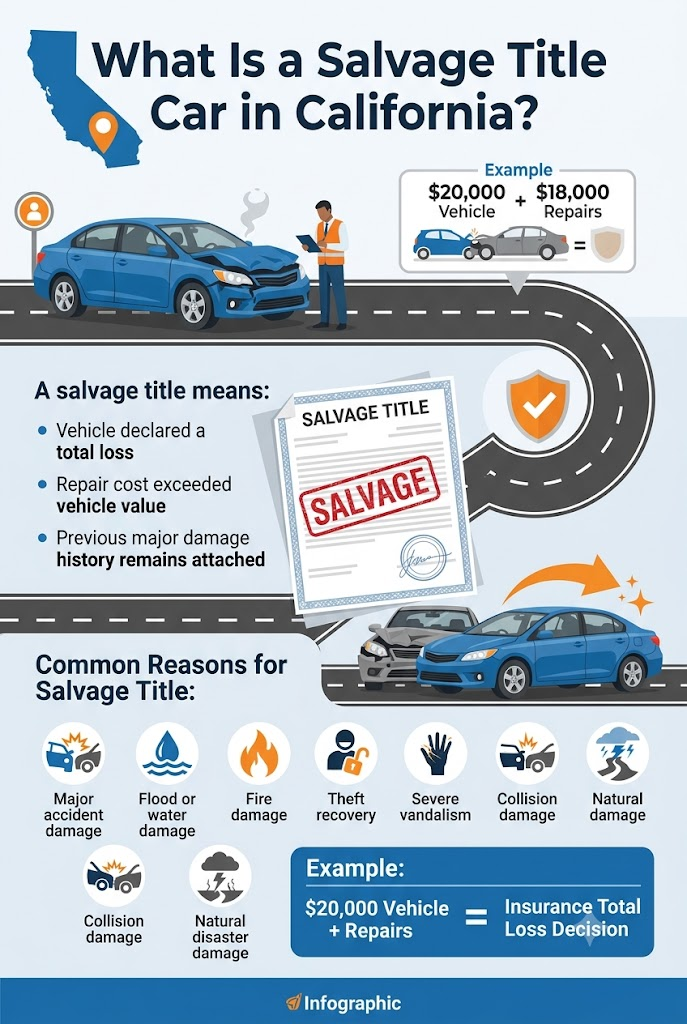
In California, a vehicle generally receives a salvage title when the cost of repairing the damage is too high compared with the vehicle’s value. Common reasons a vehicle receives a salvage title include:
- Major accident damage
- Flood or water damage
- Fire damage
- Theft recovery
- Severe vandalism
- Collision damage
- Natural disaster damage
For example, if a car worth $20,000 is badly damaged in an accident and repairs are estimated at $18,000, an insurer may decide that repairing it is not financially practical. The vehicle may then be declared a total loss and receive a salvage title.
The vehicle does not necessarily mean the car is unsafe forever. Many salvage vehicles are repaired and pass inspection before being legally driven again. However, the history of major damage remains attached to the vehicle title.
Salvage Title vs Rebuilt Title in California
Many people confuse salvage titles with rebuilt titles, but they are different.
Salvage Title
A salvage title means:
- The vehicle was declared a total loss
- It has not yet completed the California repair and inspection process
- It may not legally be driven on public roads until requirements are completed
A salvage vehicle typically cannot be registered for normal road use until it becomes a rebuilt vehicle.
Rebuilt Title (Previously Salvaged)
After repairs are completed, a salvage vehicle can go through California’s inspection process.
If approved, the vehicle receives a rebuilt or revived salvage designation and can usually be registered and driven legally.
Insurance companies are more likely to insure a rebuilt vehicle compared with a vehicle that still carries an active salvage title.
Can You Insure a Salvage Title Car in California?
Yes, but it depends on the vehicle’s status and the insurance company.
Getting insurance for a salvage title vehicle is possible, but coverage options are usually more limited than with a clean-title car.
Most insurers are willing to provide:
- Liability insurance
- Uninsured/underinsured motorist coverage
- Medical payments coverage
- Personal injury protection (where applicable)
However, getting comprehensive and collision coverage can be difficult.
The biggest challenge is that insurance companies have trouble determining the vehicle’s true value after major repairs.
Why Insurance Companies Are Hesitant to Cover Salvage Cars
Insurance companies consider salvage vehicles higher risk for several reasons.
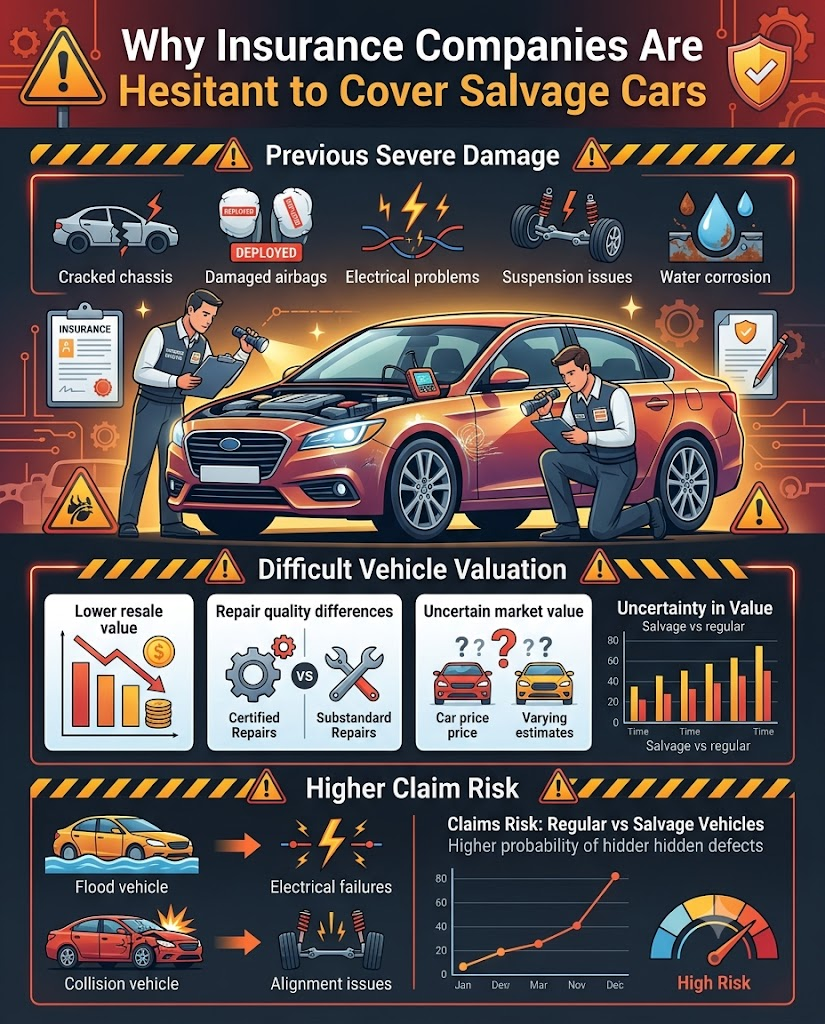
Previous Severe Damage
A salvage vehicle has already experienced significant damage. Even after repairs, hidden problems may remain.
Examples include:
- Structural frame issues
- Electrical problems
- Airbag system problems
- Suspension damage
- Water-related corrosion
Difficult Vehicle Valuation
For a clean-title car, insurers can easily estimate market value using:
- Vehicle history
- Mileage
- Condition
- Local sales data
For salvage vehicles, valuation becomes more complicated because:
- The car has a lower resale value
- Repair quality varies
- Damage history affects buyer confidence
Higher Claim Risk
A previously damaged vehicle may have a higher chance of future problems.
For example:
- A repaired flood vehicle may develop electrical failures months later.
- A repaired collision vehicle may have alignment or suspension issues.
Because insurers face uncertainty, some companies limit coverage or refuse comprehensive policies.
Minimum Insurance Requirements for Salvage Vehicles in California
California requires all registered vehicles to carry minimum liability insurance.
As of current California requirements, drivers must carry at least:
- $30,000 bodily injury liability per person
- $60,000 bodily injury liability per accident
- $15,000 property damage liability
These requirements apply whether your vehicle has:
- A clean title
- A rebuilt title
- A salvage history
Liability insurance covers damage you cause to others. It does not pay for repairs to your own vehicle.
Can You Get Full Coverage Insurance on a Salvage Title Car?
Full coverage usually refers to:
- Liability coverage
- Collision coverage
- Comprehensive coverage
Getting full coverage on a salvage vehicle in California is possible, but it is much harder.
Some insurers may refuse collision and comprehensive coverage because:
- The car has already suffered major damage
- Repairs may not meet manufacturer standards
- The vehicle value is uncertain
Other insurers may offer coverage but with:
- Lower payout limits
- Higher deductibles
- Special inspection requirements
- Reduced claim settlements
Does Full Coverage Pay the Same Amount on a Salvage Vehicle?
No.
Even if you obtain comprehensive and collision coverage, your payout may be significantly lower than a similar clean-title vehicle.
Insurance companies typically consider:
- Current market value
- Salvage history
- Repair quality
- Vehicle condition
For example:
A clean-title Honda Civic may be valued at $15,000.
A rebuilt salvage-title Honda Civic may only be valued at $9,000 to $11,000 because of its history.
If the vehicle is totaled again, the insurer usually pays based on the lower value.
How to Insure A Car With A Salvage Title in California
Getting insurance for a salvage title vehicle in California requires more preparation than insuring a regular car. Insurance companies want proof that the vehicle has been properly repaired, inspected, and legally registered.
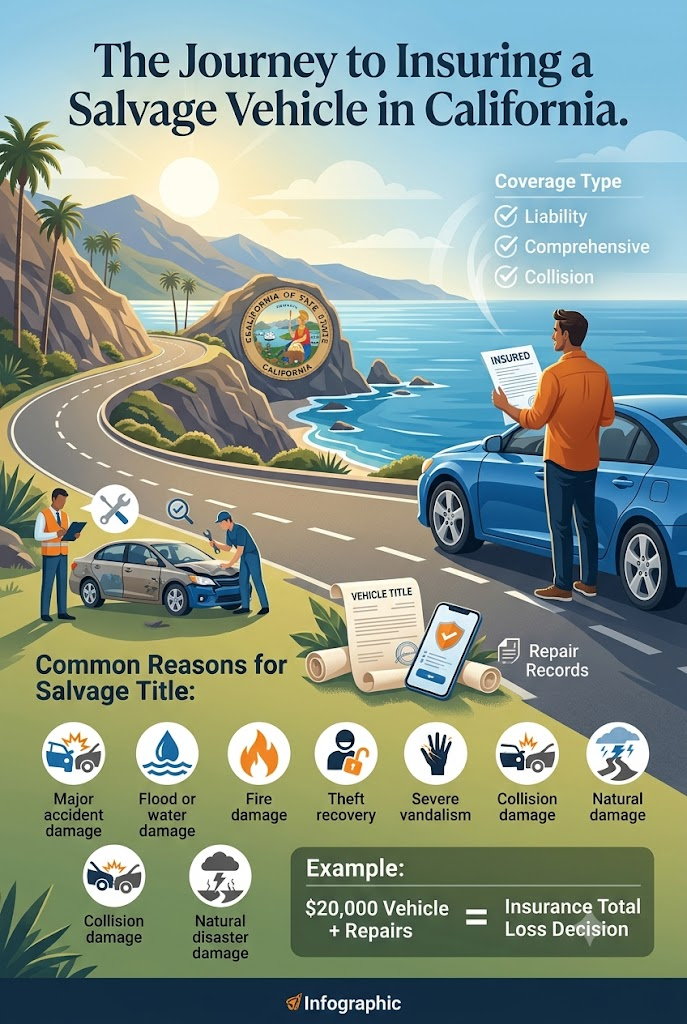
Follow these steps to improve your chances of getting coverage.
Step 1: Confirm the Vehicle’s Title Status
Before looking for insurance, confirm whether the vehicle has:
- A salvage title
- A rebuilt or revived salvage title
- A clean title with previous salvage history
This distinction matters because most insurers will not insure a vehicle that still has an active salvage title for normal road use.
A vehicle with a salvage title generally needs to complete California’s inspection and registration process before it can be driven legally.
Check the vehicle documents carefully, including:
- Current title
- Registration documents
- Vehicle identification number (VIN)
- Repair records
A VIN history report can also reveal:
- Previous accidents
- Flood damage
- Theft recovery
- Title changes
- Reported mileage issues
Step 2: Complete California Salvage Vehicle Requirements
Before obtaining regular insurance, a salvage vehicle usually needs to become a legally registered rebuilt vehicle.
California requires certain vehicles with salvage history to go through a verification process.
This may involve:
- Vehicle inspection
- Proof of ownership
- Repair documentation
- Receipts for replaced parts
- VIN verification
- Brake and light inspection (when required)
The purpose of this process is to confirm that the vehicle was properly repaired and is not illegally rebuilt using stolen parts.
Once approved, the vehicle can receive a revived salvage status and be registered.
Step 3: Gather Required Insurance Documents
Insurance companies usually require additional documents for salvage vehicles.
Prepare the following:
Vehicle Title
Provide:
- Salvage title
- Rebuilt title
- Registration documents
Repair Records
Detailed repair documentation can improve your chances of getting coverage.
Helpful records include:
- Repair invoices
- Parts receipts
- Mechanic statements
- Photos before and after repairs
These documents help insurers understand the quality of repairs.
Inspection Reports
Some insurers may request:
- Vehicle inspection reports
- California Highway Patrol (CHP) inspection paperwork
- Mechanical inspection results
Vehicle Photos
Insurance companies may request photographs showing:
- Exterior condition
- Interior condition
- Engine compartment
- Vehicle identification number
Photos help insurers evaluate the current condition of the car.
Step 4: Contact Insurance Companies That Accept Rebuilt Vehicles
Not every insurance company handles salvage-title vehicles.
Some major insurers may offer liability coverage, while others may provide broader coverage depending on the vehicle and circumstances.
Companies that may consider rebuilt vehicles include:
- Progressive
- State Farm
- GEICO
- Allstate
- Farmers
- Nationwide
- Local independent insurance agencies
Availability varies by:
- California location
- Vehicle type
- Damage history
- Repair quality
- Driver history
- Coverage needs
An independent insurance agent can often help because they can compare multiple insurers instead of checking with only one company.
Step 5: Decide What Coverage You Need
Insurance options for salvage vehicles depend on your budget and how much financial protection you want.
Liability Coverage
This is the easiest coverage to obtain.
It pays for:
- Injuries you cause to others
- Damage you cause to another person’s property
However, it does not cover damage to your own vehicle.
Comprehensive Coverage
Comprehensive insurance covers non-collision damage such as:
- Theft
- Fire
- Flood damage
- Falling objects
- Storm damage
- Animal-related damage
Some insurers may provide comprehensive coverage on rebuilt vehicles after inspection.
Collision Coverage
Collision coverage pays for damage caused by:
- Accidents
- Hitting another vehicle
- Hitting objects
- Single-car crashes
This coverage is often the hardest to obtain for salvage vehicles.
Uninsured Motorist Coverage
This protects you if another driver causes damage but does not have enough insurance.
California drivers often consider this coverage valuable because it can help protect against uninsured drivers.
Which Insurance Companies Are Best for Salvage Title Cars in California?
There is no single best insurer because acceptance policies vary. However, some companies are more flexible with rebuilt vehicles than others.
Progressive
Progressive is often considered one of the more flexible large insurers when it comes to vehicles with unusual histories.
Possible coverage options may include:
- Liability
- Comprehensive
- Collision (case dependent)
State Farm
State Farm may insure rebuilt vehicles depending on:
- Vehicle inspection
- Repair history
- State guidelines
Availability can vary between agents.
GEICO
GEICO may provide coverage for rebuilt vehicles, but approval depends on underwriting review.
Farmers
Farmers and its agents may evaluate rebuilt vehicles individually.
Independent Insurance Agents
Independent agents can be useful because they work with multiple insurance carriers.
They may help find insurers specializing in:
- High-risk vehicles
- Rebuilt cars
- Collector vehicles
- Non-standard insurance situations
How Much Does Salvage Title Car Insurance Cost in California?
Insurance costs vary widely, but salvage vehicles may not always be cheaper to insure.
Several factors affect the premium:
- Driver age
- Driving record
- Location
- Vehicle model
- Repair quality
- Coverage level
- Insurance company
A salvage vehicle may have a lower market value, but insurers may still charge higher rates because of increased uncertainty.
Factors That Can Increase Insurance Rates
Previous Major Damage
A vehicle with serious accident history may be considered higher risk.
Limited Insurance Availability
When fewer insurers are willing to cover the vehicle, prices may increase.
Difficulty Determining Vehicle Value
Insurers may spend more time evaluating the vehicle before offering coverage.
Vehicle Type
A rebuilt luxury vehicle or high-performance car may cost more to insure than an economy vehicle.
How to Lower Insurance Costs on a Salvage Vehicle
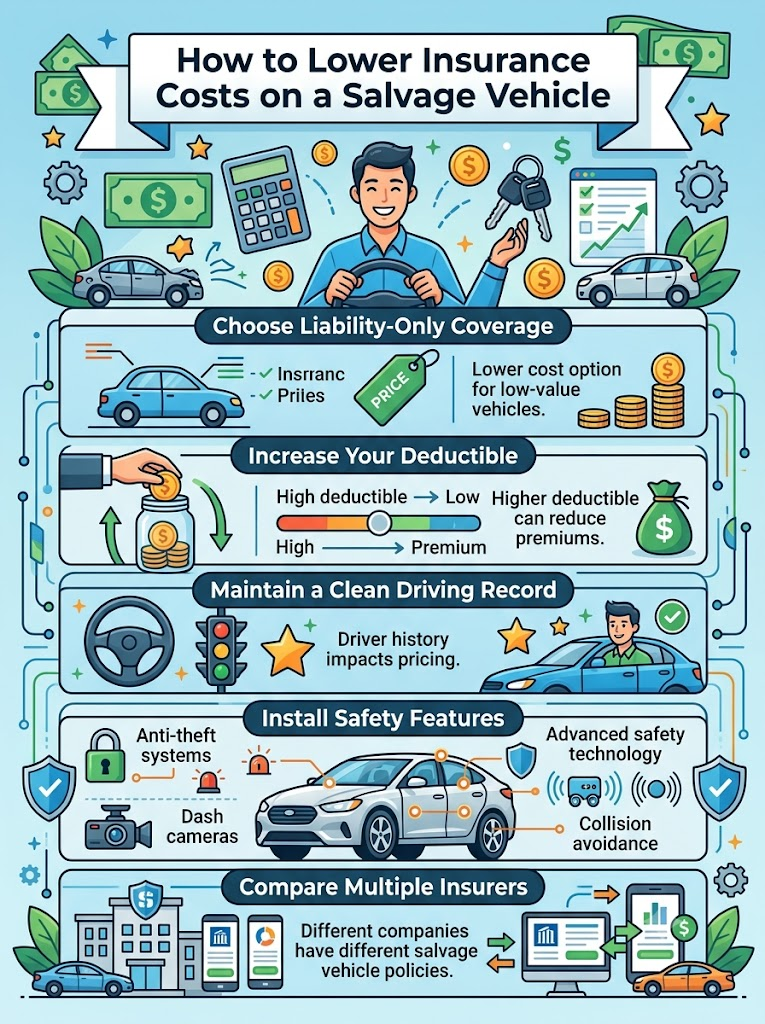
You can reduce premiums by:
Choose Liability-Only Coverage
If your vehicle has a low replacement value, liability-only insurance may make financial sense.
Increase Your Deductible
A higher deductible can lower monthly premiums.
Maintain a Clean Driving Record
Your driving history often affects pricing more than the vehicle itself.
Install Safety Features
Features such as:
- Anti-theft systems
- Dash cameras
- Advanced safety technology
may help with risk assessment.
Compare Multiple Insurers
Do not rely on one company. Salvage vehicle policies vary significantly between insurers.
Can You Get Comprehensive and Collision Coverage on a Salvage Title Car in California?
Getting comprehensive and collision coverage on a salvage-title vehicle in California can be challenging, but it is not impossible.
Most insurance companies evaluate rebuilt vehicles individually before approving physical damage coverage.
Unlike liability insurance, which mainly protects other people from damages you cause, comprehensive and collision coverage protects your own vehicle. Because a salvage vehicle has already experienced major damage, insurers want to reduce the risk of paying for problems related to previous repairs.
Before approving coverage, an insurer may consider:
- Type of previous damage
- Quality of repairs
- Current vehicle condition
- Repair documentation
- Vehicle inspection results
- Current market value
A vehicle that was rebuilt after a minor collision may have an easier time getting coverage compared with a vehicle that had flood, fire, or structural damage.
Why Flood-Damaged Salvage Cars Are Harder to Insure
Flood vehicles are often viewed as higher risk compared with other salvage vehicles.
Water damage can affect:
- Electrical systems
- Computer modules
- Sensors
- Wiring harnesses
- Safety systems
- Mechanical components
Some problems may not appear immediately after repairs.
For example:
A flood-damaged vehicle may run normally after restoration but develop electrical failures months later. Because these issues can be difficult to predict, many insurers avoid offering comprehensive or collision coverage for flood salvage vehicles.
Why Structural Damage Affects Insurance Approval
Vehicles involved in serious collisions may suffer damage to:
- Frame rails
- Safety cages
- Crumple zones
- Suspension mounting points
Modern vehicles are designed with specific structural engineering to protect occupants during crashes.
Poor-quality structural repairs may affect:
- Vehicle safety
- Crash performance
- Alignment
- Tire wear
- Handling
Because of these concerns, insurers may request additional inspections before providing coverage.
How Vehicle Inspections Affect Salvage Car Insurance
An inspection can play an important role when insuring a rebuilt vehicle.
Insurance companies may want proof that:
- Repairs were completed correctly
- The vehicle is safe to operate
- The VIN matches official records
- Major systems are functioning properly
An inspection may check:
Exterior Condition
Inspectors may examine:
- Body panels
- Paint quality
- Signs of poor repairs
- Rust or corrosion
Mechanical Components
The vehicle may be checked for:
- Engine condition
- Transmission operation
- Suspension problems
- Brake performance
Safety Equipment
Important safety items include:
- Airbags
- Seat belts
- Anti-lock braking system
- Stability control systems
Electrical Systems
Modern vehicles rely heavily on electronics, so inspectors may look for:
- Warning lights
- Sensor problems
- Wiring issues
- Battery problems
Can Insurance Companies Deny Claims on Salvage Vehicles?
Yes, insurance companies can deny claims in certain situations, just like they can with clean-title vehicles.
However, having a salvage history alone does not automatically mean claims will be denied.
Common reasons for claim problems include:
Undisclosed Salvage History
If you fail to tell an insurer that the vehicle has a rebuilt or salvage history, the company may investigate the policy application.
Always provide accurate information when requesting coverage.
Pre-Existing Damage
Insurance generally covers new damage, not problems that existed before the policy started.
For example:
If a vehicle already had damaged suspension components before insurance coverage began, repairs related to that previous damage may not be covered.
Poor Repairs
If an accident occurs because of improper repairs, an insurer may investigate whether the damage is connected to previous work.
Incorrect Vehicle Valuation
Before buying comprehensive or collision coverage, understand how the insurer values the vehicle.
A rebuilt vehicle may have a much lower insured value than a similar clean-title vehicle.
How Is a Salvage Vehicle’s Value Determined for Insurance?
Insurance companies usually consider:
- Vehicle make and model
- Age
- Mileage
- Current condition
- Local market prices
- Salvage history
A rebuilt vehicle typically has a lower value because future buyers may hesitate to purchase it.
For example:
A clean-title vehicle may sell for $18,000.
The same vehicle with a rebuilt salvage history might only be worth $11,000 to $14,000.
This difference affects:
- Insurance payouts
- Collision coverage limits
- Total-loss settlements
Should You Buy a Salvage Title Car in California?
A salvage vehicle can be a good purchase in certain situations, but buyers should carefully evaluate the risks.
Advantages of Buying a Salvage Vehicle
Lower Purchase Price
The biggest advantage is cost.
A rebuilt vehicle may cost thousands less than a similar clean-title vehicle.
Access to Better Models
A lower price may allow buyers to purchase:
- Newer vehicles
- Higher trim levels
- Better features
Good Value If Properly Repaired
Some salvage vehicles are professionally repaired and can provide years of reliable service.
Disadvantages of Salvage Vehicles
Lower Resale Value
Selling a rebuilt vehicle can be more difficult because many buyers prefer clean-title cars.
Insurance Challenges
You may have fewer insurance options, especially for full coverage.
Hidden Repair Problems
Not every rebuilt vehicle is repaired properly.
Potential issues include:
- Poor body repairs
- Electrical failures
- Alignment problems
- Safety system issues
Financing Difficulties
Many lenders are cautious about financing salvage vehicles.
Some banks and credit unions may:
- Refuse loans
- Require larger down payments
- Offer less favorable terms
Common Mistakes When Insuring a Salvage Title Vehicle
Avoid these mistakes when purchasing and insuring a rebuilt vehicle.
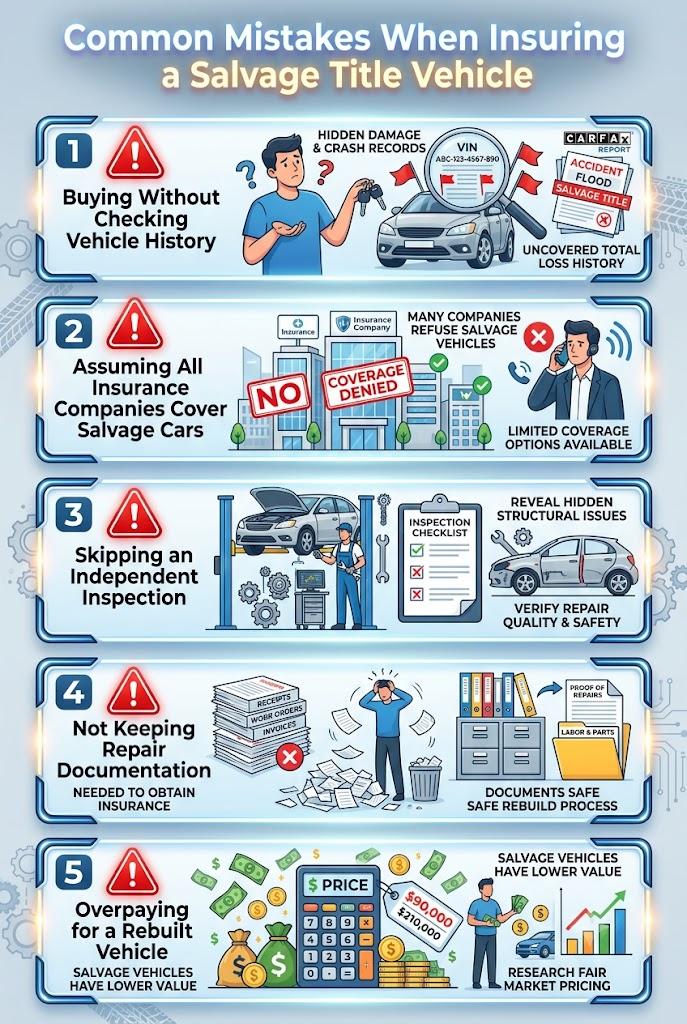
Mistake 1: Buying Without Checking Vehicle History
Never purchase a salvage vehicle without reviewing:
- VIN history
- Accident records
- Title information
- Repair documents
A low price does not always mean a good deal.
Mistake 2: Assuming All Insurance Companies Cover Salvage Cars
Many drivers assume their current insurer will automatically cover any vehicle.
However, salvage vehicles often require additional review.
Always confirm coverage before purchasing the vehicle.
Mistake 3: Skipping an Independent Inspection
A professional inspection can reveal:
- Hidden damage
- Poor repairs
- Mechanical problems
It is especially important for salvage vehicles.
Mistake 4: Not Keeping Repair Documentation
Keep:
- Receipts
- Photos
- Inspection reports
- Repair invoices
These records can help when applying for insurance or selling the vehicle later.
Mistake 5: Overpaying for a Rebuilt Vehicle
A rebuilt vehicle should usually cost significantly less than a clean-title equivalent.
Consider:
- Repair quality
- Mileage
- Market value
- Insurance availability
before deciding whether the price is reasonable.
California DMV Requirements for Salvage and Rebuilt Vehicles
Before you can properly insure and drive a salvage vehicle in California, the vehicle must meet state requirements.
A salvage vehicle cannot simply be repaired and placed back on the road without documentation and verification.
California has a process to make sure repaired salvage vehicles meet legal requirements before receiving registration.
Step 1: Obtain Proper Ownership Documents
You must have proof that you legally own the vehicle.
Required documents may include:
- Salvage certificate
- Title documents
- Bill of sale
- Transfer paperwork
- Repair documentation
Without proper ownership records, completing the registration process can become difficult.
Step 2: Complete Vehicle Verification
California may require a vehicle verification process before a salvage vehicle can be registered.
Verification helps confirm:
- Vehicle identification number (VIN)
- Ownership records
- Vehicle identity
- Major component information
This step helps prevent stolen vehicles and illegally rebuilt cars from entering the market.
Step 3: Complete Required Inspections
Depending on the vehicle history, inspections may be required.
These inspections may include:
Brake and Light Inspection
The vehicle may need certification showing that:
- Brakes operate correctly
- Lighting systems function properly
- Safety equipment meets requirements
VIN Verification
VIN verification confirms that:
- The VIN matches official records
- The vehicle has not been altered illegally
- Components match documentation
California Highway Patrol Inspection
Some salvage vehicles may require a CHP inspection.
This is commonly associated with vehicles that need additional verification due to:
- Theft recovery
- Missing documentation
- Suspicious vehicle history
How to Explain a Salvage Title Vehicle to an Insurance Company
When applying for insurance, transparency is important.
Do not hide the vehicle’s history. Insurance companies can discover title information through databases and vehicle reports.
Provide details such as:
- Why the vehicle received a salvage title
- What repairs were completed
- Who performed the repairs
- Whether original or aftermarket parts were used
- Whether the vehicle passed inspections
A well-documented repair history can improve your chances of getting coverage.
Questions Insurance Companies May Ask
When applying for insurance, expect questions such as:
Why does the vehicle have a salvage history?
Examples:
- Collision damage
- Flood damage
- Theft recovery
- Fire damage
When were repairs completed?
Insurers may want to know:
- Repair date
- Repair duration
- Current mileage after repair
Who repaired the vehicle?
Professional repairs from a licensed shop may be viewed more favorably than undocumented repairs.
Are there repair records?
Helpful documents include:
- Before-and-after photos
- Parts invoices
- Mechanic reports
- Inspection certificates
Tips Before Buying a Salvage Title Car in California
Buying a salvage vehicle requires more research than buying a normal used car.
Follow these steps before making a purchase.
Get a Professional Inspection
Always have the vehicle inspected by an independent mechanic.
Ask them to check:
- Frame condition
- Airbags
- Electronics
- Suspension
- Engine
- Transmission
- Signs of water damage
A seller’s mechanic may not provide an unbiased evaluation.
Review Before-and-After Photos
Photos can reveal the severity of previous damage.
Look for:
- Crushed areas
- Missing components
- Structural damage
- Flood exposure
A vehicle that only needed cosmetic repairs is generally less concerning than one with major structural damage.
Check Airbag Repairs
Airbag systems are critical safety components.
Confirm that:
- Airbags were replaced correctly
- Sensors work properly
- Warning lights are not active
Some poorly repaired salvage vehicles have airbags removed or replaced incorrectly.
Compare the Price With Clean-Title Vehicles
Do not compare a salvage vehicle only with other salvage cars.
Compare it with similar clean-title vehicles.
A rebuilt vehicle should usually be priced significantly lower because of:
- Lower resale value
- Insurance challenges
- Unknown repair history
Get Insurance Quotes Before Buying
One of the biggest mistakes buyers make is purchasing a salvage vehicle first and checking insurance later.
Before buying:
- Contact insurers
- Provide the VIN
- Ask about available coverage
- Confirm whether comprehensive and collision are available
Insurance availability should be part of your buying decision.
Final Checklist: Insuring a Salvage Title Car in California
Before buying and insuring a salvage vehicle, complete this checklist:
✅ Verify whether the vehicle has a salvage or rebuilt title
✅ Check VIN history reports
✅ Get an independent mechanical inspection
✅ Review repair records and photos
✅ Confirm California registration requirements
✅ Complete required inspections
✅ Collect all ownership documents
✅ Contact insurance companies before purchase
✅ Compare liability and full coverage options
✅ Understand the vehicle’s lower insurance valuation
✅ Keep all repair documentation permanently
Final Thoughts
Insuring a salvage title car in California requires more preparation than insuring a regular vehicle, but it is possible when the vehicle has been properly repaired and documented.
The most important factors are:
- The quality of repairs
- Proper California registration
- Honest disclosure to insurers
- Realistic expectations about coverage and value
A well-repaired rebuilt vehicle can provide reliable transportation at a lower purchase price. However, buyers should carefully inspect the vehicle, understand insurance limitations, and avoid purchasing a salvage car solely because it appears inexpensive.
Taking time to research the vehicle before buying can prevent expensive problems later.