
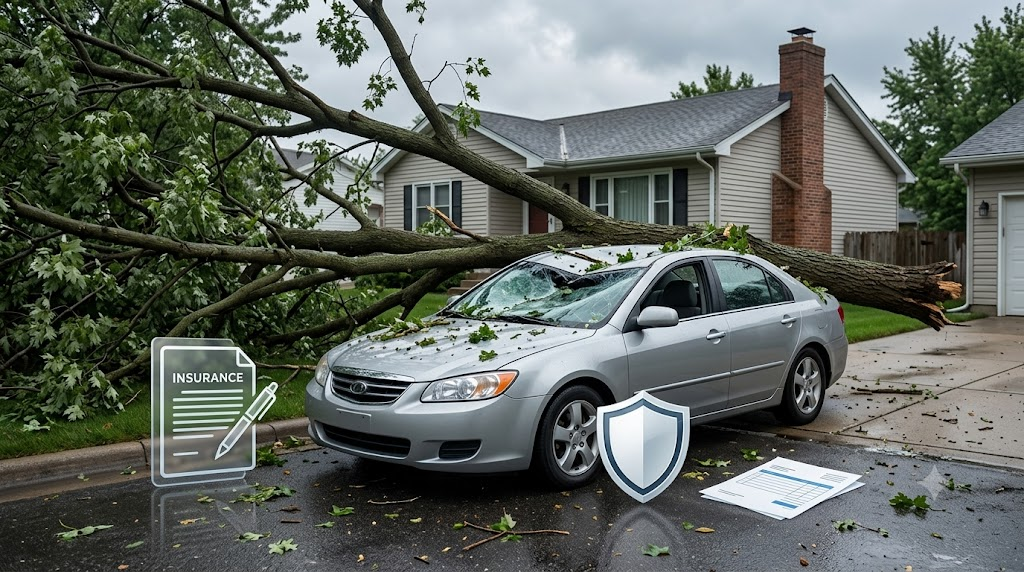

A tree falling on your car can be a stressful and expensive situation. Whether it happens during a storm, because of a dead tree, or due to poor maintenance, the first question most car owners ask is:
Who is responsible for paying for the damage?
The answer depends on several factors, including why the tree fell, where the tree was located, who was responsible for maintaining it, and what type of insurance coverage you have.
In many cases, your own auto insurance policy, especially comprehensive coverage, may pay for the damage. However, there are situations where your neighbor may be responsible, particularly if they knew the tree was dangerous and failed to take action.
Understanding how insurance and liability work can help you know what steps to take after a tree damages your vehicle.
In this guide, we will explain:
- Who pays when a neighbor’s tree falls on your car
- When your neighbor may be responsible
- Whether car insurance covers tree damage
- What happens if the tree falls during a storm
- What to do after a tree damages your vehicle
- How to file an insurance claim
Who Pays If A Neighbor’s Tree Falls On My Car
In most cases, your own insurance company pays for the damage if a neighbor’s tree falls on your car, as long as you have comprehensive coverage.
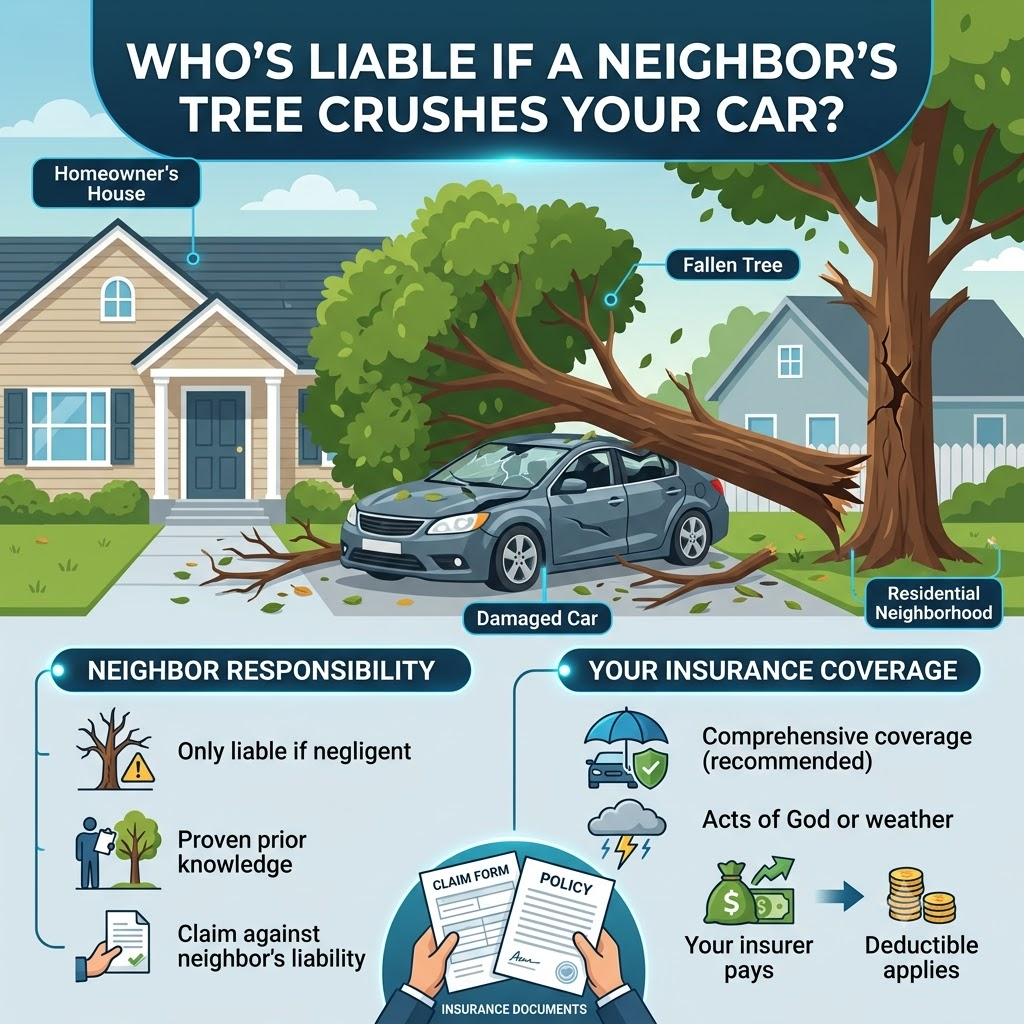
Comprehensive auto insurance usually covers damage caused by events outside your control, including:
- Falling trees
- Falling branches
- Storm damage
- Wind damage
- Natural disasters
Your insurance company may pay for repairs after you pay your deductible.
However, your neighbor may be responsible if the tree fell because of their negligence.
For example:
- The tree was visibly dead or dangerous.
- Your neighbor was warned about the risk.
- They ignored requests to remove or repair the tree.
- The tree fell because it was poorly maintained.
In these situations, you may be able to seek compensation from your neighbor’s homeowners insurance or directly from the responsible party.
Does Car Insurance Cover Damage From a Neighbor’s Tree?
Yes, car insurance may cover damage caused by a neighbor’s tree, but the type of coverage matters.
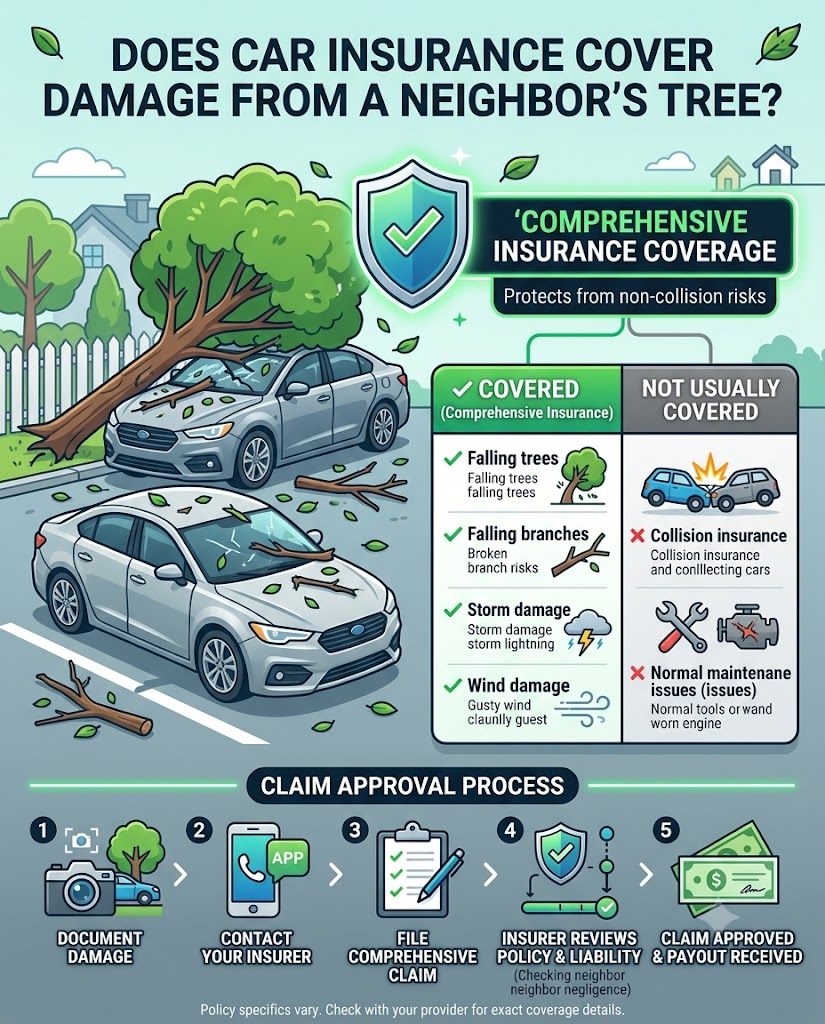
The coverage usually comes from comprehensive insurance, not collision coverage.
Comprehensive Coverage
Comprehensive insurance protects your vehicle from damage caused by events that are not related to a crash.
Examples include:
- Trees falling on your vehicle
- Hail damage
- Flooding
- Theft
- Fire
- Vandalism
- Animal damage
If a neighbor’s tree falls on your parked car during a storm, comprehensive coverage will often pay for repairs.
Example:
A large storm hits your neighborhood. A tree from your neighbor’s yard falls onto your driveway and damages your car.
In this situation:
- Your comprehensive insurance covers the damage.
- You pay your deductible.
- Your insurer pays the remaining repair costs.
The fact that the tree belonged to your neighbor does not automatically make them financially responsible.
What If the Tree Fell Because of a Storm?
Storm-related tree damage is one of the most common situations.
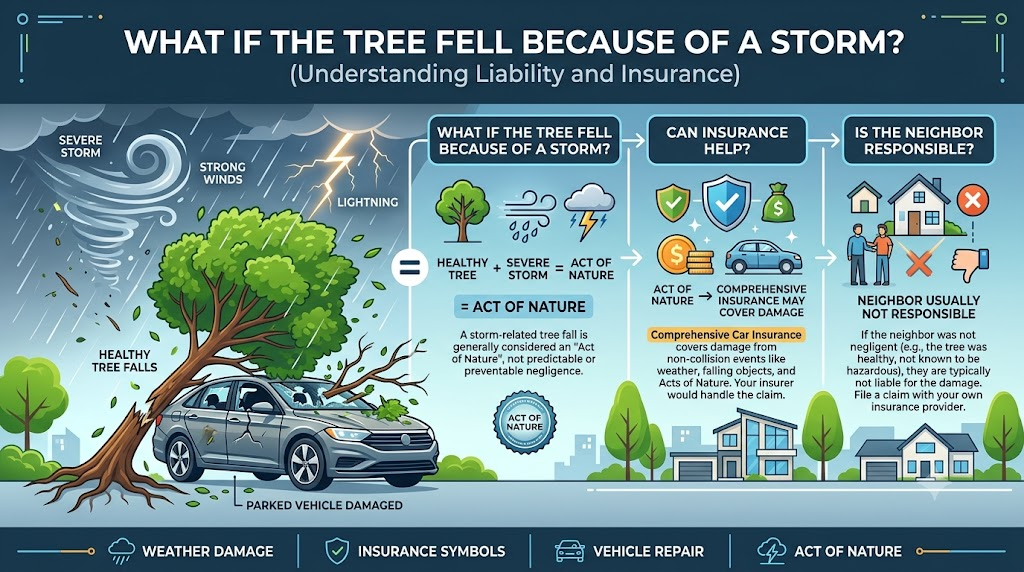
If a healthy tree falls because of strong winds, lightning, heavy rain, or a storm, the damage is usually considered an act of nature.
In most cases:
- Your comprehensive insurance covers your vehicle damage.
- Your neighbor is not automatically responsible.
- Their homeowners insurance usually does not pay for your car repairs.
Example:
A healthy tree standing in your neighbor’s yard is knocked down by a severe storm and falls onto your parked vehicle.
Since the tree fell due to weather conditions rather than negligence:
- Your auto insurance handles the vehicle damage.
- Your neighbor is generally not liable.
The same principle often applies if a tree from your property falls onto a neighbor’s vehicle during a storm.
When Is a Neighbor Responsible for a Tree Falling on Your Car?
Although storms often remove liability from the tree owner, there are situations where your neighbor may be responsible.
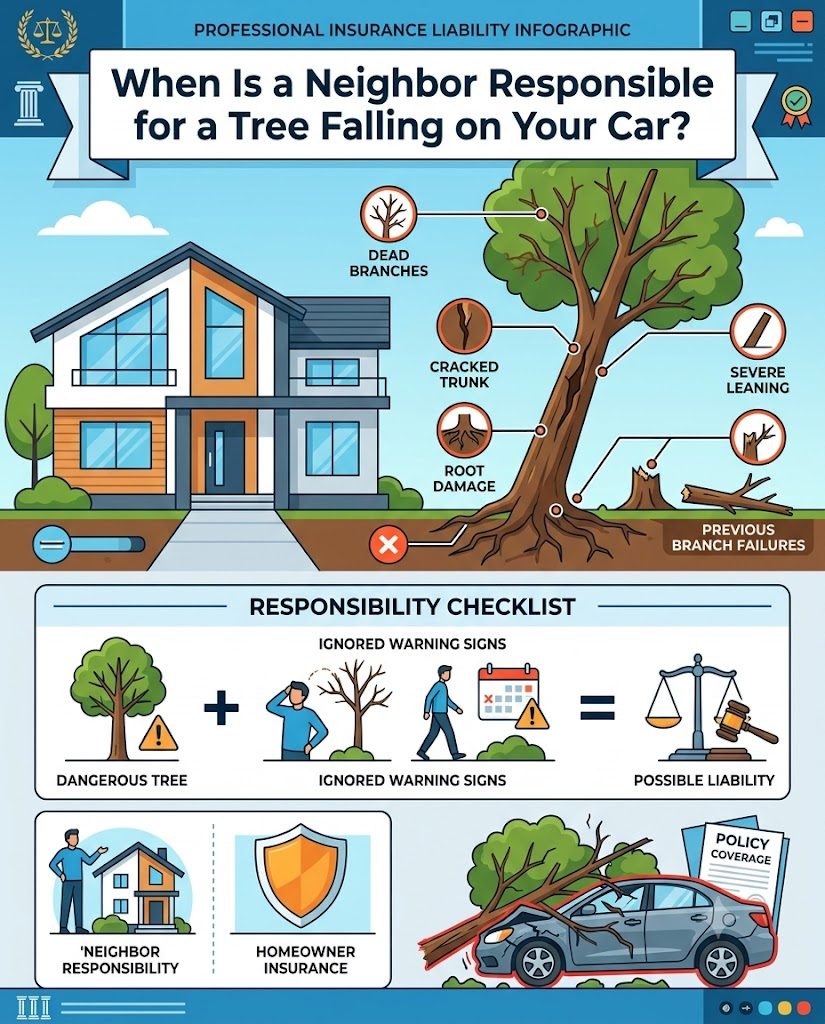
A neighbor may be liable if they were negligent in maintaining the tree.
The Tree Was Dead or Clearly Dangerous
If the tree showed obvious signs that it could fall, the owner may have a responsibility to address the danger.
Warning signs include:
- Large dead branches
- Visible cracks in the trunk
- Severe leaning
- Root damage
- Rot or decay
- Previous branch failures
If your neighbor ignored these problems and the tree later damaged your vehicle, you may have grounds to seek compensation.
The Neighbor Was Previously Warned
Documentation can be important.
If you:
- Told your neighbor about the dangerous tree
- Sent written notices
- Reported the issue to local authorities
- Had evidence of the danger
it may help show that the neighbor knew about the risk but failed to act.
Poor Maintenance Caused the Tree to Fall
A neighbor may be responsible if improper care contributed to the damage.
Examples include:
- Ignoring a diseased tree
- Failing to remove unstable branches
- Allowing a damaged tree to deteriorate
- Improper trimming that weakened the tree
In these cases, their homeowners insurance may help cover the damage.
Does Homeowners Insurance Pay If a Neighbor’s Tree Falls on Your Car?
Many people assume that if a neighbor’s tree damages their vehicle, the neighbor’s homeowners insurance will automatically pay for the repairs. However, that is not always true.
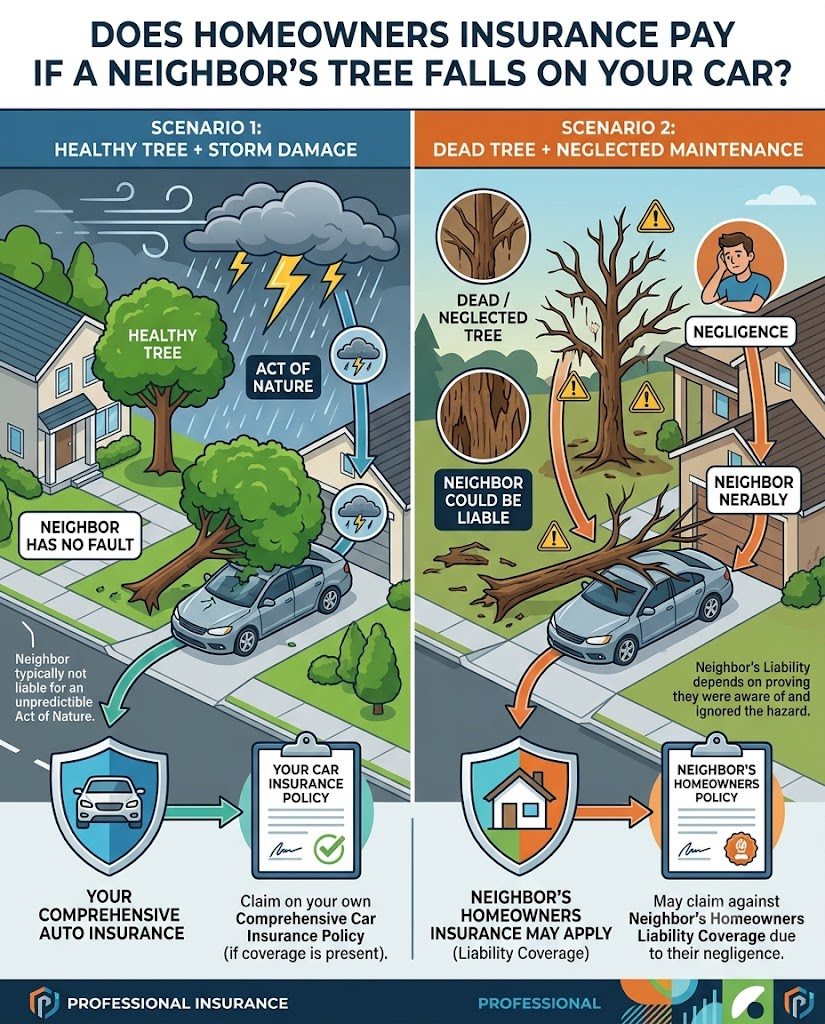
In most cases, your own auto insurance is the first option for covering vehicle damage, especially if you have comprehensive coverage.
Your neighbor’s homeowners insurance may only become involved if the neighbor was legally responsible for the tree damage.
For example:
- A healthy tree falls during a severe storm → your comprehensive auto insurance usually pays.
- A dead tree that your neighbor ignored falls onto your car → your neighbor may be responsible.
The key factor is negligence.
When Your Neighbor’s Homeowners Insurance May Pay
Your neighbor’s homeowners insurance may cover your vehicle damage if the tree fell because of their failure to maintain a dangerous condition.
Examples include:
A Dead Tree Was Ignored
If the tree was clearly unhealthy and your neighbor knew it could fall but did nothing, their insurance company may consider the damage their responsibility.
Signs of an unhealthy tree may include:
- Large dead branches
- Visible decay
- Cracks in the trunk
- Significant leaning
- Root problems
The Neighbor Knew About the Risk
Evidence that the neighbor was aware of the danger can strengthen your claim.
Examples:
- Previous conversations about the tree
- Messages requesting repairs
- Reports from tree professionals
- Photos showing the tree’s condition before it fell
The Tree Fell Due to Poor Maintenance
A tree that falls because of improper care may create liability.
Examples:
- Dangerous branches were not removed
- A diseased tree was left untreated
- A damaged tree was not inspected after previous problems
In these situations, the neighbor’s homeowners insurance may help pay for:
- Vehicle repairs
- Towing costs
- Other related damages
However, insurance companies usually investigate whether the homeowner was actually negligent before approving payment.
What Happens If My Neighbor Refuses to Pay?
A common problem after a tree falls is that the neighbor may refuse responsibility.
They may argue:
- “It was just a storm.”
- “The tree looked healthy.”
- “I didn’t know it was dangerous.”
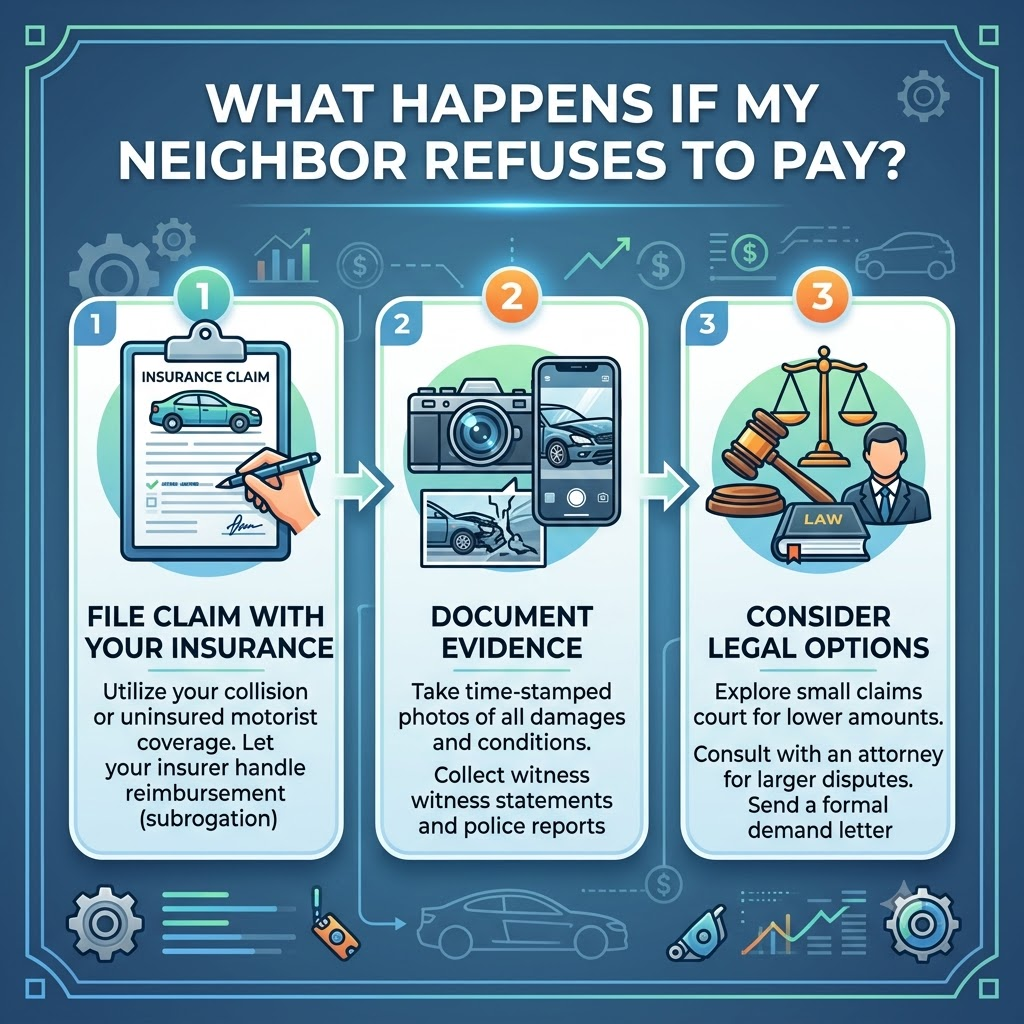
If your neighbor refuses to pay, you have several options.
File a Claim With Your Own Insurance
If you have comprehensive coverage, this is often the fastest solution.
Your insurance company can:
- Inspect the damage
- Pay for repairs (minus your deductible)
- Handle the claim process
In some cases, your insurer may try to recover the money from the responsible party through a process called subrogation.
If your insurer successfully recovers the money, you may receive your deductible back.
Document Everything
Before removing the tree or repairing the vehicle, collect evidence.
Important documentation includes:
- Photos of the fallen tree
- Photos of vehicle damage
- Pictures showing the tree’s condition
- Weather reports
- Witness statements
- Repair estimates
- Communication with your neighbor
This evidence can help determine whether negligence was involved.
Consider Legal Options
If the damage is significant and your neighbor refuses responsibility, you may consider legal action.
This may be necessary when:
- The neighbor ignored known hazards
- Repair costs are high
- Insurance companies disagree about responsibility
For smaller damages, many people resolve the issue through insurance rather than going directly to court.
Does Collision Insurance Cover a Tree Falling on Your Car?
No, collision insurance usually does not cover damage caused by a falling tree.
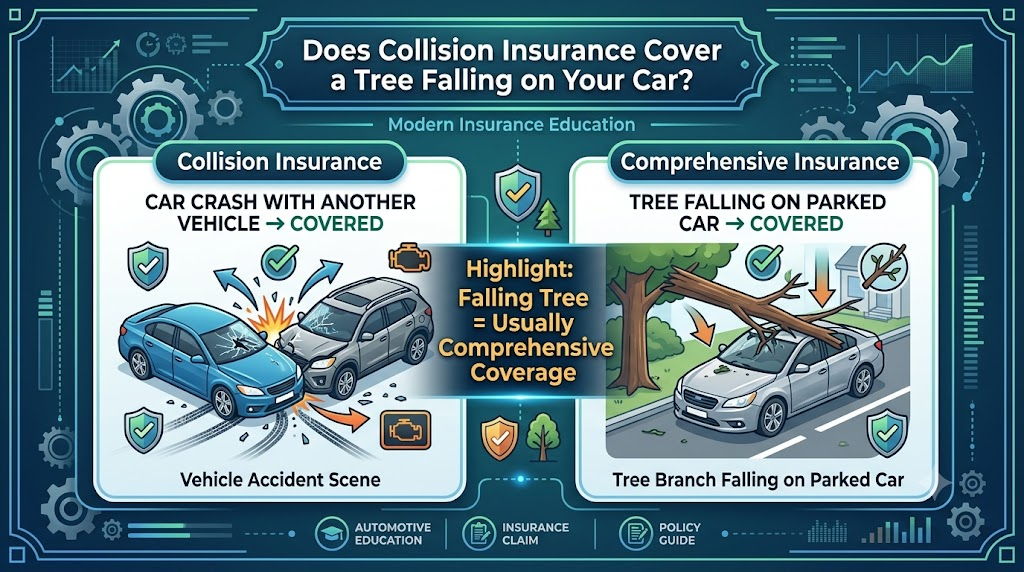
Collision coverage is designed for accidents involving:
- Another vehicle
- A stationary object
- A rollover accident
A tree falling on your parked vehicle is generally considered an environmental or non-collision event.
That type of damage usually falls under comprehensive coverage.
Example:
Your car is parked outside your home. A large branch breaks during a storm and damages the roof and windshield.
Coverage:
- Collision insurance: Usually does not apply
- Comprehensive insurance: May cover the damage
This is why having comprehensive coverage is important if you park your vehicle outdoors or live in an area with frequent storms.
What If a Tree Falls on My Car While Parked on Someone Else’s Property?
The location where the vehicle was parked can sometimes affect the situation.
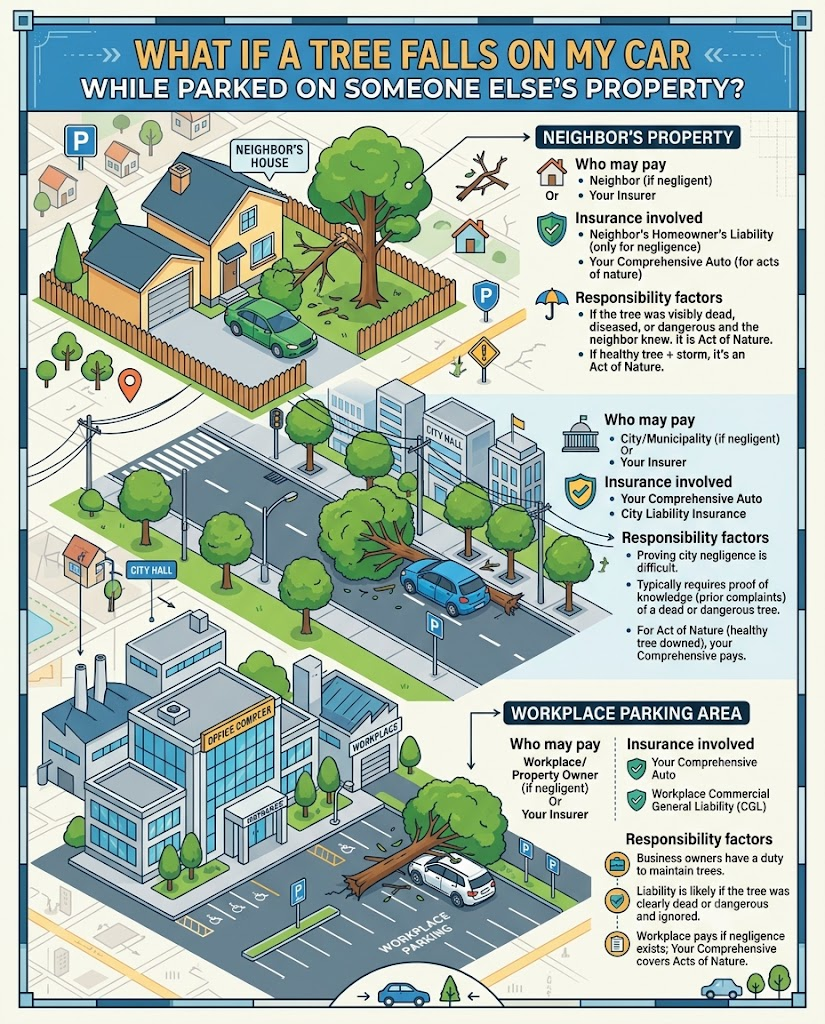
Parking at a Neighbor’s Property
If you parked your car at your neighbor’s home and their tree falls on it:
- Your comprehensive insurance may cover the damage.
- Your neighbor may only be responsible if negligence contributed.
Simply owning the property does not automatically make them liable.
Parking on Public Property
If a tree from public land damages your vehicle, responsibility may depend on:
- Whether the tree was maintained properly
- Whether the government agency knew about the hazard
- Local laws regarding public property damage
You may need to contact the responsible authority and your insurance company.
Parking in a Workplace or Business Area
If a tree falls in a commercial parking lot, responsibility may depend on:
- Who owned the property
- Whether the tree was properly maintained
- Whether the business knew about the danger
Your comprehensive insurance may still be the quickest way to handle repairs.
What Should You Do If a Neighbor’s Tree Falls on Your Car?
A tree falling on your vehicle can be dangerous and overwhelming. Taking the right steps immediately can help protect your safety, document the damage, and improve your chances of getting your repair costs covered.
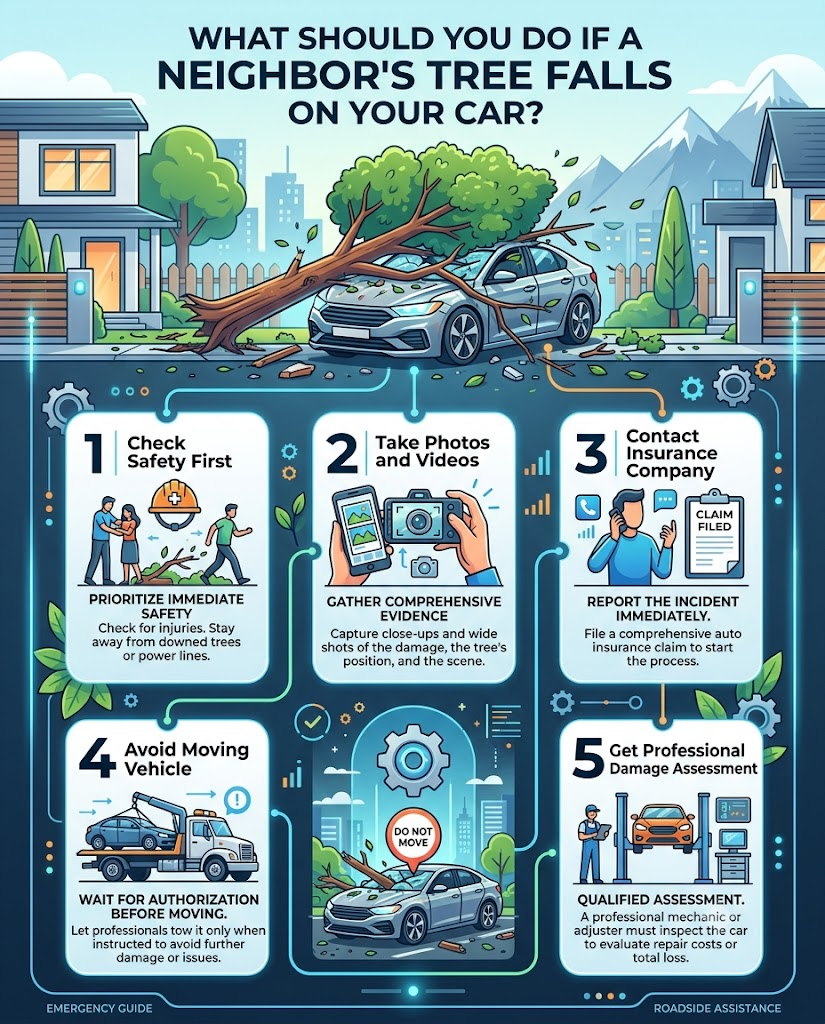
Follow these steps after a tree damages your car.
Check for Safety First
Before inspecting your vehicle, make sure the area is safe.
A fallen tree may create additional hazards, such as:
- Broken branches that can fall
- Damaged power lines
- Unstable tree sections
- Sharp debris around the vehicle
Do not attempt to move large branches or climb on the vehicle if there is any risk of injury.
If power lines are involved, stay away from the area and contact the appropriate authorities.
Take Photos and Videos of the Damage
Documentation is extremely important when dealing with insurance claims.
Take clear pictures of:
- The entire vehicle
- The damaged areas
- The fallen tree
- The location where the tree fell
- Any visible damage to the tree
Also capture details such as:
- Broken branches
- Tree condition
- Property location
- Weather conditions
These photos can help insurance companies determine whether the damage was caused by a storm, negligence, or another event.
Contact Your Insurance Company
If you have comprehensive coverage, contact your insurer as soon as possible.
Provide details such as:
- When the damage happened
- Where the vehicle was parked
- How the tree fell
- Whether anyone witnessed the incident
Your insurance company will guide you through the claim process and arrange an inspection if needed.
Avoid Moving the Vehicle Until It Is Safe
Do not attempt to drive your car if:
- The roof is damaged
- Windows are broken
- The tree is still resting on the vehicle
- There is possible structural damage
Moving the vehicle may cause additional damage and could make the situation harder to evaluate.
Wait until:
- The area is safe
- The tree has been removed
- Your insurance company gives guidance
Get a Professional Damage Assessment
After the vehicle is accessible, have it inspected by a qualified repair shop.
A professional inspection can determine:
- Whether the vehicle can be repaired
- The total repair cost
- Whether hidden damage exists
Tree impacts can damage more than just visible areas.
Possible hidden damage includes:
- Frame damage
- Electrical problems
- Suspension damage
- Water damage from broken windows or roof damage
How Does a Tree Damage Insurance Claim Work?
The claim process for a fallen tree is usually similar to other comprehensive insurance claims.
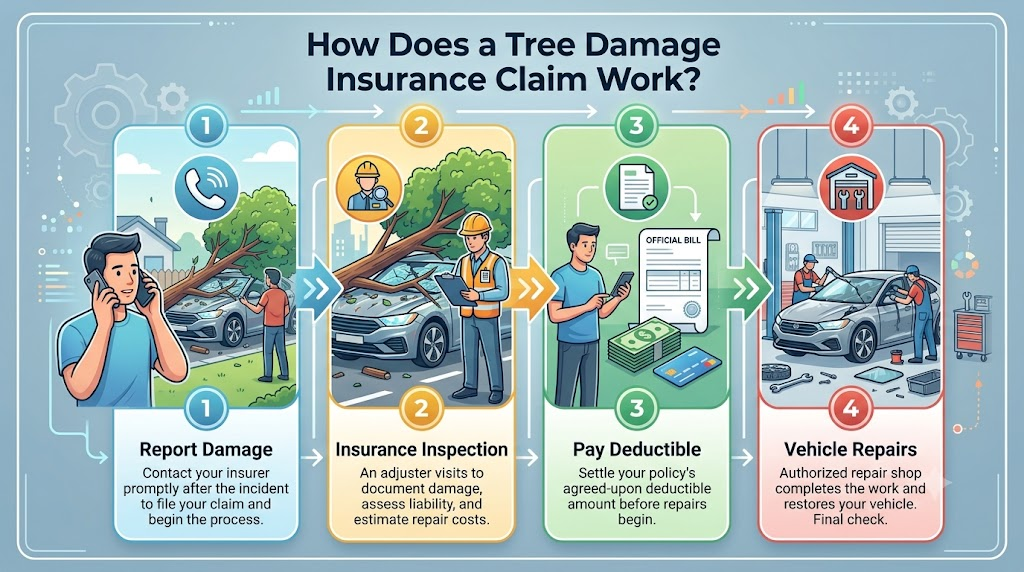
Step 1: Report the Damage
Contact your insurance provider and explain what happened.
Your insurer may ask for:
- Photos of the damage
- Incident details
- Location information
- Repair estimates
Step 2: Insurance Inspection
The insurance company may inspect the vehicle or ask you to visit an approved repair facility.
They will evaluate:
- Cause of damage
- Repair costs
- Whether the damage is covered under your policy
Step 3: Pay Your Deductible
If your comprehensive claim is approved, you usually pay your deductible first.
Example:
- Repair cost: $5,000
- Comprehensive deductible: $500
Your insurance company may pay the remaining $4,500.
The exact amount depends on your policy limits and deductible.
Step 4: Vehicle Repairs
Once approved, repairs can begin.
Depending on the damage, repairs may include:
- Removing the tree or debris
- Body repairs
- Glass replacement
- Roof repairs
- Paint work
- Mechanical repairs
Who Pays for Removing the Tree From My Car?
A common question is whether insurance pays for removing the tree itself.
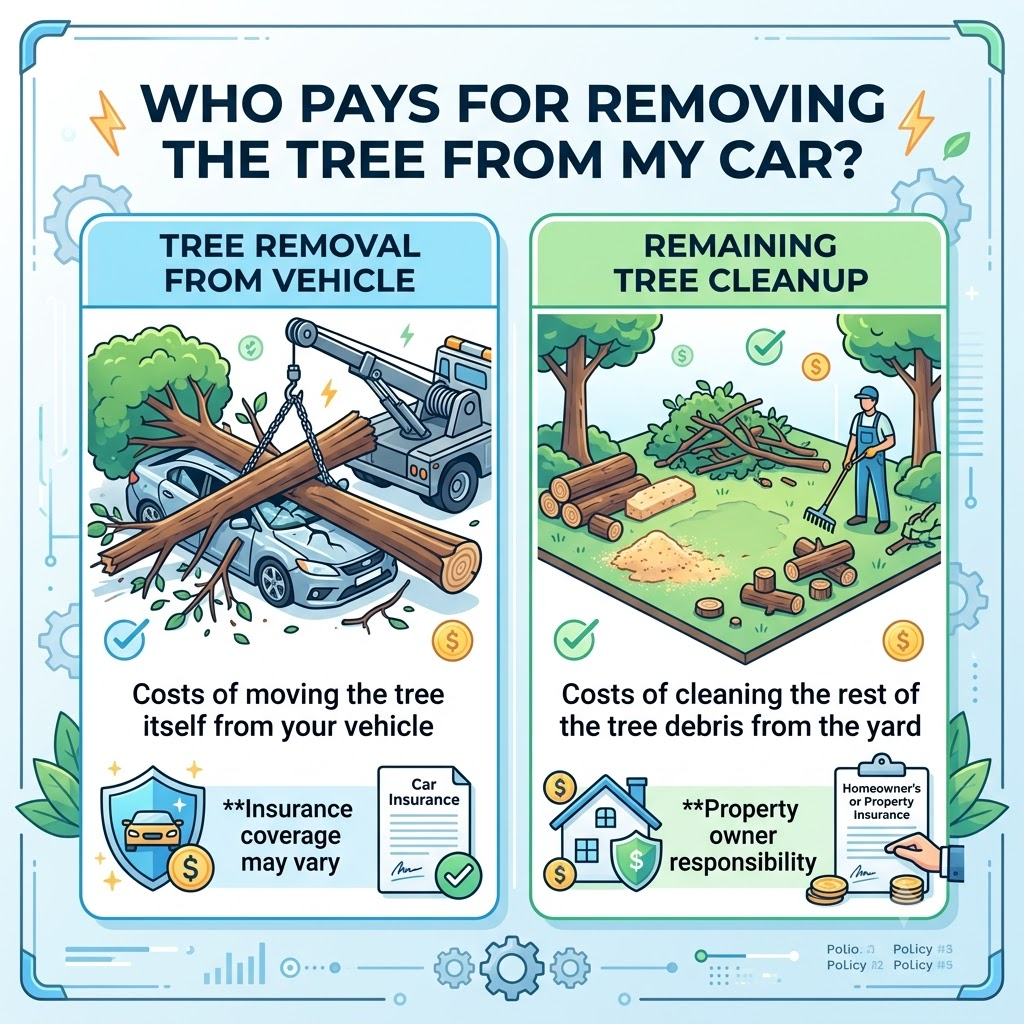
The answer depends on the situation.
Removing the Tree From Your Vehicle
If the tree is sitting on your car, removing it may be part of handling the vehicle damage.
Some insurance policies may cover removal costs, but coverage varies.
You should check with your insurance company before arranging expensive removal services.
Removing the Remaining Tree
Responsibility for removing the fallen tree often depends on property ownership.
Generally:
- The property owner handles tree cleanup on their own property.
- Your insurance may cover vehicle repairs.
- Your neighbor’s insurance may only become involved if negligence caused the damage.
Example:
A neighbor’s tree falls onto your driveway and damages your car.
Possible outcome:
- Your auto insurance covers car repairs.
- Your neighbor handles tree cleanup on their property.
- Liability depends on whether the neighbor was negligent.
Will Filing a Claim Increase My Insurance Rates?
Many drivers worry that filing a claim for tree damage will increase their insurance premium.
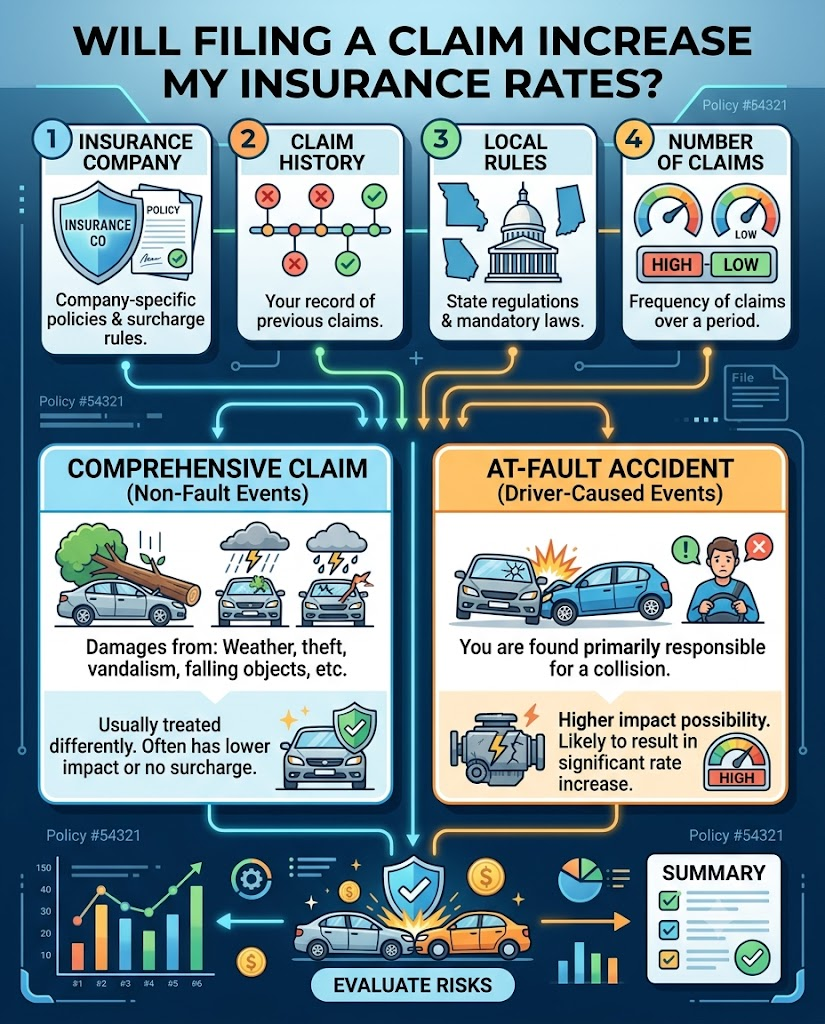
The answer depends on several factors:
- Your insurance company
- Your claim history
- Local regulations
- Whether you were responsible for the damage
Comprehensive claims are often treated differently from at-fault accidents because they involve events outside your control.
However, multiple claims within a short period may affect your rates.
Before filing a small claim, consider:
- Repair cost
- Your deductible amount
- Possible impact on your insurance history
For minor damage, paying out of pocket may sometimes make financial sense.
Who Pays If My Tree Falls on Someone Else’s Car?
Tree damage can work differently depending on where the tree was located and why it fell. If a tree from your property falls onto another person’s vehicle, the question of responsibility depends mainly on whether you were negligent.
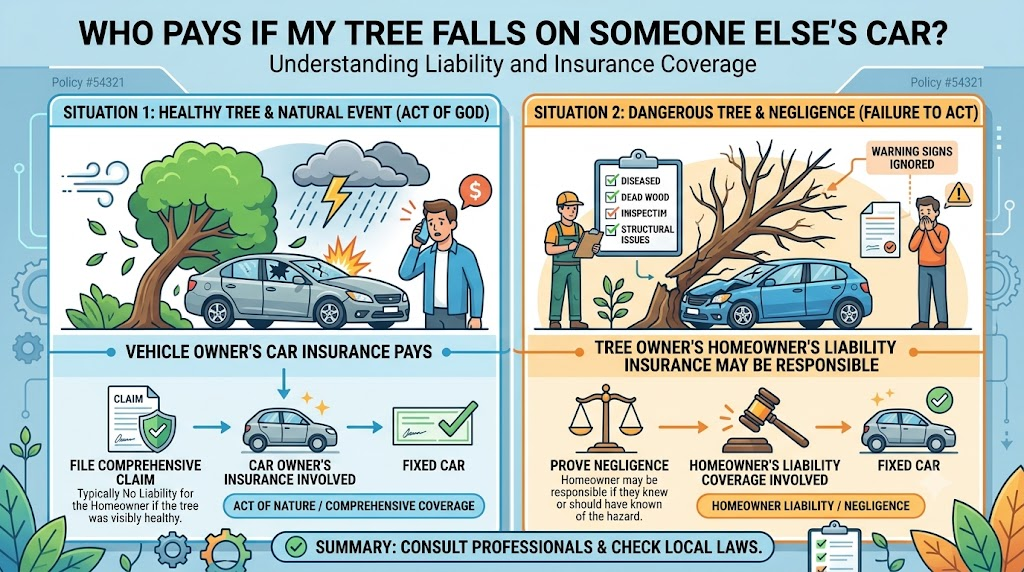
In many cases, the vehicle owner’s insurance covers the damage, especially if the tree fell because of a storm or another natural event.
However, you may be responsible if you failed to maintain a dangerous tree.
When You May Not Be Responsible
If your tree was healthy and fell because of an unexpected event, you are usually not considered liable.
Examples include:
- A strong storm knocks down a healthy tree
- Lightning causes a tree to split and fall
- High winds break a large branch
- A natural disaster damages the tree
In these situations:
- The damaged vehicle owner’s comprehensive insurance may cover repairs.
- Your homeowners insurance may not be responsible for their vehicle damage.
- You are generally not considered negligent.
The reason is that the tree failure was caused by circumstances outside your control.
When You May Be Responsible
You may be responsible if you knew or should have known that the tree was dangerous.
Examples include:
The Tree Was Clearly Dead or Diseased
If the tree showed obvious signs of danger, such as:
- Large dead branches
- Severe leaning
- Visible cracks
- Rot or decay
- Weak roots
and you failed to address the problem, you may be considered negligent.
You Ignored Previous Warnings
Responsibility may increase if:
- A neighbor warned you about the tree
- A professional tree inspection identified a problem
- Previous branches had fallen
- Local authorities notified you about the hazard
Ignoring known risks can make you financially responsible for resulting damage.
Poor Tree Maintenance Caused the Fall
A tree owner has a responsibility to take reasonable care of dangerous trees.
Examples of poor maintenance include:
- Allowing diseased trees to remain untreated
- Ignoring unstable branches
- Failing to remove a hazardous tree
- Neglecting obvious safety concerns
If poor maintenance contributed to the tree falling, your homeowners insurance may help cover the damage.
Does Homeowners Insurance Cover Damage If My Tree Falls on a Car?
Homeowners insurance may provide liability coverage if you are found responsible for the damage.
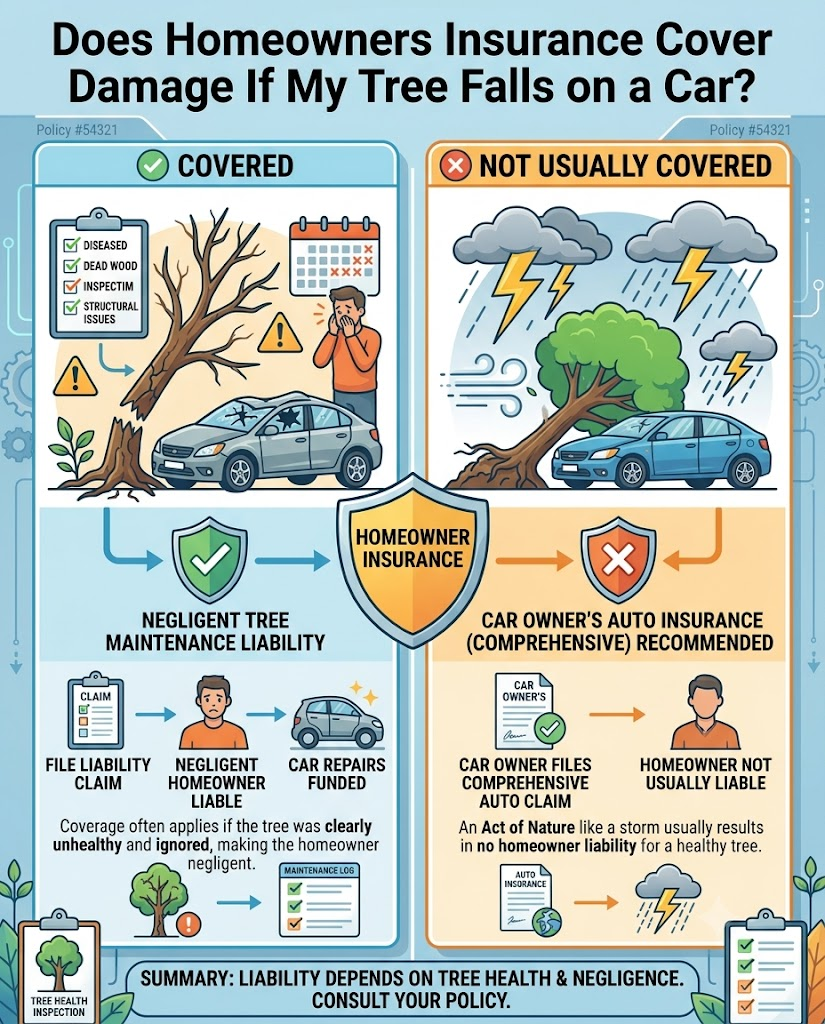
However, coverage depends on the situation and your policy terms.
Your homeowners insurance may help pay for:
- Vehicle damage caused by your negligence
- Legal expenses if you are sued
- Settlement costs related to covered claims
For example:
A tree in your backyard was visibly damaged for months. You ignored warnings to remove it. The tree later falls onto your neighbor’s car.
In this situation, your homeowners insurance may help cover the claim because the damage resulted from negligence.
However, if the tree was healthy and fell during a major storm, you may not be responsible.
What Evidence Helps Prove Tree Damage Responsibility?
Determining who is responsible often depends on evidence showing the condition of the tree before it fell.
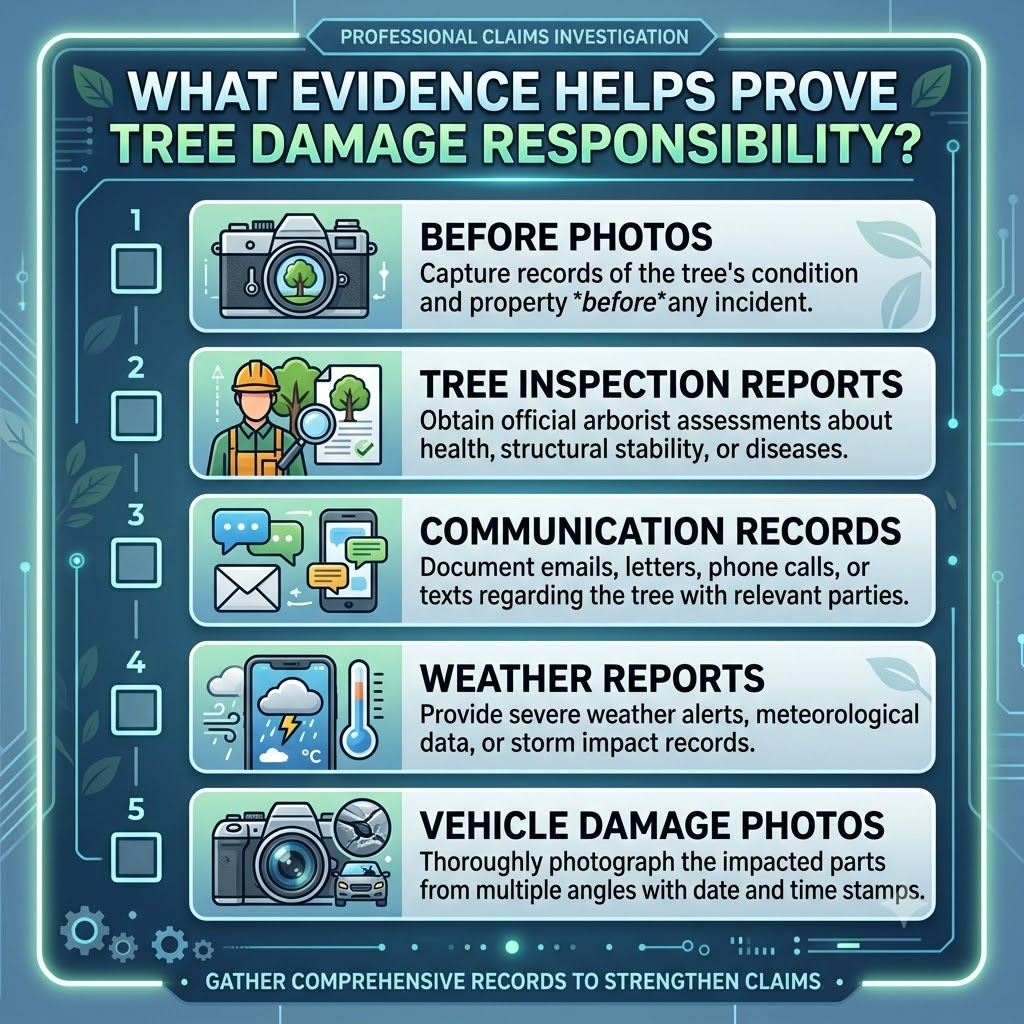
Useful evidence includes:
Photos Before the Tree Fell
Pictures showing:
- Dead branches
- Leaning trunk
- Visible damage
- Tree decay
can help establish whether the hazard was obvious.
Tree Inspection Reports
A professional arborist report can provide important information about:
- Tree health
- Risk level
- Signs of neglect
- Possible causes of failure
Communication Records
Keep records of:
- Messages between neighbors
- Written warnings
- Requests for tree removal
- Complaints about dangerous conditions
These records can show whether the property owner knew about the risk.
Weather Reports
Weather information can help determine whether the tree fell because of:
- Severe storms
- High winds
- Lightning
- Natural causes
This can affect whether negligence was involved.
How to Prevent a Tree From Damaging Your Car
Taking preventive steps can reduce the risk of expensive vehicle damage.
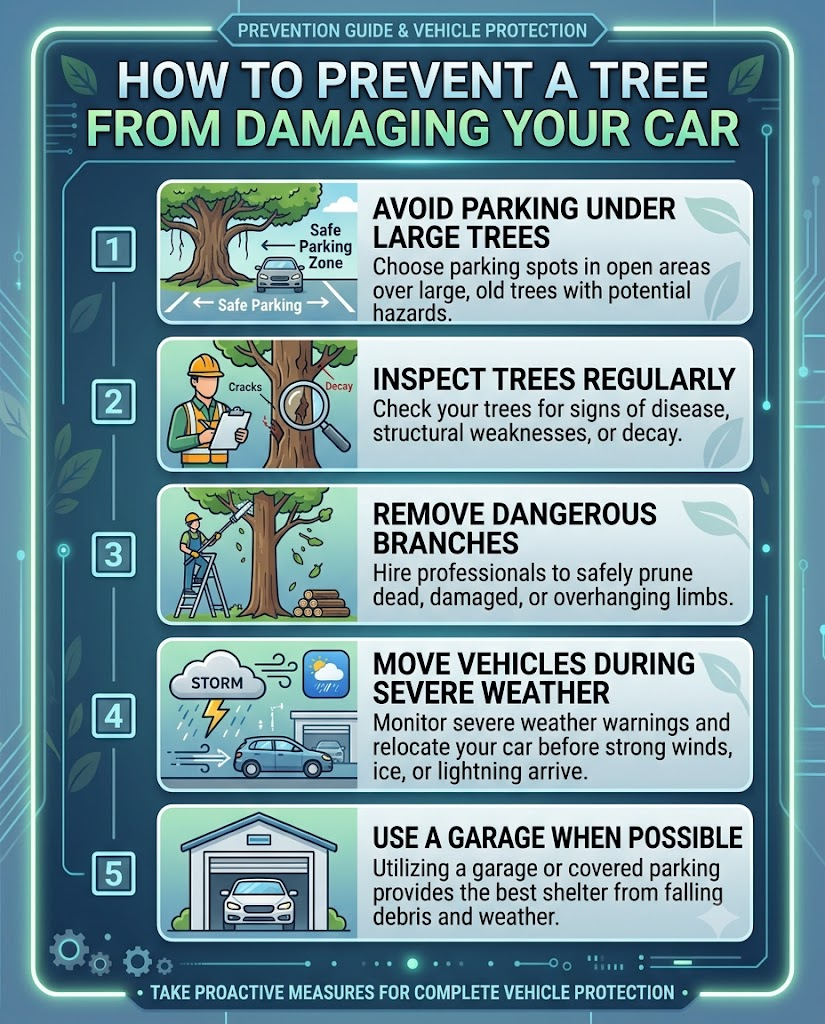
Avoid Parking Under Large Trees
Whenever possible, avoid parking directly under:
- Old trees
- Large branches
- Trees with visible damage
- Trees leaning toward parking areas
Even healthy-looking trees can lose branches during storms.
Inspect Trees Regularly
Check nearby trees for warning signs such as:
- Dead branches
- Cracks in the trunk
- Mushrooms growing near the base
- Leaning structure
- Root problems
Early detection can prevent accidents.
Remove Dangerous Branches
Removing weak or damaged branches can reduce the risk of them falling onto:
- Vehicles
- Homes
- Driveways
- Walkways
Professional trimming is often safer than attempting large tree work yourself.
Move Vehicles During Severe Weather
During storms, move your vehicle away from:
- Large trees
- Loose branches
- Areas prone to flooding
Parking in a garage or covered area can significantly reduce the chance of damage.
Insurance Checklist After a Neighbor’s Tree Falls on Your Car
Dealing with tree damage can be confusing, especially when multiple insurance policies and responsibilities are involved. Following a simple checklist can help you handle the situation properly and avoid mistakes during the claim process.
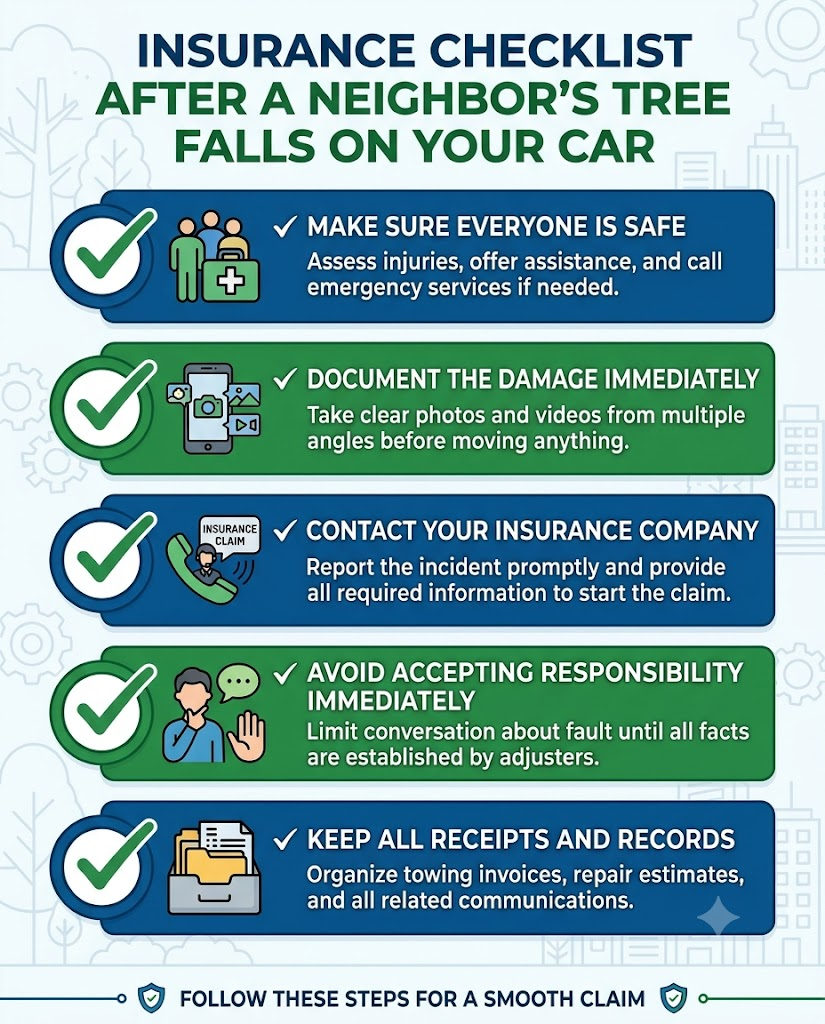
Make Sure Everyone Is Safe
Before checking the vehicle damage, look for potential dangers.
Be careful around:
- Fallen power lines
- Unstable branches
- Large tree sections that may move
- Broken glass or sharp debris
If the area is unsafe, wait for professionals to handle the situation.
Document the Damage Immediately
Good documentation can make the insurance process much easier.
Take photos and videos of:
- The damaged vehicle
- The fallen tree
- The surrounding area
- Visible tree damage
- Property locations
Also record details such as:
- Date and time of the incident
- Weather conditions
- Where the vehicle was parked
This information can help determine whether the damage was caused by a storm or possible negligence.
Contact Your Insurance Company
If you have comprehensive coverage, notify your insurance provider as soon as possible.
Provide:
- Details of what happened
- Photos and videos
- Information about the location
- Any available witness details
Your insurer can explain your coverage and guide you through the next steps.
Avoid Accepting Responsibility or Blaming Others Immediately
After an accident involving property damage, emotions can run high.
Avoid making statements like:
- “This is definitely my fault.”
- “Your tree was dangerous.”
- “You should have removed it.”
Allow insurance companies and professionals to investigate the facts.
Keep All Receipts and Records
Save documents related to the incident, including:
- Towing bills
- Repair estimates
- Rental car expenses
- Tree removal costs
- Insurance communication
- Inspection reports
These records may be needed during the claim process.
How to Reduce the Risk of Tree Damage to Your Vehicle
While you cannot prevent every storm or natural event, a few precautions can reduce the chances of expensive damage.
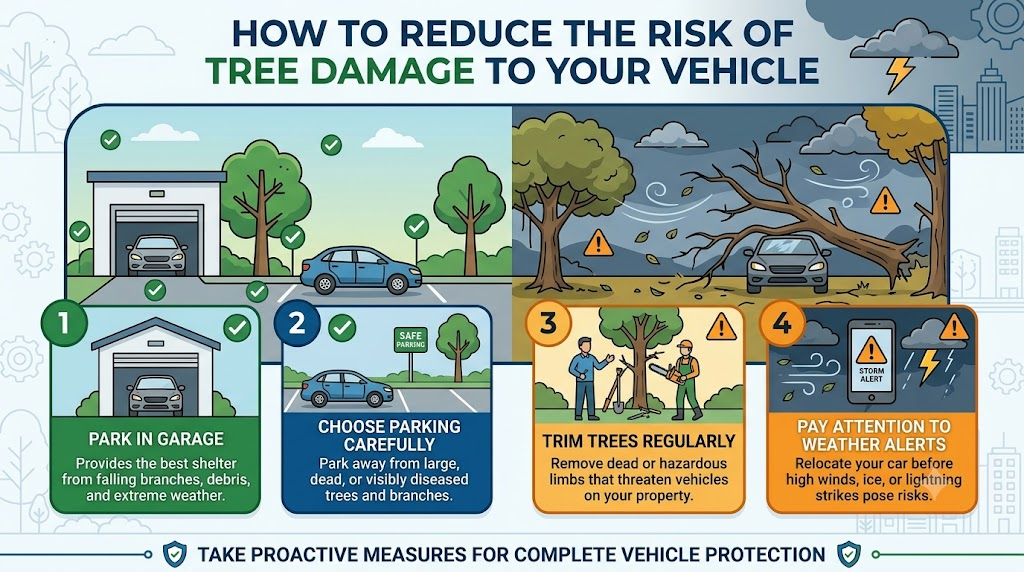
Park in a Garage When Possible
A garage provides the best protection against:
- Falling branches
- Storm damage
- Hail
- Heavy weather conditions
If you have access to covered parking, use it during severe weather.
Choose Parking Areas Carefully
Avoid parking under trees that show signs of weakness.
Be cautious around trees with:
- Dead branches
- Leaning trunks
- Visible cracks
- Signs of disease
A few extra seconds of observation can prevent thousands of dollars in repairs.
Trim Trees Regularly
Proper tree maintenance can reduce risks.
Regular trimming helps remove:
- Weak branches
- Dead limbs
- Overgrown sections
For large or damaged trees, professional inspection is recommended.
Pay Attention to Weather Alerts
During storms:
- Move your vehicle away from trees
- Avoid parking near large branches
- Use covered parking if available
Strong winds and heavy rain can cause even healthy trees to fail.
Key Takeaways: Who Pays If a Neighbor’s Tree Falls on Your Car?
The responsibility for tree damage depends on the circumstances.
If the Tree Falls During a Storm
Usually:
- Your comprehensive insurance covers the vehicle damage.
- Your neighbor is generally not responsible.
- The event is considered an act of nature.
If the Neighbor Ignored a Dangerous Tree
Possibly:
- Your neighbor may be responsible.
- Their homeowners insurance may help cover damages.
- Evidence of negligence becomes important.
If You Do Not Have Comprehensive Insurance
You may have fewer options.
Without comprehensive coverage:
- Your insurance may not pay for tree damage.
- You may need to seek payment from the responsible party if negligence can be proven.
- Repair costs may become your responsibility.
If Your Tree Damages Someone Else’s Car
You may not automatically be responsible.
Responsibility usually depends on:
- Tree condition before falling
- Whether you knew about the danger
- Whether proper maintenance was performed
The Bottom Line
So, who pays if a neighbor’s tree falls on your car?
In most cases, your own comprehensive auto insurance is the primary source of coverage for vehicle damage caused by a fallen tree. This applies even when the tree belonged to your neighbor, especially if the fall happened because of a storm or another natural event.
However, your neighbor may become responsible if they were negligent, such as ignoring a clearly dangerous tree or failing to address known risks. In those situations, their homeowners insurance may help cover the damage.
The most important factors are:
- Why the tree fell
- Whether anyone was negligent
- What insurance coverage you have
- What evidence is available
After a tree damages your vehicle, focus on safety first, document everything, and contact your insurance company quickly. Understanding your coverage and responsibilities can help you handle the situation with less stress and avoid unexpected repair costs.