
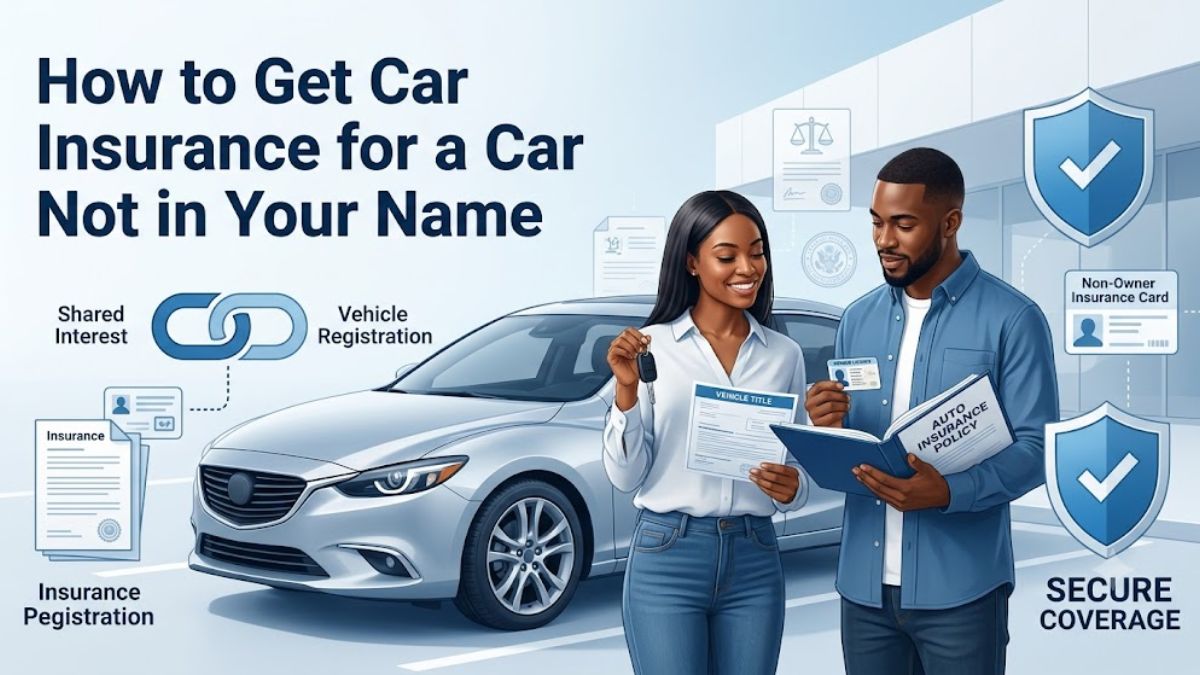

Car insurance is usually purchased by the owner of a vehicle, but there are situations where someone other than the owner needs to insure a car.
You may regularly drive a family member’s vehicle, use a company car, finance a vehicle for someone else, or live with someone who owns the car you drive every day.
This often leads to an important question:
“How to get car insurance for a car not in your name”
The answer is that it is possible in some situations, but it depends on whether you have an insurable interest in the vehicle and the insurance company’s underwriting rules.
Most insurers prefer the vehicle owner to be the named insured because they have the primary financial interest in the car. However, there are exceptions that allow another person to obtain coverage.
Understanding how ownership, registration, and insurance work together can help you avoid claim denials and ensure your vehicle is properly protected.
Can You Get Car Insurance for a Car That Isn’t in Your Name?
Yes, in some cases you can get car insurance for a car that is not in your name.
However, it is generally not as straightforward as insuring a vehicle you own.
Insurance companies usually want the policyholder to have an insurable interest in the vehicle.
An insurable interest means you would suffer a financial loss if the vehicle were damaged, stolen, or destroyed.
Without an insurable interest, many insurance companies will refuse to issue a policy.
What Is an Insurable Interest?
Insurable interest is one of the most important concepts in auto insurance.
Simply put, it means you have a legitimate financial or legal relationship with the vehicle.
Examples include:
- You own the vehicle.
- You co-own the vehicle.
- You are making loan payments.
- You lease the vehicle.
- You are financially responsible for repairs or replacement.
- You are legally responsible for the vehicle.
Insurance companies require this because insurance is designed to protect against financial loss—not to insure property that has no connection to you.
Why Insurance Companies Care About Vehicle Ownership
Auto insurance policies are based on risk.
Insurance companies evaluate:
- Who owns the vehicle
- Who drives it most often
- Where it is parked
- How it is used
- Who has financial responsibility
If the policyholder is different from the owner, insurers may have difficulty determining who should receive claim payments or who has the legal authority to make decisions about the vehicle.
That is why many companies ask whether:
- The vehicle title is in your name.
- The registration matches your name.
- The primary driver is the owner.
How to Get Car Insurance for A Car Not in Your Name
There are several legitimate reasons why someone might need insurance on a vehicle they do not own.
You Regularly Drive a Family Member’s Car
For example:
- Adult children driving parents’ vehicles
- Parents driving a child’s vehicle
- Siblings sharing one vehicle
If everyone lives in the same household, many insurers simply add the regular driver to the owner’s existing policy instead of issuing a separate policy.
You Drive Your Spouse’s Vehicle
In many households, one spouse owns the vehicle while the other drives it regularly.
Most insurance companies allow both spouses to be listed on the same policy.
Depending on state laws and company rules, ownership may not need to be transferred.
You Are Caring for an Elderly Parent
Suppose your elderly parent owns a vehicle but no longer drives.
You become the primary driver while the vehicle remains in their name.
Some insurers allow:
- The parent to remain the named insured.
- You to be listed as the primary driver.
Others may recommend changing ownership if the arrangement becomes permanent.
You Use a Company Vehicle
Company-owned vehicles are typically insured by the business.
If you regularly drive the vehicle for work, your employer usually adds you as an authorized driver under the commercial policy.
In most cases, you do not purchase personal insurance for a company-owned vehicle.
You Are Financing a Vehicle for Someone Else
Sometimes a parent finances a car for an adult child.
For example:
- Parent is listed on the loan.
- Child drives the vehicle every day.
Insurance companies often require:
- The registered owner to be listed.
- The primary driver to be identified.
Some insurers may require both individuals to appear on the policy.
Can You Insure a Car Registered to Someone Else?
Possibly.
Registration and ownership are related but not always identical.
Some vehicles are:
- Titled in one person’s name.
- Registered in another person’s name.
Insurance companies may ask for explanations and supporting documentation.
Policies vary significantly.
Always verify with the insurer before purchasing coverage.
Does the Vehicle Title Matter?
Yes.
The title identifies the legal owner of the vehicle.
Most insurance companies compare:
- Vehicle title
- Registration
- Driver information
- Insurance application
Large differences between these documents may require additional review.
For example:
Title Owner: John
Insurance Applicant: Sarah
Primary Driver: Sarah
Some insurers may approve this arrangement, while others may require the owner to purchase the policy instead.
Can You Get Insurance Without Being the Registered Owner?
In some situations, yes.
However, approval often depends on:
- State regulations
- Insurance company guidelines
- Your relationship to the owner
- Whether you have an insurable interest
Some insurers are more flexible than others, especially when family members living in the same household are involved.
Common Reasons Insurance Companies May Decline Coverage
An insurer may refuse to issue a policy if:
- You have no insurable interest.
- You rarely use the vehicle.
- Ownership information cannot be verified.
- The registered owner is not disclosed.
- There is concern about insurance fraud.
- The ownership arrangement is unclear.
Being transparent during the application process is essential. Providing inaccurate ownership or driver information could result in policy cancellation or denied claims.
Ways to Get Car Insurance for a Car Not in Your Name
If you need insurance for a car you do not own, there is no one-size-fits-all solution. The best option depends on your relationship with the vehicle owner, how often you drive the car, and the insurance company’s underwriting guidelines.
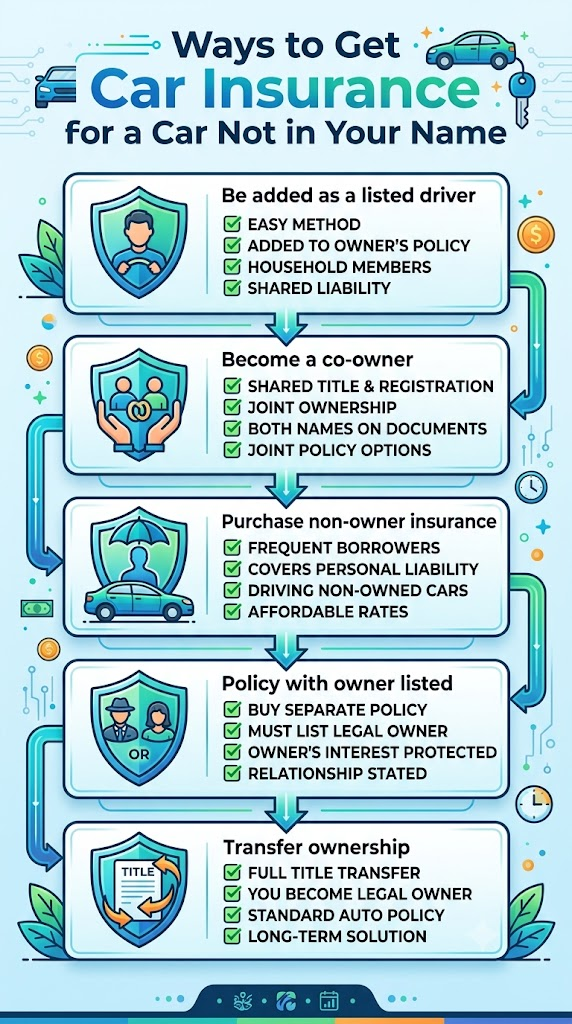
Below are the most common ways to obtain coverage.
Option 1: Be Added as a Listed Driver on the Owner’s Policy
For most people, this is the easiest and most affordable solution.
Instead of purchasing your own insurance policy, ask the vehicle owner to add you as a listed or named driver.
This option works well if:
- You regularly drive a spouse’s vehicle.
- You drive your parents’ car.
- You use a sibling’s vehicle.
- You live with the vehicle owner.
- You borrow the car frequently.
Most insurance companies already expect household members who regularly drive the vehicle to be listed on the policy.
Benefits
- Usually the least expensive option
- No ownership transfer required
- Continuous insurance coverage
- Easy to update if circumstances change
Possible Limitations
- The vehicle owner controls the policy.
- Premiums may increase depending on your driving history.
- Claims may affect the owner’s insurance record.
Option 2: Become a Co-Owner of the Vehicle
If you drive the vehicle regularly and share financial responsibility, adding your name to the vehicle title may be a practical solution.
As a co-owner, you generally have an insurable interest in the vehicle.
Insurance companies are often more comfortable issuing policies when both ownership and insurance reflect the same individuals.
Examples include:
- Married couples
- Parents and adult children
- Business partners
- Family members sharing one vehicle
Advantages
- Clear ownership records
- Easier to obtain insurance
- Shared financial responsibility
Considerations
Adding your name to the title may involve:
- DMV paperwork
- Registration updates
- Title transfer fees
- Possible taxes depending on state laws
Option 3: Purchase Non-Owner Car Insurance
If you regularly drive vehicles you do not own but do not have access to one specific car, non-owner insurance may be worth considering.
Non-owner insurance is designed for drivers who:
- Frequently borrow cars
- Rent vehicles
- Need proof of insurance
- Require an SR-22 filing without owning a car
However, it is important to understand its limitations.
What Non-Owner Insurance Usually Covers
- Liability for bodily injury
- Liability for property damage
What It Usually Does Not Cover
- Damage to the borrowed vehicle
- Theft
- Collision damage
- Comprehensive losses
- Vehicles you regularly use or keep at home
If you drive the same vehicle every day, non-owner insurance is generally not appropriate.
Option 4: Buy a Policy With the Owner Listed as an Additional Interest
Some insurance companies allow special policy arrangements.
The policy may list:
- The vehicle owner
- The policyholder
- Additional insured parties
- Lienholders
Availability depends entirely on the insurer’s underwriting rules.
Not every company offers this option.
Option 5: Transfer Ownership to the Primary Driver
Sometimes the simplest long-term solution is transferring ownership.
This may be appropriate if:
- The original owner no longer drives.
- You are now the permanent driver.
- You are responsible for maintenance and expenses.
- The vehicle has effectively become yours.
After transferring ownership, insurance becomes much easier because:
- Title
- Registration
- Insurance
all match the same person.
Can Married Couples Insure a Car Owned by Only One Spouse?
In many cases, yes.
Most insurers allow spouses to share one policy even if only one spouse is listed on the vehicle title.
This is common because spouses often:
- Share finances
- Share vehicles
- Live at the same address
The insurer will usually ask:
- Who owns the vehicle?
- Who drives it most often?
- Where is it garaged?
Requirements vary by insurer and state.
Can Parents Insure a Car Owned by Their Adult Child?
Sometimes.
If the adult child still lives at home, many insurers allow both family members to remain on the same policy.
If the child lives independently, separate insurance is often recommended.
Insurance companies generally consider:
- Household address
- Vehicle ownership
- Primary driver
- Financial responsibility
Can an Adult Child Insure a Parent’s Car?
Yes, in some situations.
For example:
An elderly parent owns the vehicle but no longer drives.
The adult child:
- Uses the vehicle daily
- Pays maintenance costs
- Keeps the vehicle at their home
Some insurers may:
- Keep the parent as the named insured
- Add the child as the primary driver
Others may recommend transferring ownership if the arrangement is permanent.
Can You Insure a Financed Vehicle That Isn’t in Your Name?
Financed vehicles can be more complicated because another party has a financial interest in the vehicle.
There may be three different parties involved:
- Vehicle owner
- Driver
- Lender
The lender usually requires:
- Continuous insurance coverage
- Specific coverage limits
- Comprehensive coverage
- Collision coverage
Insurance companies often require policy information that accurately reflects both ownership and the lender’s interest.
Can You Insure a Leased Vehicle That Isn’t in Your Name?
Usually not.
The lease agreement typically requires:
- The lessee to maintain insurance
- Specific coverage limits
- Proof of insurance throughout the lease term
If you regularly drive a leased vehicle owned by someone else, you are generally added as an authorized driver rather than purchasing your own policy.
What If You Borrow a Friend’s Car Occasionally?
If you only borrow a friend’s vehicle once in a while, you may not need your own policy for that specific car.
Many insurance policies extend coverage to occasional permissive drivers.
However, this depends on:
- The owner’s policy terms
- How often you use the vehicle
- Whether you live with the owner
If you become a regular driver, you should usually be added to the owner’s policy.
Does Every Insurance Company Have the Same Rules?
No.
Insurance companies have different underwriting guidelines regarding:
- Non-owner vehicles
- Household drivers
- Family relationships
- Insurable interest
- Ownership documentation
One insurer may approve a policy that another company declines.
For this reason, comparing insurers and discussing your specific situation before purchasing a policy is essential.
Documents You May Need to Insure a Car Not in Your Name
Requirements vary by insurer, but you may be asked to provide information about both yourself and the vehicle owner.
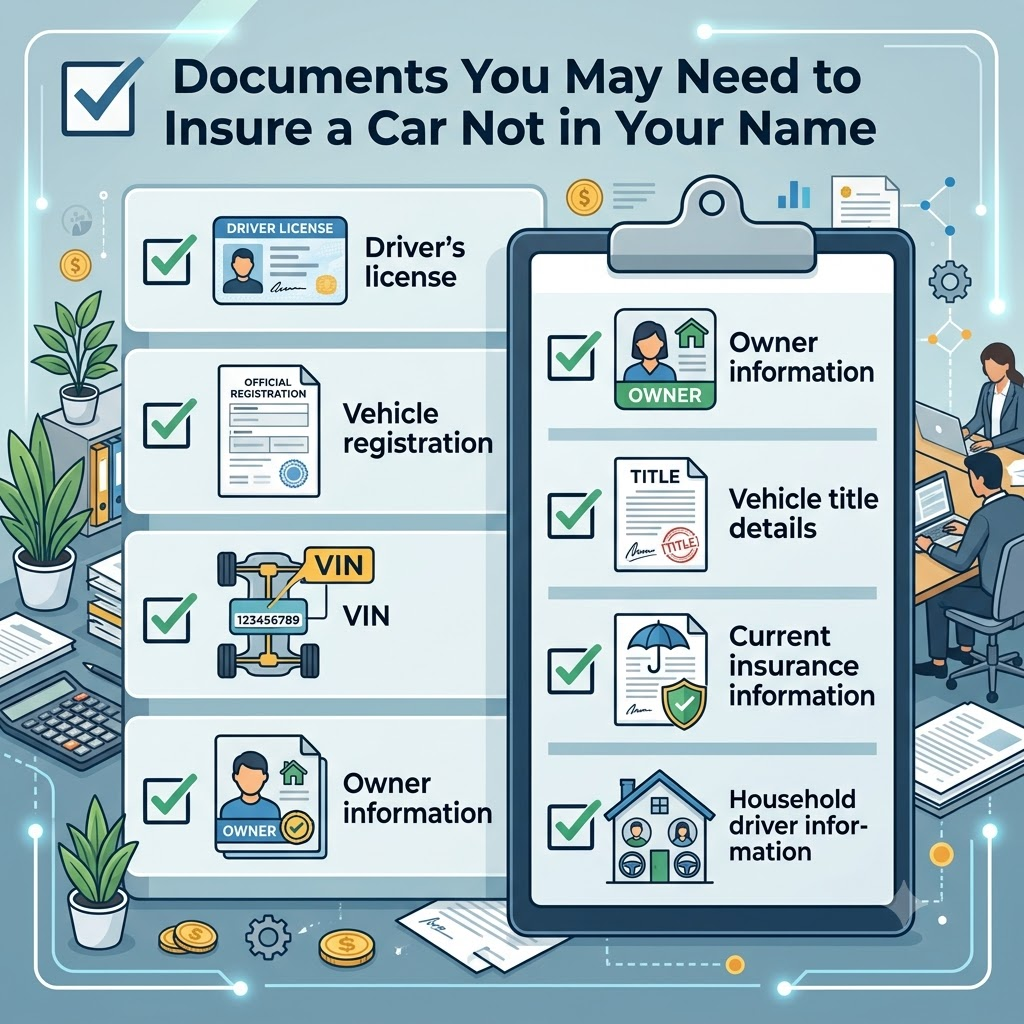
Common documents include:
- Valid driver’s license
- Vehicle registration
- Vehicle Identification Number (VIN)
- Proof of the owner’s identity
- Vehicle title information
- Current insurance details (if applicable)
- Your residential address
- Information about other household drivers
Some insurers may also ask for documentation explaining why you need to insure a vehicle that you do not own.
Information About the Vehicle Owner
Since the owner has a financial interest in the vehicle, insurance companies often request details such as:
- Owner’s full name
- Address
- Relationship to you
- Ownership status
- Registration information
Providing accurate information helps prevent delays during underwriting.
How the Insurance Application Process Works
The application process is similar to purchasing a standard auto insurance policy, but insurers may ask additional questions.
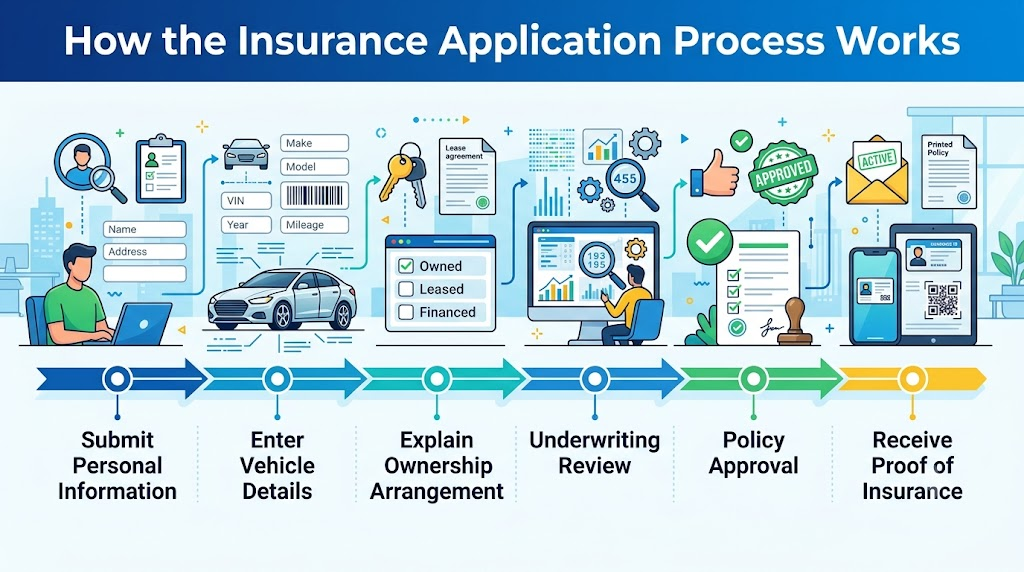
A typical process includes:
Step 1: Provide Personal Information
You will enter details such as:
- Name
- Date of birth
- Driver’s license information
- Driving history
- Contact information
Step 2: Provide Vehicle Information
The insurer will request:
- Vehicle make
- Model
- Year
- VIN
- Current mileage
- Vehicle usage
Step 3: Explain the Ownership Arrangement
This is often the most important part of the application.
Be prepared to explain:
- Who owns the vehicle
- Why it is not in your name
- Who drives it most often
- Where it is kept
- Who pays for maintenance
Honesty is essential. Attempting to hide ownership information could result in denied coverage or canceled policies.
Step 4: Underwriting Review
The insurance company reviews:
- Driving records
- Claims history
- Vehicle ownership
- Household drivers
- Insurance history
Some applications are approved immediately, while others require additional documentation.
Step 5: Policy Issuance
If approved, the insurer will issue your policy and provide:
- Proof of insurance
- Coverage details
- Premium information
- Policy documents
Review the documents carefully to ensure all listed drivers and vehicle information are correct.
How Claims Work When the Policyholder Is Not the Owner
Many people wonder what happens if they file a claim on a vehicle they do not legally own.
The answer depends on the policy structure and the insurer’s rules.
For example:
- The owner may receive payment for vehicle repairs.
- The insurance company may communicate with both the owner and the policyholder.
- If there is a loan on the vehicle, the lender may also be involved.
Because ownership affects claim payments, insurers prefer clear documentation before issuing a policy.
What Happens If Another Driver Causes an Accident?
If another insured driver listed on the policy causes an accident, the claim is generally handled according to the policy terms.
The insurer considers factors such as:
- Who was driving
- Whether they were listed on the policy
- The type of coverage purchased
- The circumstances of the accident
Providing accurate driver information helps avoid disputes during the claims process.
Can an Insurance Claim Be Denied Because You Do Not Own the Car?
Yes, it is possible.
A claim may be denied if:
- The insurer was not informed about the ownership arrangement.
- Incorrect information was provided on the application.
- The policyholder had no insurable interest.
- The primary driver was misrepresented.
- The owner was intentionally omitted.
Insurance companies investigate claims carefully, especially when ownership details differ from the policy information.
Common Mistakes to Avoid
Many insurance problems occur because applicants make incorrect assumptions about ownership and coverage.
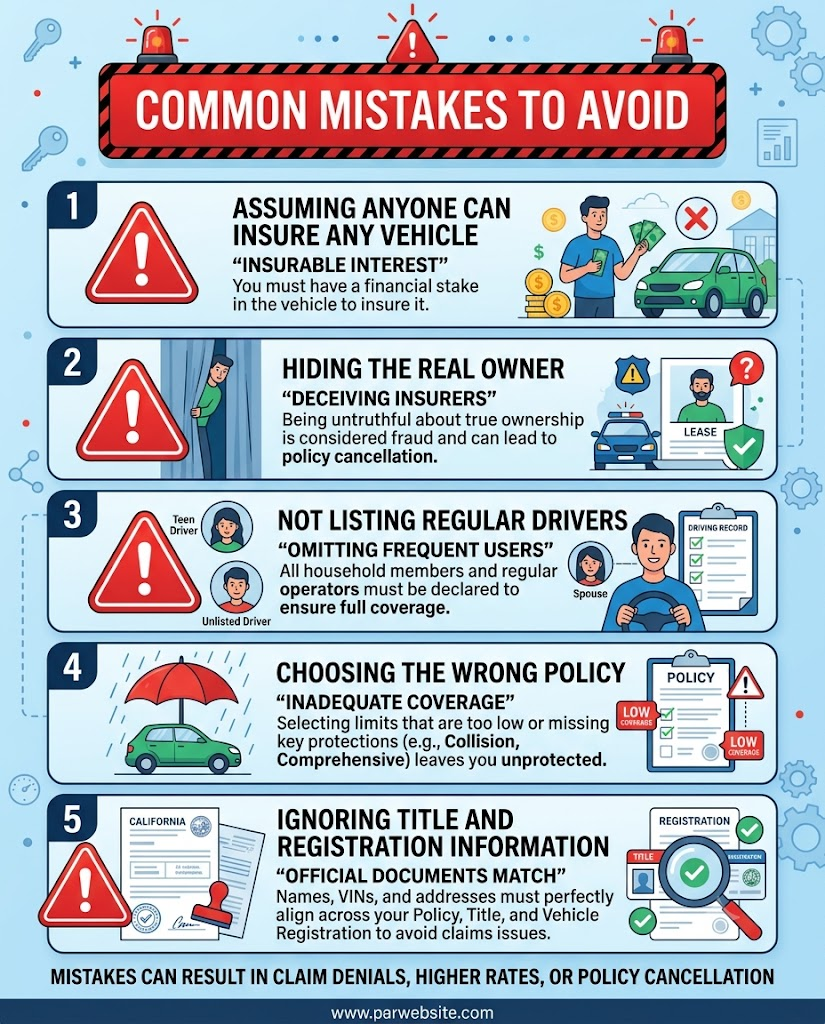
Mistake 1: Assuming Anyone Can Insure Any Vehicle
Owning or regularly driving a vehicle does not automatically mean you can insure it.
Most insurers require an insurable interest or another valid reason to issue a policy.
Mistake 2: Hiding the Real Vehicle Owner
Some applicants list themselves as the owner even when the title belongs to someone else.
This is considered misrepresentation and can lead to:
- Claim denial
- Policy cancellation
- Difficulty obtaining insurance in the future
Always disclose the actual owner.
Mistake 3: Not Listing Regular Drivers
If someone drives the vehicle frequently, they should generally be disclosed to the insurer.
Leaving off a regular driver may create issues if an accident occurs.
Mistake 4: Choosing Non-Owner Insurance for a Car You Drive Every Day
Non-owner insurance is intended for people who drive vehicles they do not own on an occasional basis.
If you regularly use the same vehicle, the insurer may determine that a standard auto policy or being added to the owner’s policy is more appropriate.
Mistake 5: Ignoring Registration and Title Information
Vehicle title, registration, and insurance should accurately reflect the ownership situation whenever possible.
Mismatched information may delay policy approval or complicate future claims.
How to Improve Your Chances of Approval
To increase the likelihood of getting approved:
- Be honest about vehicle ownership.
- Explain your relationship to the owner.
- Provide complete documentation.
- Compare multiple insurance companies.
- Ask whether the insurer accepts non-owner ownership arrangements.
- Keep copies of all submitted documents.
Being transparent helps insurers understand your situation and recommend the most appropriate coverage.
Do State Laws Affect Whether You Can Insure a Car Not in Your Name?
Yes.
Most states require every registered vehicle driven on public roads to have at least the minimum required liability insurance. However, they generally do not specify that the policyholder must always be the vehicle owner.
Instead, insurance companies set their own underwriting rules regarding:
- Vehicle ownership
- Registration
- Insurable interest
- Household drivers
- Named insured requirements
As a result, one insurer may approve your application while another may decline it.
Can You Insure an Inherited Vehicle Before the Title Is Transferred?
Yes, in many cases.
If a family member passes away and you inherit their vehicle, there may be a period before the title is officially transferred into your name.
During this time, you may need insurance to protect the vehicle.
Depending on the insurer and state laws, you may be able to:
- Continue the existing policy temporarily
- Obtain a new policy while the title transfer is pending
- Be added as an insured driver until ownership is finalized
You should complete the title transfer as soon as possible to avoid future complications.
Can You Insure a Company Vehicle?
Generally, no.
Company-owned vehicles are usually insured under a commercial auto insurance policy purchased by the business.
If you drive a company vehicle, your employer typically:
- Lists you as an authorized driver
- Maintains the insurance policy
- Determines coverage limits
You usually do not need to purchase a separate personal policy for a company-owned vehicle unless your employer specifically requires additional coverage.
Can You Insure a Vehicle Owned by a Trust?
Yes, in many cases.
Some vehicles are legally owned by:
- Family trusts
- Living trusts
- Business entities
Insurance companies may require additional documentation showing your relationship to the trust and your authority to insure the vehicle.
Can You Insure a Vehicle Owned by a Business?
Possibly.
If you use a business-owned vehicle for personal or business purposes, coverage depends on:
- Business ownership structure
- Vehicle usage
- Insurance company guidelines
The business may need a commercial auto insurance policy, while personal use could require additional endorsements or coverage.
What Happens If Ownership Changes After the Policy Begins?
Ownership changes should always be reported to your insurance company.
Examples include:
- Buying the vehicle from a family member
- Receiving the vehicle as a gift
- Paying off the loan and transferring ownership
- Completing an inheritance
Updating your policy promptly helps ensure there are no coverage issues.
Final Checklist Before Buying Insurance for a Car Not in Your Name
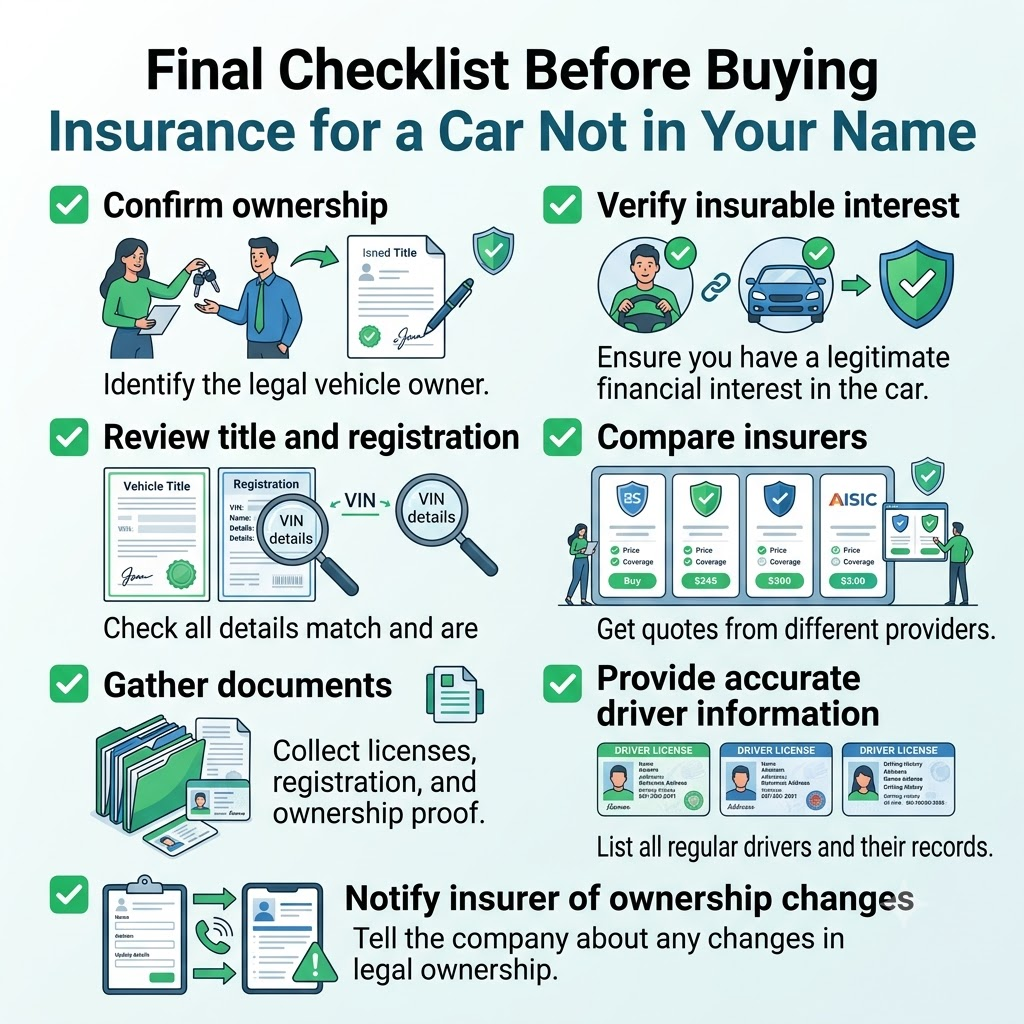
Before purchasing coverage, make sure you:
✅ Confirm who legally owns the vehicle.
✅ Determine whether you have an insurable interest.
✅ Check who is listed on the vehicle title and registration.
✅ Decide whether you should be added to the owner’s policy instead.
✅ Compare multiple insurance companies.
✅ Be honest about ownership and regular drivers.
✅ Gather all required documents before applying.
✅ Notify the insurer if ownership changes later.
Final Thoughts
Getting car insurance for a car that is not in your name is possible in many situations, but it usually requires more planning than a standard auto insurance policy.
Insurance companies want to ensure that the policyholder has an insurable interest and that the ownership, registration, and driver information accurately reflect how the vehicle is used.
In many cases, the easiest solution is to be added to the owner’s existing policy. If that is not possible, options such as co-ownership, non-owner insurance, or transferring ownership may provide a better long-term solution.
Taking the time to understand your insurer’s requirements and providing accurate information can help you avoid delays, claim disputes, and coverage problems in the future.