
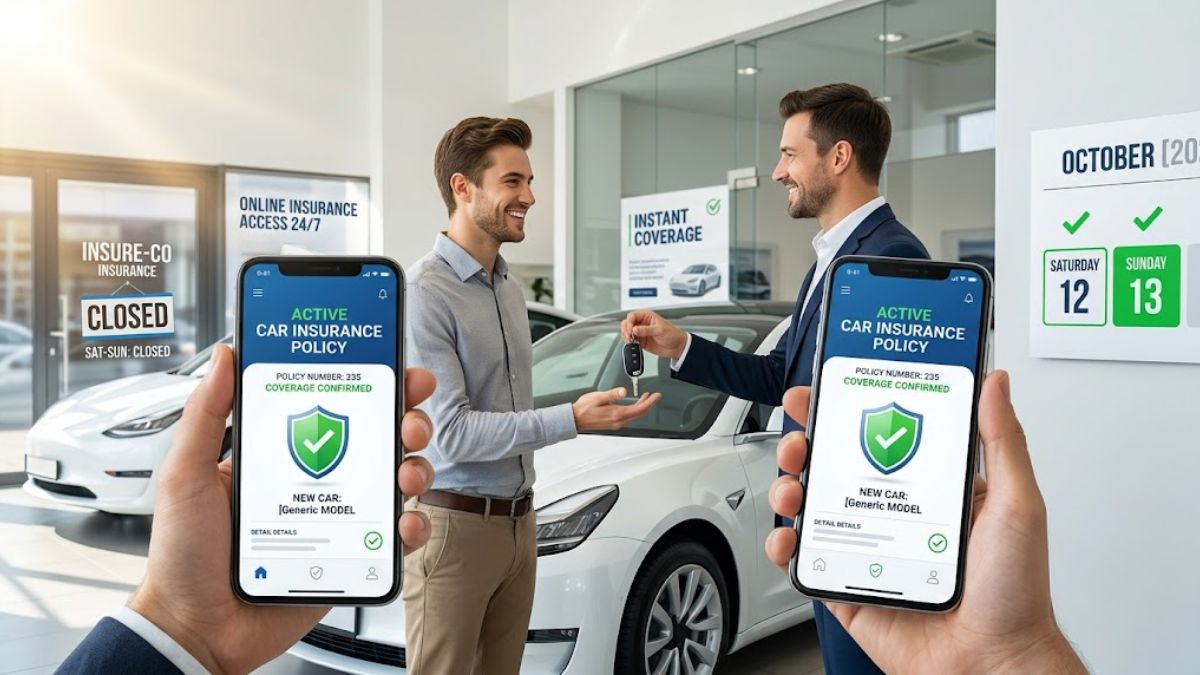

Buying a new car is an exciting experience, but it also comes with important responsibilities. One of the most critical steps before driving your new vehicle home is making sure it has proper insurance coverage.
Many buyers wonder what happens if they purchase a car on a weekend when insurance offices may be closed or agents may not be immediately available. They often ask: “Is there a car insurance grace period when buying a new car on a weekend?”
The short answer is that there is usually no automatic grace period that allows you to drive an uninsured new car after purchase. Insurance requirements depend on your location, your previous coverage, and the insurance company’s rules. In most cases, you need active insurance before you legally drive the vehicle.
Understanding how insurance works during weekend purchases can help you avoid fines, financial risks, and coverage problems.
What Is a Car Insurance Grace Period?
A car insurance grace period is a limited amount of time during which a policyholder may receive temporary coverage after a specific event, such as:
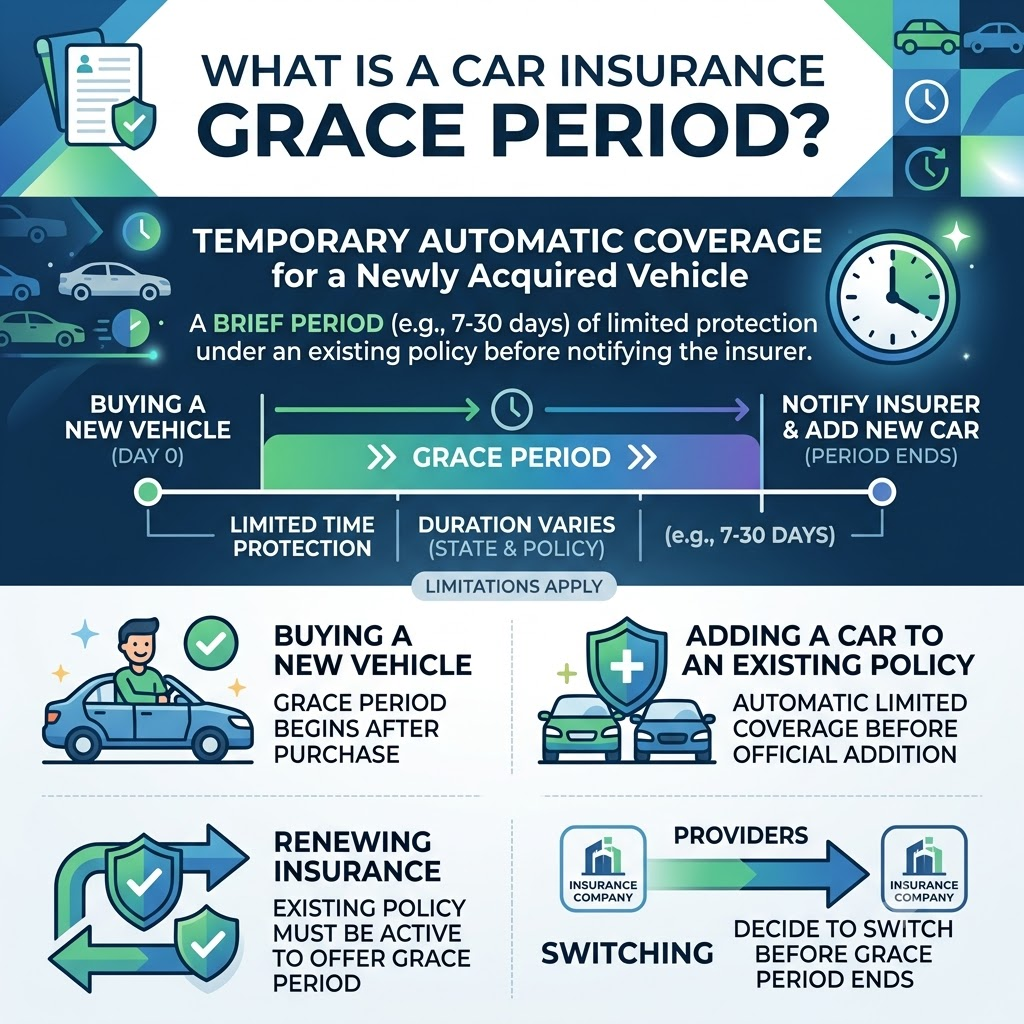
- Buying a new vehicle
- Adding a new car to an existing policy
- Renewing an expired policy
- Switching insurance providers
However, the term “grace period” can be misleading because it does not always mean you can drive any vehicle without insurance.
For new car purchases, the availability of a grace period depends on factors such as:
- Whether you already have an active auto insurance policy
- Whether you are replacing an existing vehicle
- Whether the insurer automatically extends coverage
- State or regional insurance laws
- The type of vehicle being purchased
Car Insurance Grace Period When Buying A New Car On A Weekend
Many buyers assume that because insurance companies and dealerships may have limited weekend hours, they automatically receive extra time to arrange coverage.
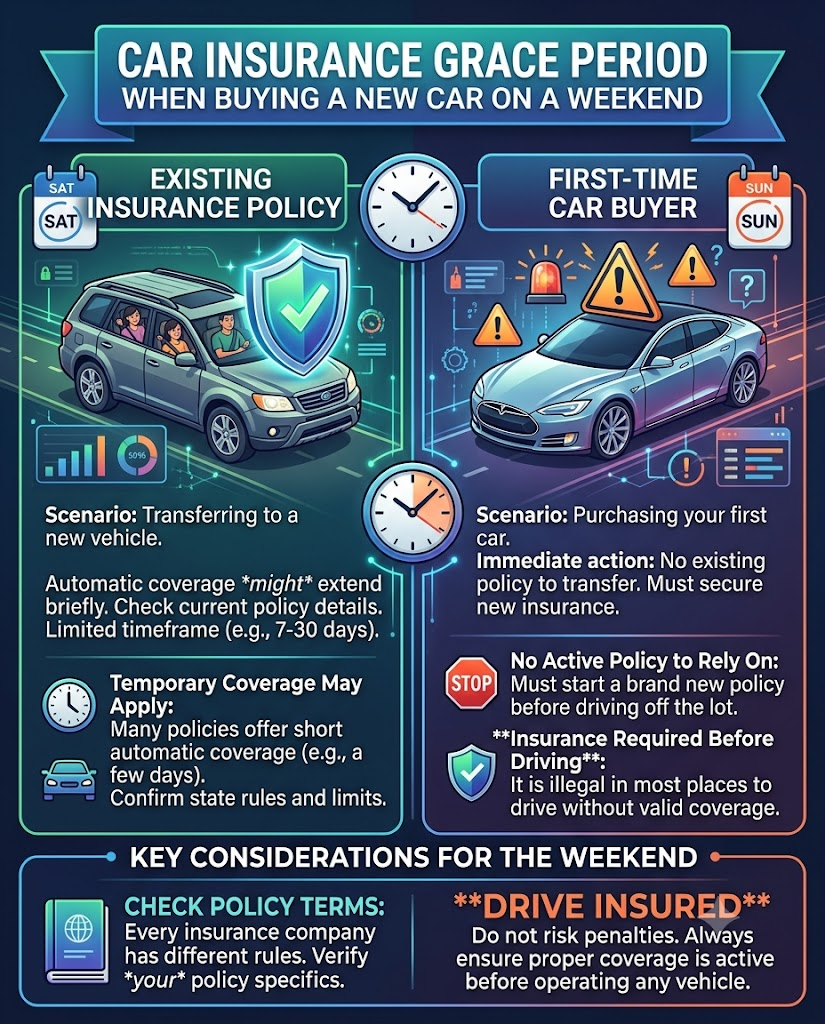
Generally, this is not true.
A weekend purchase does not automatically create a special insurance grace period. If you buy a vehicle on Saturday or Sunday, you are still responsible for having valid insurance before driving the car.
For example:
Scenario 1: You Already Have Car Insurance
If you already own a vehicle and have an active insurance policy, your insurer may provide temporary coverage for a newly purchased vehicle.
This is commonly called a newly acquired vehicle provision.
Depending on your policy, your current coverage may automatically extend to the new car for a limited period, often ranging from a few days to a few weeks.
However, this coverage may have limitations:
- It may only provide the same coverage as your existing vehicle
- It may not include full coverage for a new financed vehicle
- You may need to officially add the car within a specific timeframe
Always check your policy documents or contact your insurer.
Scenario 2: You Are Buying Your First Car
If this is your first vehicle and you do not already have auto insurance, you generally cannot rely on a grace period.
You will usually need to:
- Purchase insurance before taking delivery
- Provide proof of insurance to the dealership
- Activate the policy before driving away
Most dealerships will not allow a financed vehicle to leave without proof of insurance because lenders require coverage to protect their investment.
Why Weekend Car Purchases Create Confusion
Weekend car purchases can create uncertainty because several businesses may operate on limited schedules:
- Insurance offices may have reduced hours
- Agents may not respond immediately
- DMV or registration offices may be closed
- Banks and lenders may have processing delays
However, modern insurance systems allow many buyers to obtain coverage instantly through:
- Insurance company websites
- Mobile apps
- Online quote systems
- Independent insurance platforms
Many policies can be activated within minutes, allowing buyers to legally drive their new vehicle after completing the purchase.
Can You Drive a New Car Home Without Insurance?
In most cases, you should not drive a new car without confirmed insurance coverage.
Driving without insurance can lead to:
- Traffic fines
- Vehicle registration issues
- License penalties
- Personal financial liability after an accident
- Problems with financing agreements
If an accident happens before your insurance begins, you may be personally responsible for:
- Vehicle repairs
- Property damage
- Medical expenses
- Legal costs
A short delay in arranging insurance can create significant financial risk.
What Should You Do Before Buying a Car on Saturday or Sunday?
To avoid problems, prepare your insurance before visiting the dealership.
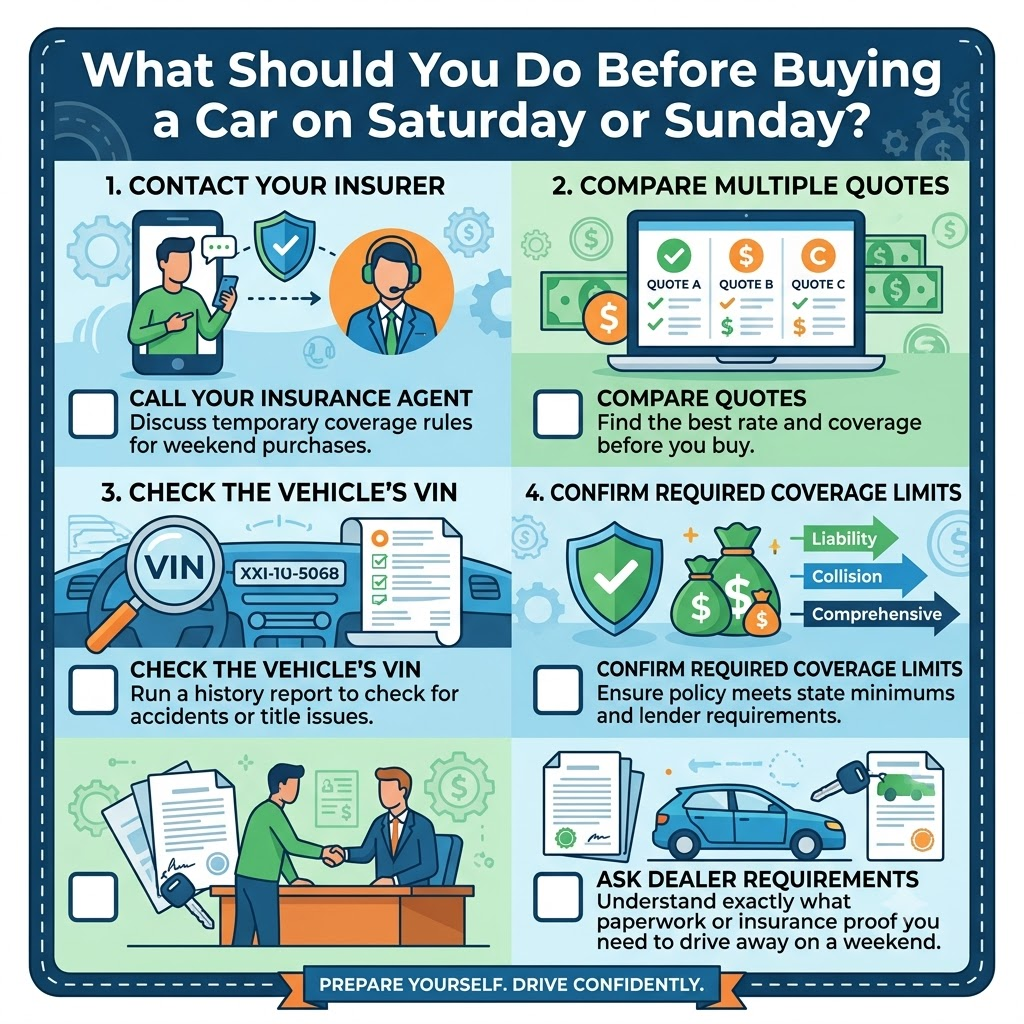
Contact Your Insurance Company in Advance
If you already have insurance, tell your provider:
- The expected purchase date
- Vehicle make and model
- VIN (if available)
- Desired coverage level
Many insurers can prepare the policy before you complete the purchase.
Get Insurance Quotes Before Shopping
Before buying the car, compare rates from multiple companies.
The cost of insurance can vary significantly based on:
- Vehicle type
- Driver history
- Location
- Coverage limits
- Deductibles
Ask the Dealer About Requirements
Before signing paperwork, confirm:
- Whether proof of insurance is required
- When you can take delivery
- Whether electronic insurance documents are accepted
How Long Does a New Car Insurance Grace Period Last?
When purchasing a new vehicle, many drivers assume they automatically receive a specific number of days to arrange insurance. However, the length and availability of a grace period depend on your existing policy and insurance provider.
There is no universal grace period that applies to every driver. Some insurers provide temporary coverage for newly purchased vehicles, while others may require immediate policy updates.
Understanding how these rules work can help you avoid accidentally driving without proper protection.
How Long Is the Newly Acquired Vehicle Grace Period?
If you already have an active auto insurance policy, many insurance companies include a newly acquired vehicle provision. This provision temporarily extends coverage from your existing policy to a newly purchased car.
The coverage period is often:
- 7 to 30 days, depending on the insurer and policy terms
- Sometimes longer in specific situations
- Subject to requirements for notifying the insurance company
During this period, you usually need to contact your insurer and officially add the new vehicle to your policy.
The temporary coverage gives you time to:
- Provide vehicle details
- Choose coverage limits
- Adjust deductibles
- Complete paperwork
- Finalize your insurance premium
However, waiting until the last day can create problems, especially if you need additional coverage for a financed vehicle.
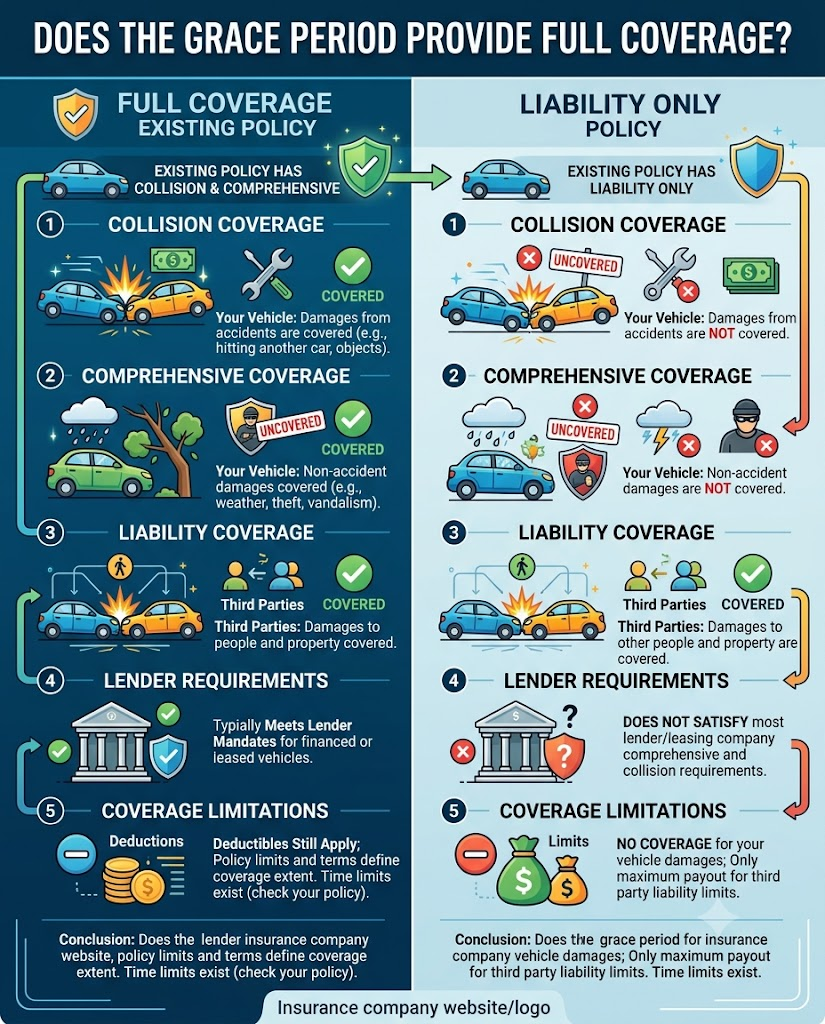
Does the Grace Period Provide Full Coverage?
A common misunderstanding is that a grace period automatically gives you the same protection as a brand-new insurance policy.
That is not always true.
In many cases, your new vehicle receives coverage based on the terms of your existing policy.
For example:
If Your Existing Vehicle Has Full Coverage
Suppose you currently insure a 2018 sedan with:
- Comprehensive coverage
- Collision coverage
- Liability coverage
You purchase a new SUV on Saturday. Your insurer may temporarily extend similar coverage to the SUV.
However, you may still need to update your policy to include:
- Higher coverage limits
- Gap insurance
- Additional lender requirements
If Your Existing Vehicle Has Only Liability Coverage
If your current car only has liability insurance, your newly purchased vehicle may receive only liability protection during the temporary period.
This can become a major issue if:
- The vehicle is brand new
- The vehicle is expensive
- The car is financed or leased
A lender typically requires comprehensive and collision coverage, meaning you may need to upgrade your policy before taking delivery.
What Happens If You Buy a New Car on Saturday and Insurance Opens Monday?
This is one of the most common situations buyers face.
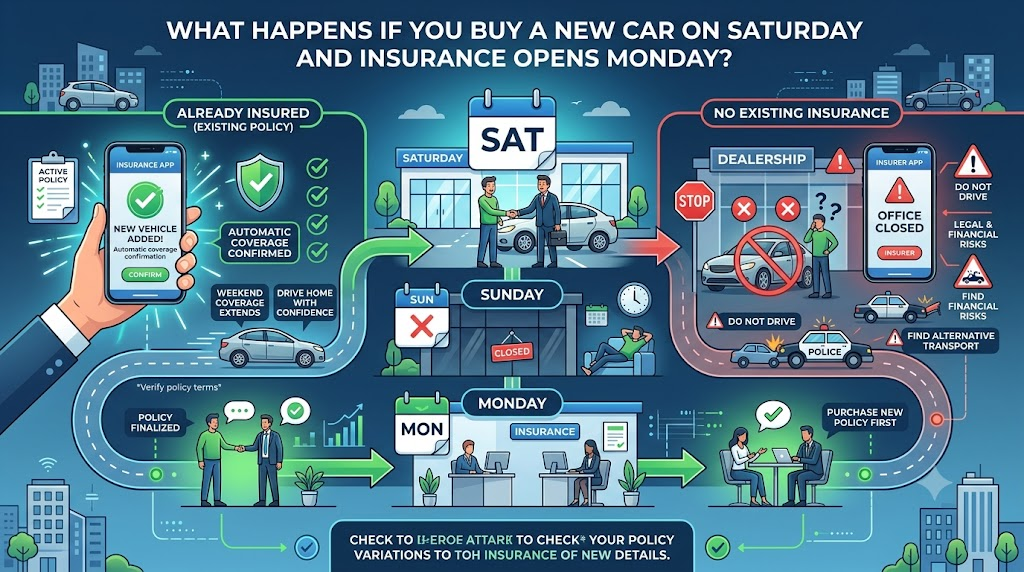
For example:
- You purchase a new car on Saturday afternoon
- Insurance offices are closed Sunday
- Your agent responds Monday morning
The solution depends on your situation.
If You Already Have Insurance
You may have temporary coverage through your existing policy if your insurer provides a newly acquired vehicle provision.
However, you should still:
- Confirm your coverage
- Notify your insurer as soon as possible
- Add the vehicle officially
Do not assume coverage exists without checking your policy.
If You Do Not Have Existing Insurance
You generally need to arrange coverage before driving the vehicle.
Possible solutions include:
- Buying insurance online instantly
- Calling an insurer with weekend customer support
- Purchasing coverage through the dealership
- Waiting until insurance is active before taking the car home
Most modern insurance companies allow policies to begin immediately, even outside normal business hours.
Does a Dealership Provide Temporary Insurance?
Some dealerships can help customers obtain insurance before delivery, but dealerships usually do not provide long-term temporary coverage.
A dealer may:
- Connect you with insurance partners
- Help submit insurance information
- Verify proof of coverage
However, the actual policy is issued by an insurance company.
Before signing the final purchase documents, ask:
- Who is providing the insurance?
- When does coverage start?
- Is the policy active immediately?
- Are the required coverage limits included?
Weekend Car Purchases From Private Sellers
Buying from a private seller is different from buying from a dealership.
A private seller usually will not help arrange insurance, and the responsibility falls entirely on the buyer.
Before completing the transaction:
- Arrange insurance coverage
- Confirm the policy effective date and time
- Transfer ownership documents
- Verify registration requirements
Driving a newly purchased vehicle away from a private seller without insurance can expose you to significant financial risk.
Why You Should Not Rely Only on a Grace Period
Even if your insurer provides temporary coverage, relying on it without confirmation can create problems.
Common issues include:
- Assuming coverage exists when it does not
- Forgetting to notify the insurer
- Having insufficient coverage for a financed vehicle
- Missing the deadline to add the vehicle
- Discovering coverage gaps after an accident
A quick call or online policy update can prevent expensive mistakes.
Insurance Requirements for Financed vs. Cash-Purchased New Cars
When buying a new vehicle, the insurance requirements can be different depending on whether you finance the car or pay for it completely with your own money.
Many buyers assume that paying cash means they can delay insurance, while financed buyers may assume the lender handles everything. Both assumptions can create problems.
Understanding the difference between financed and cash purchases can help you avoid coverage gaps.
Insurance Requirements When Financing a New Car
If you purchase a vehicle through a loan or lease, the lender usually requires proof of insurance before allowing you to take possession of the vehicle.
This is because the lender technically has a financial interest in the vehicle until the loan is paid off.
Most lenders require:
- Liability coverage
- Collision coverage
- Comprehensive coverage
- Minimum coverage limits set by the lender
In many cases, they may also recommend or require:
- Gap insurance
- Additional protection for the financed amount
A newly acquired vehicle grace period may not be enough for financed cars because your existing policy might not meet the lender’s requirements.
Why a Grace Period May Not Work for a Financed Vehicle
Suppose you currently have an older vehicle with basic liability insurance.
You purchase a new SUV on Saturday and finance it through a bank.
Your existing insurance policy may temporarily extend coverage to the new SUV. However, the lender may require:
- Full coverage
- Lower deductibles
- Higher liability limits
If your temporary coverage does not meet these requirements, the lender may not approve the vehicle delivery.
This is why dealerships usually ask for proof of insurance before handing over a financed vehicle.
Insurance Requirements When Paying Cash for a New Car
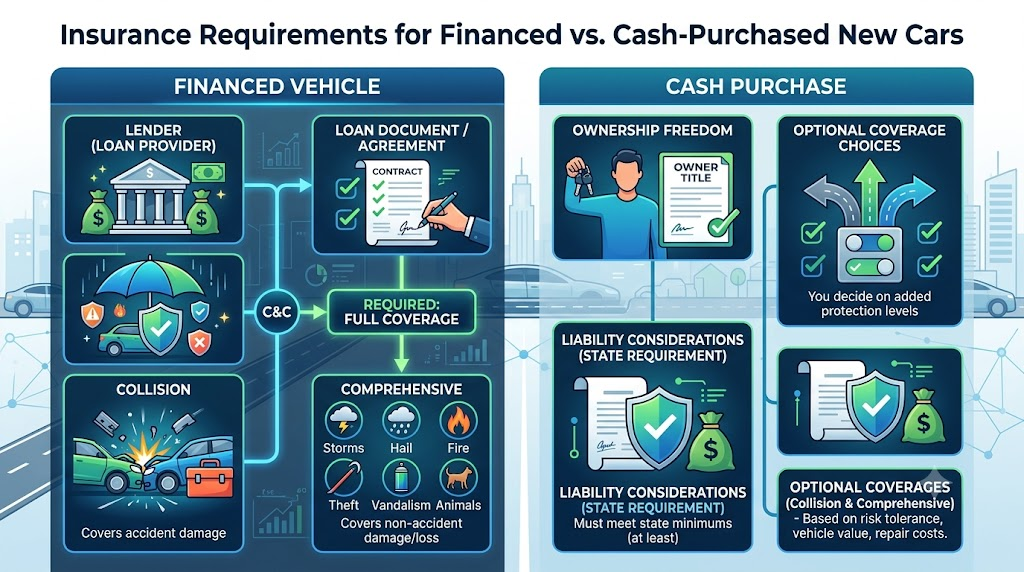
If you buy a vehicle outright without financing, there is no lender requiring specific coverage levels.
However, you are still legally responsible for having the required insurance before driving.
A cash purchase gives you more flexibility, but skipping insurance is still risky.
Many cash buyers choose:
Full Coverage Insurance
Recommended for:
- Brand-new vehicles
- Expensive cars
- Vehicles with high repair costs
Full coverage usually includes:
- Collision coverage for accident damage
- Comprehensive coverage for theft, weather, and other non-collision events
Liability-Only Insurance
Some owners choose liability-only coverage for older vehicles with lower market value.
However, liability insurance generally does not pay for damage to your own vehicle after an accident.
For a new car, many drivers prefer stronger protection because repair costs can be expensive.
What Happens If You Have an Accident During the Grace Period?
One of the biggest concerns buyers have is:
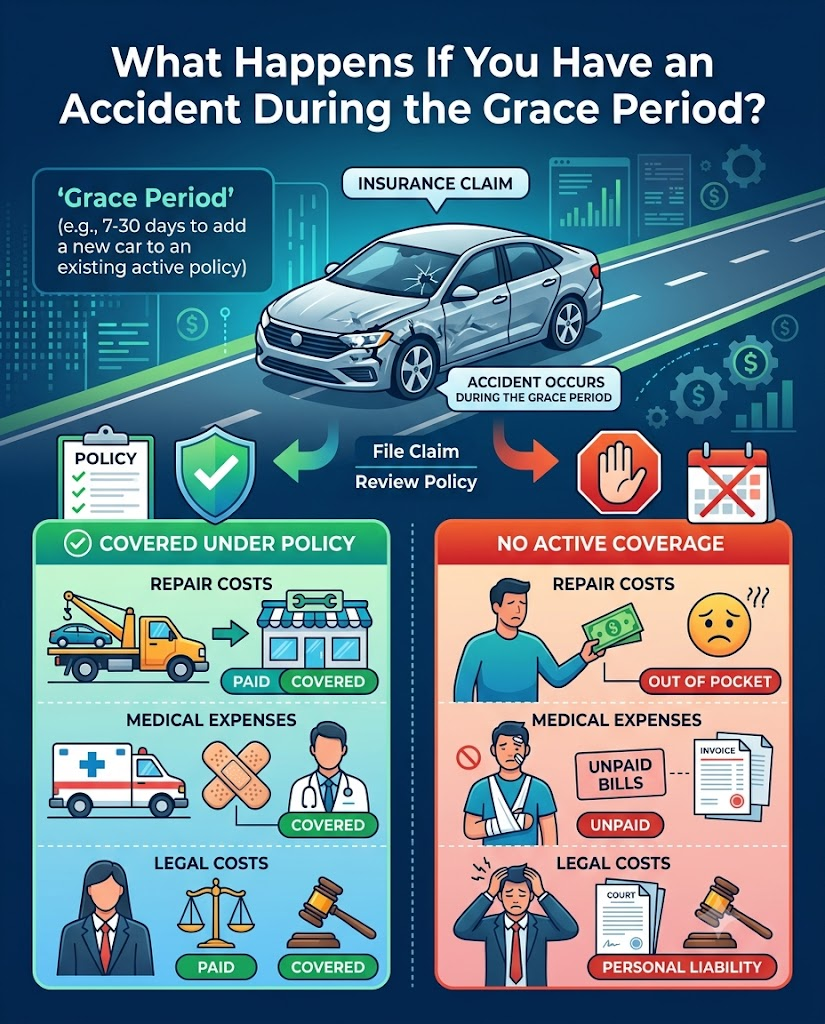
“What happens if I crash my new car before adding it to my insurance policy?”
The answer depends on whether your existing policy provides temporary coverage and what type of coverage applies.
If Your Policy Covers Newly Acquired Vehicles
If your insurer provides a grace period and you meet the policy requirements, your claim may be handled under your existing policy.
However, coverage limits may apply.
For example:
- Your old car has a $500 deductible
- Your new vehicle has higher repair costs
- Your insurer applies existing policy terms
You may still have out-of-pocket expenses.
If Your Vehicle Was Not Covered
If you purchased a vehicle without active insurance and caused an accident, you may personally pay for:
- Repairs to your vehicle
- Damage to another person’s vehicle
- Medical expenses
- Legal costs
A single accident can cost thousands of dollars, making insurance protection essential from the moment you take ownership.
Can You Add Insurance on a Weekend?
Yes, many insurance companies now allow customers to purchase or update policies outside normal business hours.
You may be able to:
- Get online quotes
- Purchase coverage through an insurer website
- Use a mobile insurance app
- Upload vehicle information digitally
- Receive electronic proof of insurance instantly
Before buying a car on a weekend, it is better to prepare your insurance information in advance.
Keep these details ready:
- Vehicle identification number (VIN)
- Purchase date
- Driver information
- Loan information (if financed)
- Desired coverage limits
What If You Buy a Car on a Holiday Weekend?
Holiday weekends create similar challenges because insurance offices, banks, and government offices may have limited availability.
Examples include:
- Memorial Day weekend
- Independence Day weekend
- Thanksgiving weekend
- Christmas holidays
The best approach is to arrange insurance before the holiday begins.
If you already have coverage, confirm whether your policy automatically protects newly purchased vehicles and how long that protection lasts.
State Laws, Common Mistakes, and How to Avoid Insurance Gaps When Buying a Car on a Weekend
Insurance rules for newly purchased vehicles can vary depending on where you live. While many insurance companies offer some form of temporary coverage for existing customers, the exact rules, deadlines, and requirements depend on your policy and local regulations.
Understanding these differences can help you avoid unexpected problems after buying a car.
Do State Laws Require Immediate Insurance on a New Car?
In most states, drivers must have valid auto insurance before operating a vehicle on public roads.
However, the exact requirements may differ.
Some states require:
- Minimum liability insurance before registration
- Proof of insurance before a dealer releases a vehicle
- Electronic insurance verification
- Continuous insurance coverage
Even if your state allows a short period to update your policy, that does not mean you should drive without confirming coverage.
Insurance laws generally focus on whether the vehicle is legally insured at the time it is driven, not whether you recently purchased it.
How Registration and Insurance Are Connected
When buying a new vehicle, insurance and registration often work together.
Many states require proof of insurance before completing registration because authorities want to ensure the vehicle has financial protection before it enters public roads.
A typical process looks like this:
- Purchase the vehicle
- Obtain insurance coverage
- Receive proof of insurance
- Complete registration and title transfer
- Begin driving legally
For dealership purchases, much of this process may be handled electronically.
For private sales, buyers usually need to manage these steps themselves.
Common Mistakes Buyers Make When Purchasing a Car on a Weekend
Buying a vehicle is exciting, and insurance details are sometimes overlooked. Here are some common mistakes that can create coverage problems.
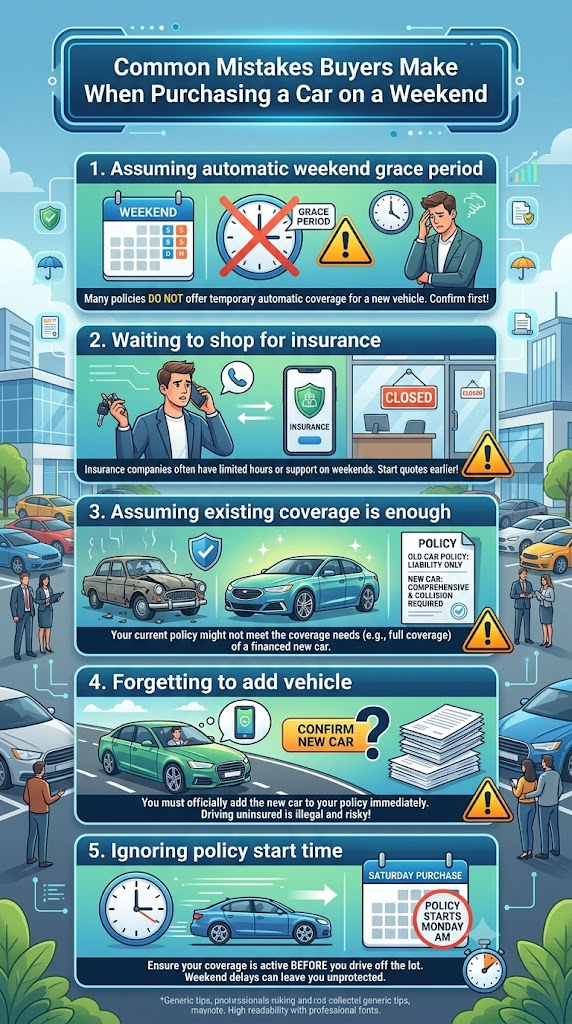
Mistake 1: Assuming There Is an Automatic Weekend Grace Period
Many buyers believe:
“I bought the car on Saturday, so I have until Monday to get insurance.”
This is not always true.
A weekend purchase does not automatically create extra protection. Your coverage depends on:
- Your existing insurance policy
- Your insurer’s rules
- Whether the vehicle qualifies as newly acquired
Always confirm before driving.
Mistake 2: Waiting Until After the Purchase to Shop for Insurance
Some buyers wait until they own the vehicle before comparing insurance options.
This can delay the process, especially if:
- The insurer needs additional information
- The vehicle requires special coverage
- The driver has multiple vehicles
- Financing paperwork is incomplete
A better approach is to compare insurance rates before buying the car.
Mistake 3: Assuming Existing Coverage Is Enough
Even if your current policy extends to a newly purchased vehicle, it may not provide the protection you need.
For example:
Your current car:
- Older sedan
- Liability-only coverage
Your new car:
- Brand-new SUV
- Financed purchase
Your temporary coverage may not satisfy lender requirements.
Always review coverage limits before driving away.
Mistake 4: Forgetting to Add the Vehicle Permanently
A grace period is temporary.
Some buyers forget to officially add the new vehicle after purchasing it.
This can lead to:
- Policy cancellation issues
- Coverage disputes
- Registration problems
- Claims complications
Set a reminder to update your policy immediately after buying the car.
Mistake 5: Not Checking the Effective Time of Coverage
Insurance policies do not always begin when you complete the purchase.
For example:
- You buy insurance online at 2 PM
- Coverage begins at midnight
- You drive the car home at 3 PM
During that gap, you may not have protection.
Always confirm:
- Effective date
- Effective time
- Confirmation number
- Proof of insurance
How to Avoid Insurance Problems When Buying a Car on a Weekend
A little preparation can make weekend car buying much easier.
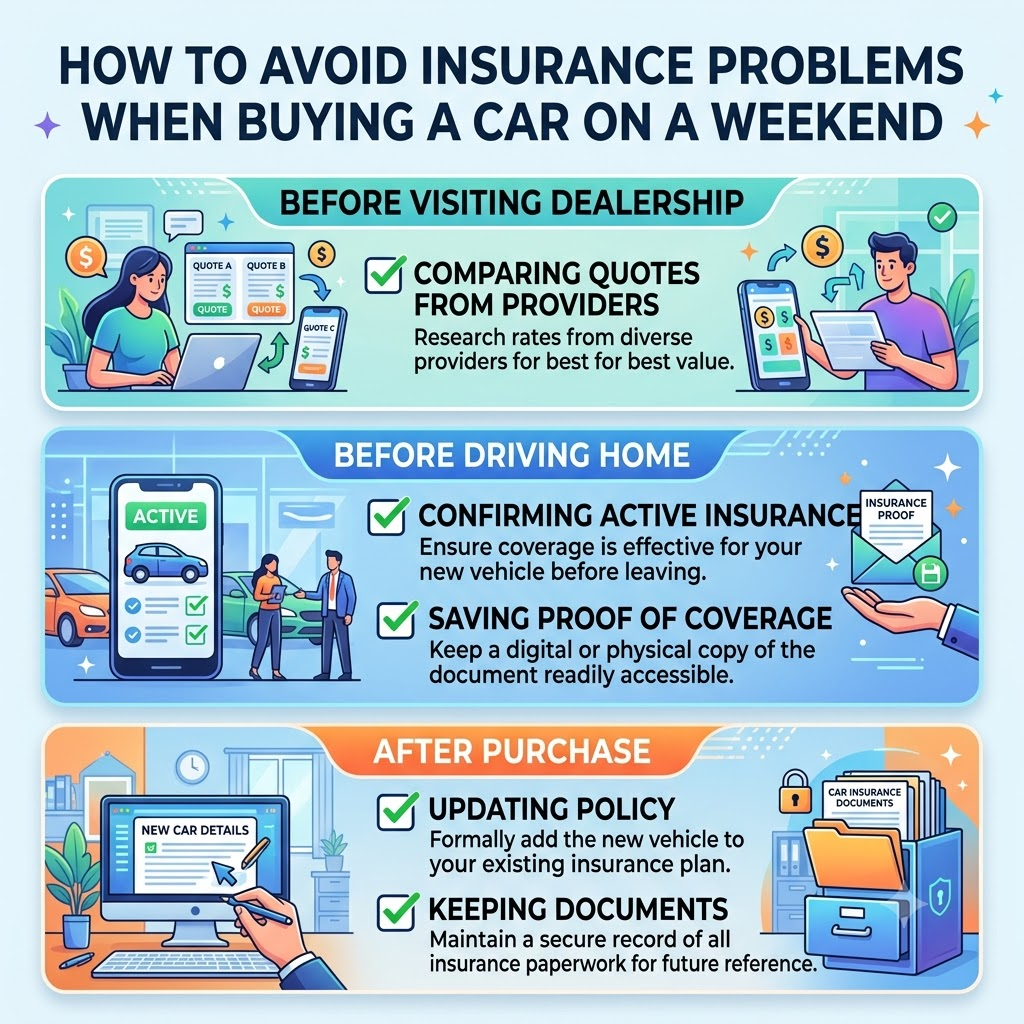
Before Visiting the Dealership
✔ Compare insurance quotes
✔ Contact your current insurer
✔ Ask about newly acquired vehicle coverage
✔ Prepare your driver’s license information
✔ Check lender insurance requirements
Before Driving the Car Home
✔ Confirm insurance is active
✔ Save electronic proof of insurance
✔ Verify coverage limits
✔ Confirm the vehicle has been added or qualifies for temporary coverage
After Purchase
✔ Update your insurance policy permanently
✔ Review your deductible and coverage options
✔ Keep all purchase and insurance documents
Why Planning Ahead Matters
A new vehicle is one of the largest purchases many people make. Spending a few minutes arranging insurance before purchase can prevent major financial problems.
A weekend car purchase does not have to be complicated. With online insurance services and proper preparation, most buyers can arrange coverage quickly and drive their new vehicle with confidence.
Weekend New Car Purchase Insurance Checklist
Before driving your new vehicle home, confirm:
✅ Insurance policy is active
✅ Coverage start date and time are confirmed
✅ Proof of insurance is available
✅ Financing requirements are satisfied
✅ Vehicle has been added to the policy
✅ Registration requirements are completed
Final Thoughts
Buying a new car on a weekend does not automatically provide extra time to arrange insurance. While many existing policies may offer temporary protection through a newly acquired vehicle provision, relying on an assumed grace period can create unnecessary risks.
The best approach is to prepare before purchase, confirm coverage before driving, and officially update your insurance policy as soon as possible.
A few minutes spent arranging insurance can protect you from major financial problems and ensure your new car ownership experience starts smoothly.