

Having a suspended driver’s license can create serious challenges, especially if you need to maintain a vehicle, renew registration, or prepare to drive again after your suspension ends.
One common question many California drivers ask is:
“Can I get car insurance with a suspended license in California?”
The answer is yes, in many cases you can still get car insurance with a suspended license in California, but it may be more difficult and may come with additional requirements.
Insurance companies have different rules regarding drivers with suspended licenses. Some insurers may refuse to issue a standard policy, while others may offer coverage with restrictions, higher premiums, or special documentation.
Understanding your options can help you avoid losing insurance coverage and create a smoother path toward reinstating your driving privileges.
What Does a Suspended License Mean in California?
A suspended driver’s license means the California Department of Motor Vehicles (DMV) has temporarily taken away your legal ability to drive.
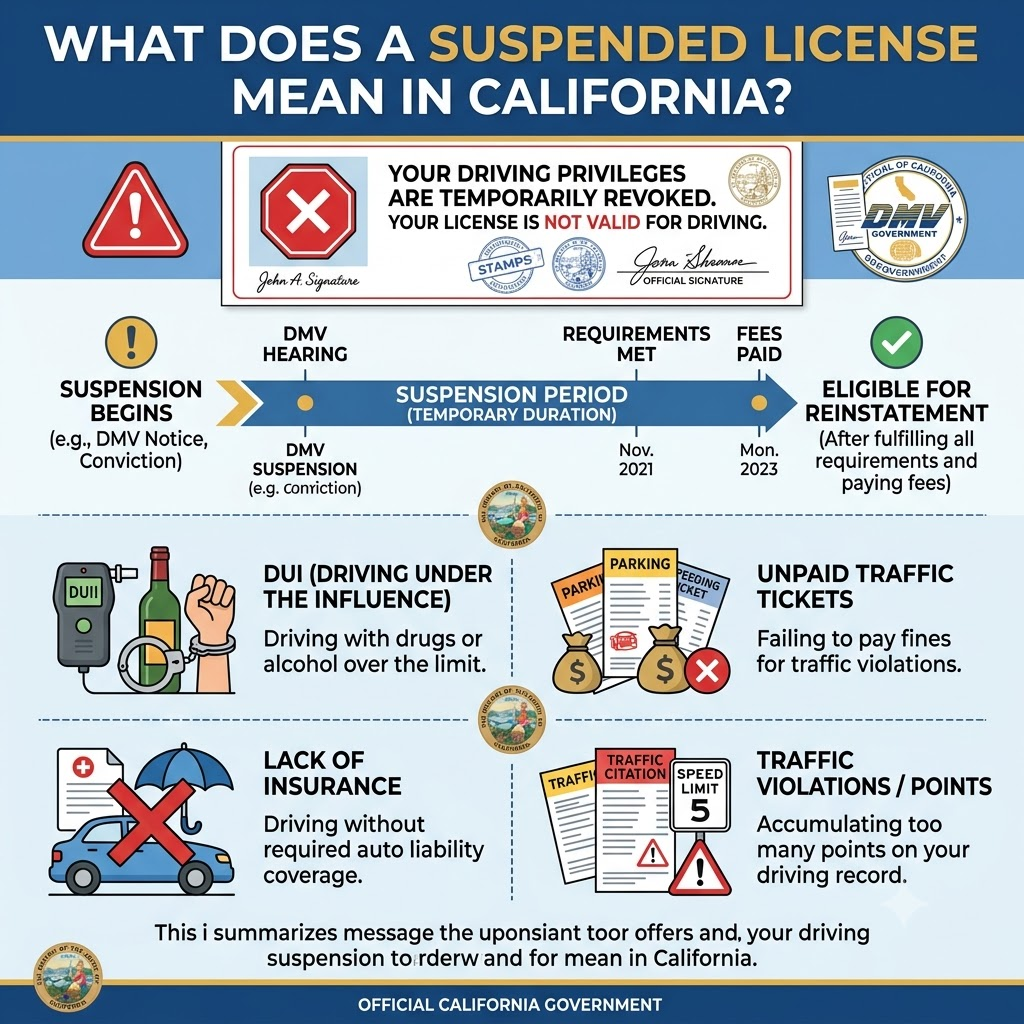
During a suspension period:
- You cannot legally operate a vehicle
- Driving may result in additional penalties
- You may face fines or extended suspension periods
- Your insurance rates may increase
A suspended license is different from a revoked license.
Suspended License
A suspension is usually temporary. After completing required steps, you may regain your driving privileges.
Examples of reasons for suspension include:
- Unpaid traffic tickets
- Driving under the influence (DUI)
- Too many points on your driving record
- Failure to provide proof of insurance
- Certain legal violations
- Medical or administrative issues
Revoked License
A revoked license is a more serious action where driving privileges are permanently canceled unless the driver takes steps to apply for reinstatement.
Can I Get Car Insurance With A Suspended License in California
Yes, you may be able to buy car insurance even if your California driver’s license is suspended.
However, the process depends on your situation.
Insurance companies generally look at:
- Why your license was suspended
- How long the suspension has lasted
- Your driving history
- Whether you own a vehicle
- Whether another licensed driver will operate the vehicle
A suspended license does not automatically prevent you from owning a vehicle or having insurance.
Why Would Someone Need Insurance With a Suspended License?
Many people assume that if they cannot drive, they do not need insurance.
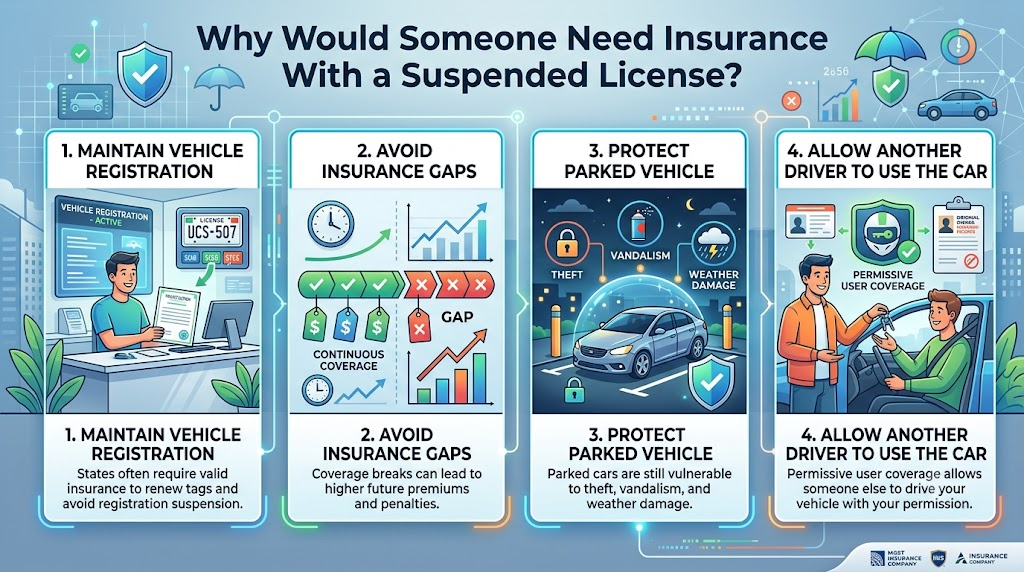
However, there are several situations where maintaining insurance is important.
To Keep a Registered Vehicle
California generally requires vehicles registered in the state to maintain proper insurance coverage.
Even if you cannot drive, your vehicle may still need insurance to remain legally registered.
To Prevent a Coverage Gap
Allowing your insurance policy to expire can create problems later.
A coverage lapse may lead to:
- Higher premiums in the future
- Difficulty finding affordable insurance
- Loss of continuous insurance discounts
To Protect a Vehicle You Own
A parked vehicle can still face risks, including:
- Theft
- Vandalism
- Fire damage
- Weather damage
- Accidental damage
Comprehensive coverage may protect against some of these risks.
If Someone Else Drives Your Vehicle
You may own the vehicle while another person operates it.
For example:
- A spouse drives your car
- A family member uses the vehicle
- A caregiver or friend drives occasionally
The insurance policy can list the licensed driver while you remain the vehicle owner.
Can You Insure a Car If Your License Is Suspended but Someone Else Drives It?
Yes, this is one of the most common situations.
Insurance companies may allow you to insure a vehicle if another person is the primary driver.
For example:
- You own the car
- Your license is suspended
- Your spouse has a valid California license
- Your spouse drives the vehicle regularly
The insurer may:
- List you as the vehicle owner
- Exclude you as a driver
- Rate the policy based on the licensed driver
Rules vary between insurance companies.
Do Insurance Companies Check Your License Status?
Yes.
When applying for auto insurance, insurers usually review:
- Driver’s license status
- Driving record
- DMV information
- Previous claims history
A suspended license may appear during the insurance company’s underwriting process.
This information helps insurers determine:
- Whether they will offer coverage
- What premium to charge
- What restrictions apply
Will a Suspended License Affect Your Insurance Rates?
A suspended license can significantly affect insurance costs.
The impact depends on the reason for suspension.
For example:
DUI-Related Suspension
A DUI suspension may result in:
- Much higher premiums
- Requirement for SR-22 filing
- Fewer available insurance companies
Administrative Suspension
A suspension caused by paperwork issues or unpaid fees may have a smaller impact.
Multiple Violations
A history of repeated violations may make insurance more expensive or harder to obtain.
Can You Renew Existing Car Insurance With a Suspended License?
Often, yes.
If you already have an insurance policy before your license suspension, your insurer may allow you to keep the policy active.
However, you should inform your insurance company about changes in your driving status.
Depending on your situation, your insurer may:
- Continue coverage
- Adjust your policy
- Require a licensed driver
- Change your premium
Never assume your policy automatically continues without checking.
SR-22 Insurance, Insurance Without a Valid License, and Non-Owner Options in California
After a license suspension, many California drivers discover that getting back on the road involves more than simply waiting for the suspension period to end. In some cases, the California DMV requires proof of financial responsibility before restoring driving privileges.
This is where SR-22 insurance becomes important.
What Is SR-22 Insurance in California?
An SR-22 is not a type of insurance policy. It is a certificate filed by your insurance company with the California DMV proving that you carry the required auto insurance coverage.
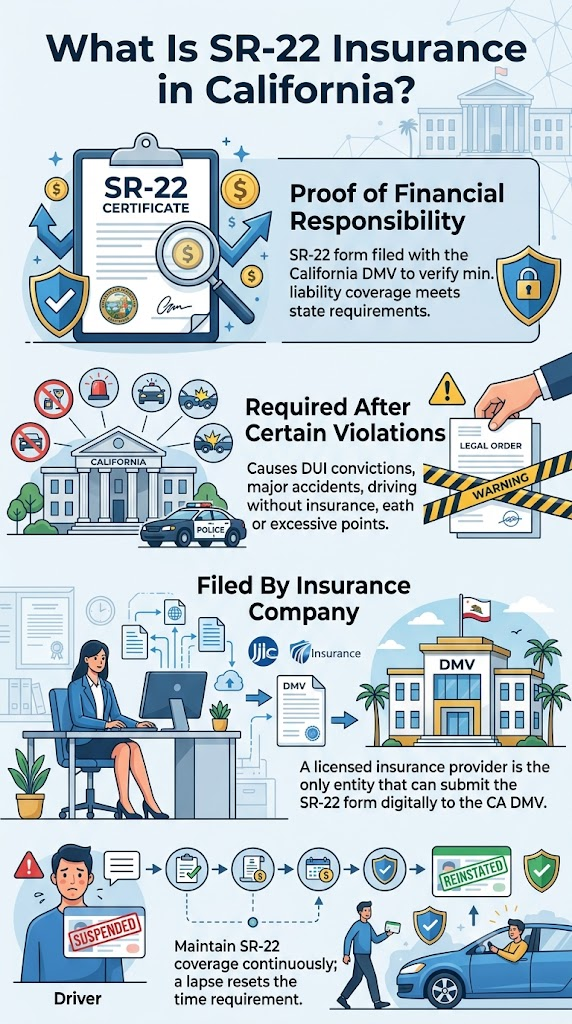
Drivers may need an SR-22 after certain violations or license suspensions.
Common reasons include:
- DUI convictions
- Driving without insurance
- Serious traffic violations
- Multiple at-fault accidents
- License suspension related to financial responsibility requirements
The SR-22 confirms to the DMV that you have maintained the required insurance coverage.
How Long Do You Need SR-22 Insurance in California?
The required SR-22 period depends on the reason for your suspension.
In many cases, California requires drivers to maintain an SR-22 for:
Three years
However, the exact period depends on your individual situation and DMV requirements.
During this period:
- Your insurance policy must remain active
- You cannot allow coverage to lapse
- Your insurer must notify the DMV if your policy is canceled
A lapse in SR-22 coverage can result in additional license problems.
Can You Get SR-22 Insurance With a Suspended License?
Yes, many California drivers can obtain SR-22 insurance while their license is suspended.
In fact, obtaining SR-22 coverage may be one of the requirements for reinstating your driving privileges.
The process usually involves:
- Contacting an insurance company that offers SR-22 filings
- Purchasing the required policy
- Having the insurer file the SR-22 with the California DMV
- Completing any additional DMV requirements
Once all requirements are satisfied, you may become eligible to restore your driving privileges.
Can You Get Car Insurance Without a Valid Driver’s License in California?
Yes, it may be possible to get car insurance without an active driver’s license, but options can be limited.
Insurance companies usually prefer customers with valid licenses because driving history is a major factor in determining risk.
However, some situations allow coverage without an active license.
Examples include:
- You own a vehicle but cannot currently drive
- Another licensed driver operates your vehicle
- You need insurance to maintain registration
- You need comprehensive coverage for a parked vehicle
How to Get Insurance If Your License Is Suspended but You Own a Car
If you own a vehicle but cannot legally drive, you may have several options.
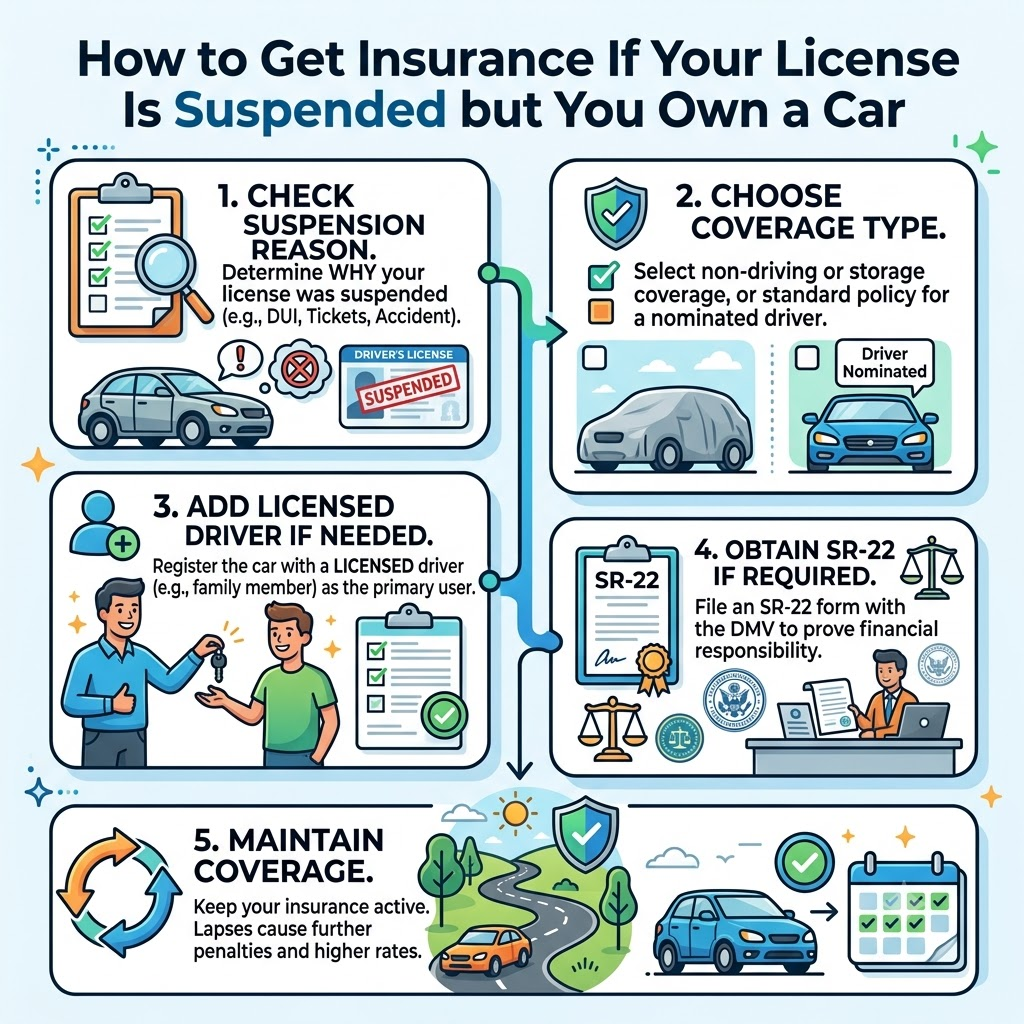
Option 1: Add a Licensed Driver to Your Policy
This is one of the most common solutions.
Example:
- You own a Toyota Camry
- Your license is suspended
- Your spouse or family member drives the vehicle
The insurance policy can be based on the licensed driver who operates the car.
The insurer may:
- List you as the owner
- List the other person as the primary driver
- Exclude you from driving
Option 2: Purchase Comprehensive-Only Coverage
If your vehicle is stored and nobody drives it, you may consider coverage that protects against non-driving risks.
Comprehensive coverage may help protect against:
- Theft
- Fire
- Vandalism
- Weather damage
- Falling objects
However, availability depends on the insurance company.
Not every insurer offers comprehensive-only policies.
Can You Get Non-Owner Car Insurance With a Suspended License?
Non-owner insurance provides liability coverage for people who drive vehicles they do not own.
It is commonly used by drivers who:
- Borrow vehicles occasionally
- Need proof of insurance for license reinstatement
- Need an SR-22 filing without owning a car
However, obtaining non-owner insurance with a suspended license can be more complicated.
Some insurers may offer it, while others may require:
- License reinstatement first
- SR-22 requirement confirmation
- Proof of future driving eligibility
A non-owner policy does not allow you to legally drive while your license remains suspended.
Can You Drive Someone Else’s Car With a Suspended License in California?
No.
Insurance coverage does not give you permission to drive.
If your California driver’s license is suspended, you cannot legally operate a vehicle, even if:
- The vehicle is insured
- The owner gives permission
- You have insurance coverage
Driving during a suspension can result in:
- Criminal penalties
- Fines
- Extended suspension
- Vehicle-related consequences
Insurance protects financial risks, but it does not restore driving privileges.
Can Someone Else Insure a Car That Is Registered in Your Name?
Yes, depending on the insurer’s rules.
Situations where this may happen include:
- A spouse regularly drives the vehicle
- A family member operates the car
- The owner cannot currently drive
Insurance companies typically want the policy information to accurately reflect:
- Vehicle ownership
- Primary driver
- Regular usage
Providing incorrect driver information can create claim problems later.
What Happens If Your Insurance Expires During a License Suspension?
Allowing your insurance to lapse can create additional problems.
Possible consequences include:
- Registration suspension issues
- Higher future premiums
- Loss of insurance history discounts
- Difficulty obtaining affordable coverage
If you are not driving, you may still need some form of coverage depending on your vehicle status.
Steps to Take Before Your License Is Reinstated
If you are preparing to get your driving privileges back, consider completing these steps early:
✅ Check your California DMV requirements
✅ Obtain SR-22 insurance if required
✅ Pay outstanding fines or fees
✅ Complete required classes or programs
✅ Maintain continuous insurance coverage
✅ Confirm reinstatement eligibility
Planning ahead can help you avoid delays when your suspension period ends.
Best Insurance Options When Your License Is Suspended in California
The right insurance option depends on your situation.
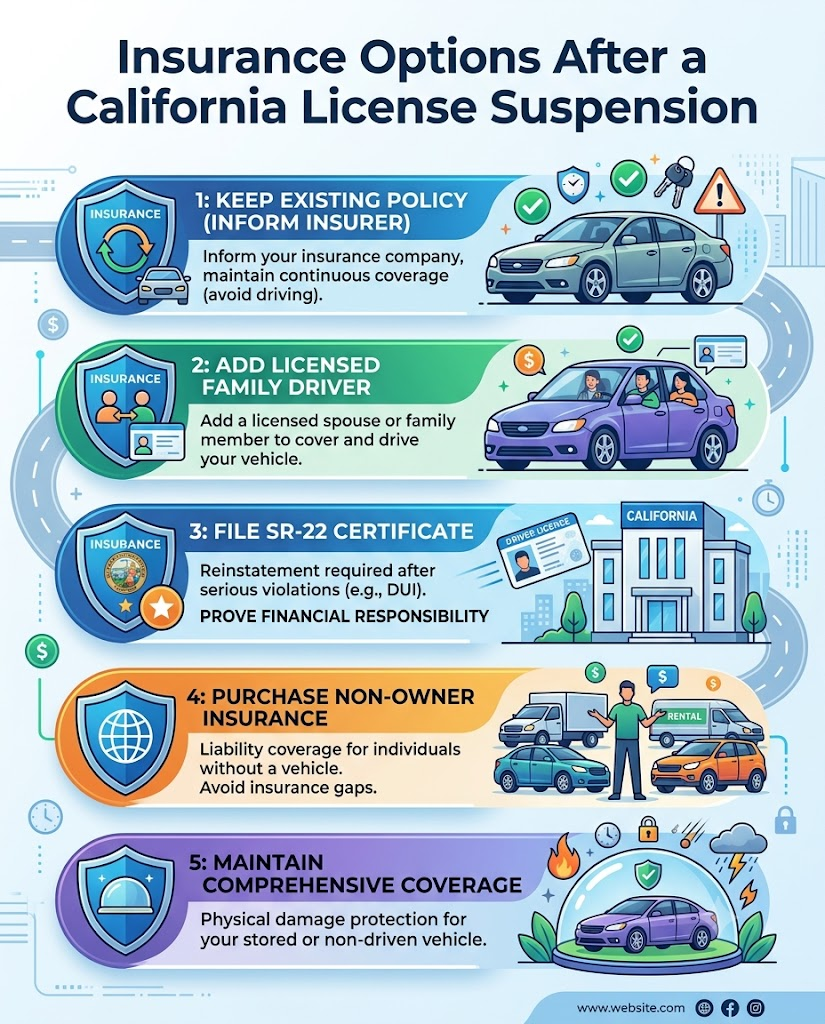
Common choices include:
- Keeping your existing auto insurance policy
- Adding a licensed driver to your policy
- Getting SR-22 insurance
- Buying a non-owner policy
- Maintaining comprehensive coverage for a parked vehicle
Option 1: Keep Your Existing Car Insurance Policy
If you already have car insurance before your suspension, keeping the policy active may be beneficial.
Maintaining coverage can help you avoid:
- Insurance gaps
- Higher future premiums
- Difficulty finding coverage later
Your insurer may adjust your policy based on your situation.
Possible changes include:
- Removing you from the active driver rating
- Adding another primary driver
- Adjusting coverage limits
- Updating your policy details
Always inform your insurer about your license status to avoid issues during a claim.
Option 2: Add a Licensed Driver to Your Policy
If someone else drives your vehicle, adding them to your policy may be the most practical solution.
Examples:
- Your spouse uses the car
- Your adult child drives the vehicle
- A family member regularly operates the vehicle
The insurance company may rate the policy based on the licensed driver rather than your suspended license.
You should provide accurate information about:
- Who drives the vehicle
- How often it is used
- Where it is stored
Incorrect information can cause claim problems.
Option 3: Get SR-22 Insurance
If your suspension requires an SR-22, you will need an insurer that provides SR-22 filings.
SR-22 insurance may be required before:
- License reinstatement
- Driving privilege restoration
- DMV approval
Because SR-22 drivers are considered higher risk, premiums are often more expensive.
The cost depends on:
- Driving history
- Reason for suspension
- Vehicle type
- Location
- Coverage limits
Option 4: Buy Non-Owner SR-22 Insurance
If you do not own a vehicle but need insurance proof for reinstatement, a non-owner SR-22 policy may be an option.
This type of policy typically provides liability coverage when you drive vehicles you do not own.
It may help drivers who:
- Sold their vehicle during suspension
- Borrow vehicles after reinstatement
- Need SR-22 filing without owning a car
However, it does not allow you to drive while your license is suspended.
Option 5: Comprehensive Coverage for a Stored Vehicle
If your vehicle is parked and not being driven, you may want protection against non-driving risks.
Comprehensive coverage may protect against:
- Theft
- Fire
- Vandalism
- Weather damage
- Falling objects
This can be useful if you own a valuable vehicle but cannot legally operate it.
How Much Does Car Insurance Cost With a Suspended License in California?
Insurance costs vary widely depending on the reason for suspension and your overall driving record.
A suspended license can increase premiums because insurers may consider you a higher-risk driver.
Factors that influence cost include:
Reason for Suspension
A suspension caused by a DUI or serious violation may significantly increase rates.
A suspension caused by administrative issues may have a smaller impact.
Driving History
Insurance companies review:
- Accidents
- Traffic violations
- Claims history
- Previous insurance coverage
A clean record before suspension may help reduce the impact.
Type of Vehicle
Insurance costs are also affected by the vehicle you own.
Factors include:
- Vehicle value
- Repair costs
- Safety features
- Theft risk
A high-value vehicle may cost more to insure.
Coverage Amount
Higher coverage limits usually increase premiums.
Examples:
- Higher liability limits
- Comprehensive coverage
- Lower deductibles
While these increase cost, they provide stronger protection.
How to Lower Car Insurance Costs After a License Suspension
Although a suspension can make insurance more expensive, several strategies may help reduce costs.
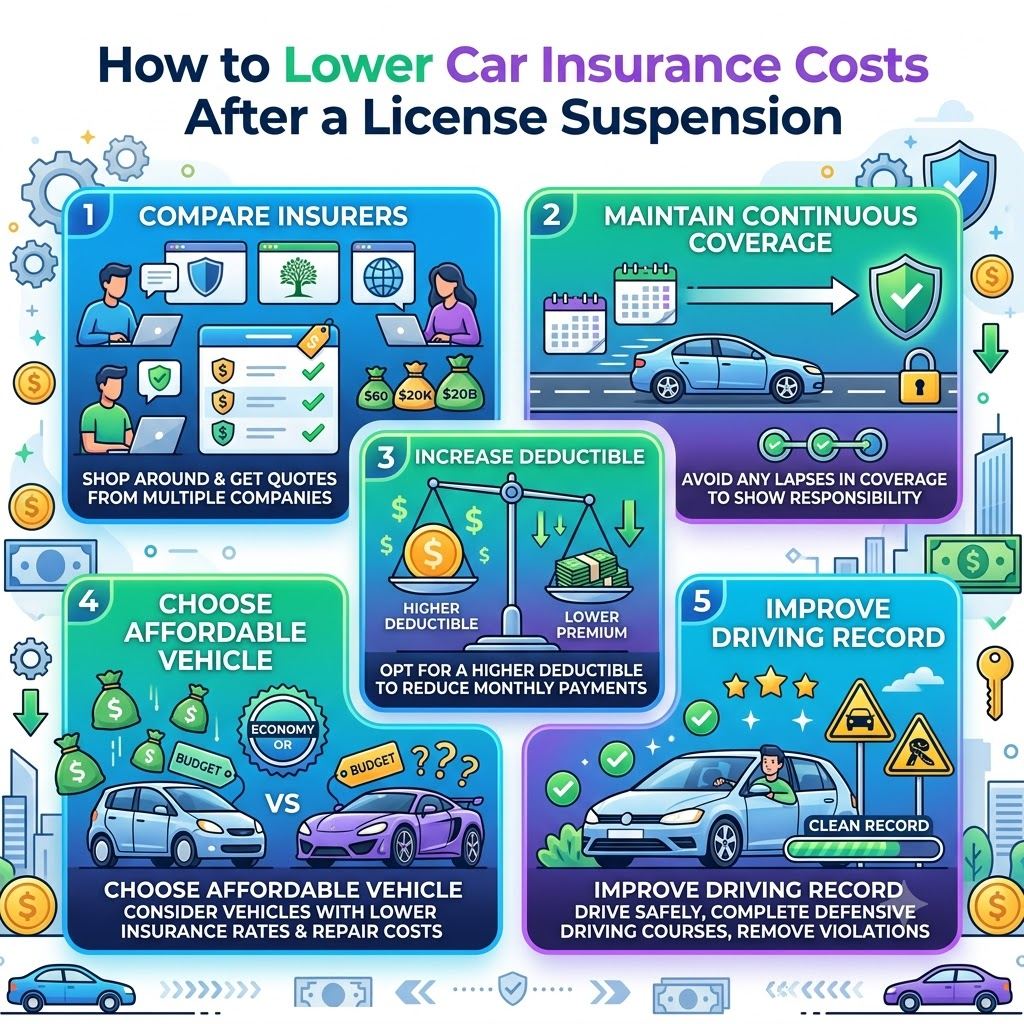
Compare Multiple Insurance Companies
Insurance companies evaluate risk differently.
One company may charge significantly more than another for the same driver profile.
Compare:
- Premiums
- Coverage options
- SR-22 availability
- Customer service reputation
Maintain Continuous Insurance Coverage
Avoid letting your policy expire.
A coverage lapse can make future insurance more expensive because insurers may view gaps as a risk factor.
Choose an Appropriate Vehicle
If you need to purchase a vehicle after suspension, insurance costs may vary significantly.
Lower-cost vehicles often have:
- Cheaper repairs
- Lower theft risk
- Lower insurance premiums
Increase Your Deductible
A higher deductible may reduce your premium.
For example:
A $1,000 comprehensive deductible may cost less than a $250 deductible.
However, make sure you can afford the deductible if you need to file a claim.
Complete Required Programs
For certain suspensions, completing required programs may help you move toward reinstatement and eventually improve your insurance situation.
Examples include:
- DUI programs
- Defensive driving courses
- Court requirements
Common Mistakes Drivers Make During a License Suspension
Many drivers unintentionally create bigger problems during a suspension period.
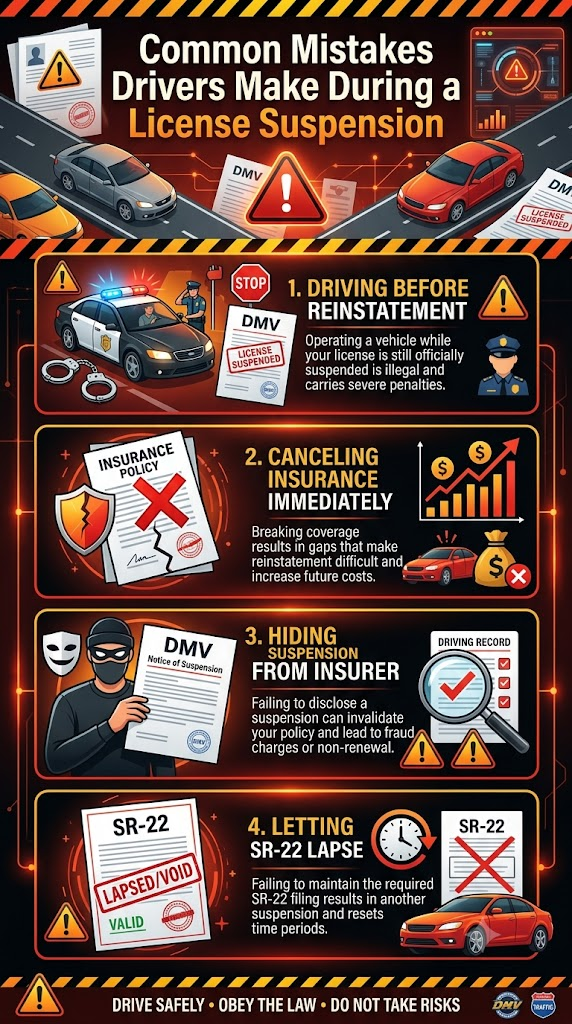
Mistake 1: Driving Before Reinstatement
A suspended license means you cannot legally drive.
Driving during suspension can lead to:
- Additional penalties
- Longer suspension
- Criminal charges in some situations
Mistake 2: Canceling Insurance Immediately
Some drivers cancel insurance because they cannot drive.
However, a coverage gap may create problems later.
Before canceling, consider:
- Vehicle ownership status
- Registration requirements
- Future insurance costs
Mistake 3: Hiding the Suspension From the Insurance Company
Failing to disclose a suspended license can create serious issues.
Insurance companies may discover license status through DMV records.
Providing incorrect information can lead to:
- Policy cancellation
- Claim disputes
- Coverage problems
Mistake 4: Letting SR-22 Coverage Lapse
If you are required to carry SR-22 insurance, maintaining continuous coverage is essential.
A cancellation may be reported to the DMV and could affect your reinstatement status.
How to Get Car Insurance With a Suspended License in California (Step-by-Step Guide)
Getting car insurance with a suspended license may require extra steps, but preparation can make the process much easier.
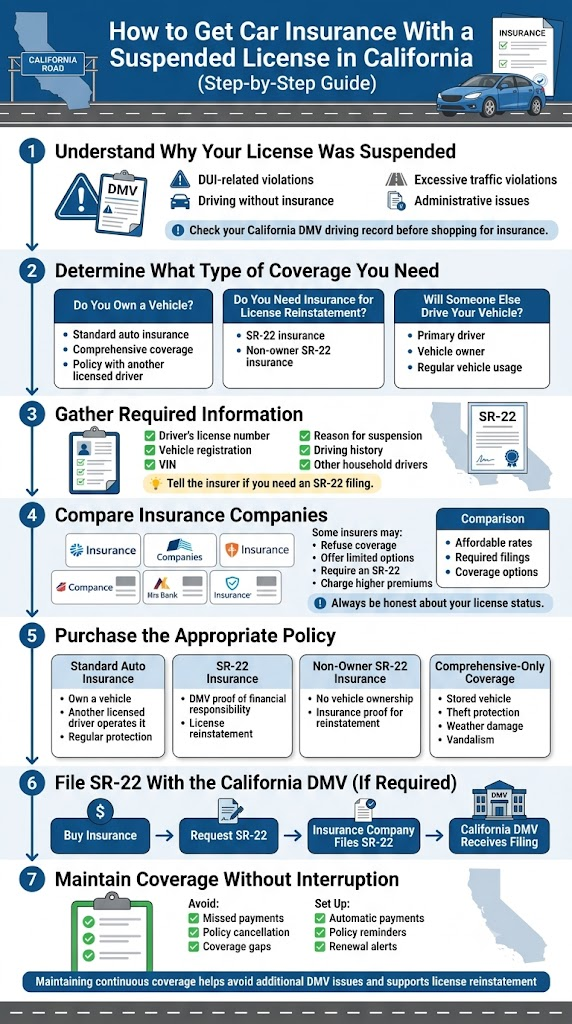
Whether you need coverage to maintain your vehicle, satisfy DMV requirements, or prepare for license reinstatement, understanding the process can help you avoid delays.
Step 1: Understand Why Your License Was Suspended
Before shopping for insurance, determine the reason for your suspension.
The cause of your suspension affects:
- Insurance availability
- Premium costs
- Whether you need an SR-22 filing
- Reinstatement requirements
Common suspension reasons in California include:
- DUI-related violations
- Driving without insurance
- Unpaid traffic fines
- Failure to appear in court
- Excessive traffic violations
- Administrative issues
You can check your driving status through the California DMV to understand your current requirements.
Step 2: Determine What Type of Coverage You Need
Your insurance needs depend on your situation.
Ask yourself:
Do You Own a Vehicle?
If yes, you may need:
- Standard auto insurance
- Comprehensive coverage
- A policy with another licensed driver listed
Do You Need Insurance for License Reinstatement?
If your suspension requires proof of insurance, you may need:
- SR-22 insurance
- Non-owner SR-22 insurance
Will Someone Else Drive Your Vehicle?
If another person operates your vehicle, the policy should accurately list:
- Primary driver
- Vehicle owner
- Regular vehicle usage
Step 3: Gather Required Information
Insurance companies may ask for additional details when your license is suspended.
Prepare:
- Driver’s license number
- Vehicle registration information
- Vehicle identification number (VIN)
- Reason for suspension
- Driving history details
- Information about other drivers in your household
If you need SR-22 insurance, inform the insurer before purchasing the policy.
Step 4: Compare Insurance Companies
Not every insurance company handles suspended-license drivers the same way.
Some insurers may:
- Refuse coverage
- Offer limited options
- Require an SR-22
- Charge higher premiums
Compare multiple providers to find:
- Affordable rates
- Required filings
- Suitable coverage options
When requesting quotes, be honest about your license status.
Step 5: Purchase the Appropriate Policy
Once you find an insurer, choose coverage based on your needs.
Possible policies include:
Standard Auto Insurance
Used when:
- You own a vehicle
- Another licensed driver operates it
- You need regular vehicle protection
SR-22 Insurance
Used when:
- California DMV requires proof of financial responsibility
- You need license reinstatement approval
Non-Owner SR-22 Insurance
Used when:
- You do not own a vehicle
- You need insurance proof for reinstatement
Comprehensive-Only Coverage
Used when:
- Your vehicle is stored
- Nobody is driving it
- You want protection against theft or damage
Step 6: File SR-22 With the California DMV (If Required)
If SR-22 is required, your insurance company usually files it electronically with the DMV.
The process involves:
- Buying an eligible insurance policy
- Requesting an SR-22 filing
- Insurance company submitting the certificate
- DMV receiving proof of coverage
You may still need to complete other requirements before your license is restored.
Step 7: Maintain Coverage Without Interruption
Maintaining insurance is extremely important after a suspension.
Avoid:
- Missed payments
- Policy cancellation
- Coverage gaps
If you have SR-22 requirements, a lapse can create additional DMV problems.
Set up:
- Automatic payments
- Policy reminders
- Renewal alerts
Can You Register a Car With a Suspended License in California?
Yes, having a suspended license does not automatically prevent you from owning or registering a vehicle.
A driver’s license and vehicle ownership are separate issues.
You may still:
- Own a vehicle
- Register a vehicle
- Insure a vehicle
However, you cannot legally drive the vehicle until your license is reinstated.
Can You Buy a Car With a Suspended License in California?
Yes, you may generally purchase a vehicle with a suspended license.
A license suspension affects your ability to drive, not your ability to own property.
However, practical issues may arise.
For example:
- You may not be able to test drive the vehicle
- Financing companies may require additional documentation
- Insurance arrangements may be more complicated
A licensed driver may need to drive the vehicle for you.
Can You Sell a Car While Your License Is Suspended?
Yes.
A suspended license does not prevent you from selling your vehicle.
You can:
- Transfer ownership
- Complete required paperwork
- Sell the vehicle to another person
The buyer will need to handle registration and insurance requirements.
Can Someone Else Drive Your Car During Your Suspension?
Yes, if they are properly licensed and insured.
Examples include:
- Spouse
- Family member
- Caregiver
- Friend
However, your insurance company must know who regularly drives the vehicle.
Failing to list a regular driver can create problems if an accident occurs.
What Happens If Someone Drives Your Car and Gets Into an Accident?
If a licensed person drives your vehicle with permission, your insurance policy may provide coverage depending on the policy terms.
The claim may depend on:
- Who was driving
- Whether they were listed on the policy
- Vehicle usage
- Coverage limits
Your suspended license does not automatically prevent insurance from covering another authorized driver.
How Long Does a Suspended License Stay on Your Record in California?
The impact of a suspension depends on the reason and the type of violation.
Certain violations may remain visible on your driving record for years.
Insurance companies may review:
- Suspension history
- Traffic violations
- Accidents
- Claims
The longer you maintain safe driving behavior after reinstatement, the better your insurance situation may become over time.
Final Checklist: Getting Car Insurance With a Suspended License in California
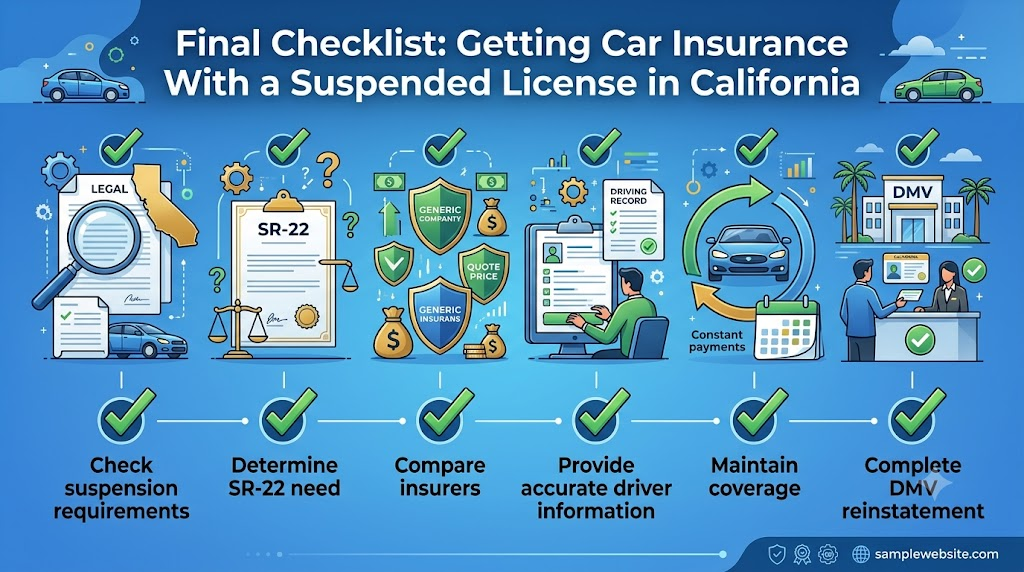
Before purchasing insurance, make sure you:
✅ Understand why your license was suspended
✅ Check if you need SR-22 insurance
✅ Compare multiple insurance providers
✅ Provide accurate driver information
✅ Decide whether you need vehicle coverage or non-owner insurance
✅ Maintain continuous coverage
✅ Complete DMV reinstatement requirements
Final Thoughts
A suspended license can make obtaining car insurance more complicated, but it does not always prevent you from getting coverage in California.
Whether you need insurance to protect a vehicle, satisfy SR-22 requirements, or prepare for license reinstatement, the key is choosing the right policy for your situation.
Avoid driving while suspended, maintain proper insurance coverage, and complete all DMV requirements to get back on the road legally and safely.