

How to Save Money on Vehicle Insurance is an important topic for every driver looking to reduce costs without sacrificing necessary protection. Vehicle insurance is an essential expense, but that does not mean you have to overpay for coverage. Insurance premiums can vary significantly depending on your vehicle, driving history, location, coverage choices, and the insurance company you choose.
Many drivers renew their vehicle insurance policies every year without checking whether they are still getting the best price. However, small changes such as comparing quotes, adjusting coverage, improving driving habits, and taking advantage of available discounts can help reduce vehicle insurance costs.
Whether you are buying your first policy or trying to lower your existing premium, understanding how insurers calculate rates can help you make smarter financial decisions.
In this guide, we will explore proven strategies for how to save money on vehicle insurance while maintaining the protection you need.
Why Is Vehicle Insurance So Expensive?
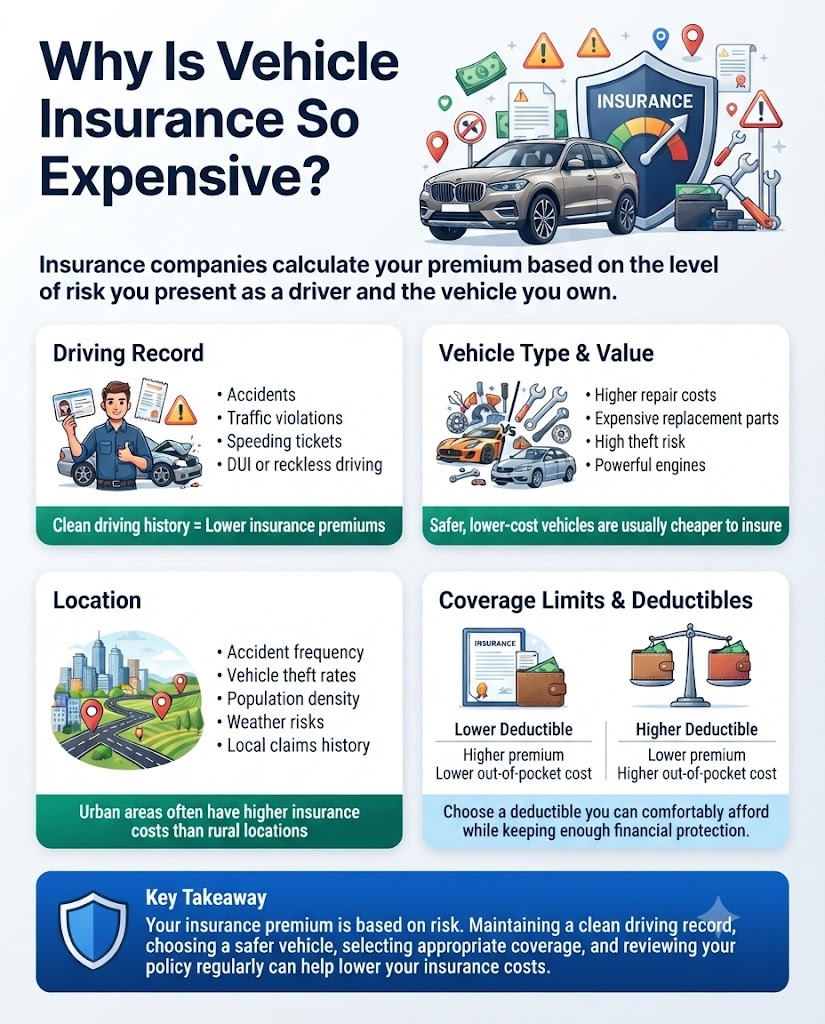
Before finding ways to reduce your premium, it is important to understand what factors affect vehicle insurance costs.
Insurance companies calculate premiums based on the level of risk they associate with a driver and vehicle.
Common factors that influence insurance rates include:
Driving Record
Your driving history is one of the biggest factors affecting your insurance premium.
Drivers with:
- Accidents
- Traffic violations
- Speeding tickets
- DUI or reckless driving records
are usually considered higher-risk and may pay more for coverage.
A clean driving record over time can help lower insurance costs.
Vehicle Type and Value
The vehicle you drive has a major impact on your insurance price.
Generally, vehicles with:
- Higher repair costs
- Expensive parts
- Higher theft rates
- Powerful engines
may cost more to insure.
For example, luxury vehicles and high-performance cars often have higher premiums compared with affordable vehicles that are inexpensive to repair.
Choosing a vehicle with good safety ratings and lower repair costs can help reduce insurance expenses.
Location
Where you live also affects your insurance premium.
Insurance companies consider factors such as:
- Accident rates
- Vehicle theft levels
- Population density
- Weather risks
- Insurance claim history in the area
Drivers in urban areas often pay more than drivers in rural locations because of higher traffic congestion and accident risks.
Coverage Limits and Deductibles
The amount of coverage you choose directly affects your premium.
Higher coverage limits generally increase costs, while lower limits may reduce premiums.
Your deductible also plays an important role.
A deductible is the amount you pay out of pocket before insurance coverage begins.
For example:
- A lower deductible means you pay less during a claim but usually have higher premiums.
- A higher deductible means you pay more during a claim but may have lower monthly or annual insurance costs.
Choosing the right balance can help you save money without leaving yourself financially exposed.
How to Save Money on Vehicle Insurance
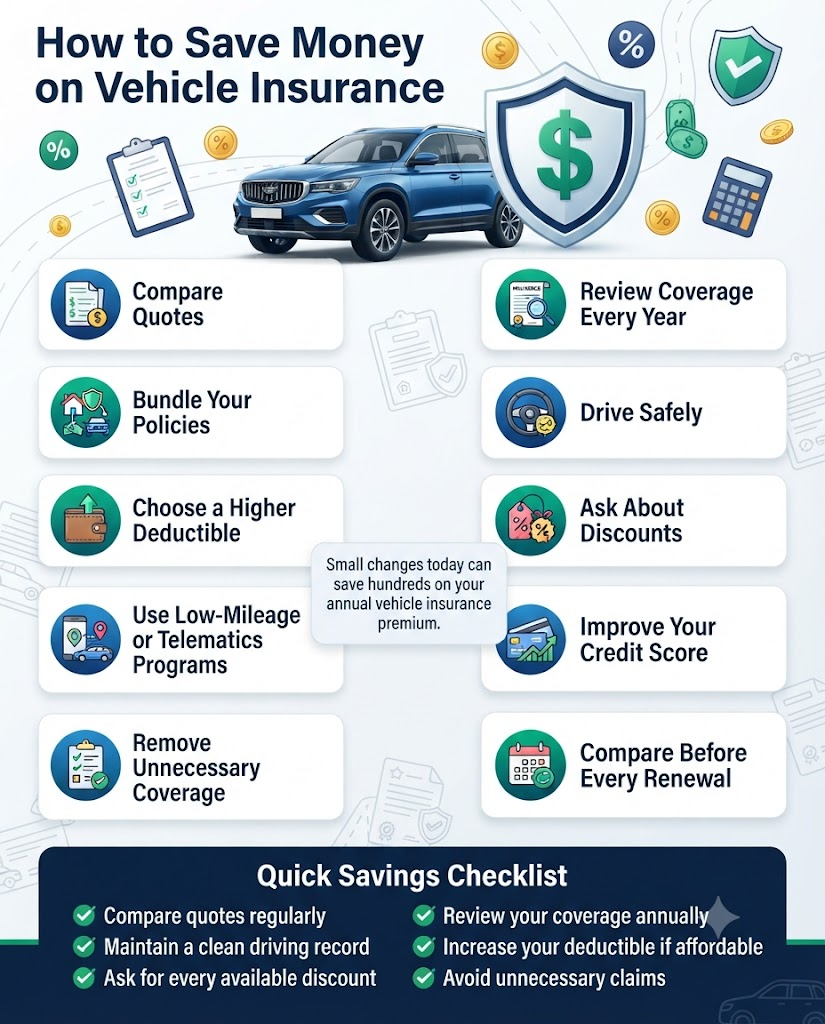
Are you paying more for vehicle insurance than you should? With the right strategies, you can lower your premium without sacrificing essential coverage. Here’s how to save money on vehicle insurance and keep more cash in your pocket.
Compare Vehicle Insurance Quotes From Multiple Companies
One of the easiest ways to save money on vehicle insurance is to compare quotes from different insurers.
Insurance companies use different formulas to calculate risk, meaning two companies may offer very different prices for the same driver and vehicle.
A driver who receives a $1,500 annual quote from one insurer may find similar coverage for $1,000 from another company.
When comparing quotes, look at:
- Premium price
- Coverage limits
- Deductibles
- Claim service reputation
- Customer reviews
- Available discounts
Do not choose a policy only because it is the cheapest. A low-cost policy with poor claim support may create problems later.
Review Your Coverage Every Year
Many drivers continue with the same insurance coverage for years without checking whether it still fits their needs.
Your insurance requirements can change because of:
- Vehicle age
- Reduced driving habits
- Lifestyle changes
- Financial situation
- Changes in vehicle value
For example, an older vehicle may no longer need certain optional coverages if repair costs exceed the vehicle’s value.
Before renewing your policy, review:
- Liability coverage
- Collision coverage
- Comprehensive coverage
- Optional add-ons
- Deductible amounts
Regular policy reviews can help identify unnecessary costs.
Bundle Insurance Policies
Many insurance companies offer discounts when customers purchase multiple policies from the same provider.
Common bundles include:
- Auto and home insurance
- Auto and renters insurance
- Multiple vehicles under one policy
Bundling can simplify payments and may reduce your overall insurance expenses.
However, always compare the bundled price with separate policies to ensure you are actually saving money.
Maintain a Clean Driving Record
Safe driving is one of the most effective long-term ways to reduce vehicle insurance costs.
Insurance companies reward drivers who demonstrate lower risk.
Ways to maintain a clean driving record include:
- Following speed limits
- Avoiding distracted driving
- Maintaining safe distances
- Following traffic laws
- Avoiding unnecessary claims
Some insurers also offer safe driver discounts for customers with several years of accident-free driving.
Increase Your Deductible to Lower Premiums
One effective way to reduce your vehicle insurance premium is by increasing your deductible.
The deductible is the amount you agree to pay out of pocket before your insurance company covers a claim.
For example:
- A $500 deductible means you pay the first $500 of a covered claim.
- A $1,000 deductible means you pay the first $1,000 before insurance pays the remaining amount.
A higher deductible usually results in a lower insurance premium because you are taking on more financial responsibility.
However, you should only choose a deductible amount that you can comfortably afford in case of an accident.
Before increasing your deductible, consider:
- Your emergency savings
- Your vehicle’s value
- Your driving habits
- Your risk of filing a claim
If you rarely file claims and have enough savings to handle unexpected repairs, a higher deductible may help reduce your annual insurance costs.
Ask About Available Discounts
Many drivers qualify for insurance discounts but never ask their insurance company about them.
Insurance providers offer discounts based on driving habits, vehicle features, personal circumstances, and policy choices.
Common vehicle insurance discounts include:
Safe Driver Discount
Drivers with:
- No recent accidents
- No traffic violations
- Several years of clean driving history
may qualify for lower premiums.
Multi-Vehicle Discount
If your household has multiple vehicles, insuring them under the same policy may reduce your total insurance cost.
Instead of maintaining separate policies, combining vehicles with one insurer can often provide savings.
Low Mileage Discount
Drivers who do not drive frequently may qualify for lower rates.
Insurance companies may offer discounts to people who:
- Work remotely
- Use public transportation
- Drive only occasionally
- Have low annual mileage
Lower mileage generally means less time on the road and a lower chance of accidents.
Vehicle Safety Feature Discounts
Modern safety technology can help reduce insurance costs.
Some insurers offer discounts for vehicles equipped with:
- Anti-lock brakes
- Airbags
- Anti-theft systems
- Backup cameras
- Lane departure warning
- Automatic emergency braking
Before purchasing a vehicle, check whether its safety features may help lower insurance expenses.
Student and Young Driver Discounts
Young drivers often pay higher premiums because they have less driving experience.
However, some insurers provide discounts for students who:
- Maintain good grades
- Complete approved driver education courses
- Drive safely
Families adding a teenage driver to their policy should ask about available programs to reduce costs.
Consider Usage-Based Insurance Programs
Usage-based insurance (UBI) programs use technology to monitor driving habits and adjust premiums based on driving behavior.
These programs may track factors such as:
- Mileage
- Speed patterns
- Hard braking
- Rapid acceleration
- Driving times
- Phone usage while driving
Drivers with safe habits may receive discounts.
Usage-based insurance can be beneficial for:
- Low-mileage drivers
- Careful drivers
- People who rarely drive during high-risk hours
However, some drivers may prefer not to participate because of privacy concerns or worries about sharing driving data.
Before enrolling, review:
- What information is collected
- How the data is used
- Whether poor driving scores can increase rates
- Whether participation is optional
Improve Your Credit-Based Insurance Score
In many regions, insurance companies consider credit history when calculating premiums.
A stronger credit profile may help you qualify for lower insurance rates because insurers often associate responsible financial behavior with lower claim risk.
Ways to improve your credit-based insurance score include:
- Paying bills on time
- Reducing credit card balances
- Avoiding unnecessary debt
- Checking credit reports for errors
- Maintaining older credit accounts responsibly
Improving your credit score does not reduce insurance costs immediately, but it can help lower premiums over time.
Remove Unnecessary Coverage From Older Vehicles
As vehicles age, the cost of certain coverage options may no longer make financial sense.
For example, collision and comprehensive coverage may not be worthwhile if your vehicle’s market value is very low.
Consider:
- Current vehicle value
- Annual insurance cost
- Potential repair expenses
- Your ability to replace the vehicle
Example:
If your vehicle is worth $3,000 and you pay several hundred dollars each year for certain optional coverages, the financial benefit may be limited.
However, removing coverage should be done carefully. You should still maintain required insurance and protection against major financial losses.
Avoid Small Claims When Possible
Filing every minor repair claim can sometimes increase future insurance costs.
Insurance companies consider claim history when determining risk.
For small expenses, paying out of pocket may sometimes be financially smarter.
Examples:
- Minor scratches
- Small dents
- Low-cost repairs
Before filing a claim, consider:
- Repair cost
- Your deductible
- Possible premium increases
- Your claim history
However, major accidents and significant damage should always be reported according to your policy requirements.
Drive a Vehicle That Costs Less to Insure
Your choice of vehicle can have a major impact on insurance expenses.
Vehicles that are typically cheaper to insure often have:
- Lower repair costs
- Strong safety ratings
- Lower theft rates
- Affordable replacement parts
Before buying a vehicle, research insurance costs along with:
- Purchase price
- Fuel economy
- Maintenance expenses
- Depreciation
A slightly cheaper vehicle may cost more overall if insurance and repair expenses are high.
Maintain Continuous Insurance Coverage
Keeping continuous vehicle insurance coverage can help you save money in the long run.
Insurance companies often consider drivers with uninterrupted coverage to be lower-risk customers.
A gap in insurance coverage can happen when:
- A policy expires and is not renewed
- A driver cancels coverage before purchasing a new policy
- A vehicle is temporarily uninsured
Even a short lapse may result in:
- Higher future premiums
- Loss of loyalty discounts
- Difficulty finding affordable coverage
If you are switching insurance companies, make sure your new policy begins before your old policy ends.
Pay Your Insurance Premium Annually
Many insurance companies allow customers to pay premiums in different ways:
- Monthly payments
- Quarterly payments
- Semi-annual payments
- Annual payments
Paying your vehicle insurance premium annually may help reduce costs because some insurers charge installment fees for monthly payments.
Benefits of annual payment may include:
- Lower administrative fees
- Fewer payment processing charges
- Easier policy management
However, make sure paying the full amount upfront does not affect your emergency savings.
Take a Defensive Driving Course
Completing a recognized defensive driving course may help some drivers qualify for insurance discounts.
These courses teach skills such as:
- Accident prevention techniques
- Safe following distances
- Hazard awareness
- Defensive driving strategies
- Proper responses to dangerous situations
Defensive driving courses can be especially useful for:
- Young drivers
- Drivers with recent violations
- Older drivers looking to refresh their skills
Before enrolling, check whether your insurance company recognizes the course and offers a discount.
Reduce Optional Add-Ons You Do Not Need
Insurance policies often include optional coverage features that increase premiums.
Common add-ons include:
- Rental car coverage
- Roadside assistance
- Accident forgiveness
- Custom equipment coverage
- Extended protection packages
These features can be valuable, but not every driver needs all of them.
Review your policy regularly and ask:
- Do I already have this benefit elsewhere?
- How often would I realistically use it?
- Is the extra cost worth the protection?
Removing unnecessary add-ons can reduce your premium without affecting essential coverage.
Install Anti-Theft Devices
Vehicle theft risk can affect insurance rates.
Installing security features may help reduce premiums with some insurers.
Examples include:
- Factory-installed alarms
- GPS tracking systems
- Immobilizers
- Steering wheel locks
- Advanced security systems
Anti-theft devices may reduce the likelihood of theft and make your vehicle less risky to insure.
Before purchasing an aftermarket security system, check whether your insurer provides a discount for that specific device.
Keep Your Vehicle Well Maintained
Regular vehicle maintenance may indirectly help reduce insurance expenses by lowering the chance of accidents and expensive claims.
Important maintenance tasks include:
- Checking tire condition
- Maintaining brakes
- Repairing warning lights
- Following service schedules
- Replacing worn parts
A well-maintained vehicle is safer to drive and may help prevent accidents caused by mechanical problems.
Choose the Right Coverage Limits
While reducing coverage may lower your premium, having insufficient protection can create serious financial problems after an accident.
The goal is not simply to buy the cheapest policy but to choose appropriate coverage.
Consider:
- Your vehicle’s value
- Your financial situation
- Local insurance requirements
- Your risk tolerance
For example:
A driver with a newer vehicle may need comprehensive and collision coverage, while someone with an older vehicle may prioritize liability protection.
Review your coverage limits periodically as your circumstances change.
Compare Insurance Rates Before Buying a New Vehicle
Many buyers focus only on the purchase price of a vehicle and forget about ongoing insurance costs.
Before purchasing a new car, check estimated insurance rates.
Factors that may increase insurance costs include:
- Expensive repairs
- High replacement costs
- Performance features
- Theft popularity
- Limited availability of parts
Two vehicles with similar purchase prices can have very different insurance premiums.
Researching insurance costs before buying can help you avoid unexpected expenses.
Consider Paying for Minor Repairs Yourself
Not every vehicle repair needs to become an insurance claim.
For smaller damages, paying out of pocket may help protect your future premiums.
Examples:
- Minor bumper damage
- Small windshield repairs
- Cosmetic scratches
Fewer claims can help maintain a better insurance history.
However, never avoid reporting situations where your policy requires notification or where another person may make a claim against you.
Review Your Policy After Major Life Changes
Your insurance needs can change when your personal circumstances change.
Important events that may affect your premium include:
- Moving to a new location
- Changing jobs
- Working from home
- Driving fewer miles
- Getting married
- Adding or removing drivers
- Paying off a vehicle loan
Informing your insurer about these changes may help you qualify for lower rates.
For example, someone who starts working remotely may drive fewer miles and qualify for a low-mileage discount.
Avoid Letting Your Policy Automatically Renew Without Comparison
Automatic renewal is convenient, but it can sometimes result in paying more than necessary.
Insurance companies may change rates due to:
- Market conditions
- Claims trends
- Repair costs
- Regional risks
Before renewal:
- Compare quotes
- Review coverage
- Check discounts
- Confirm your information is accurate
A quick annual review can potentially save hundreds of dollars.
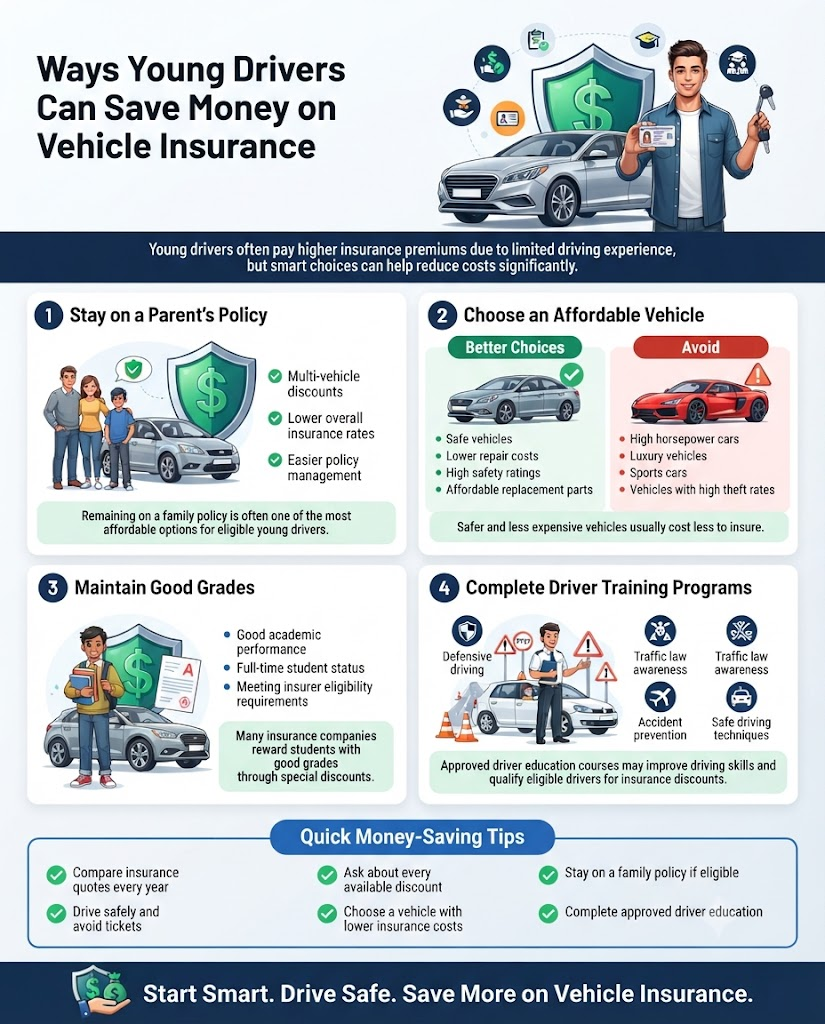
Ways Young Drivers Can Save Money on Vehicle Insurance
Young drivers often pay higher insurance premiums because insurers consider them more likely to be involved in accidents due to limited driving experience.
However, several strategies can help reduce costs.
Stay on a Parent’s Policy When Appropriate
Teen and young adult drivers often save money by remaining on a family insurance policy instead of purchasing separate coverage.
A family policy may provide:
- Multi-vehicle discounts
- Lower overall rates
- Easier policy management
However, the driver and vehicle situation must meet the insurer’s requirements.
Choose an Affordable Vehicle
The type of vehicle a young driver uses can significantly affect insurance costs.
Avoid vehicles with:
- High horsepower
- Expensive repairs
- High theft rates
- Sports-car characteristics
Safer and more affordable vehicles usually cost less to insure.
Maintain Good Grades
Many insurance companies offer student discounts for young drivers who demonstrate academic responsibility.
Requirements may vary, but insurers often consider:
- Grade point average
- School enrollment status
- Age requirements
Students should ask their insurance provider about available discounts.
Complete Driver Training Programs
Approved driver education courses can help young drivers develop safer habits and may qualify them for discounts.
Training programs can teach:
- Defensive driving skills
- Traffic law awareness
- Accident prevention techniques
Ways Older Drivers Can Save Money on Vehicle Insurance
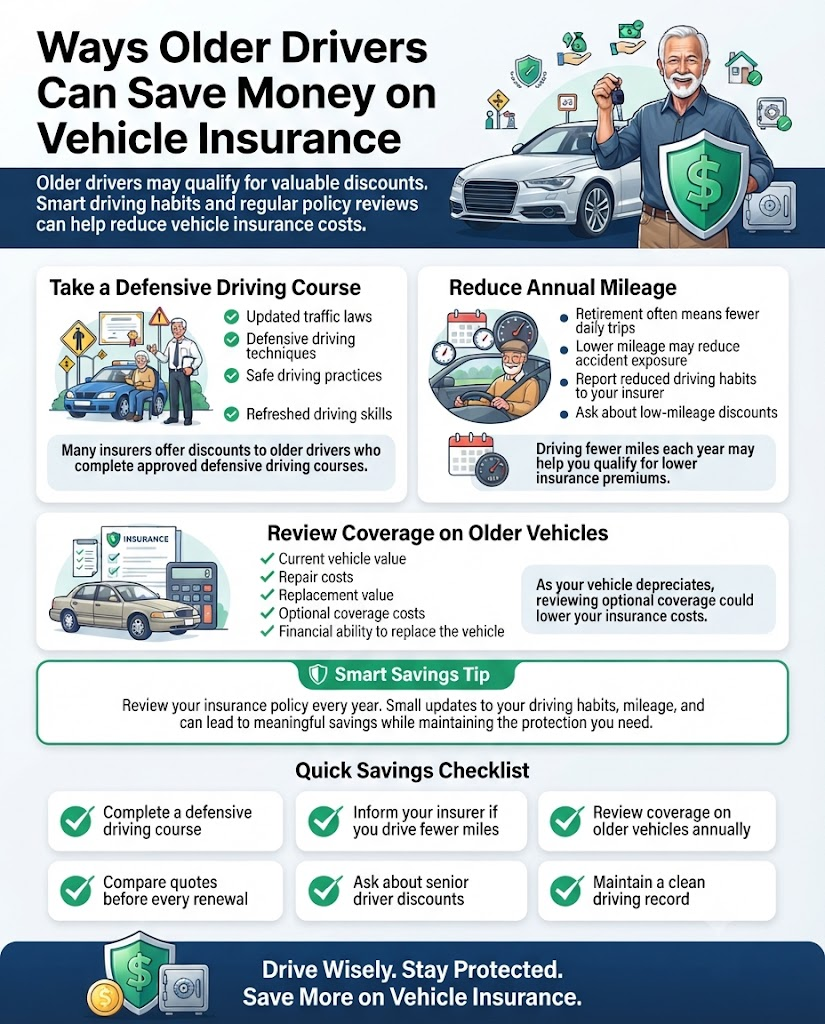
Older drivers may qualify for discounts, but insurance rates can increase later in life due to changes in driving patterns and risk factors.
Strategies that may help include:
Take a Defensive Driving Course
Some insurers provide discounts to older drivers who complete approved safety courses.
These programs help refresh knowledge about:
- Updated traffic laws
- Defensive driving techniques
- Safe driving practices
Reduce Annual Mileage
Many retirees drive fewer miles after leaving the workforce.
Lower mileage may help qualify for discounts because less driving can reduce accident exposure.
Inform your insurer if your driving habits change.
Review Coverage on Older Vehicles
Older drivers often keep vehicles longer.
If a vehicle’s value decreases significantly, review whether certain optional coverages are still cost-effective.
Consider:
- Vehicle replacement value
- Repair costs
- Your financial ability to replace the vehicle
How Drivers With Accidents Can Lower Insurance Costs
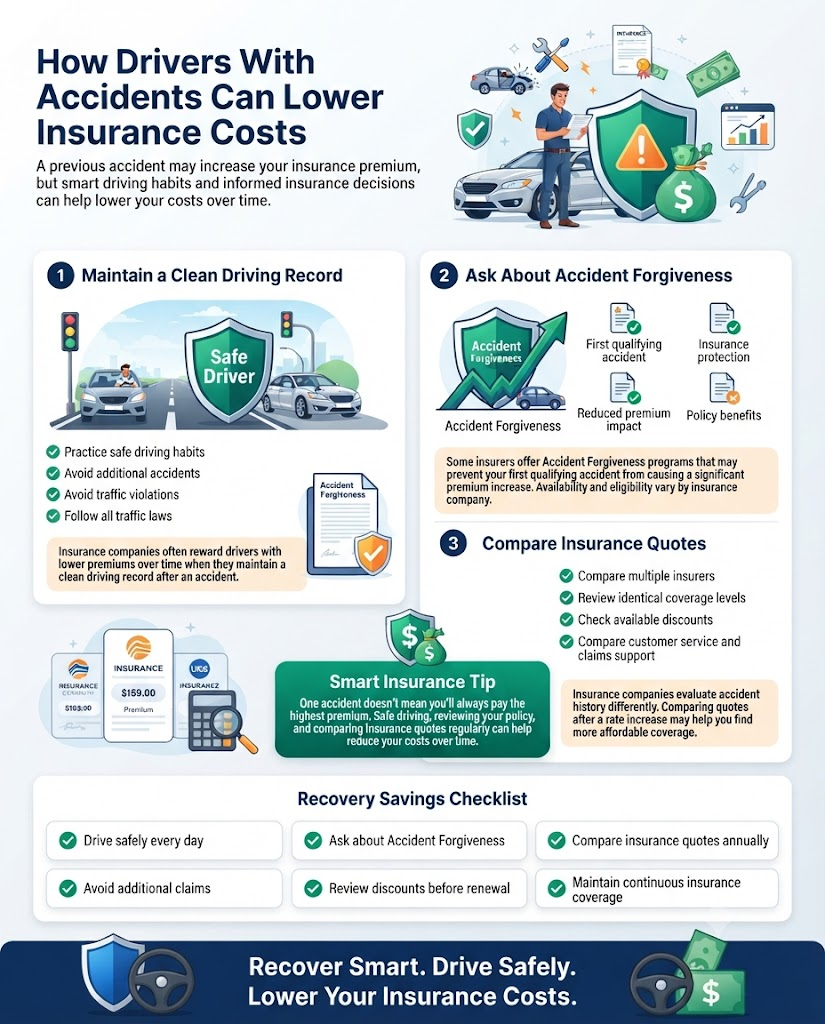
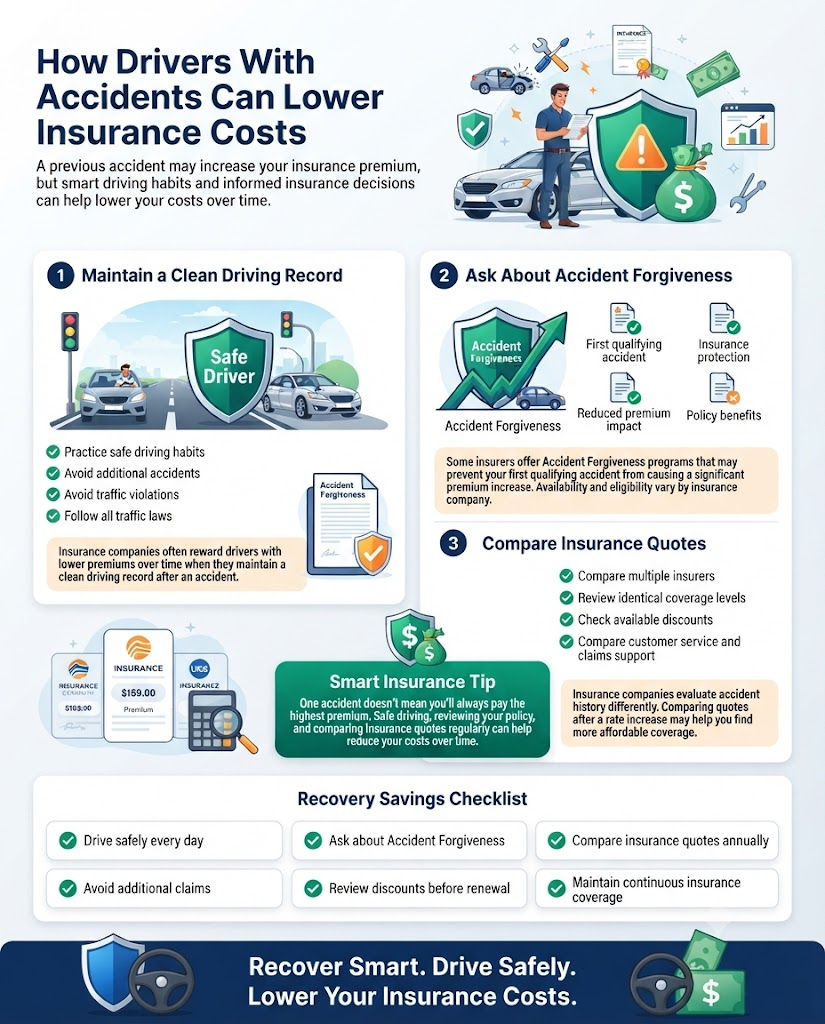
An accident history can increase insurance premiums, but there are still ways to reduce costs.
Maintain a Clean Record After an Accident
Insurance rates may decrease over time if you avoid additional incidents.
Focus on:
- Safe driving habits
- Avoiding violations
- Following traffic rules
Ask About Accident Forgiveness
Some insurance companies offer accident forgiveness programs.
These programs may prevent your first qualifying accident from causing a major premium increase.
Availability and requirements vary by insurer.
Shop Around After Your Rates Increase
After an accident, your current insurer may increase your premium.
Comparing quotes from multiple companies can help you find more competitive pricing.
Different insurers may evaluate your driving history differently.
How Drivers With Tickets Can Reduce Insurance Costs
Traffic violations can increase insurance premiums because they indicate higher risk.
Common violations that affect rates include:
- Speeding tickets
- Reckless driving
- Running red lights
- Distracted driving violations
Ways to reduce the impact include:
Avoid Additional Violations
The best way to lower future premiums is to maintain a clean record after receiving a ticket.
Complete Traffic Safety Courses
Some regions allow drivers to complete approved courses that may:
- Reduce points on driving records
- Improve driving knowledge
- Potentially help with insurance costs
Compare Insurance Companies
Some insurers may offer better rates for drivers with minor violations compared with others.
Shopping around can help identify better options.
Tips for High-Risk Drivers to Save Money
Drivers considered high-risk may include those with:
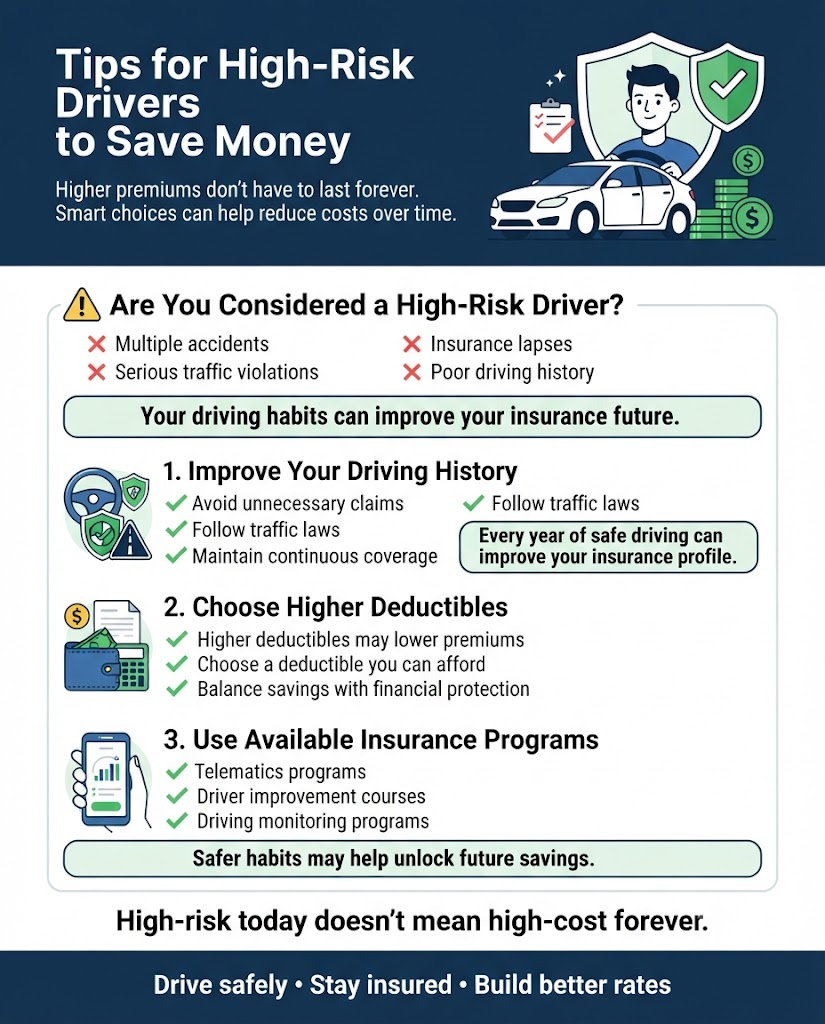
- Multiple accidents
- Serious violations
- Insurance lapses
- Poor driving history
Although premiums may be higher, drivers can still reduce costs over time.
Helpful strategies include:
Improve Driving History
Every year of safe driving can improve your insurance profile.
Focus on:
- Avoiding claims
- Following traffic laws
- Maintaining continuous coverage
Choose Higher Deductibles
If financially possible, increasing your deductible may lower your premium.
Make sure you can afford the deductible if a claim occurs.
Take Advantage of Available Programs
Some insurers offer programs designed to help high-risk drivers demonstrate safer habits.
Examples include:
- Telematics programs
- Driver improvement courses
- Monitoring programs
Common Mistakes That Increase Vehicle Insurance Costs
Many drivers unknowingly pay more because of avoidable mistakes.
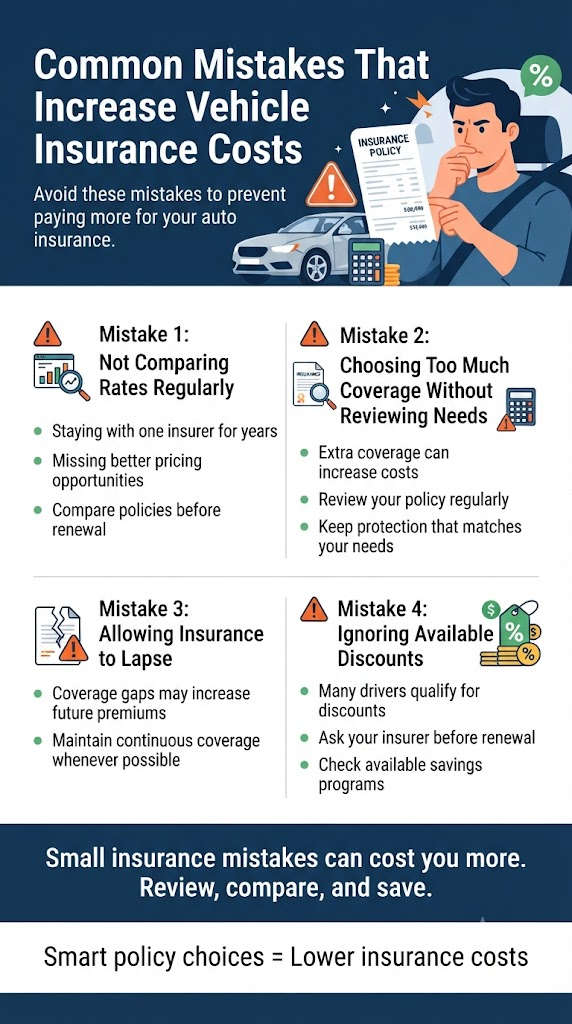
Not Comparing Rates Regularly
Staying with the same insurer for years without comparison may result in missed savings opportunities.
Choosing Too Much Coverage Without Reviewing Needs
Extra protection can be valuable, but unnecessary coverage increases costs.
Review your policy regularly.
Allowing Insurance to Lapse
A gap in coverage can lead to higher premiums in the future.
Always maintain continuous coverage when possible.
Ignoring Available Discounts
Many drivers qualify for discounts but never ask about them.
Always check with your insurer before renewal.
Final Checklist to Save Money on Vehicle Insurance
Reducing vehicle insurance costs does not always require major changes. Small improvements made consistently can help lower premiums over time.
Use this checklist to review your policy and find possible savings opportunities.
Compare Insurance Quotes Regularly
☐ Get quotes from multiple insurance companies
☐ Compare similar coverage levels
☐ Review customer service and claim reputation
☐ Check for new discounts or programs
Insurance rates change frequently, and another company may offer better pricing for the same protection.
Review Your Coverage Needs
☐ Check if your coverage matches your current vehicle value
☐ Remove unnecessary add-ons
☐ Adjust deductibles based on your financial situation
☐ Confirm you have enough liability protection
Your insurance policy should protect you without paying for coverage you no longer need.
Improve Your Driving Habits
☐ Avoid speeding tickets
☐ Reduce distracted driving
☐ Follow traffic rules
☐ Maintain a clean driving record
Safe driving is one of the strongest long-term ways to reduce insurance expenses.
Ask About Discounts
☐ Safe driver discounts
☐ Multi-vehicle discounts
☐ Low-mileage discounts
☐ Student discounts
☐ Vehicle safety discounts
☐ Loyalty discounts
☐ Defensive driving discounts
Never assume discounts are automatically applied. Ask your insurance company to review available savings.
Maintain Your Vehicle
☐ Perform regular maintenance
☐ Keep tires properly inflated
☐ Repair safety issues quickly
☐ Maintain security systems
A safer, well-maintained vehicle can reduce accident risks.
How Much Can You Save on Vehicle Insurance?
The amount you can save depends on your current policy, driving history, location, and insurance provider.
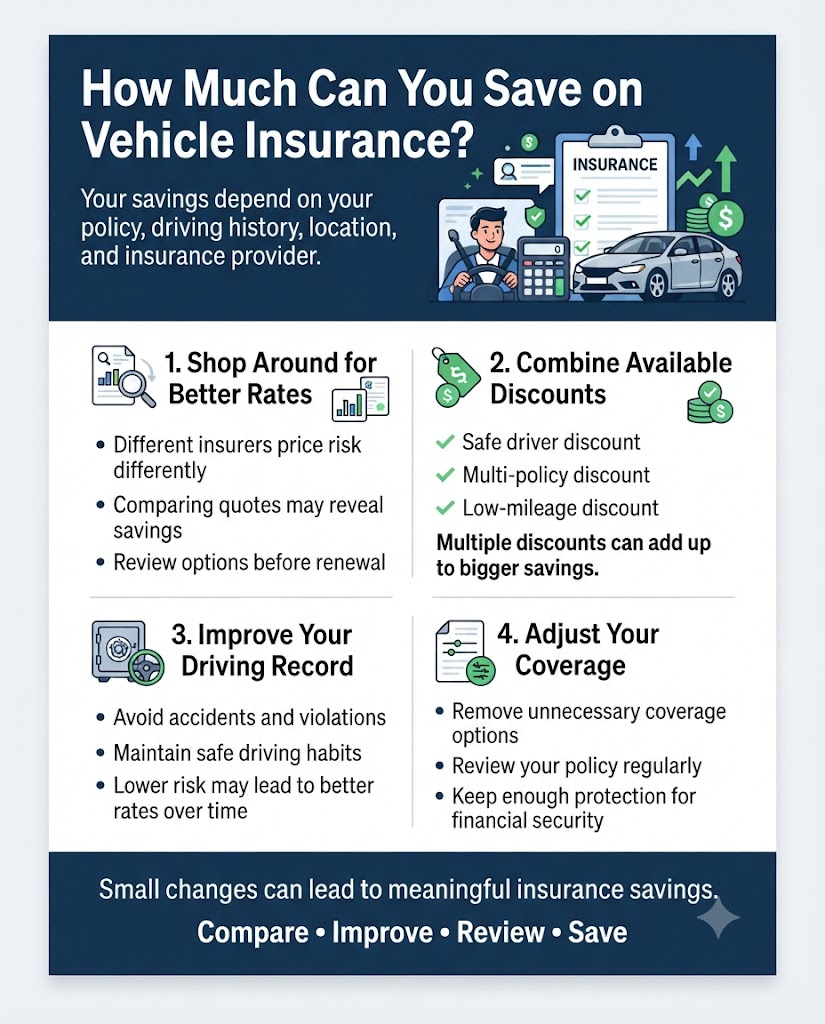
Some drivers may save a small amount by making simple changes, while others may reduce their premiums significantly by switching companies or improving their risk profile.
Potential savings may come from:
Shopping Around
Switching insurers can sometimes produce major savings because companies price risk differently.
Combining Discounts
Multiple discounts can add up.
For example, a driver may qualify for:
- Safe driver discount
- Multi-policy discount
- Low-mileage discount
Together, these savings may noticeably reduce annual insurance costs.
Improving Your Driving Record
A clean driving history can help reduce premiums over time.
Avoiding accidents and violations demonstrates lower risk to insurers.
Adjusting Coverage
Reviewing coverage levels and removing unnecessary options can help reduce expenses.
However, avoid reducing coverage so much that you are financially vulnerable after an accident.
Conclusion: Smart Ways to Lower Vehicle Insurance Costs
Saving money on vehicle insurance is not about choosing the cheapest policy available. It is about finding the right balance between affordable premiums and sufficient protection.
The most effective ways to reduce costs include:
- Comparing quotes regularly
- Maintaining a clean driving record
- Taking advantage of discounts
- Choosing the right coverage limits
- Increasing deductibles carefully
- Driving fewer miles when possible
- Reviewing your policy every year
Insurance needs change over time, so regular policy reviews can help ensure you are not paying more than necessary.
By understanding how insurance companies calculate premiums and making informed decisions, drivers can reduce vehicle insurance costs while still maintaining valuable financial protection.
Nustaronlinecasino caught my eye with its promotions. Seems like a decent place for grabbing some extras. Might be worth checking for the bonuses alone! nustaronlinecasino
Yo heard about Gem79win? Giving it a try. Seems alright so far. Need more time with Gem79win. Give it a look gem79win.
Downloaded appvui123 looks pretty good, lets see if i can make some money today, don’t miss out appvui123.
If you are looking for a reliable slot site, this is it. The login is fast and the game variety is impressive. I’m really enjoying the experience so far at gamezoneslotslogin
Great platform with a very user friendly design. I feel safe depositing here and the wins are real. Check out nogad88app!
The app version is way better than the browser. It is so convenient to play on the go. Just use 8k8casinoapplogin to get started.
Integration with Maya makes everything so much easier. No more waiting for hours for deposits to reflect. Super convenient experience with fairplaymaya.
Best login portal I have used for this game. No more broken links or downtime, just straight to the fun at luckyplayphlogin.
The app version is a game changer. I can play anywhere and the graphics are top notch. Just downloaded pa777app and I am already hooked.
If you are looking for a reliable site, give ph93jili a try. The gameplay is fair and the wins are satisfying.
The VIP perks are actually meaningful and make the experience feel premium. Great service all around for jilifvip
Super easy to navigate and the customer service is on point. I feel safe depositing my funds here. Keep it up krwego88!
Just downloaded the app and it works like a charm. The installation process was super quick and it doesn’t lag at all. Definitely check out in777download if you prefer playing on mobile.
I love how intuitive the platform feels. It is very easy to navigate through the different categories and find your favorite games. inze777 is definitely my new go-to spot.
This site has a great vibe and the winning odds feel fair. I had a great run last night and the withdrawal was fast. Give brricowin a try
Very reliable site with a great layout. I’ve had a few big wins recently and the withdrawal was processed almost instantly. Love jilibet88login.
Logging in is quick and the account verification process was straightforward. No hassle at all. Glad I found 59cbetlogin for my daily gaming.
Really solid platform with a great community feel. Everything feels very transparent and fair. Cheers to brwinbrl for the awesome setup.
The login process is seamless and the app is very responsive on my phone. Makes accessing my account so much easier. Visit 89bdloginapp today.
The game variety is top notch and the interface is very user friendly. I really enjoy the daily bonuses. Highly recommend br55win
Finally found a platform that actually pays out fast. The game selection is top notch and the bonuses are legit. Check out ph50jili if you want a real gaming experience.
I’ve been playing here for a few weeks now and the payouts are surprisingly fast. Definitely one of the smoother experiences I’ve had lately. Check out br333bet8 if you want a reliable spot.
I have tried many platforms over the years, but this one stands out for its honest approach and lively spirit. Payments go through like clockwork, the game library is huge, and I always leave feeling satisfied rather than drained. It really brings people together in the best way possible. Come feel the energy at cobet1000
Finally found a login link that actually works without any redirects. Great service and the support team is very responsive. Give nibung88login a try.
Great platform with a very friendly community feel. I appreciate how straightforward the deposit and withdrawal process is. Give mumu86login a try.
Best place for those who love quick wins and easy navigation. The login process is seamless and the graphics are top notch. Try jili666login now.
The app version is just a game changer. I can play anywhere on my phone without any lag. Seriously go download phplus777apk right now.
Super addictive games and the daily rewards keep me coming back. I have told all my friends to join phjilii already!
Super easy login process and the games load instantly. I love how straightforward everything is here. Best experience so far with 688jililogin
Great variety of tables and slots. I’ve won a decent amount here and the process of getting my money out was seamless. You can’t go wrong with 200jilicasinologin.
Logging in is quick and secure which is exactly what I need. I feel safe using my account on aaajili357login for my daily sessions.
Love the vibe of this site! It is very user friendly and the games load quickly on my phone. bigbunnylogin makes gaming so much easier.
Fast registration and even faster withdrawals. It is refreshing to find a site that does not make you jump through hoops. Great job 288jililogin.
Using the app makes everything so much more convenient. I can play anywhere and anytime via 91jililoginapp
Absolutely loving the current promotions. The site runs perfectly on my phone and the community is great. Check out phkingjililogin
If you are looking for a reliable site, give ph93jili a try. The gameplay is fair and the wins are satisfying.
The withdrawal process is seamless and transparent. No hidden fees or weird delays. I trust pkroyal777 with my deposits.
Finally found a reliable link to get the app. The download was smooth and the installation didn’t take long. Definitely the best way to get megaparidownload working on my phone.
I was skeptical at first but this site really delivers. The game variety is amazing and I had no issues with my first withdrawal. Love krawin68 so far!
Logging in is quick and secure which is exactly what I need. I feel safe using my account on aaajili357login for my daily sessions.
Super intuitive design and the loading times are barely there. It makes the whole experience so much more enjoyable. vnzoo88 is killing it right now.
Best slot action I have had in a long time. The graphics are crisp and the win rate feels fair. Big fans of minion178slot over here.
Simply the best experience I have had with online slots in the Philippines. Reliable, fast, and exciting. Go to betjililogin if you want real action.
Really impressed with the performance here. Everything loads quickly and the navigation is intuitive. If you are searching for a stable platform, br22ff is the way to go.
Fast loading times and very user friendly. I can get into my favorite games in seconds. The best way to play is through oppa888login.
This app has completely replaced my old way of checking odds and placing bets. The interface is clean and everything loads quickly even on slower connections. Withdrawals are processed around the clock and I always receive my funds without any drama. I recommend this to anyone who wants a straightforward and reliable betting companion. 555wwapp
I’ve tried many sites but the interface here is so smooth. The winning streaks are actually real. Highly recommend paitoangkaslot to everyone looking for a fair game.
Great community and even better rewards. It feels like a place where players are actually valued. Cheers to brmm33!
I’ve been playing here for a few weeks and the payouts are surprisingly fast. Definitely one of the best options for slots right now. Check out ph38jili
The login process is seamless and I didn’t encounter any glitches. It is a reliable spot for some quality gaming time. Keep it up bakso108login!
Love the selection of live dealer games. It really feels like I am at a real casino without leaving my living room. Cheers to rk88bet for the great setup.
No more login issues or broken links. This site is reliable and the game selection is vast. If you are looking for a stable portal, z777login is the way to go.
Really loving the slot variety here. I hit a decent win yesterday and the withdrawal process was a breeze. jilijiliph is my new go-to for daily fun.
Switched from my old bookie and the difference is night and day. The live betting section responds instantly and the odds actually make sense for sports fans. I love how easy it is to track my wagers without digging through menus. If you enjoy sharp betting tools this is the app to download sportytraderapp
If you are looking for a reliable APK that actually works without glitches, this is it. The loading speed is amazing. Get your 8k8app4apk and start winning.
Really liking the rewards system on this app. It keeps things exciting and the prizes are actually attainable. bdbb444app is my new favorite.
The variety of slots here is insane. I spent hours exploring different themes and the graphics are top-notch. Definitely giving 777jiliwin another go tomorrow.
I’ve tried a few sites but this one feels the most professional. No lag and the graphics are crisp. Love spending time on phgamezonelogin.
The game selection is massive and the quality is impressive. I have recommended this place to all my friends already. Best at aa888plataforma
I’ve been playing here for a week now and the payouts are actually legit. Really smooth interface and the games load fast. Definitely check out kkjilivip if you want a reliable spot.
This place has a great vibe and the payouts are consistently fast. I appreciate the transparency and the easy registration process. phbtbjili
Best rewards system I have encountered in a long time. It actually feels like they value their loyal players. Visit pleypixcasino soon.
Top notch service and a very user-friendly layout. I had a few questions and the support team sorted me out quickly. Highly recommend bd39999bat.
The login process is seamless and I never have issues accessing my account. It is the most stable site I have used in a while. Visit taya666777login for a top-notch experience.
Everything is so professional here. I feel secure with my transactions and the variety of options is just great. neu88online is the real deal.
The graphics are crisp and the gameplay is very immersive. I appreciate the fair odds and the constant updates to the game library. phpanaloka is a gem.
Downloading the APK was a breeze and the app runs like a dream. No glitches and fast loading times. I really like bd444betapk
Finding a reliable link is always a hassle but this one works perfectly. Great selection of games and very stable. Give betpkcasinolink a try.
Great vibes and even better wins! I had a lucky streak last night and the withdrawal was processed almost instantly. Visit dtg288 for some real action.
Top notch gaming experience! The variety of slots is amazing and I love the daily bonuses they provide. Highly recommend checking out bdbt777.
Really impressed with the payout speed here. It is rare to find a site that is this honest and fast. Great job to the phkishph team!
Solid performance and very reliable service. The slot games are fair and the rewards are generous. I’m definitely sticking with armorbet78slot for a long time.
Really appreciate how transparent the bonuses are here. No hidden traps, just a straight up great gaming experience. I am sticking with vnbet168169.
Finally found a site that actually pays out on time. The variety of games is impressive and keeps me entertained for hours. pklucky71
The best place to bet if you are looking for fairness and speed. I had a huge win last weekend and the withdrawal was instant. Love phmegabet
This is my new favorite spot for some weekend fun. The odds are fair and the atmosphere is great. Love bdbet5777!
I have tried dozens of sports books and this one stands out for its market depth and quick settlement. Whether I am watching the afternoon game or the night match the updates are always on time. My buddy shared this link with me and now we use it as our main spot. Look up bet888game if you want a hassle free experience.
Finally found a platform that doesn’t lag during peak hours. The interface is super smooth and easy to navigate. Highly recommend krikialogin to everyone.
Really impressed with the game variety here. Everything loads quickly and the customer support is helpful. Give 59ccom a try if you enjoy winning.
The graphics are stunning and the gameplay is just fluid. It is so much better than other sites I have used in the past. Check out bdx999game