
Car wraps have become one of the most popular ways to customize a vehicle without committing to a permanent paint job.
Whether you want to advertise your business, protect your car’s original paint, or give your vehicle a completely new look, a vinyl wrap can transform its appearance while often costing less than a high-quality repaint.
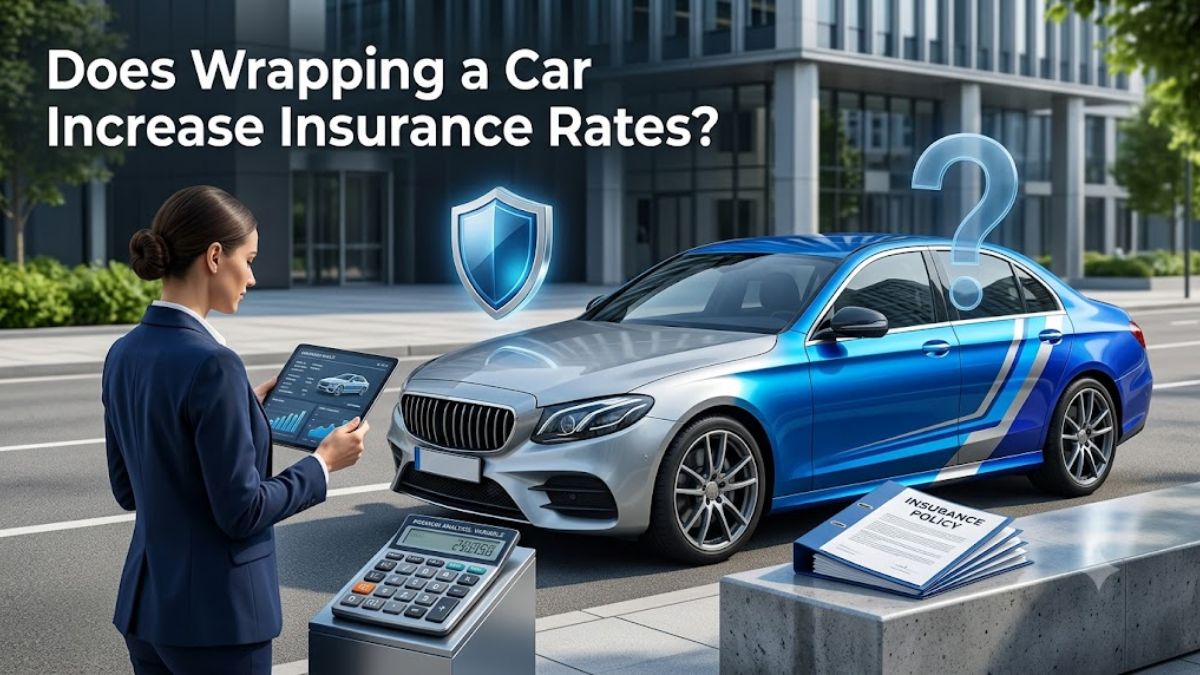
One question many drivers ask before investing in a wrap is: Does wrapping a car increase insurance rates?
The short answer is it can, but not always. Simply installing a vinyl wrap does not automatically raise your insurance premium. However, the type of wrap, its value, how you use the vehicle, and whether you notify your insurance company can all influence your coverage and insurance costs.
For example, a simple color-change wrap on a personal vehicle may have little or no impact on your premium. On the other hand, an expensive custom wrap, commercial advertising wrap, or specialty finish may increase your vehicle’s value and repair costs, leading to higher insurance premiums or the need for additional coverage.
In this guide, you’ll learn:
- Whether a car wrap affects insurance rates
- Why insurers care about vehicle wraps
- When a wrap can increase your premium
- Whether insurance covers vinyl wraps after an accident
- How to insure a wrapped vehicle properly
- Ways to keep insurance costs low after wrapping your car
What Is a Car Wrap?
A car wrap is a large sheet of vinyl film applied over a vehicle’s original paint. Instead of repainting the vehicle, owners use wraps to change its appearance or display graphics while preserving the factory finish underneath.
Professional installers carefully apply the vinyl to the body panels, creating a smooth finish that can often resemble factory paint.
Unlike paint, wraps are removable, allowing owners to restore the original appearance later.
Types of Car Wraps
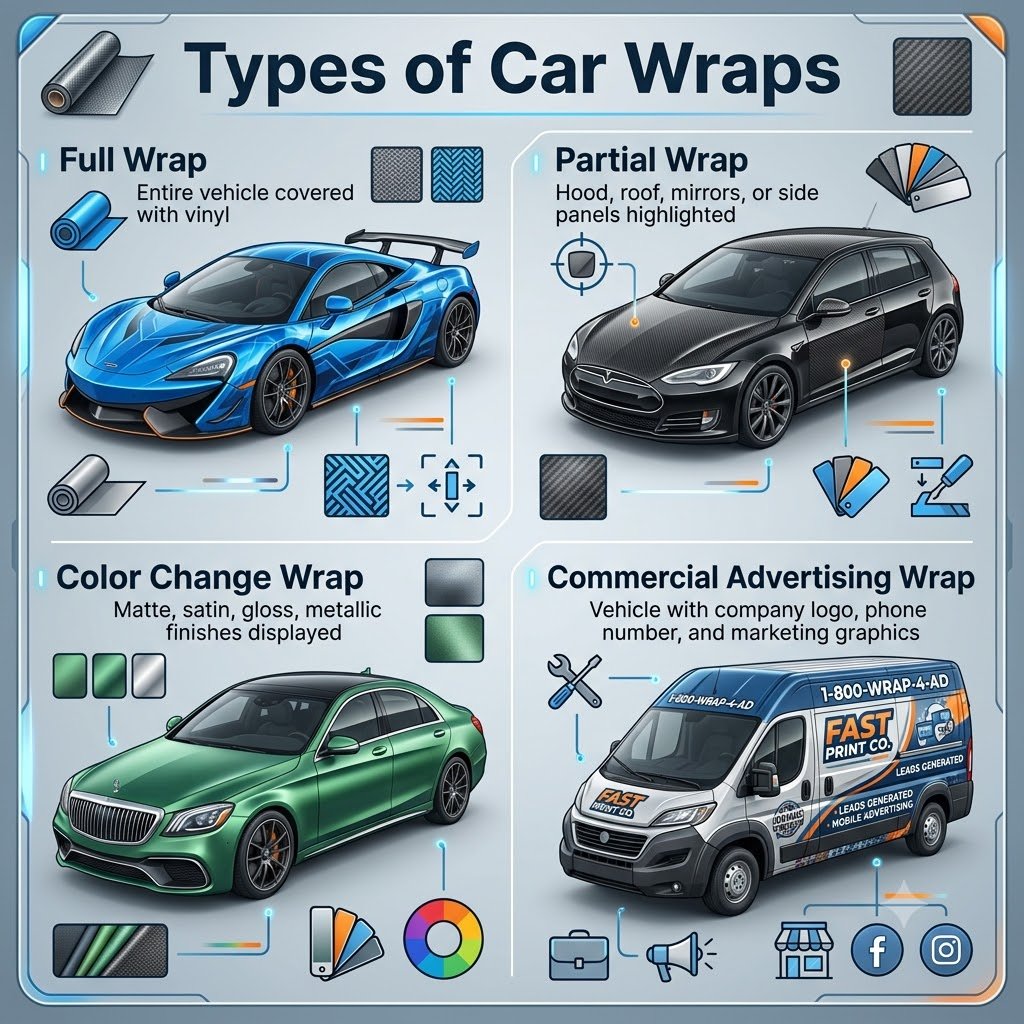
Not all wraps are the same. The type of wrap installed can influence insurance considerations.
Full Wrap
A full wrap covers nearly the entire exterior of the vehicle.
It may include:
- Hood
- Roof
- Doors
- Fenders
- Bumpers
- Trunk
Full wraps provide the greatest visual transformation and usually cost more than partial wraps.
Partial Wrap
A partial wrap covers only selected areas of the vehicle.
Examples include:
- Hood
- Roof
- Mirrors
- Side panels
- Racing stripes
Partial wraps are generally less expensive to install and replace.
Color Change Wrap
A color-change wrap gives the vehicle a completely different appearance.
Popular finishes include:
- Matte
- Satin
- Gloss
- Metallic
- Chrome
- Color-shifting vinyl
Many owners choose this option instead of repainting the vehicle.
Commercial Advertising Wrap
Businesses often wrap vehicles with:
- Company logos
- Phone numbers
- Product images
- Marketing graphics
Commercial wraps serve as mobile advertising and may affect insurance differently because the vehicle’s use often changes from personal to business.
Paint Protection Film (PPF)
Paint Protection Film is sometimes confused with a vinyl wrap.
Unlike decorative wraps, PPF is a nearly transparent protective film designed to protect paint from:
- Rock chips
- Scratches
- Road debris
- UV damage
Although it changes the vehicle’s protection level, it usually has less impact on insurance than decorative wraps.
Does Wrapping a Car Increase Insurance Rates?
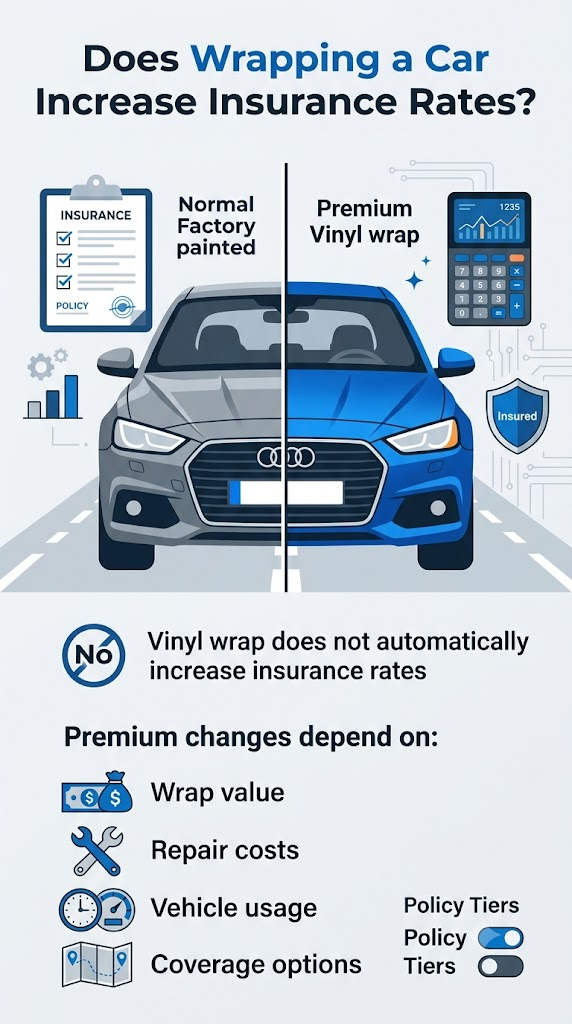
Not necessarily.
A vinyl wrap alone does not automatically increase your insurance premium. Many insurance companies do not charge extra simply because a vehicle has been wrapped.
However, a wrap can indirectly affect insurance if it changes:
- Vehicle value
- Repair costs
- Replacement costs
- Vehicle usage
- Theft risk
Whether your premium changes depends on your insurer’s underwriting policies and the specifics of your wrap.
Why Insurance Companies Care About Car Wraps
Insurance companies calculate premiums based on risk and the expected cost of future claims.
A wrap may increase claim costs because replacing damaged vinyl is often more expensive than repairing factory paint alone.
Insurers may consider factors such as:
- Cost of the wrap
- Type of vinyl used
- Professional installation
- Vehicle value
- Availability of replacement materials
For example, a premium color-shifting wrap costing several thousand dollars may require specialized materials and labor after an accident, increasing repair costs.
When a Car Wrap Can Increase Insurance Rates
Several situations may result in higher insurance premiums.
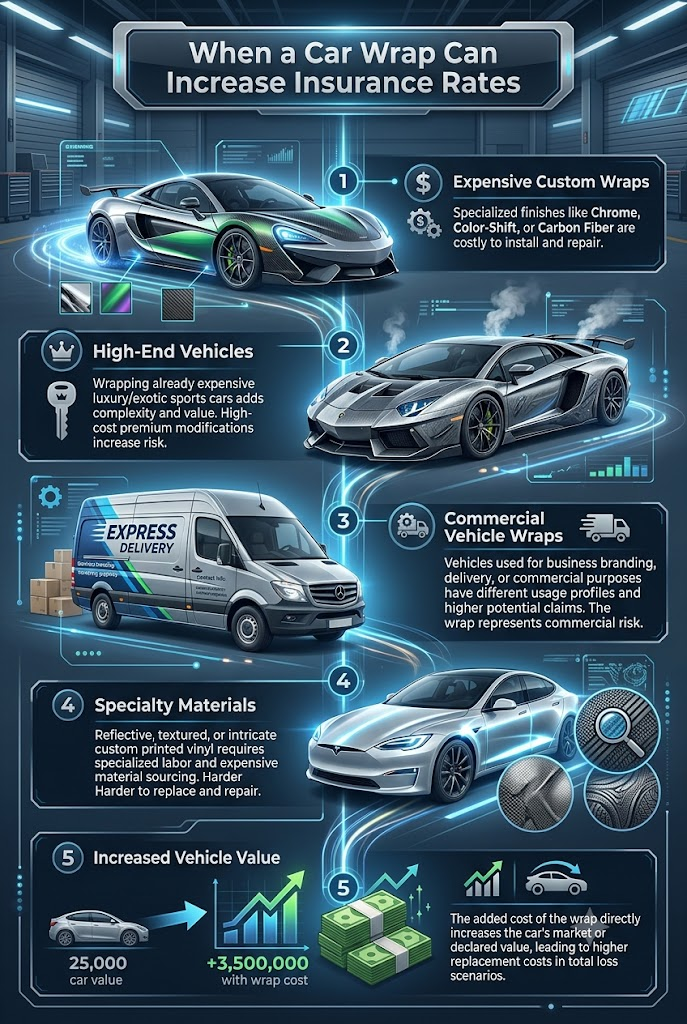
Expensive Custom Wraps
Luxury vinyl wraps can cost several thousand dollars.
Examples include:
- Chrome wraps
- Color-shift wraps
- Carbon fiber finishes
- Custom printed graphics
If you want the wrap protected under your policy, your insurer may adjust your premium to reflect the increased replacement cost.
High-End Vehicles
Luxury cars often cost more to insure regardless of whether they have a wrap.
Adding an expensive wrap to a premium vehicle may further increase:
- Repair costs
- Replacement costs
- Vehicle value
As a result, insurance premiums may increase slightly.
Commercial Vehicle Wraps
Insurance companies are often more concerned about how a vehicle is used than the wrap itself.
A vehicle displaying business advertising may indicate:
- Commercial driving
- Delivery services
- Client visits
- Increased annual mileage
Commercial use typically carries more risk than personal use, which may lead to higher premiums.
Specialty Materials
Certain wraps require specialized installation and replacement.
Examples include:
- Chrome vinyl
- Textured finishes
- Reflective wraps
- Printed artwork
- Limited-edition films
These materials are often more expensive to repair after an accident.
Increased Vehicle Value
A professionally installed wrap represents an investment.
If you request coverage for the wrap, your insurer may increase the insured value of the vehicle.
Higher insured values sometimes lead to slightly higher premiums.
Does Every Insurance Company Treat Car Wraps the Same?
No.
Insurance companies have different underwriting guidelines for vehicle modifications.
Some insurers may:
- Simply note the modification on your policy
- Offer optional custom parts coverage
- Increase your premium slightly
- Require documentation
- Ask for installation receipts
Others may not adjust your premium at all if the wrap adds minimal value.
Because policies vary, it is always a good idea to contact your insurer before or shortly after installing a wrap.
Does a Wrap Count as a Vehicle Modification?
Yes.
Although a wrap does not change the vehicle’s mechanical performance, it is generally considered an aftermarket modification.
Like custom wheels, upgraded stereos, or body kits, a wrap changes the vehicle from its original factory condition.
Because of this, insurers often recommend reporting the modification so it can be properly documented.
Should You Tell Your Insurance Company About a Car Wrap?
Yes.
Even if your insurer does not increase your premium, notifying them helps ensure accurate coverage.
Providing details about the wrap can prevent disputes if it is damaged in a covered claim.
Information your insurer may request includes:
- Installation date
- Cost of the wrap
- Type of vinyl
- Professional installation receipt
- Photos of the completed vehicle
Keeping accurate records can make the claims process much smoother.
Does Insurance Cover a Vinyl Wrap After an Accident?
Whether insurance pays for a damaged vinyl wrap depends on your policy, the type of coverage you have, and whether the wrap was disclosed to your insurance company.
A standard auto insurance policy may cover damage to the vehicle itself, but it does not always pay to repair or replace aftermarket modifications such as vinyl wraps.
If you want the wrap protected, you may need to add additional coverage or ensure the wrap is included in your policy.
Before assuming your wrap is covered, review your policy or ask your insurance company how aftermarket modifications are handled.
Does Comprehensive Insurance Cover a Car Wrap?
Comprehensive insurance protects your vehicle from damage caused by events other than collisions.
Examples include:
- Theft
- Fire
- Hail
- Flooding
- Falling trees
- Vandalism
- Animal damage
If your wrap is damaged during one of these covered events, insurance may help pay for repairs or replacement—but only if the wrap is covered under your policy.
Example
A severe hailstorm damages both your vehicle’s roof and its professionally installed vinyl wrap.
If your insurance policy includes coverage for the wrap, both the vehicle repairs and wrap replacement may be covered, subject to your deductible and policy limits.
If the wrap is not covered, the insurer may pay only to repair the vehicle itself, leaving you responsible for replacing the vinyl.
Does Collision Insurance Cover a Car Wrap?
Collision insurance covers damage caused by:
- Accidents with another vehicle
- Single-vehicle crashes
- Hitting a guardrail
- Impact with stationary objects
- Rollover accidents
When a wrapped vehicle is involved in a collision, insurers generally inspect:
- Body damage
- Paint damage
- Wrap damage
- Repair costs
If the wrap is included in your policy, replacement may be covered after a covered collision.
However, if the wrap was never disclosed or insured, reimbursement may be limited.
Is the Entire Wrap Replaced After an Accident?
It depends on the extent of the damage.
Minor damage affecting one body panel may require replacing only that section of vinyl.
More serious damage can be more complicated because matching the existing wrap may not always be possible.
Factors include:
- Wrap color
- Vinyl brand
- Pattern availability
- Age of the wrap
- Sun fading
If matching material is unavailable, replacing larger sections—or even the entire wrap—may be necessary to achieve a consistent appearance.
What Happens if Only One Panel Is Damaged?
For example, suppose another driver dents your front passenger door.
The repair shop may:
- Repair the damaged panel
- Remove the old vinyl
- Install new vinyl on that panel
If the original wrap has faded or the vinyl has been discontinued, the replacement panel may not match the rest of the vehicle.
Some insurers may pay only for the damaged area, while others may consider replacing additional sections if required under the policy.
Does Insurance Cover Custom Graphics?
Custom graphics often cost more to replace than standard color wraps.
Examples include:
- Company logos
- Racing graphics
- Printed artwork
- Custom illustrations
- Branding decals
Because these graphics are unique, insurers may request:
- Original design files
- Installation invoices
- Replacement estimates
Coverage depends on whether custom graphics are included in your policy.
What About Commercial Vehicle Wraps?
Commercial wraps deserve special attention because they often indicate business use.
A vehicle wrapped with company branding may be used for:
- Deliveries
- Service calls
- Client visits
- Mobile advertising
If a personal auto policy does not cover business use, this can create coverage issues.
In many cases, businesses should consider commercial auto insurance rather than relying solely on a personal policy.
Can Insurance Deny a Claim Because of a Car Wrap?
A vinyl wrap alone does not automatically give an insurance company a reason to deny a claim.
However, certain situations can create complications.
The Wrap Was Never Reported
If you purchased an expensive wrap but never informed your insurer, the company may investigate whether the modification should have been disclosed.
While this does not automatically invalidate your policy, it may affect reimbursement for the wrap itself.
The Wrap Increased Repair Costs
A wrapped vehicle often costs more to repair because technicians may need to:
- Remove damaged vinyl
- Repair the body
- Reapply matching material
If the wrap was not insured, the insurer may pay only for restoring the vehicle to its factory condition.
Business Use Was Not Disclosed
Suppose you wrap your car with business advertising and begin using it for deliveries or client appointments.
If your insurer believes the vehicle is being used for commercial purposes that were not disclosed, they may review whether the policy provides appropriate coverage.
Always be honest about how your vehicle is used.
Does a Car Wrap Affect Total Loss Insurance Payouts?
It can.
If your vehicle is declared a total loss after an accident, insurers determine its value according to your policy terms.
If the wrap is covered, its value may be included in the settlement.
If it is not covered, the insurer may base the payout on the vehicle’s value without considering the cost of the wrap.
Example
A vehicle is worth $30,000 before modifications.
The owner installs a professionally applied vinyl wrap costing $4,000.
If the wrap is included in the policy, the settlement may reflect its insured value, subject to policy terms.
If it is not included, the payout may only reflect the vehicle’s standard value.
What Is Custom Parts and Equipment Coverage?
Many insurers offer Custom Parts and Equipment (CPE) coverage for aftermarket modifications.
This optional coverage may help protect additions such as:
- Vinyl wraps
- Custom paint
- Body kits
- Wheels
- Suspension upgrades
- Performance exhaust systems
- Audio systems
- Lighting upgrades
Coverage limits vary by insurer, so review the policy carefully to understand what is included.
Does the Cost of the Wrap Matter?
Yes.
A simple wrap costing a few hundred dollars may have little impact on insurance decisions.
However, high-end wraps costing several thousand dollars represent a more significant investment and are more likely to require additional coverage if you want them fully protected.
Should You Keep Documentation for Your Wrap?
Absolutely.
Maintain records such as:
- Installation receipt
- Vinyl manufacturer information
- Warranty documents
- Before-and-after photographs
- Payment records
- Installer details
These documents can help establish the wrap’s value if you ever need to file a claim.
Best Insurance Options for Wrapped Cars
There is no single best insurance company for wrapped vehicles because each insurer has its own underwriting guidelines for aftermarket modifications.
Some companies simply note the wrap on your policy, while others may recommend adding Custom Parts and Equipment (CPE) coverage to protect the vinyl.
When comparing insurers, look for companies that offer:
- Coverage for aftermarket modifications
- Custom Parts and Equipment (CPE) coverage
- Flexible coverage limits
- Easy claims process
- Good customer service
- Competitive premiums
Before purchasing or renewing your policy, ask specifically whether vinyl wraps are covered and whether any additional endorsement is required.
How Much Does Insurance Cost for a Wrapped Car?
There is no standard premium increase for wrapped vehicles.
Some drivers may see no change in their insurance rates, while others may pay more depending on the value of the wrap and the coverage they choose.
Insurance companies typically consider several factors.
Value of the Wrap
The more expensive the wrap, the more it may cost to insure.
For example:
- Basic color-change wrap
- Premium matte finish
- Chrome wrap
- Custom printed graphics
- Commercial advertising wrap
High-value wraps generally cost more to replace after damage, which can influence premiums.
Vehicle Value
The vehicle itself remains one of the biggest pricing factors.
A wrapped luxury sports car is usually more expensive to insure than a wrapped economy sedan because repairs and replacement parts cost more.
Driver History
Your driving record often has a greater effect on insurance rates than the wrap itself.
Insurance companies review factors such as:
- Accident history
- Traffic violations
- Years of driving experience
- Previous insurance claims
Drivers with clean records generally receive lower premiums.
Location
Where you live also affects insurance costs.
Areas with higher rates of:
- Vehicle theft
- Vandalism
- Traffic accidents
- Severe weather
may result in higher premiums regardless of whether the vehicle has a wrap.
Vehicle Usage
How you use the vehicle matters.
Examples include:
- Personal commuting
- Weekend driving
- Business use
- Delivery services
- Ride-sharing
Commercial use generally results in higher insurance premiums because of increased exposure to risk.
How to Lower Insurance Costs After Wrapping Your Car
Wrapping your vehicle does not automatically mean you will pay significantly more for insurance.
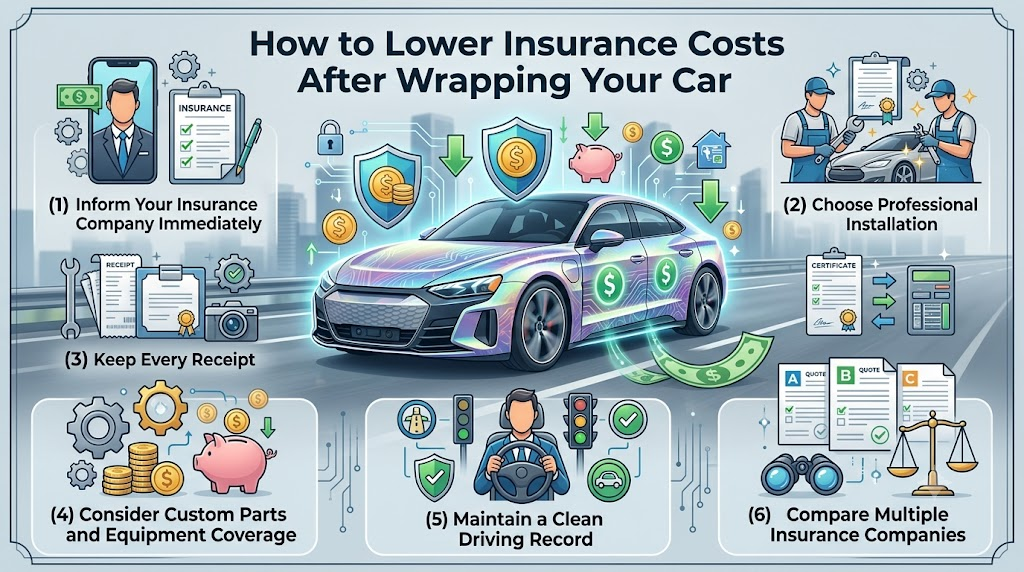
The following strategies may help keep premiums affordable.
Inform Your Insurance Company Immediately
Notify your insurer as soon as the wrap is installed.
Providing accurate information helps ensure the modification is properly documented and avoids claim disputes later.
Choose Professional Installation
Professionally installed wraps are typically easier to insure because they come with:
- Detailed invoices
- Warranty information
- Quality installation records
Professional work also reduces the likelihood of problems caused by improper installation.
Keep Every Receipt
Save copies of:
- Installation invoices
- Material receipts
- Warranty documents
- Design files (for custom graphics)
- Before-and-after photos
These records can make the claims process much smoother.
Consider Custom Parts and Equipment Coverage
If your wrap represents a significant investment, adding Custom Parts and Equipment (CPE) coverage may be worthwhile.
This optional coverage can help protect the wrap if it is damaged in a covered loss.
Maintain a Clean Driving Record
Safe drivers often receive lower premiums regardless of vehicle modifications.
Avoiding accidents and traffic violations remains one of the most effective ways to reduce insurance costs.
Compare Multiple Insurance Companies
Coverage for wrapped vehicles varies from one insurer to another.
Before renewing your policy:
- Request multiple quotes
- Compare coverage options
- Review modification limits
- Ask about aftermarket protection
Shopping around can help you find better value without sacrificing coverage.
Common Mistakes to Avoid
Many vehicle owners make simple mistakes that can lead to coverage issues.
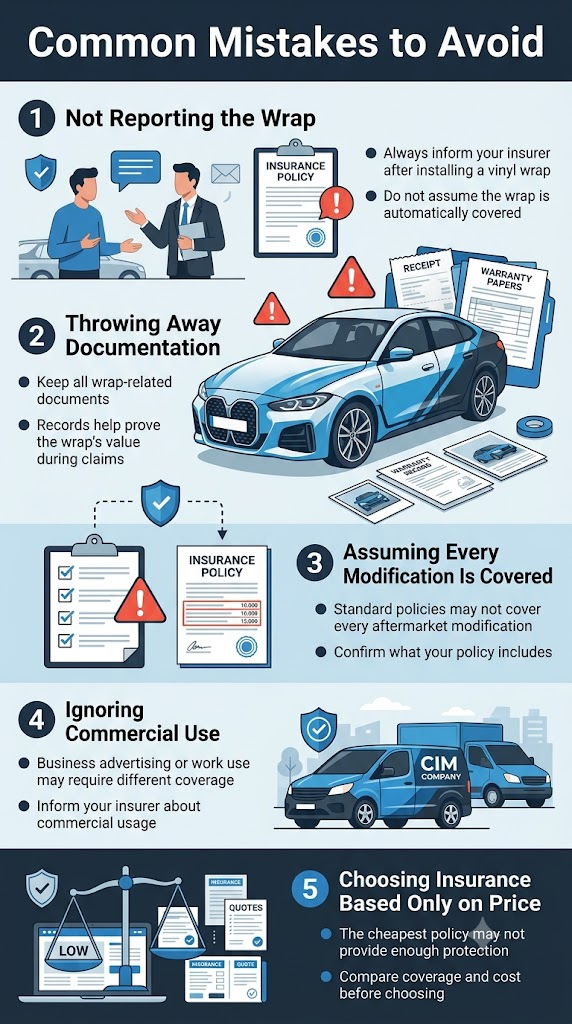
Mistake 1: Not Reporting the Wrap
Never assume your insurance company will automatically cover a vinyl wrap.
Always inform your insurer after installation.
Mistake 2: Throwing Away Documentation
Keep all paperwork related to the wrap.
Important documents include:
- Receipts
- Installation records
- Warranty information
- Photos
These can help prove the wrap’s value if you file a claim.
Mistake 3: Assuming Every Modification Is Covered
Standard insurance policies do not automatically include every aftermarket modification.
Confirm exactly what your policy covers.
Mistake 4: Ignoring Commercial Use
If your vehicle displays business advertising or is used for work, tell your insurer.
Commercial use may require different coverage than personal driving.
Mistake 5: Choosing Insurance Based Only on Price
The lowest premium may not provide adequate protection for your wrap.
Compare both coverage and cost before making a decision.
Final Checklist for Insuring a Wrapped Car
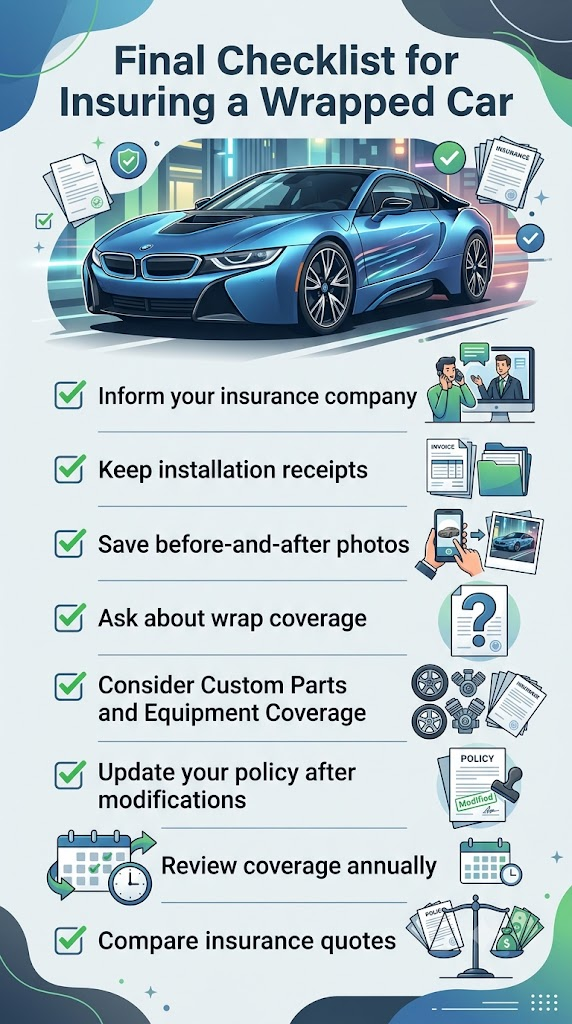
Before and after installing a vehicle wrap, complete this checklist:
✅ Inform your insurance company about the wrap
✅ Keep installation receipts and invoices
✅ Save before-and-after photographs
✅ Ask whether the wrap is covered under your policy
✅ Consider adding Custom Parts and Equipment (CPE) coverage
✅ Update your policy after future modifications
✅ Review your coverage annually
✅ Compare insurance quotes before renewing
Final Thoughts: Does Wrapping a Car Increase Insurance Rates?
Wrapping a car does not automatically increase insurance rates, but it can influence your premium depending on the type of wrap, its value, and how your insurer handles aftermarket modifications.
For many drivers, a standard color-change wrap has little or no effect on insurance costs. However, expensive custom graphics, specialty finishes, or commercial wraps may increase repair costs and require additional coverage.
The best way to protect your investment is to notify your insurance company, keep detailed documentation, and understand exactly what your policy covers. Taking these steps can help you avoid unexpected claim issues and ensure your vinyl wrap receives the protection it deserves.