
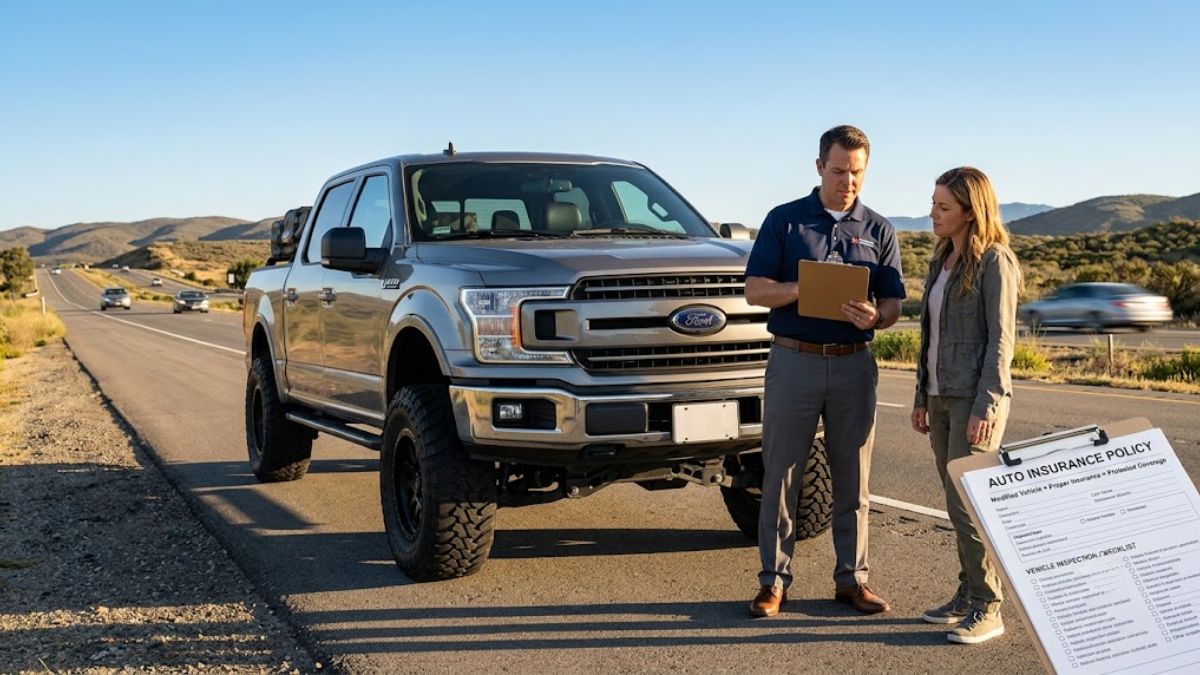

Installing a lift kit is one of the most popular modifications among truck and SUV owners. Whether you want improved off-road capability, a more aggressive appearance, larger tires, or increased ground clearance, a lift kit can significantly change the look and performance of your vehicle.
However, many vehicle owners worry about how modifications affect their insurance coverage. A common question is: Does a lift kit void car insurance?
The short answer is no, a lift kit does not automatically void your car insurance policy. However, failing to inform your insurance company about the modification can create problems, especially when filing a claim after an accident.
Insurance companies evaluate modified vehicles differently because aftermarket changes can affect:
- Vehicle value
- Repair costs
- Safety systems
- Accident risk
- Liability concerns
Understanding how lift kits affect insurance can help you protect your vehicle and avoid unexpected claim issues.
This guide explains whether a lift kit affects insurance, when coverage can be denied, how to insure a modified vehicle, and what steps you should take before installing a lift kit.
What Is a Lift Kit?
A lift kit is an aftermarket modification designed to raise a vehicle’s body or suspension higher than its factory height.
Lift kits are commonly installed on:
- Pickup trucks
- SUVs
- Jeeps
- Off-road vehicles
The main purpose is to create additional space between the vehicle and the ground.
Why Do People Install Lift Kits?
Vehicle owners install lift kits for several reasons.
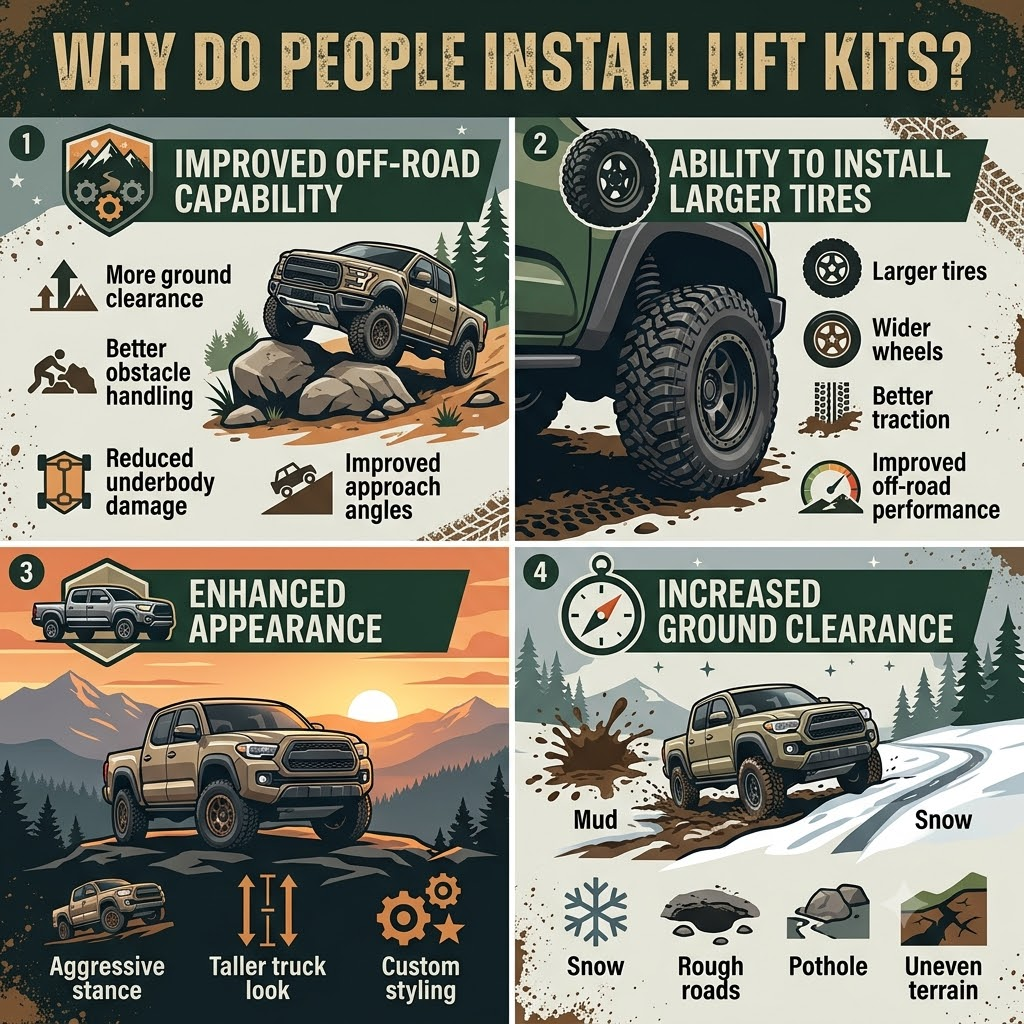
Improved Off-Road Capability
A higher vehicle provides:
- More ground clearance
- Better ability to overcome rocks and obstacles
- Reduced risk of underbody damage
- Improved approach and departure angles
Off-road enthusiasts often install lift kits to improve trail performance.
Ability to Install Larger Tires
A lift kit creates additional wheel well space, allowing owners to install:
- Larger tires
- Wider wheels
- More aggressive off-road tires
Larger tires can improve:
- Traction
- Ground clearance
- Off-road performance
Enhanced Appearance
Many owners install lift kits because they prefer the appearance of:
- Taller trucks
- More aggressive stance
- Custom styling
A lifted truck often has a more rugged appearance compared with a stock vehicle.
Increased Ground Clearance
Additional height can help vehicles handle:
- Rough roads
- Mud
- Snow
- Uneven terrain
This is especially useful for drivers who regularly travel in challenging conditions.
Does a Lift Kit Void Car Insurance?
No, a lift kit generally does not automatically void your car insurance policy.
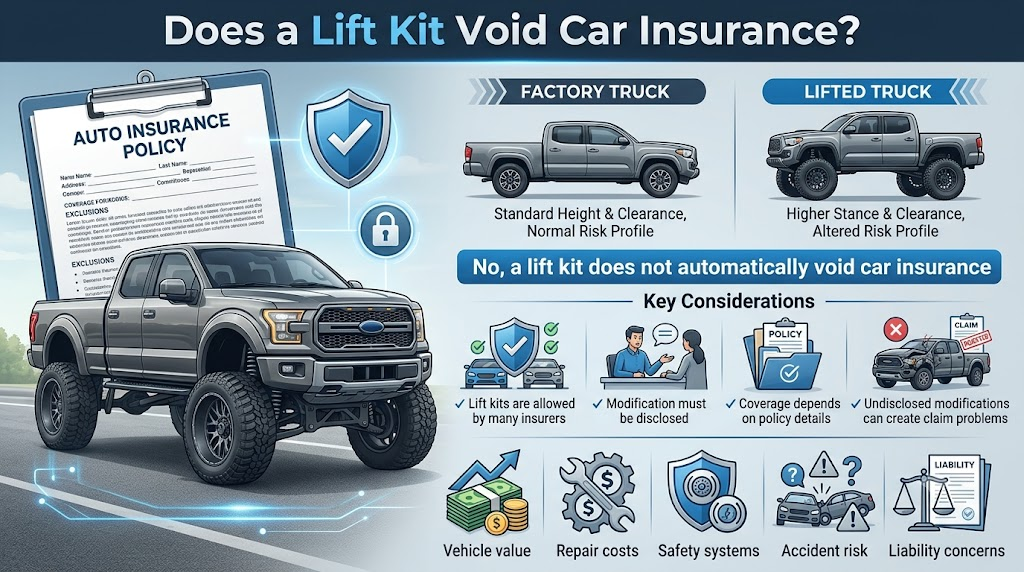
Insurance companies usually allow vehicle modifications, including:
- Lift kits
- Suspension upgrades
- Larger tires
- Custom wheels
- Performance modifications
However, insurance coverage depends on whether the modification was properly disclosed.
The important difference is:
Installing a lift kit does not automatically cancel insurance.
Failing to tell your insurer about the lift kit can create coverage problems.
Why You Should Inform Your Insurance Company About a Lift Kit
When you install a lift kit, your vehicle is no longer identical to the factory version that was originally insured.
Insurance companies calculate premiums based on factors such as:
- Vehicle specifications
- Replacement costs
- Repair expenses
- Safety features
- Risk profile
A lift kit can change these factors.
For example:
A stock pickup truck may have standard suspension components.
A lifted truck may have:
- Modified suspension
- Larger wheels
- Custom shocks
- Aftermarket control arms
- Different steering components
If an accident occurs, repairs may cost significantly more than a factory vehicle.
What Happens If You Do Not Tell Insurance About a Lift Kit?
Failing to disclose a lift kit may cause problems during a claim.
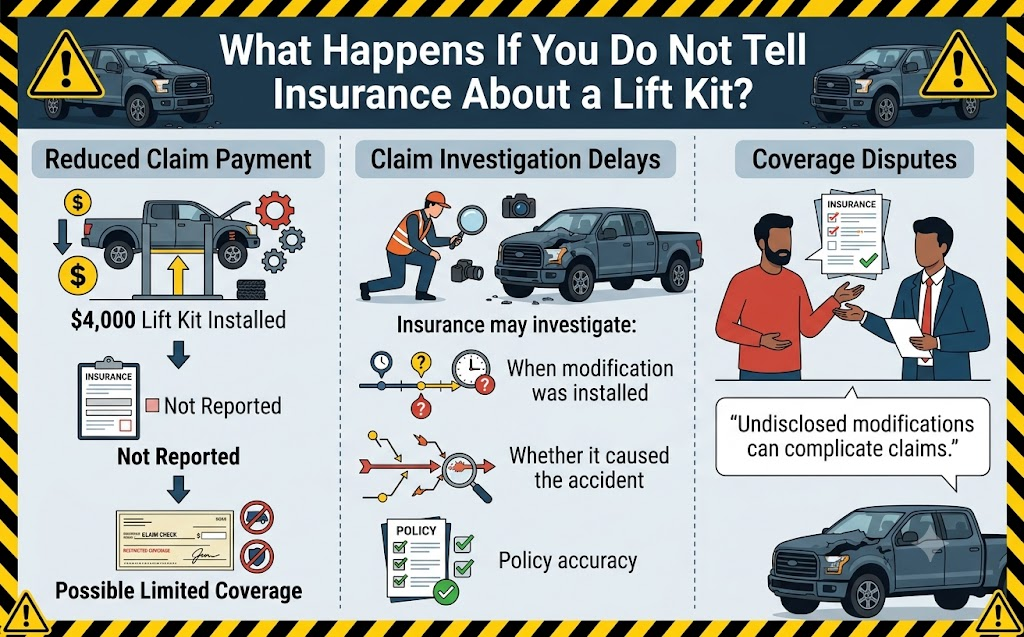
Possible outcomes include:
Reduced Claim Payment
An insurer may pay only for the original factory equipment rather than modified parts.
Example:
You install a $4,000 suspension lift kit but never report it.
After an accident, the insurance company may calculate repairs based on the original suspension system.
You may have to pay the difference yourself.
Claim Investigation Delays
Insurance companies may investigate:
- When the modification was installed
- Whether it contributed to the accident
- Whether the policy information was accurate
This can delay the claims process.
Coverage Disputes
In some situations, an insurer may argue that important vehicle information was not disclosed.
This does not always mean the entire policy becomes invalid, but it can complicate the claim.
Do Insurance Companies Care About Lift Kits?
Yes, many insurance companies consider lift kits when evaluating a vehicle.
However, their response depends on:
- Type of lift kit
- Lift height
- Vehicle type
- State regulations
- Driving history
- Intended use
A small suspension upgrade on a daily-driven SUV may receive different treatment than a heavily modified off-road truck.
Factors Insurance Companies Consider With Lift Kits
Lift Height
The amount of lift matters.
A:
- 2-inch lift
- 3-inch lift
- 6-inch lift
- Extreme suspension modification
may have different insurance considerations.
Larger lifts can affect:
- Vehicle stability
- Handling
- Center of gravity
- Braking performance
Quality of Installation
Professional installation may make insurers more comfortable.
Documentation from a reputable shop can help show that:
- Correct parts were used
- Installation followed manufacturer guidelines
- Safety standards were considered
Vehicle Use
Insurance companies may ask how the vehicle is used.
Examples:
- Daily driving: Lower risk
- Occasional off-road use: May require additional discussion
- Competitive off-roading: May require specialized coverage
Other Modifications
A lift kit combined with other modifications may affect insurance more.
Examples:
- Oversized tires
- Engine modifications
- Suspension changes
- Custom bumpers
- Winches
- Armor upgrades
The more extensively modified the vehicle becomes, the more important proper coverage becomes.
Can Insurance Deny a Claim Because of a Lift Kit?
A lift kit alone usually does not give an insurance company a reason to automatically deny a claim. However, there are situations where a lift kit can affect how a claim is handled.
Insurance companies generally investigate whether:
- The modification was disclosed
- The lift kit contributed to the accident
- The vehicle was modified legally
- The modification increased repair costs
A lifted vehicle is still insured as long as the policy remains valid and the modification has been properly reported.
Situations Where a Lift Kit May Cause Claim Problems
The Lift Kit Was Not Disclosed
This is one of the most common issues.
When you purchase insurance, the company creates a policy based on the information provided about your vehicle.
If you later install a lift kit but do not update your policy, the insurer may argue that:
- The vehicle was not accurately represented
- The modification changed the vehicle’s value
- Repair costs were higher than expected
Example:
A truck has a factory suspension valued at $1,500.
The owner installs a $5,000 suspension lift kit but does not notify insurance.
After a collision, the modified suspension is damaged. The insurer may not cover the full replacement cost because the aftermarket equipment was never included in the policy.
The Lift Kit Contributed to the Accident
In some cases, insurers may investigate whether the modification affected vehicle handling.
A poorly installed or unsafe lift kit can affect:
- Steering response
- Braking distance
- Vehicle stability
- Tire contact with the road
For example:
A poorly installed extreme lift changes the vehicle’s center of gravity and contributes to a rollover accident.
The insurer may examine whether the modification played a role in the crash.
The Lift Kit Violates Local Laws
Vehicle modification laws vary by state.
If your lift kit exceeds legal limits or creates safety problems, insurance complications may occur.
Possible concerns include:
- Excessive vehicle height
- Improper lighting placement
- Unsafe suspension modifications
- Tire coverage issues
- Steering problems
A vehicle that does not comply with legal requirements may face additional scrutiny after an accident.
Does a Lift Kit Increase Insurance Rates?
A lift kit may increase insurance premiums, but not always.
Insurance companies consider several factors before adjusting rates.
A small lift installed on a truck used mainly for commuting may have little impact.
A heavily modified off-road vehicle may have higher premiums because of:
- Increased replacement costs
- Higher repair expenses
- Greater accident risk
- Increased theft risk
Why Lift Kits Can Increase Insurance Costs
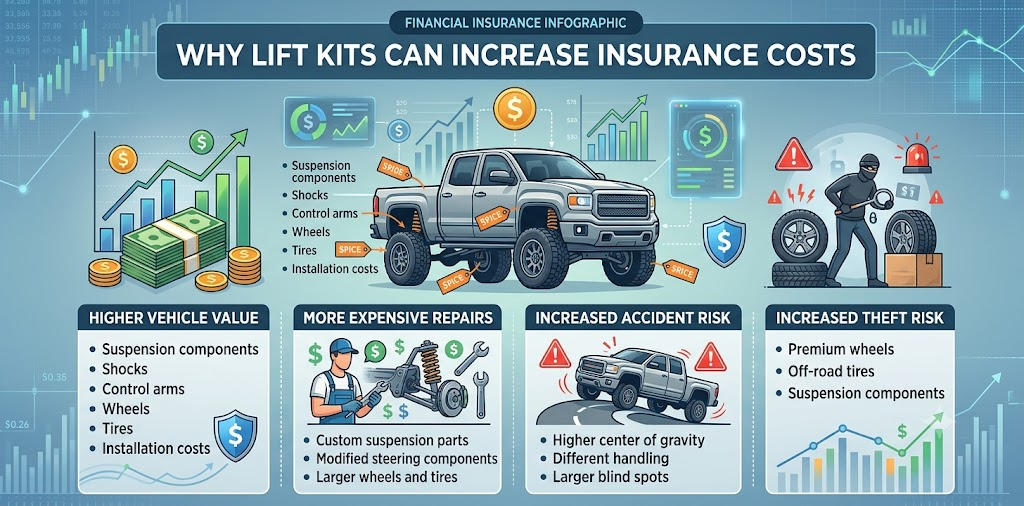
Higher Vehicle Value
A quality lift kit can cost thousands of dollars.
Examples:
- Suspension components
- Shocks
- Control arms
- Wheels
- Tires
- Installation costs
If these modifications are included in coverage, the insurer may charge more because the vehicle is worth more.
More Expensive Repairs
A lifted vehicle may require specialized parts after an accident.
A repair shop may need to replace:
- Custom suspension components
- Modified steering parts
- Larger wheels and tires
These repairs can cost more than repairing a stock vehicle.
Increased Accident Risk
Insurance companies evaluate risk based on vehicle characteristics.
Lifted vehicles may have:
- Higher center of gravity
- Different handling characteristics
- Larger blind spots
Especially large lifts can increase rollover risk compared with factory vehicles.
Increased Theft Risk
Modified trucks and SUVs can attract thieves because aftermarket parts have resale value.
Commonly targeted items include:
- Premium wheels
- Off-road tires
- Suspension components
- Custom accessories
How Much Does Lifted Truck Insurance Cost?
The cost of insuring a lifted vehicle varies widely.
Factors include:
- Vehicle make and model
- Lift kit cost
- Modification level
- Driver history
- Location
- Coverage limits
- Insurance company
A lifted truck may cost slightly more to insure than a stock truck, especially if aftermarket modifications are included in the policy.
Example Insurance Cost Differences
A standard pickup truck:
- Lower replacement value
- Factory parts
- Standard repair costs
A modified lifted pickup:
- Higher vehicle value
- Custom parts
- More expensive repairs
The difference could range from a small increase to a significant premium adjustment depending on the modifications.
Does Full Coverage Insurance Cover a Lift Kit?
Standard comprehensive and collision coverage may not automatically cover aftermarket modifications.
This is an important point for vehicle owners.
A regular policy may cover the vehicle itself but not necessarily:
- Custom suspension
- Aftermarket wheels
- Specialty tires
- Performance upgrades
To protect modifications, you may need:
- Custom parts and equipment coverage
- Modified vehicle insurance
- Additional endorsements
What Is Custom Parts and Equipment Coverage?
Custom parts and equipment (CPE) coverage is designed to protect aftermarket additions.
It may cover items such as:
- Lift kits
- Custom wheels
- Tires
- Audio systems
- Exterior upgrades
- Performance parts
Coverage limits vary by insurer.
For example:
You install:
- $3,500 lift kit
- $2,000 wheels
- $1,800 tires
Without additional coverage, you may not receive full reimbursement after a covered loss.
Should You Get Specialized Insurance for a Lifted Vehicle?
For a heavily modified vehicle, specialized insurance may be worth considering.
This is especially true if your vehicle has:
- Large suspension lifts
- Expensive aftermarket parts
- Extensive modifications
- Off-road equipment
Specialized insurers often understand modified vehicles better than standard insurance providers.
They may offer coverage designed around:
- Actual vehicle value
- Custom equipment
- Agreed value policies
- Modification protection
Does a Lift Kit Affect Comprehensive Coverage?
A lift kit usually does not prevent you from getting comprehensive coverage.
Comprehensive insurance covers damage caused by events such as:
- Theft
- Fire
- Weather damage
- Falling objects
- Animal collisions
However, whether your lift kit itself is covered depends on whether it was reported and included in your policy.
Example:
A tree falls on your lifted truck and damages the custom suspension.
If the lift kit was properly insured, repair costs may be covered.
If it was never disclosed, coverage may be limited.
Does a Lift Kit Affect Collision Coverage?
Collision coverage is where lift kits can create more questions.
Collision insurance covers damage from:
- Vehicle crashes
- Impact with objects
- Rollover accidents
After a collision, insurers may evaluate:
- Whether the lift contributed to the accident
- Whether repairs include modified parts
- Whether modifications were disclosed
Proper documentation can make the claims process easier.
Best Insurance Options for Lifted Trucks and SUVs
Finding the right insurance for a lifted vehicle depends on how heavily modified the vehicle is and how you use it.
A basic lift kit on a daily-driven truck may be covered by a standard insurer, while a heavily customized off-road vehicle may require specialized coverage.
When comparing insurance companies, look for providers that offer:
- Modified vehicle coverage
- Custom parts and equipment coverage
- Replacement coverage for aftermarket upgrades
- Flexible valuation options
- Off-road vehicle protection (if applicable)
Standard Insurance Companies for Lifted Vehicles
Many large insurance companies may insure vehicles with lift kits, especially when modifications are properly disclosed.
Examples include:
- Progressive
- State Farm
- GEICO
- Allstate
- Farmers
- Nationwide
However, acceptance and coverage options vary based on:
- Vehicle type
- Modification details
- Location
- Driver history
- Lift height
- Intended use
A company that accepts a mildly modified truck may not insure an extensively customized off-road vehicle.
Specialized Insurance for Modified Vehicles
Owners with highly modified trucks may benefit from insurers that focus on specialty vehicles.
These insurers often understand:
- Custom builds
- Modified trucks
- Classic vehicles
- Off-road vehicles
- Performance vehicles
They may provide coverage based on the actual value of the vehicle rather than standard factory pricing.
This can be useful when modifications represent a significant investment.
Example:
A stock Jeep may be worth $35,000.
After modifications:
- Lift kit: $5,000
- Wheels and tires: $4,000
- Suspension upgrades: $3,000
- Off-road equipment: $5,000
The vehicle may now represent a $52,000 investment.
A standard policy may not fully account for those upgrades unless they are specifically included.
How to Tell Your Insurance Company About a Lift Kit
When installing a lift kit, contact your insurance provider before or immediately after the modification.
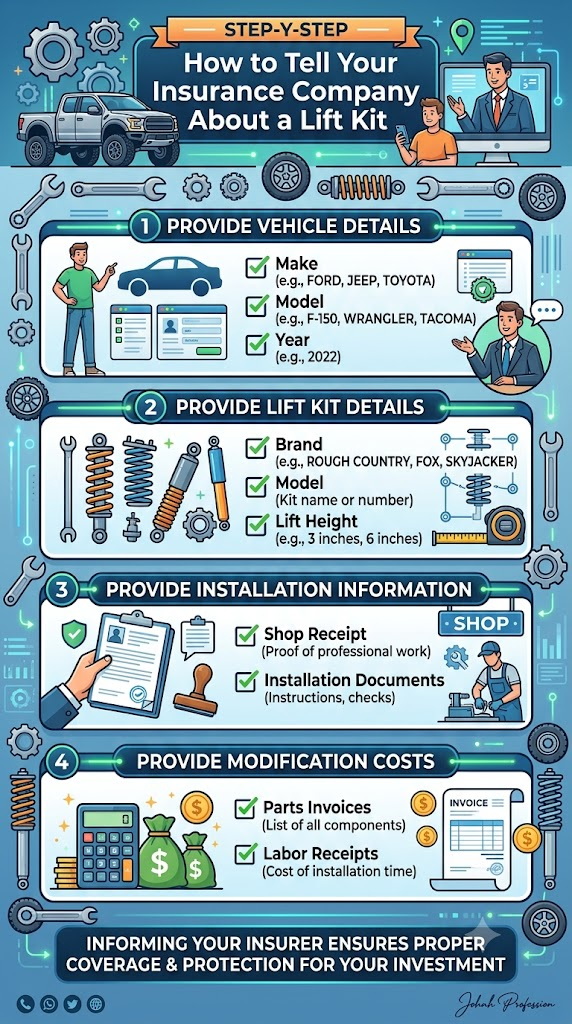
Provide accurate details about:
- Vehicle make and model
- Lift kit brand
- Lift height
- Installation date
- Installation cost
- Additional modifications
Information Your Insurer May Request
Insurance companies may ask for:
Lift Kit Details
Include:
- Brand name
- Model
- Suspension type
- Height increase
Examples:
- 2-inch leveling kit
- 3-inch suspension lift
- 6-inch full suspension lift
Installation Information
Provide:
- Professional installation receipt
- Shop information
- Installation documentation
A professionally installed lift kit may be viewed more favorably than a homemade modification.
Cost of Modifications
Keep records of:
- Parts invoices
- Labor receipts
- Wheel and tire costs
- Additional accessories
These documents help determine proper coverage.
Lift Kit Documentation Checklist
Maintaining records is important for insurance claims.
Keep the following documents:
✅ Lift kit purchase receipt
✅ Installation invoice
✅ Manufacturer information
✅ Before-and-after photos
✅ Wheel and tire receipts
✅ Alignment records
✅ Suspension inspection reports
✅ Insurance endorsement documents
Store these records digitally and keep copies in a safe location.
Why Before-and-After Photos Matter
Photos provide proof of your vehicle’s condition before and after modification.
They can help show:
- The quality of installation
- Parts that were installed
- Vehicle appearance
- Condition before an accident
This can make the claims process easier.
Does a Lift Kit Affect Vehicle Safety?
A properly installed lift kit can be safe, but improper modifications may create safety concerns.
A lift changes the vehicle’s original design, which can affect:
- Handling
- Braking
- Steering
- Stability
The impact depends on:
- Lift height
- Vehicle type
- Installation quality
- Suspension design
Potential Safety Concerns With Lift Kits
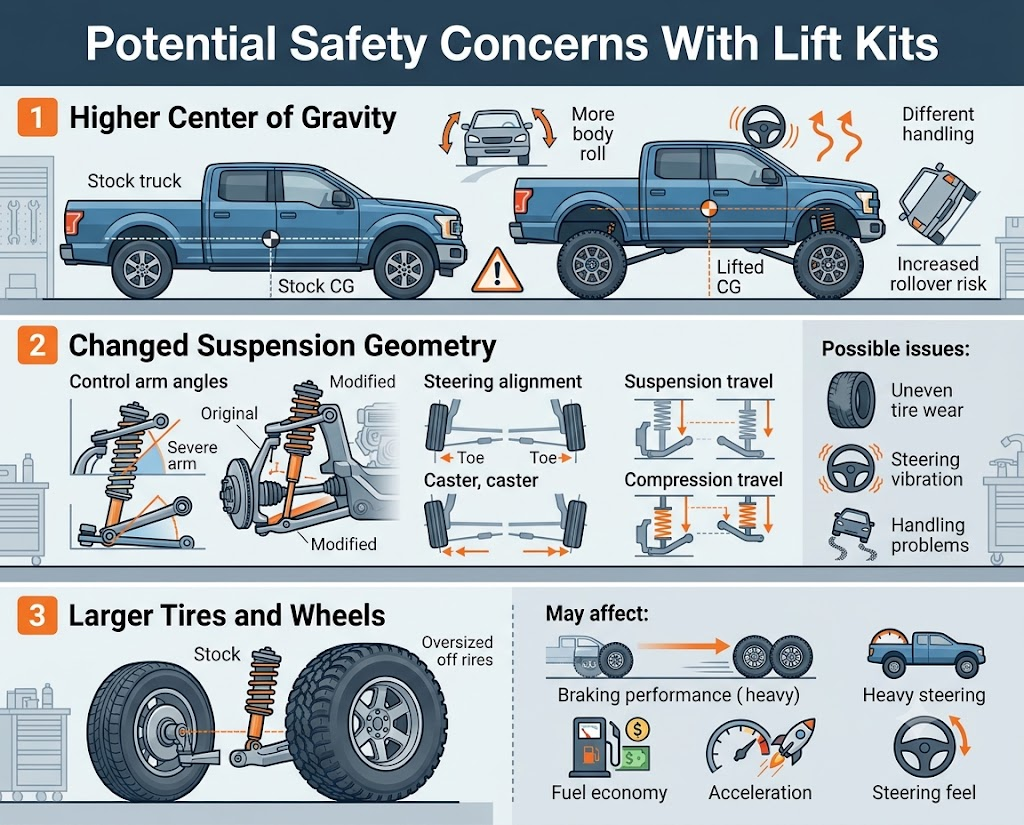
Higher Center of Gravity
Raising a vehicle increases its center of gravity.
Possible effects include:
- More body roll during turns
- Different handling characteristics
- Increased rollover risk in extreme situations
Changed Suspension Geometry
A lift kit can affect:
- Control arm angles
- Steering alignment
- Suspension travel
Poor geometry can cause:
- Uneven tire wear
- Steering vibration
- Handling issues
Larger Tires and Wheels
Many lift kit owners install larger tires.
While they can improve off-road capability, they may affect:
- Braking performance
- Fuel economy
- Acceleration
- Steering feel
Do Lift Kits Need Professional Installation?
Professional installation is strongly recommended, especially for suspension lifts.
A professional installer can ensure:
- Correct torque specifications
- Proper suspension alignment
- Safe steering operation
- Correct component installation
After installation, a wheel alignment is usually recommended.
A poorly installed lift kit can create mechanical and insurance problems.
Are Lift Kits Legal?
Lift kit laws vary by state and local regulations.
Before modifying your vehicle, check:
- Maximum vehicle height limits
- Headlight height requirements
- Bumper height regulations
- Tire coverage rules
- Suspension modification laws
A vehicle that exceeds legal limits may face:
- Fines
- Inspection failures
- Registration issues
- Insurance complications
How Lift Kit Laws Can Affect Insurance
Insurance companies generally expect vehicles to comply with applicable laws.
If an illegal modification contributes to an accident, it may create complications.
Examples:
- Excessive lift affecting vehicle control
- Improperly mounted lighting
- Unsafe suspension modifications
- Tires extending beyond legal limits
Always verify local regulations before installing a lift kit.
Pros and Cons of Installing a Lift Kit
Advantages of a Lift Kit
Better Off-Road Performance
A lifted vehicle can provide:
- More ground clearance
- Better obstacle clearance
- Improved off-road capability
Improved Appearance
Many owners prefer:
- Aggressive styling
- Larger stance
- Custom appearance
Larger Tire Options
A lift allows installation of:
- Bigger tires
- More capable off-road tires
- Improved traction setups
Increased Customization
Lift kits allow owners to personalize their vehicles.
Disadvantages of a Lift Kit
Higher Insurance Considerations
You may need:
- Additional coverage
- Higher limits
- Modified vehicle insurance
Increased Maintenance Costs
Modified vehicles may require additional maintenance.
Possible expenses include:
- Alignment adjustments
- Suspension inspections
- Tire replacement
Reduced Fuel Economy
Larger tires and increased vehicle height can increase:
- Wind resistance
- Vehicle weight
- Rolling resistance
This may reduce fuel efficiency.
Potential Resale Challenges
Some buyers prefer factory vehicles.
A heavily modified vehicle may have a smaller resale market.
Lift Kit Insurance Checklist
Before installing a lift kit, follow this checklist:
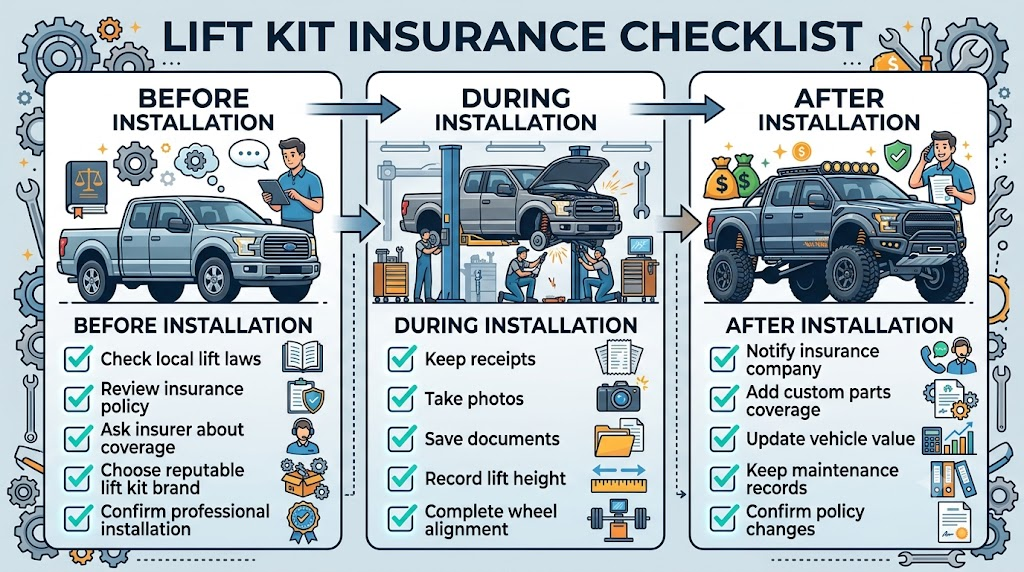
Before Installation
✅ Check local lift laws and regulations
✅ Review your insurance policy
✅ Ask your insurer about modification coverage
✅ Choose a reputable lift kit brand
✅ Confirm professional installation options
During Installation
✅ Keep all receipts
✅ Take before-and-after photos
✅ Save installation documents
✅ Record lift height and parts used
✅ Complete wheel alignment
After Installation
✅ Notify your insurance company
✅ Add custom parts coverage if needed
✅ Update your vehicle value
✅ Keep maintenance records
✅ Confirm policy changes in writing
Tips to Keep Insurance Problems Away After Installing a Lift Kit
Be Honest With Your Insurance Company
Never hide modifications.
Insurance companies need accurate information to provide proper coverage.
Avoid Extreme Modifications Without Research
Large lifts and extensive modifications can create:
- Safety concerns
- Legal issues
- Insurance challenges
Research how modifications affect your specific vehicle.
Use Quality Parts
Cheap or poorly designed lift kits may create reliability problems.
Choose:
- Reputable manufacturers
- Vehicle-specific kits
- Properly rated components
Keep Professional Installation Records
Documentation proves that the modification was completed correctly.
Review Your Coverage Regularly
If you add more modifications, update your insurance.
Examples:
- Bigger wheels
- Winch
- Off-road bumpers
- Lighting upgrades
- Suspension upgrades
Your policy should reflect the actual vehicle you own.
Final Thoughts: Does a Lift Kit Void Car Insurance?
A lift kit does not automatically void car insurance.
The biggest factor is not the lift kit itself, but whether the modification is properly disclosed, legally installed, and correctly insured.
A properly installed lift kit can be a valuable upgrade that improves:
- Ground clearance
- Off-road ability
- Vehicle appearance
- Customization options
However, vehicle owners should understand that modifications can change:
- Insurance costs
- Repair expenses
- Vehicle value
- Safety considerations
Before installing a lift kit:
- Contact your insurance provider
- Understand coverage options
- Keep documentation
- Follow local laws
- Consider custom parts coverage
When handled correctly, a lifted truck or SUV can remain fully insured while giving you the performance and appearance you want.