
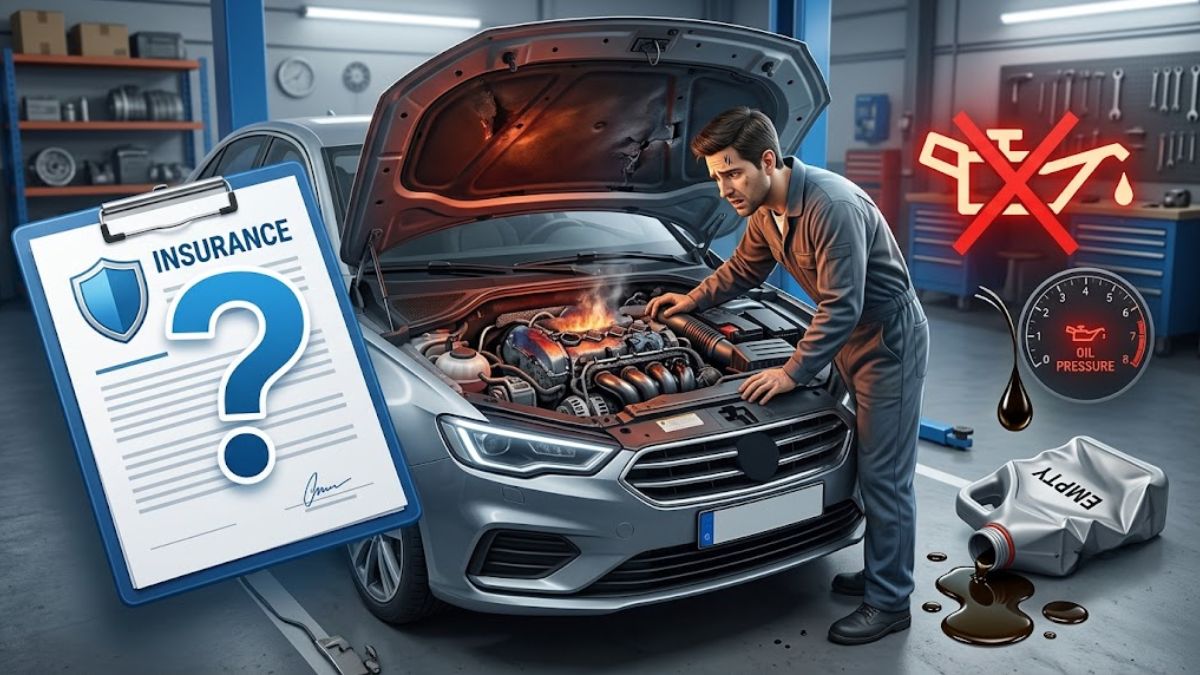

A blown engine is one of the most expensive repairs a car owner can face. Depending on the vehicle, engine replacement can cost anywhere from a few thousand dollars to over $10,000.
Because of these high repair costs, many drivers wonder: Does car insurance cover a blown engine caused by no oil?
The short answer is usually no.
Most insurance companies consider engine damage from low or no oil a maintenance issue, not an unexpected accident. Standard car insurance is designed to cover events such as collisions, theft, fire, vandalism, and certain natural disasters, rather than damage caused by neglect or mechanical problems.
However, there are exceptions. If engine damage happens because of a covered event, such as a collision that damages the oil pan and causes oil loss, insurance may help pay for repairs depending on your policy.
In this guide, we will explain when insurance covers engine damage, why claims are denied, and what other options like warranties may help.
Does Car Insurance Cover A Blown Engine From No Oil
In most cases, car insurance does not cover a blown engine caused by running without enough oil.
Insurance companies usually classify this type of damage as:
- Poor maintenance
- Mechanical failure
- Wear and tear
- Preventable damage
Maintaining proper oil levels is the responsibility of the vehicle owner. If an engine fails because it was driven without enough oil, the repair cost usually falls on the owner.
However, if the oil loss happened because of a covered accident, the situation may be different.
Why Engine Oil Is So Important
Engine oil is essential for keeping your vehicle’s engine running smoothly. It reduces friction between moving parts, helps control heat, and protects important components from damage.
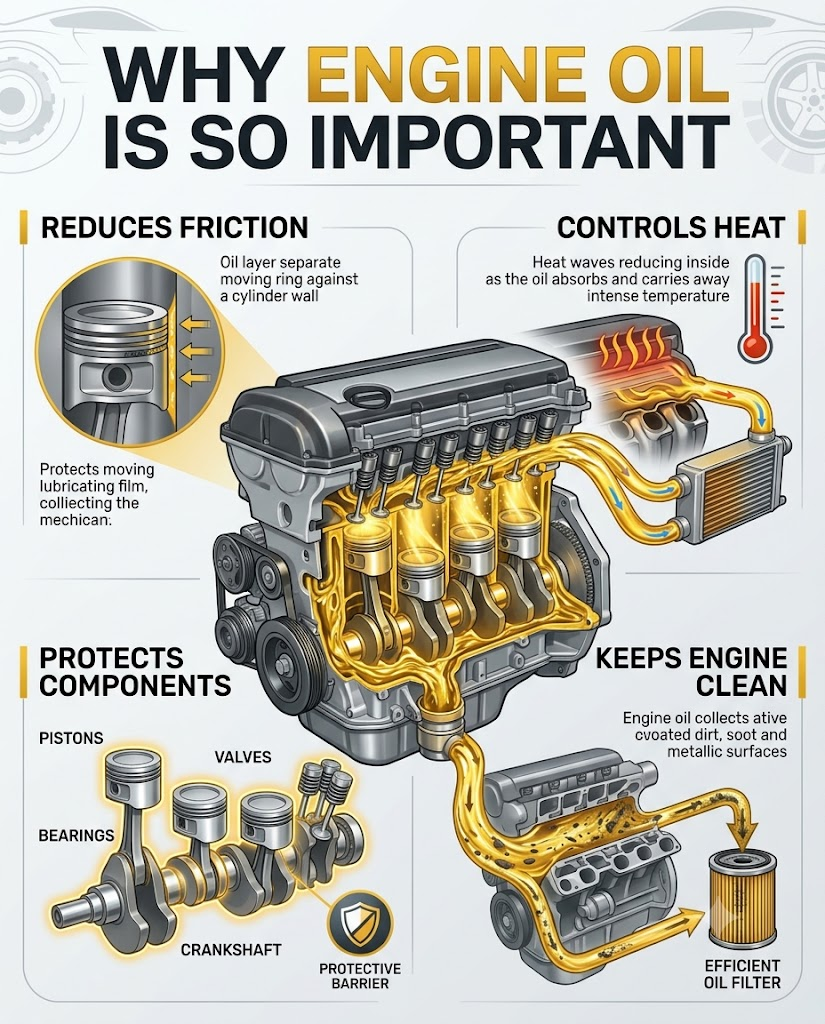
Without enough oil, engine parts begin rubbing directly against each other. This creates excessive friction and heat, which can quickly lead to serious damage.
Engine oil helps by:
Reducing Friction
Oil creates a protective layer between moving engine parts, reducing wear and preventing metal components from grinding against each other.
Controlling Heat
Although coolant handles most engine temperature control, oil also helps remove heat from internal parts.
Protecting Engine Components
Proper lubrication helps protect parts such as:
- Pistons
- Bearings
- Crankshaft
- Valves
Keeping the Engine Clean
Engine oil collects dirt and debris, helping prevent sludge buildup inside the engine.
What Happens If Your Engine Runs Without Oil?
Driving with little or no oil can cause severe engine damage within a short time.
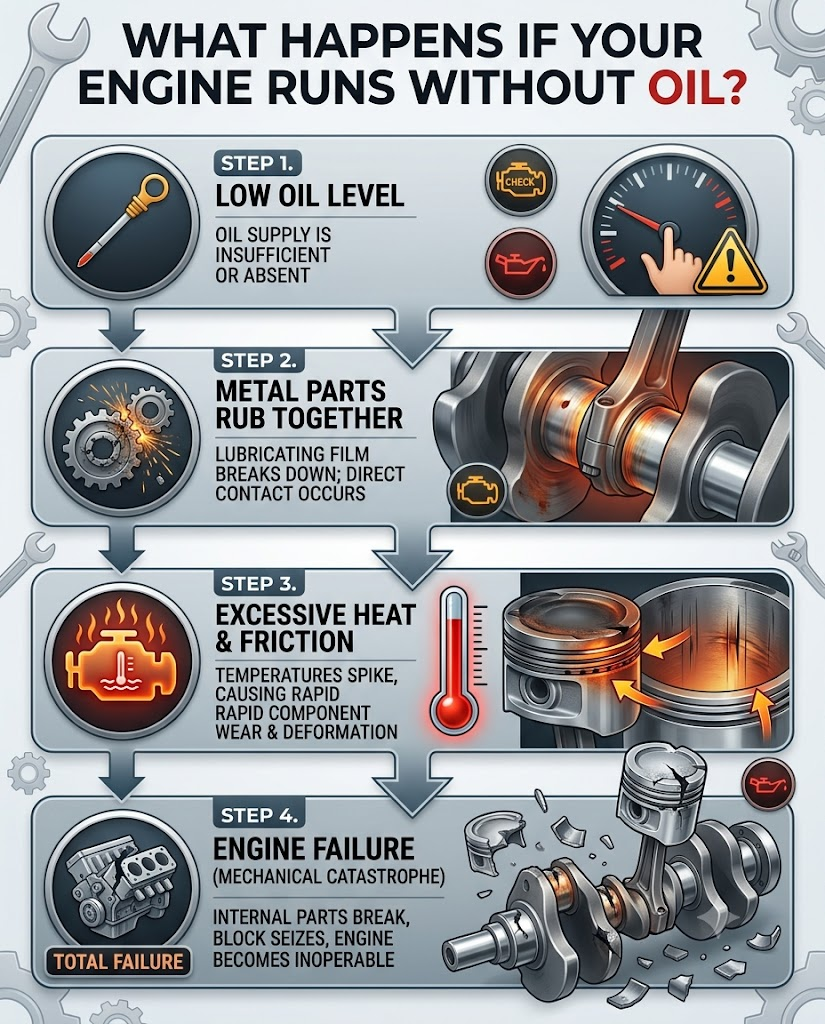
Common problems include:
Seized Pistons
Without lubrication, pistons can overheat and become stuck inside the cylinders.
Damaged Bearings
Engine bearings require oil to function properly. Lack of lubrication can cause them to wear out quickly.
Warped Engine Parts
Excessive heat can damage major components such as the cylinder head or engine block.
Complete Engine Failure
In severe cases, the engine may seize completely and require a rebuild or replacement.
Why a Blown Engine Can Be So Expensive
Once an engine suffers major damage from low oil, repairs can become extremely costly.
Possible solutions include:
- Engine rebuild
- Replacement of damaged internal parts
- Complete engine replacement
For many vehicles, replacing the engine becomes the only practical option.
Why Insurance Usually Doesn’t Cover a Blown Engine From No Oil
Car insurance is designed to cover sudden and unexpected events, not damage caused by maintenance problems.
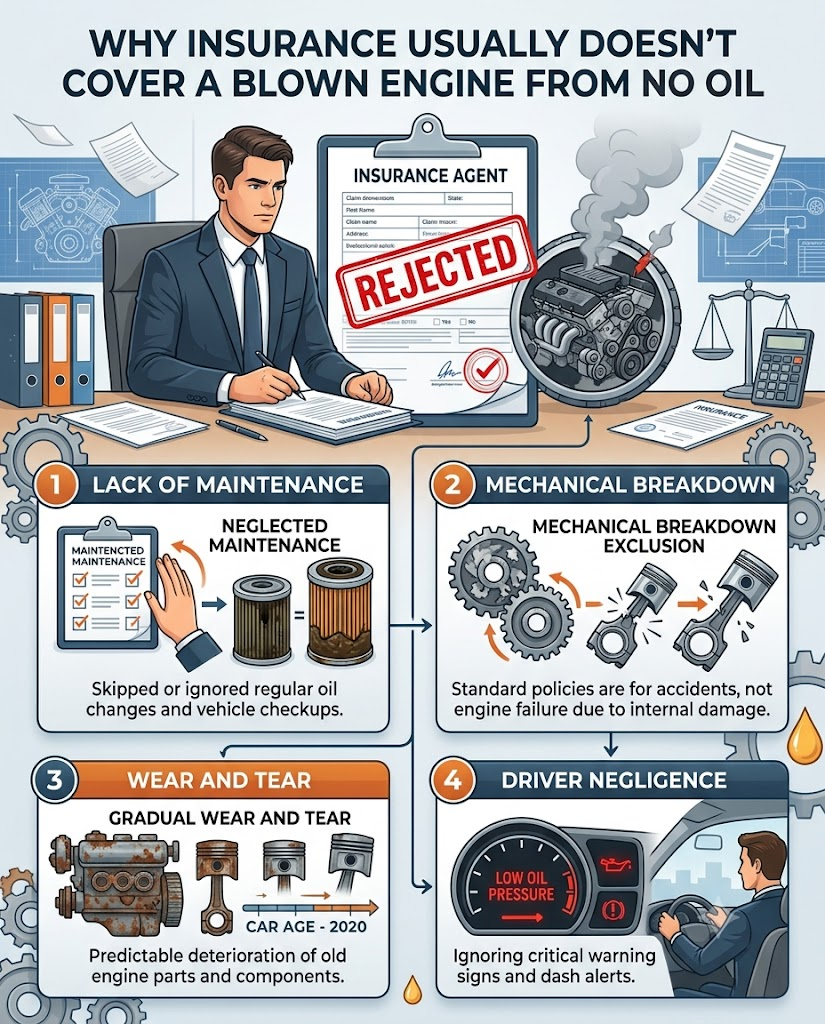
If an engine fails because it was running without enough oil, insurers usually consider the damage preventable.
Common reasons claims are denied include:
Lack of Maintenance
Drivers are responsible for:
- Changing oil regularly
- Checking oil levels
- Fixing leaks
If poor maintenance causes engine failure, insurance usually will not cover the repair.
Mechanical Breakdown
A blown engine caused by low oil is considered a mechanical failure rather than an accident.
Standard insurance policies typically exclude mechanical breakdown repairs.
Wear and Tear
Engines naturally wear over time. Insurance generally does not cover damage caused by:
- Aging components
- High mileage
- Normal deterioration
Driver Negligence
Claims may be denied if the driver ignored warning signs, such as:
- Oil warning lights
- Engine knocking sounds
- Overheating problems
Continuing to drive after these signs can make the damage worse.
When Car Insurance May Cover Engine Damage
Although car insurance usually does not cover an engine failure caused by low or no oil, there are situations where engine damage may be covered.
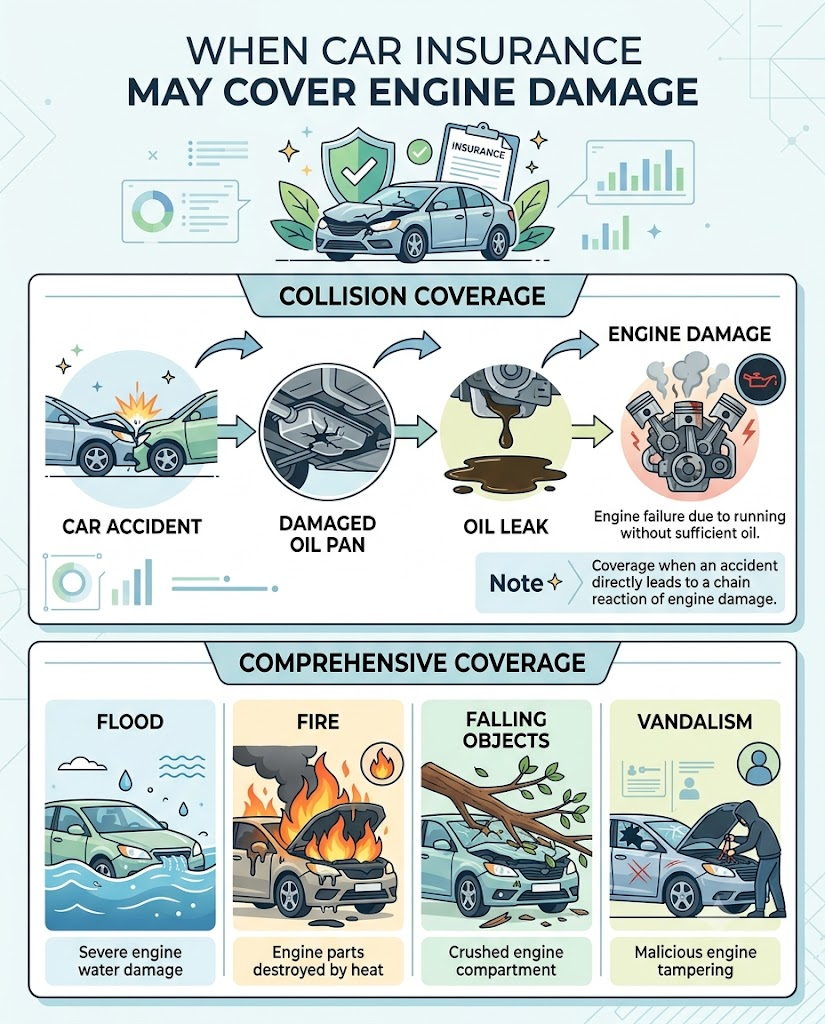
The main factor is what caused the engine damage.
If the oil loss or engine failure happened because of a covered event, your insurance policy may help pay for repairs.
Collision Damage
Collision coverage may help cover engine damage if an accident causes the oil loss.
For example:
- A collision damages the oil pan
- Engine oil leaks out
- The engine loses lubrication
- Internal engine damage occurs
Since the damage started because of an accident, the repair may be covered under collision insurance.
However, coverage depends on your policy and the insurer’s assessment.
Comprehensive Insurance Claims
Comprehensive coverage may apply when engine damage happens because of certain non-collision events.
Examples include:
Flood Damage
Water entering the engine can cause serious damage. Flood-related engine failure may be covered under comprehensive insurance.
Fire Damage
If a vehicle fire damages the engine or related components, comprehensive coverage may help pay for repairs.
Falling Objects
Damage from events such as falling trees or large objects hitting the vehicle may be covered if they damage engine components.
Vandalism
If someone intentionally damages your vehicle, drains oil, or damages engine parts, comprehensive insurance may cover the resulting damage.
Theft and Recovery Damage
If your vehicle is stolen and later recovered with engine damage, comprehensive insurance may help cover repair costs.
Examples include:
- The thief drives the vehicle aggressively and damages the engine
- Engine parts are damaged during the theft
- Oil is drained intentionally
Since the damage occurred during a covered theft event, your policy may provide protection.
Damage Caused by Road Debris
In some cases, road debris can damage engine-related components.
For example:
- A large object hits the underside of the vehicle
- The oil pan gets damaged
- Oil leaks out
- The engine suffers damage
Depending on the circumstances and policy terms, collision coverage may help pay for repairs.
Situations That Usually Are Not Covered
Insurance generally does not cover engine damage caused by maintenance problems or preventable issues.
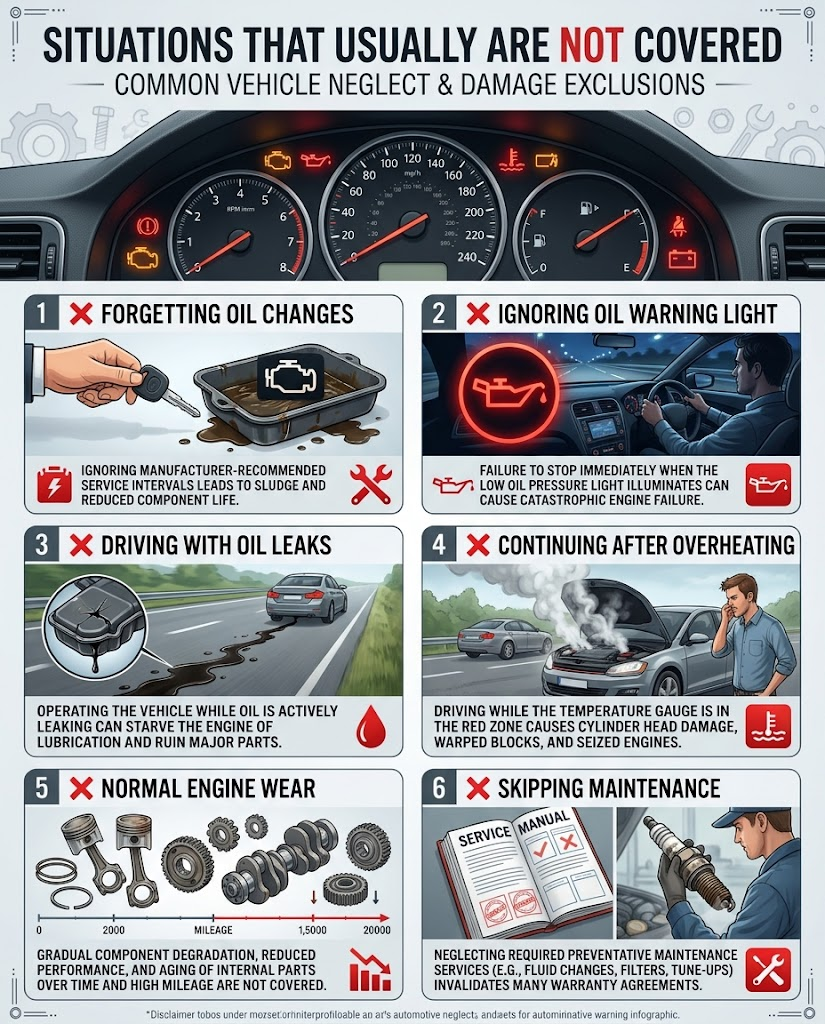
Common examples include:
Forgetting Oil Changes
Engine oil needs to be replaced regularly.
If the engine fails because oil changes were ignored, insurance will usually deny the claim.
Ignoring Oil Warning Lights
The oil warning light indicates a possible lubrication problem.
Continuing to drive after this warning appears can cause severe engine damage, and insurers may consider it avoidable.
Driving With an Oil Leak
A small oil leak can eventually leave the engine without enough oil.
If the leak was known but not repaired, the resulting engine damage is usually not covered.
Running the Engine After Oil Pressure Drops
Low oil pressure means the engine is not receiving proper lubrication.
Continuing to drive can destroy internal engine components and may lead to a denied claim.
Normal Engine Wear
Insurance does not cover normal aging of engine components.
Examples include:
- Worn bearings
- Aging seals
- High-mileage engine problems
These are considered part of regular vehicle ownership.
Ignoring Manufacturer Maintenance
Vehicle manufacturers provide recommended service schedules for a reason.
Skipping required maintenance can increase the risk of engine failure and may affect insurance or warranty claims.
What About an Extended Warranty?
An extended warranty or vehicle service contract may provide additional protection for certain engine repairs.
Unlike insurance, which mainly covers accidents and external damage, extended warranties are designed to cover specific mechanical failures.
However, coverage depends on:
- The warranty provider
- Covered components
- Cause of failure
- Maintenance history
What an Extended Warranty May Cover
Depending on the plan, an extended warranty may cover:
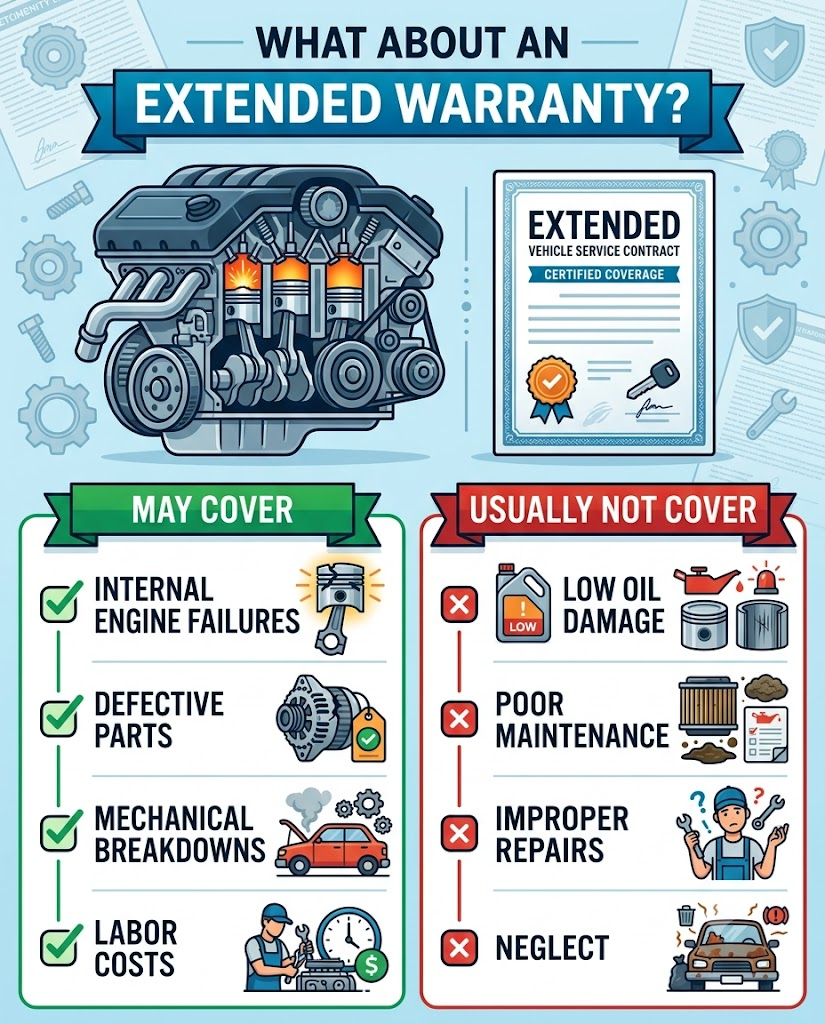
Internal Engine Failures
Examples include failures involving:
- Pistons
- Crankshafts
- Camshafts
- Timing components
Defective Parts
If an engine component fails due to a manufacturing defect or faulty part, repairs may qualify for coverage.
Mechanical Breakdowns
Unexpected failures during normal vehicle use may be covered if the failed component is included in the contract.
Labor Costs
Many plans cover both parts and repair labor, which can significantly reduce expenses.
What an Extended Warranty Usually Does Not Cover
While an extended warranty can help with certain mechanical failures, it does not cover every type of engine damage.
Most warranty providers exclude problems caused by poor maintenance, neglect, or improper use.
Common exclusions include:
Lack of Routine Maintenance
Vehicle owners are responsible for regular maintenance, including:
- Changing engine oil on time
- Following service schedules
- Checking fluid levels
- Repairing problems early
If an engine fails because maintenance was ignored, the warranty company may deny the claim.
Low or No Engine Oil
Damage caused by running an engine without enough oil is usually not covered.
This is because low oil is considered a preventable issue.
Examples include:
- Not checking oil levels
- Ignoring oil leaks
- Continuing to drive after the oil warning light appears
Improper Repairs
Warranty coverage may be denied if damage results from incorrect repairs.
Examples include:
- Poor-quality repair work
- Incorrectly installed parts
- Unauthorized modifications
Neglect or Misuse
Extended warranties generally do not cover damage caused by ignoring vehicle problems.
Examples include:
- Driving with overheating issues
- Ignoring warning lights
- Continuing to operate a vehicle with serious engine noises
Normal Wear and Tear
Some engine parts naturally wear over time.
Warranty providers may exclude damage caused by:
- High mileage
- Aging components
- Normal deterioration
Coverage depends on the specific warranty contract.
Why Maintenance Records Matter
Maintenance records are important when making an extended warranty claim.
The warranty provider may ask for proof that the vehicle was properly maintained.
Important documents include:
- Oil change receipts
- Service invoices
- Repair records
- Maintenance history
Without proper records, the warranty company may argue that poor maintenance contributed to the failure and deny coverage.
Can a Manufacturer’s Warranty Cover Engine Damage?
A manufacturer’s factory warranty may cover engine repairs, but only in certain situations.
Factory warranties are designed to cover defects in materials or workmanship, not damage caused by poor maintenance.
An engine repair may qualify if the failure happened because of a manufacturing defect or faulty component.
When a Manufacturer’s Warranty May Cover Engine Failure
Defective Oil Pump
The oil pump is responsible for circulating oil throughout the engine.
If the oil pump fails because of a manufacturing defect, the engine may lose lubrication and suffer damage.
In this case, the manufacturer may cover the repair if the defect is confirmed.
Faulty Engine Components
A factory warranty may cover failures caused by defective parts, such as:
- Pistons
- Bearings
- Valves
- Crankshaft components
The key factor is whether the part failed because of a manufacturing problem.
Manufacturing or Assembly Defects
Sometimes engine failures occur because of problems during production.
Examples include:
- Defective materials
- Improper assembly
- Factory-related issues
If the manufacturer confirms the defect, repairs may be completed under warranty.
What a Factory Warranty Usually Does Not Cover
Factory warranties generally do not cover engine damage caused by maintenance issues.
Common exclusions include:
Missed Oil Changes
Failing to change oil at recommended intervals can lead to:
- Poor lubrication
- Excessive wear
- Engine damage
Since oil changes are routine maintenance, warranty coverage usually does not apply.
Low Oil Due to Neglect
If the engine runs without enough oil because the owner failed to check or maintain oil levels, the manufacturer may deny the claim.
Ignoring Maintenance Schedules
Skipping recommended services can affect warranty coverage.
Examples include:
- Missing scheduled inspections
- Delaying required servicing
- Ignoring maintenance reminders
Continuing to Drive After Warning Signs
Driving after noticing problems such as:
- Oil pressure warning light
- Engine overheating
- Unusual engine noises
can be considered avoidable damage.
Importance of Service Records
If you request warranty coverage for engine failure, manufacturers may ask for maintenance proof.
Useful documents include:
- Oil change receipts
- Dealership service records
- Repair invoices
- Maintenance logs
These records help show that you followed proper care guidelines.
Signs Your Engine May Be Running Low on Oil
Low engine oil is one of the most serious problems a vehicle can experience. If detected early, you may be able to prevent expensive repairs.
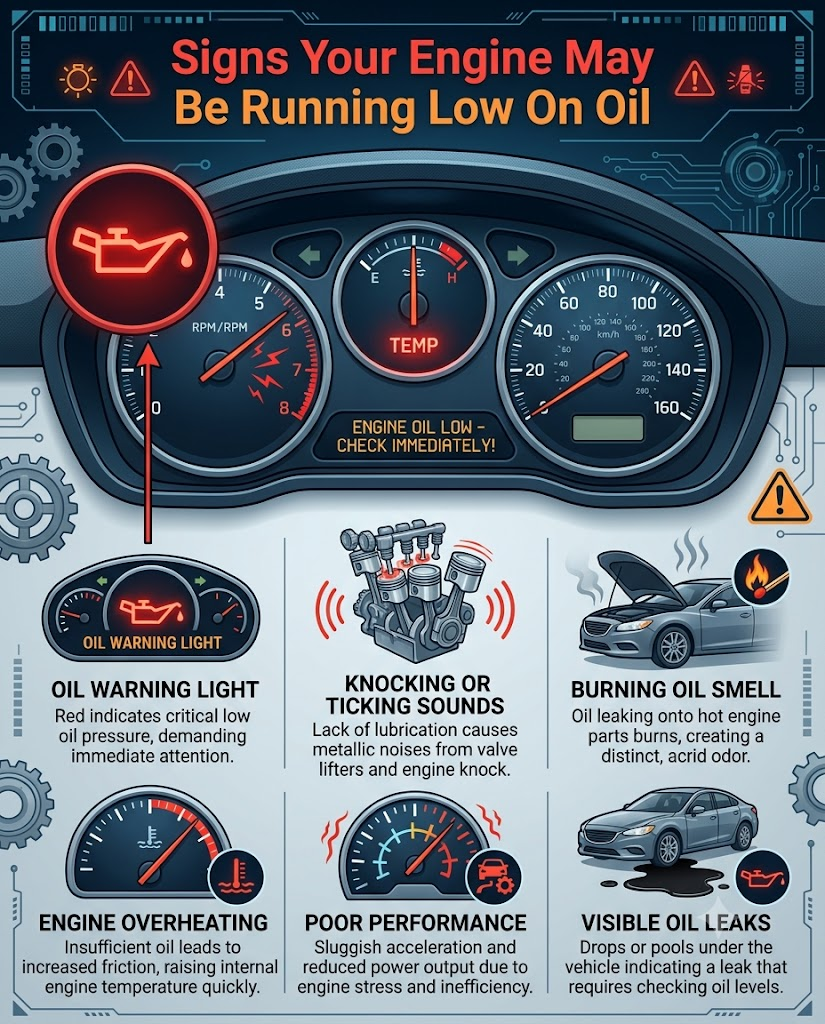
However, continuing to drive with insufficient oil can cause severe internal damage and may eventually lead to complete engine failure.
Your vehicle often provides warning signs when oil levels are low or when engine parts are not receiving enough lubrication.
Oil Warning Light
The oil pressure warning light is one of the most important signs of a lubrication problem.
It may indicate:
- Low engine oil level
- Reduced oil pressure
- A failing oil pump
- Poor lubrication inside the engine
Unlike some dashboard warnings, an oil warning light should never be ignored.
Continuing to drive after this warning appears can cause serious engine damage within a short time.
Knocking or Ticking Sounds
Unusual engine noises can be an early sign of low oil levels.
When there is not enough oil, metal parts inside the engine may begin rubbing against each other.
You may hear:
- Knocking sounds
- Ticking noises
- Clicking sounds
- Grinding noises
These sounds indicate that engine components may not be properly protected and require immediate attention.
Burning Oil Smell
A burning oil smell may indicate an oil leak or overheating caused by poor lubrication.
Possible causes include:
- Oil leaking from seals or gaskets
- Oil dripping onto hot engine parts
- Excessive engine temperature
If you notice a strong burning smell, it is safer to stop driving and inspect the vehicle.
Engine Overheating
Engine oil helps reduce friction and control heat inside the engine.
When oil levels are too low:
- Friction increases
- Engine temperatures rise
- Internal parts can become damaged
- The risk of engine seizure increases
An overheating engine should never be ignored, especially when combined with other low-oil symptoms.
Poor Engine Performance
A vehicle with insufficient oil may not run normally.
Common signs include:
- Loss of power
- Rough idling
- Slow acceleration
- Unusual vibrations
- Hesitation while driving
These problems happen because damaged or poorly lubricated engine components cannot work efficiently.
Visible Oil Leaks
Sometimes the first sign of low oil is a leak underneath the vehicle.
Look for:
- Dark brown or black fluid spots
- Oil dripping from the engine area
- Oil levels dropping between services
Even a small leak can eventually cause the engine to run without enough lubrication.
Increased Exhaust Smoke
Low oil levels or internal engine damage may cause unusual exhaust smoke.
Warning signs include:
- Blue smoke from the exhaust
- Excessive smoke during acceleration
- Burning oil smell from the exhaust
This may indicate that engine oil is entering areas where it should not, such as the combustion chamber.
What Should You Do If You Notice These Signs?
If you experience signs of low engine oil:
- Stop driving when it is safe
- Turn off the engine
- Check the oil level if possible
- Add the correct oil if required
- Get the vehicle inspected if the problem continues
Ignoring early warning signs can turn a simple oil issue into a complete engine replacement.
What Should You Do If Your Engine Blows?
An engine failure can be stressful and expensive, especially if it happens while driving.
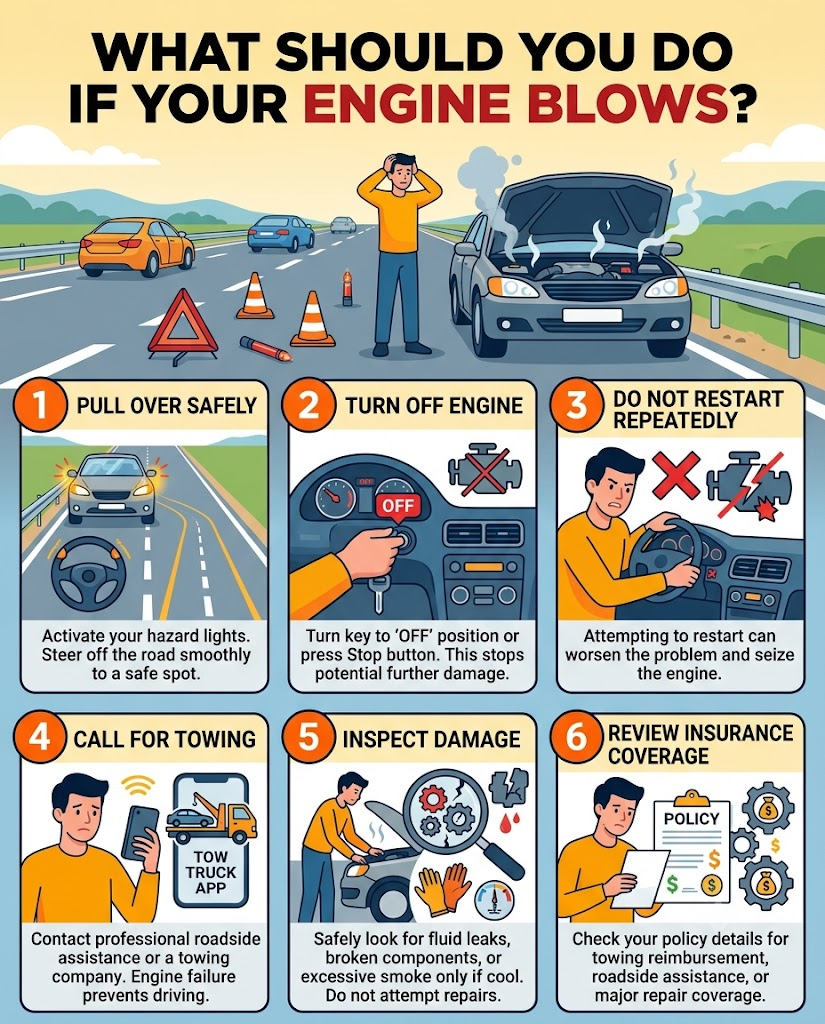
Taking quick action can help prevent further damage and may help determine whether insurance or warranty coverage is available.
Pull Over Safely and Turn Off the Engine
If you notice signs such as:
- Loud knocking or grinding noises
- Sudden loss of power
- Smoke from the engine
- Oil warning light
- Engine overheating
Safely pull over and turn off the engine immediately.
Continuing to drive can turn a small problem into major engine damage.
Do Not Restart the Vehicle Repeatedly
Avoid repeatedly trying to start the vehicle if you notice:
- Oil warning lights
- Strange engine noises
- Overheating
- Smoke or fluid leaks
Repeated attempts can increase internal damage and make repairs more expensive.
Have the Vehicle Towed to a Repair Shop
Do not continue driving a vehicle with possible engine damage.
A qualified mechanic can determine:
- Whether the engine can be repaired
- What caused the failure
- Whether the issue was due to maintenance, a defect, or an accident
Determine the Cause Before Filing a Claim
The cause of engine failure plays a major role in whether insurance may cover repairs.
Possible covered causes:
- Collision damage
- Flood damage
- Fire
- Covered vandalism
Usually not covered:
- Running without enough oil
- Missed oil changes
- Normal engine wear
- Ignoring warning signs
A mechanic’s inspection report can help identify the exact cause.
Review Insurance and Warranty Coverage
After finding the cause of engine failure, review your available protection options.
Depending on your situation, coverage may come from:
- Collision insurance
- Comprehensive insurance
- Manufacturer warranty
- Extended warranty
- Vehicle service contract
Each type of coverage has different rules and exclusions.
For example, a warranty may cover a defective engine component, but it usually will not cover damage caused by:
- Low engine oil
- Missed maintenance
- Neglect
- Improper repairs
Keep Repair Records and Documents
If you plan to file an insurance or warranty claim, keeping proper documentation is important.
Useful records include:
- Mechanic inspection reports
- Repair estimates
- Towing receipts
- Oil change records
- Maintenance history
- Photos of damage
These documents can help prove what caused the engine failure and support your claim.
How to Prevent a Blown Engine
Preventing engine damage is much cheaper than replacing an engine.
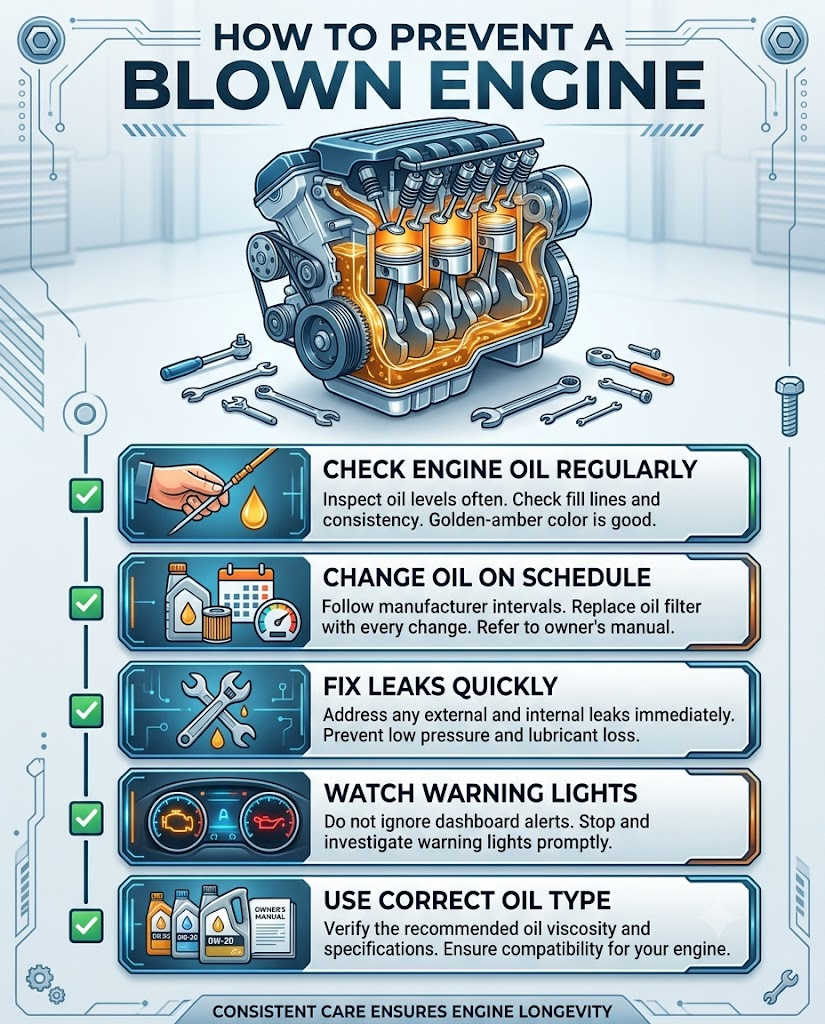
Simple maintenance habits can greatly reduce the risk of failure.
Check Engine Oil Regularly
Do not wait until the oil warning light appears.
Check the oil level periodically, especially:
- Before long trips
- During high-mileage use
- If your vehicle has an oil consumption issue
Maintaining the correct oil level helps protect internal engine components.
Follow Oil Change Intervals
Always follow the oil change schedule recommended by your vehicle manufacturer.
Regular oil changes help:
- Maintain proper lubrication
- Remove contaminants
- Reduce engine wear
- Extend engine life
Fix Oil Leaks Quickly
Small leaks can become major problems if ignored.
Common signs of an oil leak include:
- Oil spots under the vehicle
- Low oil levels between services
- Burning oil smell
Repairing leaks early can prevent expensive engine damage.
Pay Attention to Warning Lights
Never ignore dashboard warnings, especially:
- Oil pressure warning light
- Engine temperature warning
- Check engine light
Early action can prevent a minor problem from becoming a major repair.
Use the Correct Engine Oil
Always use the oil type and grade recommended in your owner’s manual.
Using the wrong oil can affect:
- Engine protection
- Fuel efficiency
- Long-term reliability
The Bottom Line
So, does car insurance cover a blown engine from no oil?
In most cases, the answer is no.
Insurance companies usually consider low-oil engine damage a maintenance issue rather than an unexpected accident. If the engine fails because it was operated without enough oil, the repair cost generally becomes the vehicle owner’s responsibility.
However, coverage may be available if the engine damage was caused by a covered event, such as:
- A collision that damages the oil system
- Flood damage
- Fire
- Vandalism
Other protection options, such as extended warranties or manufacturer warranties, may help if the failure was caused by a covered mechanical defect.
The best way to avoid a costly engine replacement is regular maintenance. Checking oil levels, changing oil on time, fixing leaks, and responding quickly to warning signs can protect your engine and save thousands of dollars in repair costs.
A few minutes of preventive care can make the difference between a reliable vehicle and a major engine failure.