
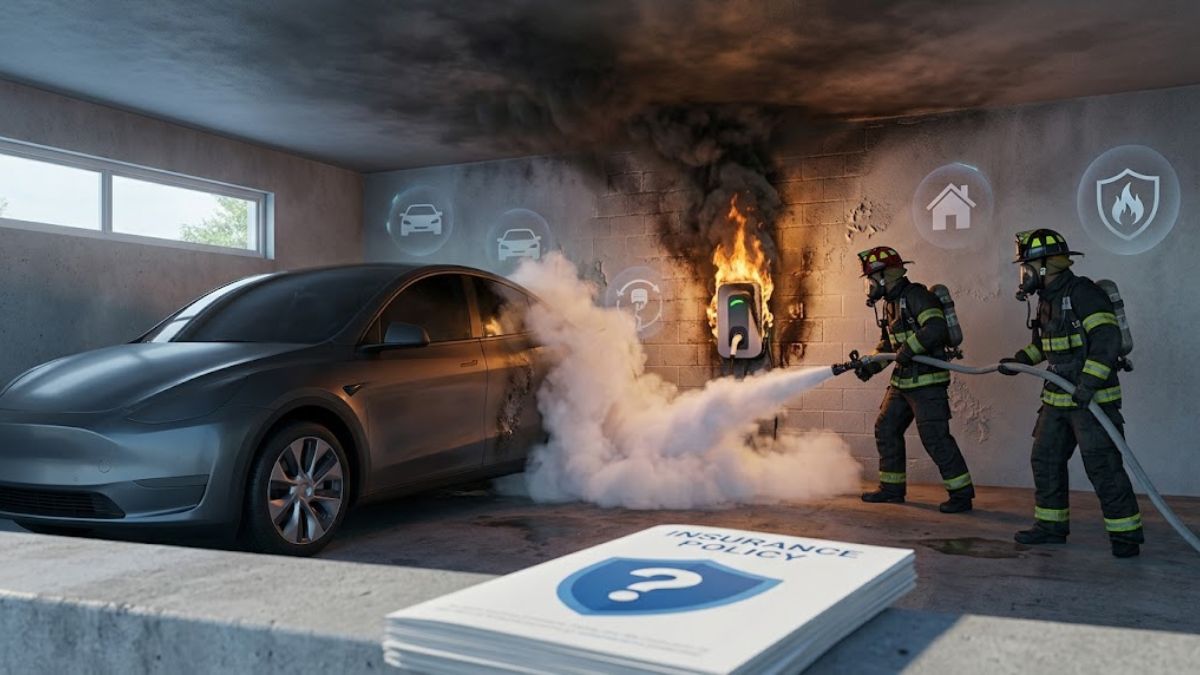

Electric vehicles (EVs) are becoming more common every year. Along with the growing number of EV owners comes an increase in home charging stations. Charging at home is convenient, cost-effective, and often much cheaper than relying on public chargers.
However, many homeowners have started asking an important question:
Does auto insurance cover home charging station fires?
The answer is not as straightforward as many people expect.
A fire involving an EV charging station can involve several insurance policies, including your auto insurance, homeowners insurance, and sometimes even the manufacturer’s warranty or the installer’s liability insurance.
Knowing which policy applies can save you thousands of dollars if something goes wrong.
This guide explains everything you need to know about insurance coverage for home charging station fires, including:
- Which insurance policy pays
- When auto insurance helps
- When homeowners insurance is responsible
- Common claim scenarios
- Coverage exclusions
- Ways to reduce your risk
- Tips for filing a successful claim
Let’s begin by understanding why this topic is becoming increasingly important.
Why Home Charging Station Fires Are Becoming a Bigger Concern
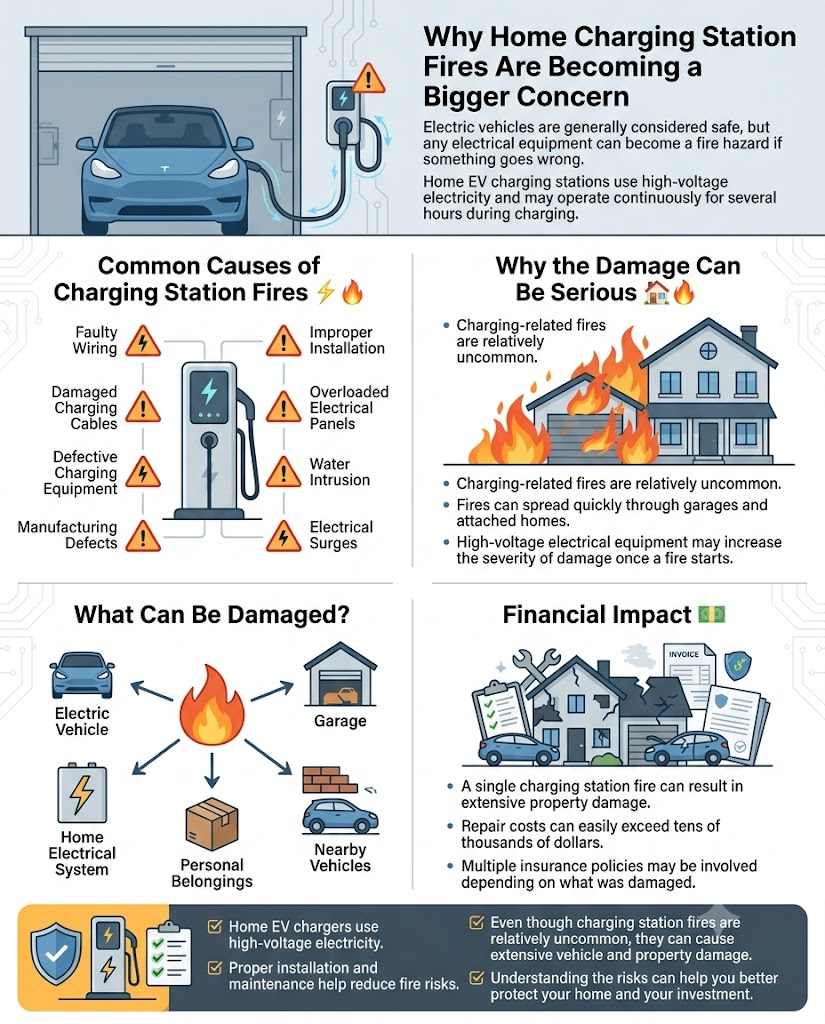
Electric vehicles are generally considered safe, but any electrical equipment can become a fire hazard if something goes wrong.
Most home EV charging stations operate with high-voltage electricity. Depending on the charger, they may continuously deliver power for several hours.
Common causes of charging-related fires include:
- Faulty wiring
- Improper installation
- Damaged charging cables
- Overloaded electrical panels
- Defective charging equipment
- Water intrusion
- Manufacturing defects
- Electrical surges
Although these incidents are relatively uncommon, the damage can be significant because fires often spread quickly through garages and attached homes.
A charging station fire can damage:
- Your vehicle
- Your garage
- The home’s electrical system
- Walls and ceilings
- Personal belongings
- Nearby vehicles
Repair costs can easily exceed tens of thousands of dollars.
Does auto insurance cover home charging station fires?
Sometimes—but usually only for damage involving your vehicle.
In most situations:
- Auto insurance pays for damage to the insured vehicle if the policy includes the appropriate coverage.
- Homeowners insurance usually covers damage to the house and attached structures.
- The charging station itself may be covered under homeowners insurance, a warranty, or the installer’s insurance, depending on the cause of the fire.
This means multiple insurance companies may become involved after a single incident.
Understanding the Difference Between Auto Insurance and Homeowners Insurance
Many people assume that because the fire started while charging their vehicle, auto insurance automatically covers everything.
That is not how insurance typically works.
Insurance policies are designed around what was damaged, not simply what caused the damage.
For example:
If an EV charger catches fire and damages:
- the vehicle,
- the garage,
- the roof,
- tools,
- bicycles,
- furniture,
each item may fall under a different section of one or more insurance policies.
Understanding this distinction is essential before filing a claim.
What Auto Insurance Usually Covers
Auto insurance focuses on protecting the vehicle itself.
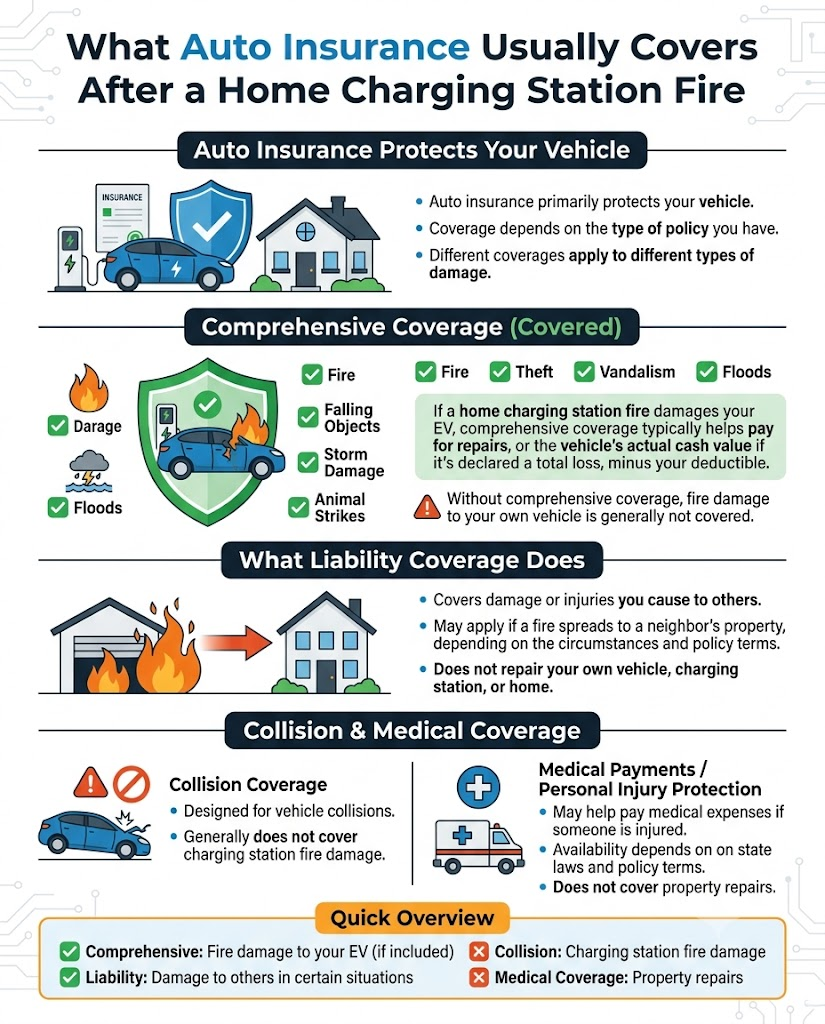
If a charging station fire damages your EV, coverage depends on the type of insurance you purchased.
Comprehensive Coverage
Comprehensive coverage is the part of an auto insurance policy that generally covers damage caused by events other than collisions.
Examples include:
- Fire
- Theft
- Vandalism
- Falling objects
- Floods
- Storm damage
- Animal strikes
If your charging station catches fire and your EV is damaged, comprehensive coverage typically helps pay for repairs or, if the vehicle is declared a total loss, its actual cash value, minus your deductible.
Without comprehensive coverage, your insurer is unlikely to pay for fire damage to your own vehicle.
Liability Coverage
Liability insurance usually does not pay for damage to your own vehicle.
Instead, it pays for injuries or property damage you cause to other people.
For example:
If an electrical fault originating from your vehicle leads to a fire that spreads to your neighbor’s garage, liability coverage may become relevant depending on the circumstances and policy terms.
However, it generally does not repair your own charging station or home.
Collision Coverage
Collision insurance is designed for crashes involving another vehicle or object.
It generally does not cover fire damage resulting from home charging equipment.
Medical Payments or Personal Injury Protection
If someone is injured during a charging station fire, medical coverage under your auto policy may apply in limited situations, depending on state laws and the circumstances.
However, these coverages are not intended to repair property damage.
When Homeowners Insurance Becomes the Primary Coverage
In most charging station fire claims, homeowners insurance plays the biggest role.
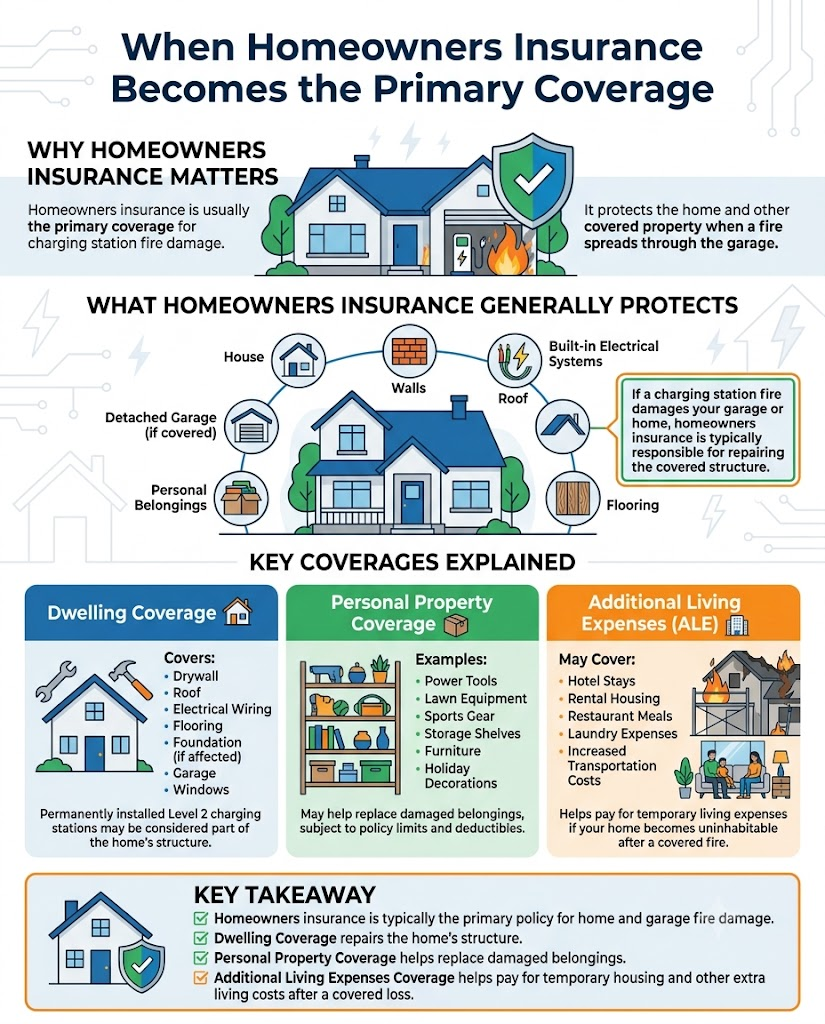
Homeowners insurance generally protects:
- The house
- Attached garage
- Detached garage (if covered)
- Built-in electrical systems
- Walls
- Roof
- Flooring
- Cabinets
- Personal belongings
If a charging station fire spreads through the garage, homeowners insurance is usually responsible for repairing the home.
Dwelling Coverage
This protects the physical structure of your home.
It can include repairs to:
- Drywall
- Roof
- Electrical wiring
- Flooring
- Foundation (if affected)
- Garage
- Windows
Since many Level 2 charging stations are permanently mounted, they may also be considered part of the home’s structure.
Personal Property Coverage
A garage often contains valuable belongings.
Examples include:
- Power tools
- Lawn equipment
- Sports gear
- Storage shelves
- Furniture
- Holiday decorations
If these items are damaged in the fire, personal property coverage may help replace them, subject to policy limits and deductibles.
Additional Living Expenses Coverage
If your home becomes temporarily uninhabitable after the fire, homeowners insurance may pay for:
- Hotel stays
- Rental housing
- Restaurant meals
- Laundry expenses
- Increased transportation costs
This coverage can be especially valuable after a major garage fire requiring extensive repairs.
Does Insurance Cover the Charging Station Itself?
This depends on several factors.
Questions insurers often ask include:
- Was the charger permanently installed?
- Was it professionally installed?
- What caused the fire?
- Is the charger still under warranty?
- Did a manufacturing defect cause the damage?
A permanently installed Level 2 charger is often treated as part of the home.
Portable Level 1 chargers may instead be considered personal property.
Coverage depends on your individual policy.
Common Scenarios and Which Insurance Usually Pays
The easiest way to understand coverage is by looking at real-world examples.
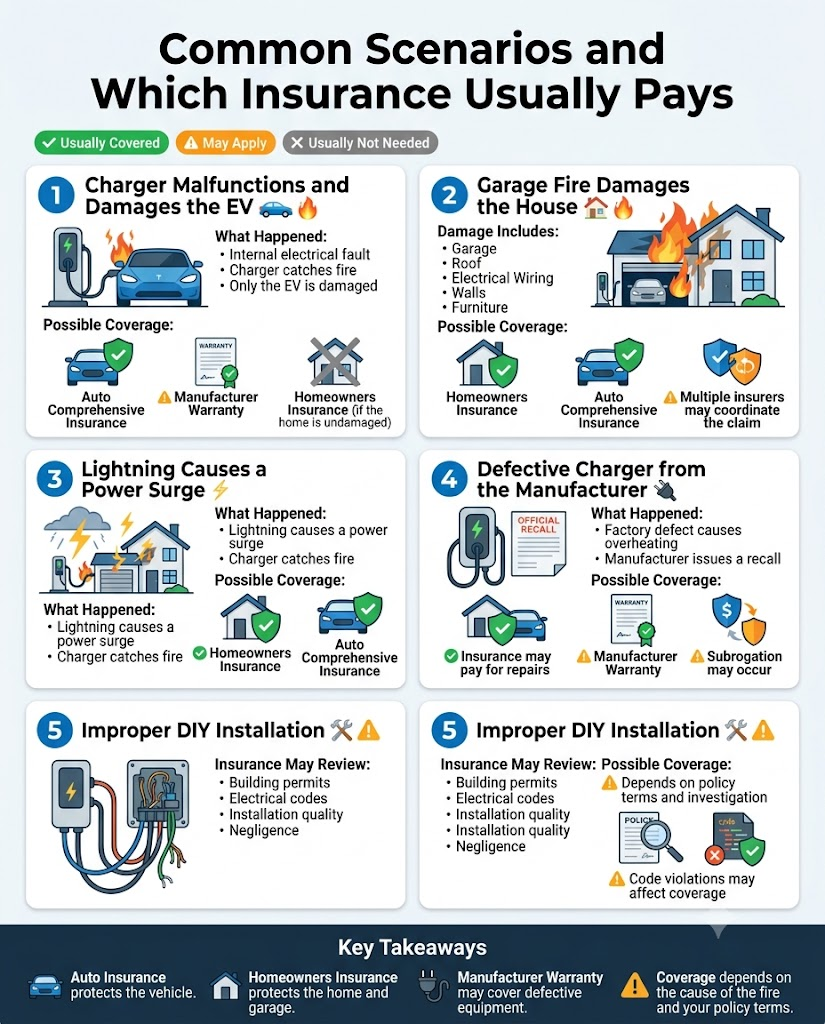
Scenario 1: Charger Malfunctions and Damages the EV
The charging station develops an internal electrical fault.
The charger overheats and catches fire.
Only the EV is damaged.
Possible coverage
- Auto comprehensive insurance: Usually covers vehicle damage.
- Manufacturer warranty: May cover the defective charger.
- Homeowners insurance: Usually not needed if the home is undamaged.
Scenario 2: Garage Fire Damages the House
The charger ignites and the fire spreads into the garage and attic.
Damage includes:
- Garage
- Roof
- Electrical wiring
- Walls
- Furniture
Possible coverage
- Homeowners insurance usually pays for the home.
- Auto comprehensive covers the vehicle.
- Multiple insurers may coordinate the claim.
Scenario 3: Lightning Causes a Power Surge
Lightning strikes nearby.
The electrical surge damages the charging station.
The charger catches fire.
Possible coverage
- Homeowners insurance often covers lightning damage to the home.
- Auto comprehensive may cover fire damage to the vehicle.
Scenario 4: Defective Charger from the Manufacturer
A factory defect causes the charger to overheat.
The manufacturer later issues a recall.
Possible outcomes include:
- Insurance may initially pay for repairs.
- The insurer may later seek reimbursement from the manufacturer through subrogation.
- Warranty coverage may apply to the defective charger itself.
Scenario 5: Improper DIY Installation
A homeowner installs a Level 2 charger without following local electrical codes.
Poor wiring causes a fire months later.
Coverage may become more complicated.
Some insurers may investigate whether:
- Building permits were required
- Local codes were followed
- Installation instructions were ignored
- Negligence contributed to the loss
Claims are evaluated based on the policy language and the facts of the incident. Poor workmanship or code violations can affect coverage, particularly for the faulty installation itself.
Can an Insurance Company Deny a Charging Station Fire Claim?
Yes.
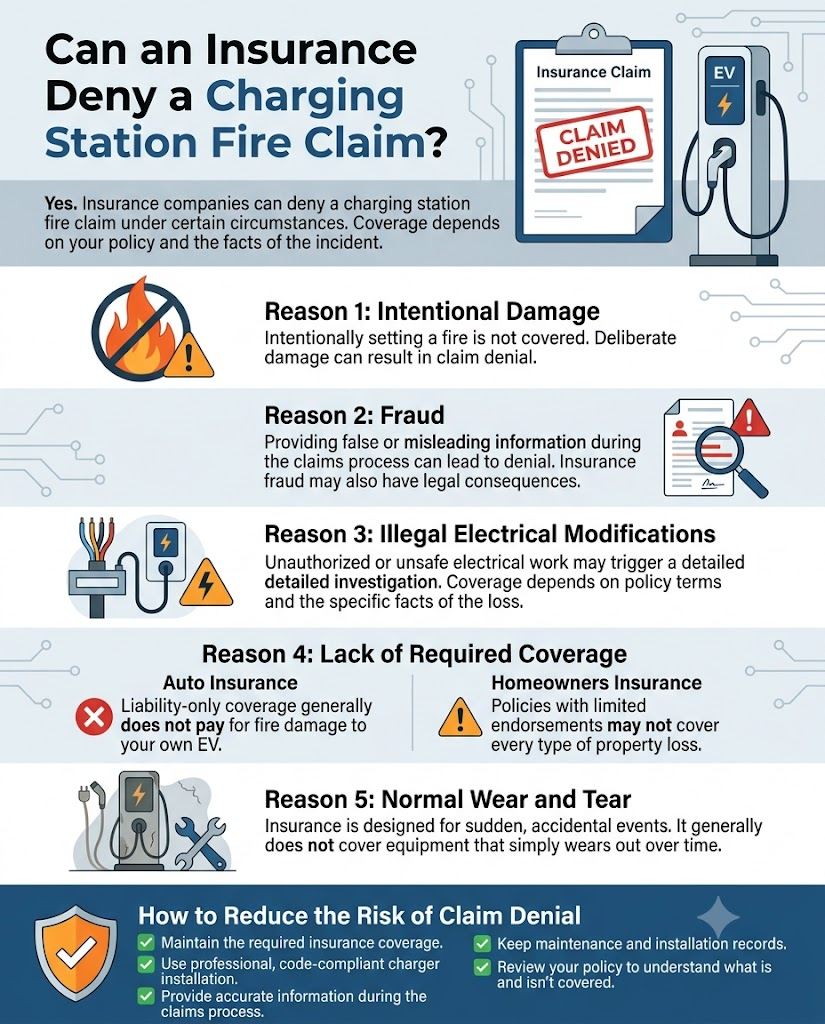
Insurance companies can deny claims under certain circumstances.
Common reasons include:
Intentional Damage
Insurance does not cover intentionally setting a fire.
Fraud
Providing false information during the claim process can result in denial and potential legal consequences.
Illegal Electrical Modifications
If unauthorized or unsafe electrical work contributed to the loss, the insurer may closely investigate the claim. Coverage depends on the policy terms and the specific facts.
Lack of Required Coverage
A driver with liability-only auto insurance typically has no coverage for fire damage to their own vehicle.
Similarly, a homeowners policy with limited endorsements may not cover every type of property loss.
Normal Wear and Tear
Insurance is designed for sudden, accidental events.
It generally does not pay to replace a charging station that simply wears out over time.
Homeowners Insurance vs Auto Insurance for Charging Station Fires
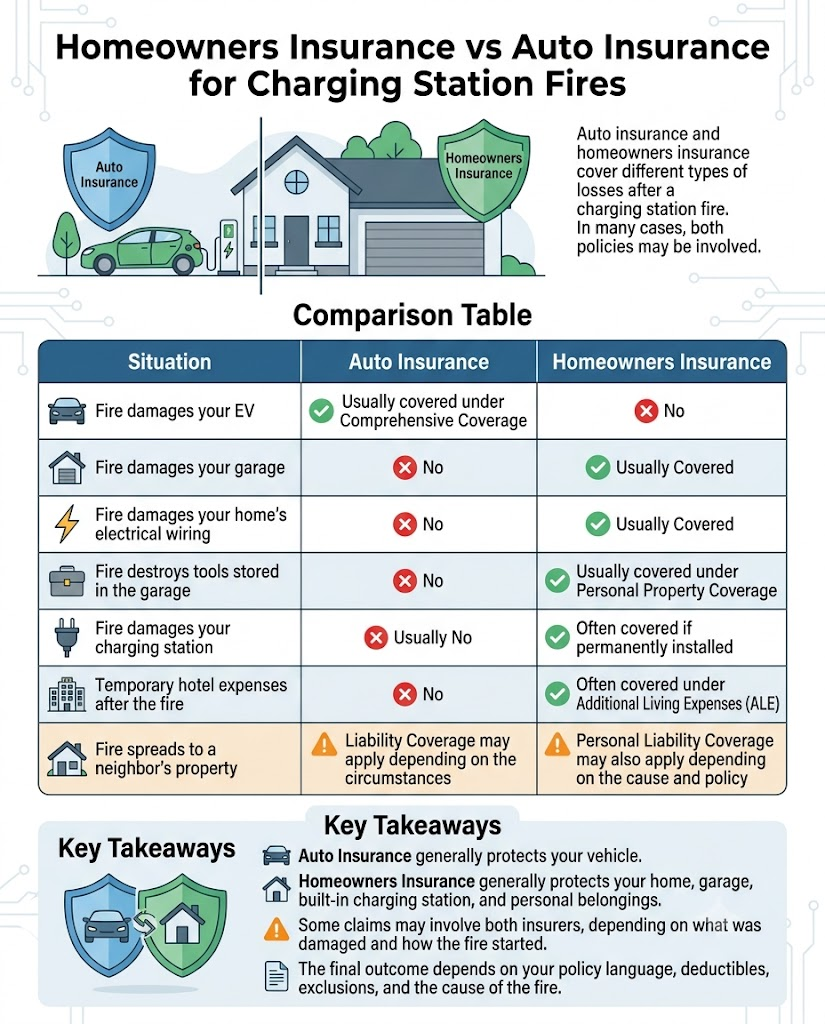
One of the biggest sources of confusion after a charging station fire is determining which insurance policy pays for what. While both auto insurance and homeowners insurance may be involved, they generally cover different types of losses.
The table below provides a quick comparison.
| Situation | Auto Insurance | Homeowners Insurance |
|---|---|---|
| Fire damages your EV | Usually covered under comprehensive coverage | No |
| Fire damages your garage | No | Usually covered |
| Fire damages your home’s electrical wiring | No | Usually covered |
| Fire destroys tools stored in the garage | No | Usually covered under personal property |
| Fire damages your charging station | Usually no | Often covered if permanently installed |
| Temporary hotel expenses after the fire | No | Often covered under Additional Living Expenses |
| Fire spreads to a neighbor’s property | Liability coverage may apply depending on circumstances | Personal liability coverage may also apply depending on the cause and policy |
The exact outcome depends on your policy language, deductibles, exclusions, and the cause of the fire.
Does Comprehensive Auto Insurance Cover EV Charging Fires?
For most EV owners, comprehensive coverage is the most important part of an auto insurance policy when it comes to fire damage.
Comprehensive insurance generally covers losses caused by events other than collisions, including:
- Fire
- Theft
- Floods
- Storms
- Hail
- Falling trees
- Vandalism
- Animal damage
If your vehicle catches fire while charging at home, comprehensive coverage is often the section of your policy that responds.
However, comprehensive insurance is subject to your deductible.
For example:
- Repair cost: $18,000
- Comprehensive deductible: $1,000
The insurer would generally pay approximately $17,000 if the claim is covered.
If the vehicle is declared a total loss, the insurer typically pays its actual cash value (ACV) at the time of the loss, minus the deductible.
What If the Charging Station Causes a Total Loss?
In severe fires, both the charging station and the vehicle may be completely destroyed.
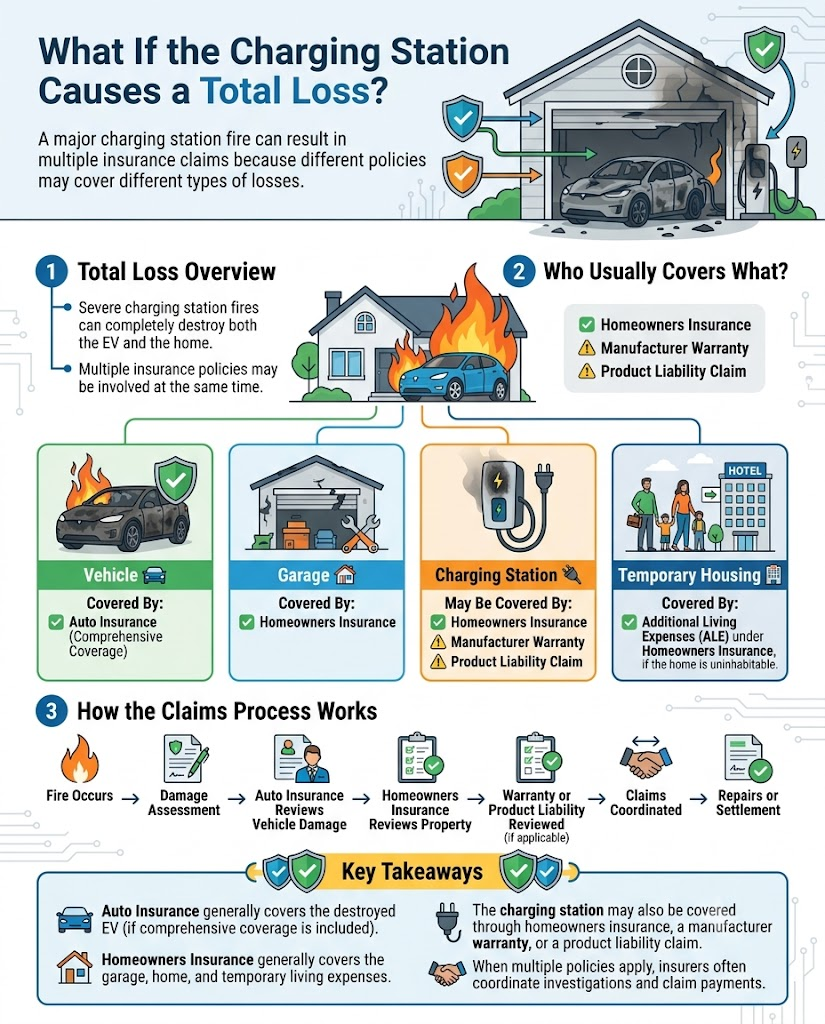
In this case, several claims may occur simultaneously.
For example:
Vehicle
Covered by: Auto insurance (comprehensive)
Garage
Covered by: Homeowners insurance
Charging Station
May be covered by:
- Homeowners insurance
- Manufacturer warranty
- Product liability claim
Temporary Housing
Covered by: Additional Living Expenses under homeowners insurance if the home is uninhabitable
Because multiple policies may apply, insurers often coordinate their investigations and payments.
What Happens If the Manufacturer Is Responsible?
Not every charging station fire is caused by poor installation or homeowner error.
Sometimes the problem originates with the equipment itself.
Examples include:
- Faulty internal wiring
- Defective circuit boards
- Battery management failures
- Poor insulation
- Manufacturing defects
- Design flaws
If the charger is defective, your insurance company may initially pay your covered claim.
Later, the insurer may attempt to recover its costs from the manufacturer through a legal process called subrogation.
This process usually happens behind the scenes, so you generally do not have to pursue the manufacturer yourself unless your insurer advises otherwise.
Can a Charger Warranty Cover Fire Damage?
Many Level 2 charging stations include a manufacturer’s warranty.
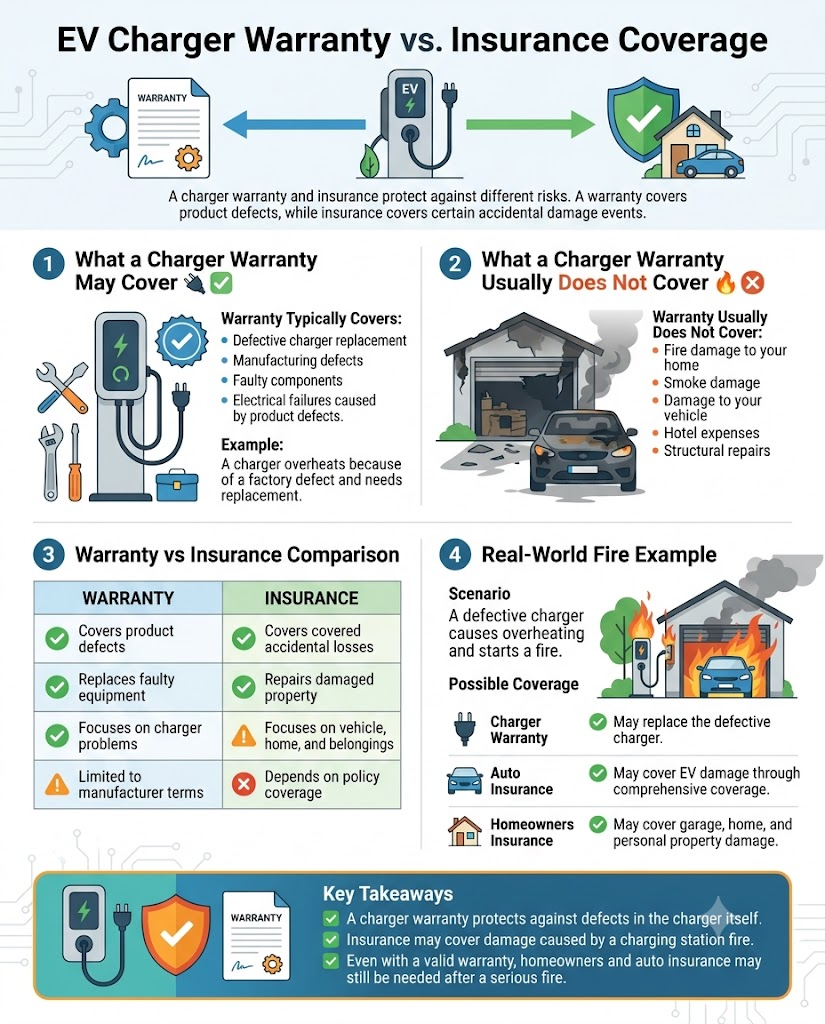
However, warranties and insurance serve different purposes.
A warranty typically covers defects in the product itself.
Insurance covers accidental property damage resulting from covered events.
For example:
Warranty may cover
- Defective charger replacement
- Manufacturing defects
- Faulty components
- Electrical failures caused by product defects
Warranty usually does not cover
- Fire damage to your home
- Smoke damage
- Damage to your vehicle
- Hotel expenses
- Structural repairs
Because of this, even if your charger is under warranty, homeowners and auto insurance may still play a significant role after a fire.
Does Homeowners Insurance Cover Detached Garages?
Many homeowners have installed EV chargers in detached garages.
Coverage often depends on how your homeowners policy treats other structures.
Other structures coverage commonly includes:
- Detached garages
- Storage sheds
- Workshops
- Fences
- Gazebos
If a charging station fire damages a detached garage, repairs are often covered under the “other structures” section of the homeowners policy, subject to limits and deductibles.
Review your policy to confirm the coverage limit for detached structures, as it is often a percentage of your dwelling coverage.
What If You Live in a Condo?
Condominium owners face a slightly different insurance situation.
Coverage may involve:
- Condo owner’s insurance (HO-6 policy)
- The condominium association’s master policy
- Auto insurance
- Manufacturer warranty
Responsibility often depends on where the fire occurred and which property was damaged.
For example:
If the charging station is installed inside your assigned garage, your condo policy may cover improvements or fixtures that you own.
If the fire spreads into common areas, the condo association’s master policy may also become involved.
Because every condominium association has different rules, reviewing both your HO-6 policy and the association’s governing documents is important.
Does Renters Insurance Cover Charging Station Fires?
Renters generally do not own the building, but they may own:
- Their EV
- Portable charging equipment
- Personal belongings
In a rental property:
- Auto insurance may cover damage to the vehicle if comprehensive coverage applies.
- Renters insurance may cover personal property damaged by a covered fire.
- The landlord’s insurance typically covers damage to the building itself.
If the landlord provides a permanently installed charging station, responsibility for repairing or replacing it may depend on the lease agreement, ownership, and the cause of the damage.
What If the Fire Starts Inside the Vehicle?
Sometimes the charging station is not the problem.
Instead, the fire begins inside the EV because of:
- Battery failure
- Electrical malfunction
- Thermal runaway
- Manufacturing defect
If the vehicle ignites while connected to the charger:
- Auto insurance may cover the vehicle if comprehensive coverage applies.
- Homeowners insurance may cover damage to the house if the fire spreads.
- The vehicle manufacturer may become involved if a defect is suspected.
Investigators will typically determine where the fire originated before deciding how responsibility is allocated.
Public Charging Station Fires vs. Home Charging Station Fires
Insurance claims can differ depending on where the fire occurs.
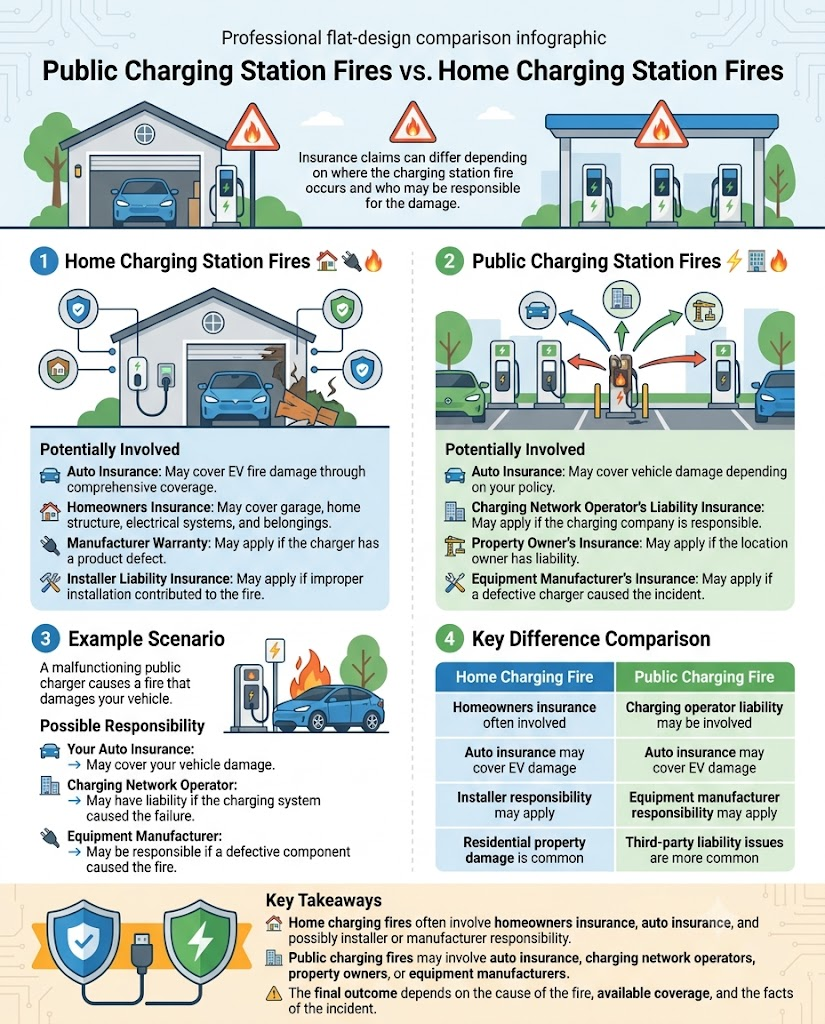
Home Charging Station
Potentially involved:
- Auto insurance
- Homeowners insurance
- Manufacturer warranty
- Installer liability insurance
Public Charging Station
Potentially involved:
- Auto insurance
- Charging network operator’s liability insurance
- Property owner’s insurance
- Equipment manufacturer’s insurance
For example, if a malfunctioning public charger damages your vehicle, the charging network operator or equipment manufacturer may bear some responsibility, depending on the facts.
Does Insurance Cover Smoke Damage?
Not every charging incident results in a large fire.
Sometimes heavy smoke causes most of the damage.
Smoke can affect:
- Walls
- Ceilings
- Flooring
- Electronics
- Furniture
- Clothing
- HVAC systems
If the smoke damage results from a covered fire, homeowners insurance generally covers cleaning, repairs, or replacement, subject to policy terms.
Similarly, comprehensive auto insurance may cover smoke damage to your vehicle if it results from a covered event.
Can Water Damage During Firefighting Be Covered?
Firefighters often use large amounts of water to extinguish fires.
As a result, damage may include:
- Water-soaked drywall
- Damaged flooring
- Mold risk
- Wet furniture
- Damaged electrical systems
Most homeowners policies that cover the fire itself also cover reasonable water damage caused while extinguishing that covered fire.
Prompt drying and mitigation are important to prevent additional damage that may not be covered if neglected.
How to File an Insurance Claim After a Home Charging Station Fire
If your EV charging station catches fire, taking the right steps immediately can protect your safety and improve the chances of a smooth insurance claim.
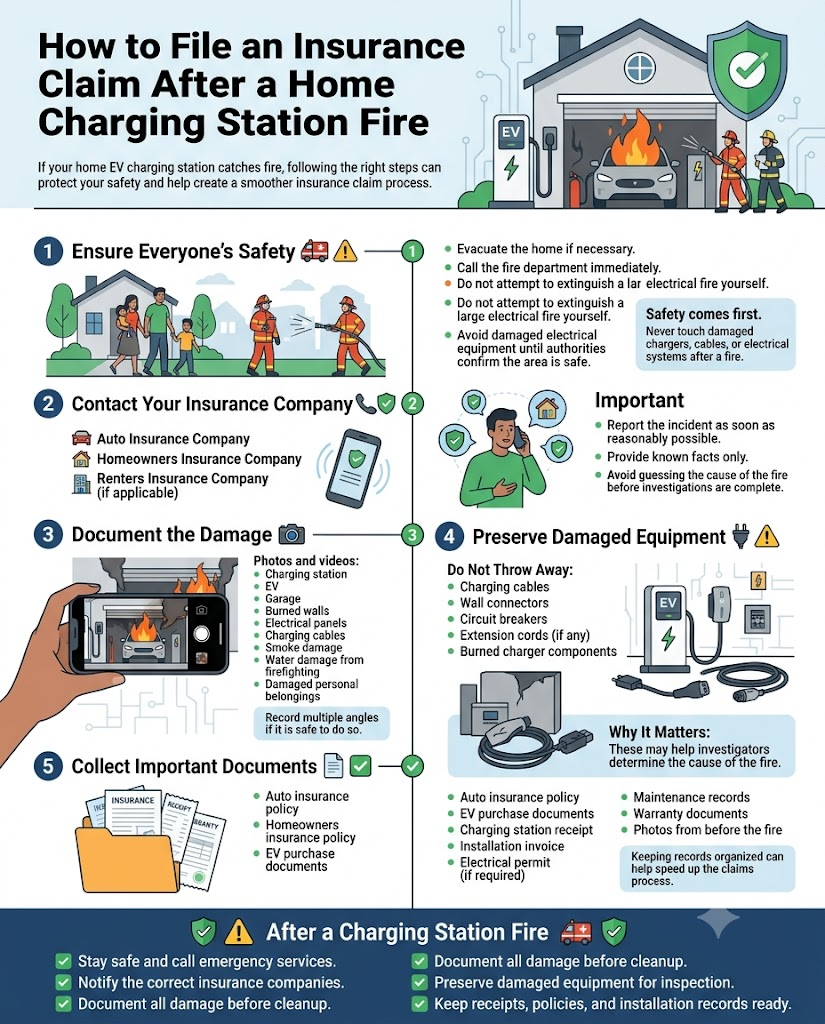
Step 1: Ensure Everyone’s Safety
Your first priority should always be safety.
- Evacuate the home if necessary.
- Call the fire department immediately.
- Do not attempt to extinguish a large electrical fire yourself.
- Stay away from damaged electrical equipment until authorities declare the area safe.
Step 2: Contact Your Insurance Company
Notify your insurance company as soon as reasonably possible.
Depending on the damage, you may need to contact:
- Your auto insurance company
- Your homeowners insurance company
- Your renters insurance company (if applicable)
Provide only the known facts. Avoid speculating about the cause of the fire until investigators complete their assessment.
Step 3: Document the Damage
If it is safe to do so, gather evidence before cleanup begins.
Take photographs of:
- The charging station
- The EV
- The garage
- Burned walls
- Electrical panels
- Charging cables
- Smoke damage
- Water damage from firefighting efforts
- Damaged personal belongings
Also record videos from multiple angles if possible.
Step 4: Preserve Damaged Equipment
Do not throw away:
- Charging cables
- Wall connectors
- Circuit breakers
- Extension cords (if any)
- Burned charger components
These items may help investigators determine the cause of the fire.
Step 5: Collect Important Documents
Insurance companies often request supporting documentation, such as:
- Auto insurance policy
- Homeowners insurance policy
- EV purchase documents
- Charging station purchase receipt
- Installation invoice
- Electrical permit (if required)
- Maintenance records
- Warranty documents
- Photos taken before the fire, if available
Having these records ready can help speed up the claims process.
How Insurance Companies Investigate Charging Station Fires
Fire investigations are often detailed, especially when expensive property has been damaged.
An adjuster or fire investigator may examine:
- The charging station
- The vehicle
- The home’s electrical system
- Circuit breakers
- Wiring
- Charging cables
- Fire patterns
- Utility records
- Installation records
Their goal is to determine:
- Where the fire started
- Why it started
- Whether it resulted from an accident, equipment failure, installation issues, or another cause
The findings help determine which insurance policy applies and whether another party may be responsible.
What If Multiple Insurance Companies Are Involved?
Large charging station fires often involve more than one insurer.
For example:
| Damaged Property | Possible Insurance |
|---|---|
| EV | Auto insurance |
| Home | Homeowners insurance |
| Personal belongings | Homeowners insurance |
| Detached garage | Homeowners insurance (other structures) |
| Neighbor’s damaged property | Liability coverage, depending on the circumstances |
| Defective charger | Manufacturer warranty or product liability claim |
The insurers may coordinate their investigations to avoid duplicate payments and determine responsibility.
Common Mistakes That Can Delay or Reduce a Claim
Avoid these common errors after a charging station fire.
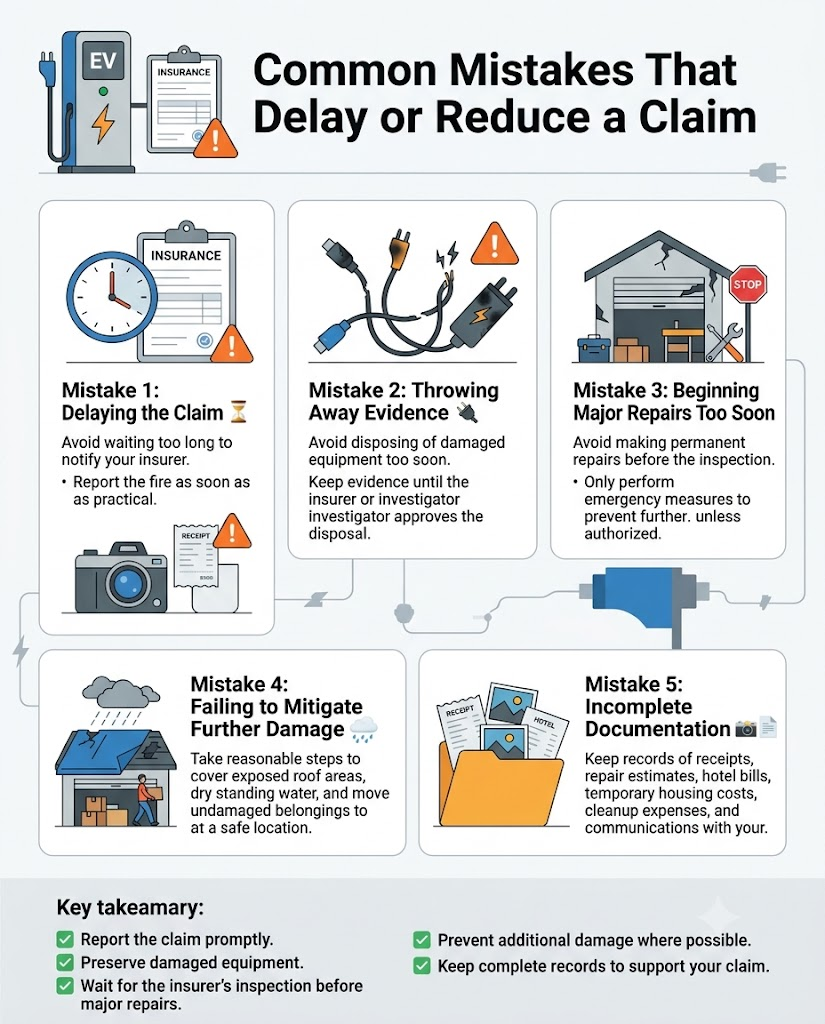
Delaying the Claim
Waiting too long to notify your insurer may complicate the claims process.
Report the incident as soon as practical.
Throwing Away Evidence
Damaged charging equipment may help establish the cause of the fire.
Dispose of damaged items only after your insurer or investigator tells you it is appropriate.
Beginning Major Repairs Too Soon
Emergency measures, such as boarding up openings or preventing further damage, are usually appropriate.
However, avoid permanent repairs until your insurer has inspected the damage, unless they authorize the work.
Failing to Mitigate Further Damage
Most insurance policies require policyholders to take reasonable steps to prevent additional damage.
Examples include:
- Covering exposed roof areas with a tarp
- Drying standing water
- Moving undamaged belongings to a safe location
Ignoring additional damage may affect coverage for those later losses.
Incomplete Documentation
The more evidence you have, the easier it is to support your claim.
Keep copies of:
- Receipts
- Repair estimates
- Hotel bills
- Temporary housing costs
- Cleanup expenses
- Communications with your insurer
Ways to Reduce the Risk of Charging Station Fires
Although charging station fires are relatively rare, following good safety practices can reduce the risk.
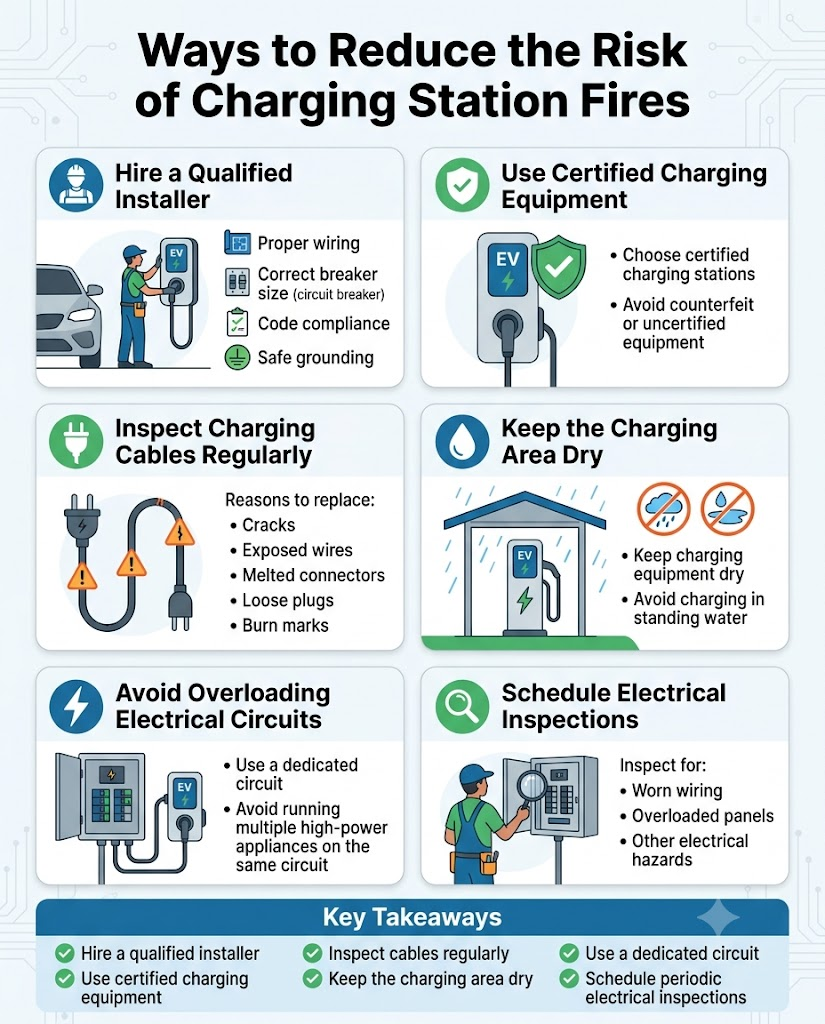
Hire a Qualified Installer
Professional installation helps ensure:
- Proper wiring
- Correct breaker size
- Compliance with local electrical codes
- Safe grounding
Improper installation is a common factor in electrical problems.
Use Certified Charging Equipment
Choose charging stations that have been tested and certified by recognized safety organizations.
Avoid counterfeit or uncertified equipment.
Inspect Charging Cables Regularly
Replace charging cables if you notice:
- Cracks
- Exposed wires
- Melted connectors
- Loose plugs
- Burn marks
Damaged cables should never be used.
Keep the Charging Area Dry
Water and electricity are a dangerous combination.
Avoid charging in standing water and protect outdoor charging equipment from excessive moisture if it is not designed for such exposure.
Avoid Overloading Electrical Circuits
A Level 2 charger typically requires a dedicated circuit.
Running multiple high-power appliances on the same circuit can increase electrical stress and should be avoided.
Schedule Electrical Inspections
Older homes may require electrical upgrades before installing a high-capacity EV charger.
Periodic inspections can identify worn wiring, overloaded panels, or other hazards before they become serious problems.
Final Verdict
So, does auto insurance cover home charging station fires?
The answer is yes, but only in certain situations.
If your electric vehicle is damaged by a charging station fire, comprehensive auto insurance will often cover the vehicle, subject to your policy’s terms, limits, and deductible.
However, auto insurance generally does not cover damage to your house, garage, or permanently installed charging station. Those losses are typically handled through homeowners insurance, while defective equipment may also involve a manufacturer’s warranty or a product liability claim.
Because a single charging station fire can affect your vehicle, home, personal belongings, and even neighboring property, multiple insurance policies may be involved. Understanding how these coverages work together before an incident occurs can help you avoid unexpected costs and make the claims process less stressful.
Before installing a home EV charging station, review both your auto and homeowners insurance policies, confirm your coverage limits, and ensure the charger is installed safely by a qualified professional. A little preparation today can make a significant difference if an unexpected electrical fire ever occurs.
Key Takeaways
Auto insurance generally covers fire damage to your EV only if you have comprehensive coverage.
Homeowners insurance usually covers damage to your home, garage, and other covered structures.
A permanently installed charging station is often treated as part of the home for insurance purposes.
Multiple insurers may handle different portions of the same loss.
Manufacturer warranties typically cover product defects, not damage to your home or vehicle.
Proper installation and routine inspections can reduce the risk of charging station fires.
Keep receipts, installation records, and maintenance documents to support future insurance claims if needed.