
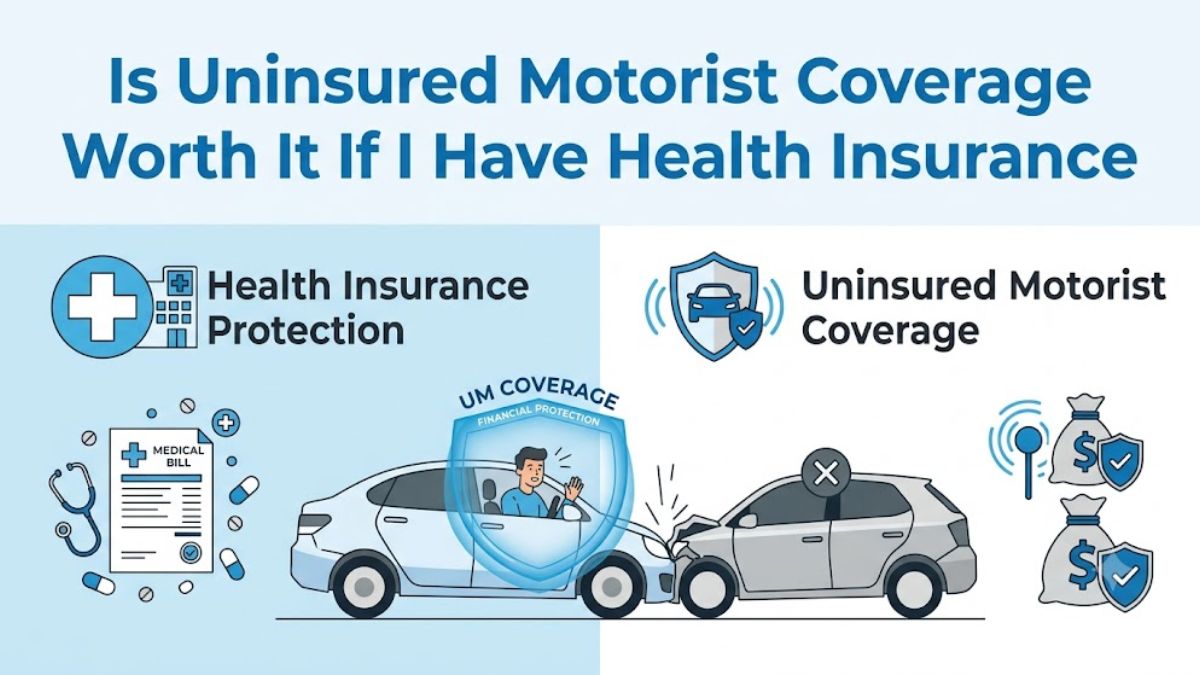

Many drivers wonder whether they need uninsured motorist coverage if they already have health insurance. At first glance, it may seem unnecessary because health insurance can help pay medical bills after a car accident.
However, health insurance and uninsured motorist coverage protect you in very different ways.
Health insurance may cover some of your medical treatment, but it usually does not cover every financial loss caused by an accident. Uninsured motorist coverage can provide additional protection for medical expenses, lost income, pain and suffering, and other damages when the at-fault driver has no insurance or not enough insurance.
Understanding the difference between these two types of protection can help you decide whether uninsured motorist coverage is worth adding to your auto insurance policy.
What Is Uninsured Motorist Coverage?
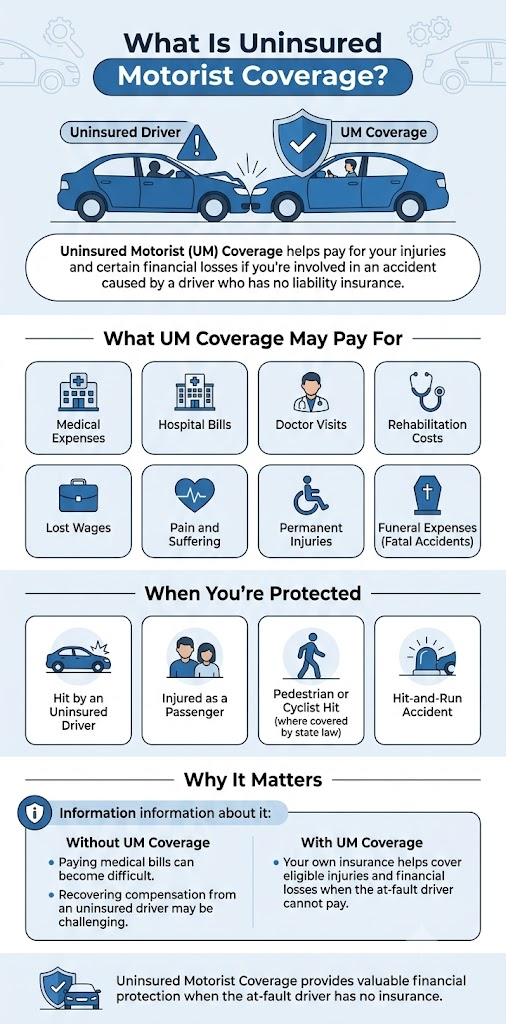
Uninsured motorist coverage (UM coverage) is a type of auto insurance protection that helps pay for your injuries and losses if you are involved in an accident caused by a driver who does not have liability insurance.
Every state requires drivers to carry some level of liability insurance, but many people still drive without coverage. If an uninsured driver causes an accident, recovering money for medical bills and other damages can become difficult.
Uninsured motorist coverage steps in and acts as protection when the responsible driver cannot pay.
It may cover:
- Medical expenses
- Hospital bills
- Doctor visits
- Rehabilitation costs
- Lost wages
- Pain and suffering
- Permanent injuries
- Funeral expenses in fatal accidents
Depending on your policy, uninsured motorist coverage may also protect you when you are:
- Hit by an uninsured driver
- Injured as a passenger
- Hit while walking or cycling (in some states)
- Involved in a hit-and-run accident
Is uninsured motorist coverage worth it if I have health insurance?
Yes, in many cases it is worth it.
Health insurance may pay your medical bills, but uninsured motorist coverage protects you from many other financial losses caused by an uninsured or underinsured driver.
For drivers who want stronger financial protection, especially those with families, high incomes, long commutes, or valuable assets, uninsured motorist coverage can be a smart addition to an auto insurance policy.
What Does Health Insurance Cover After a Car Accident?
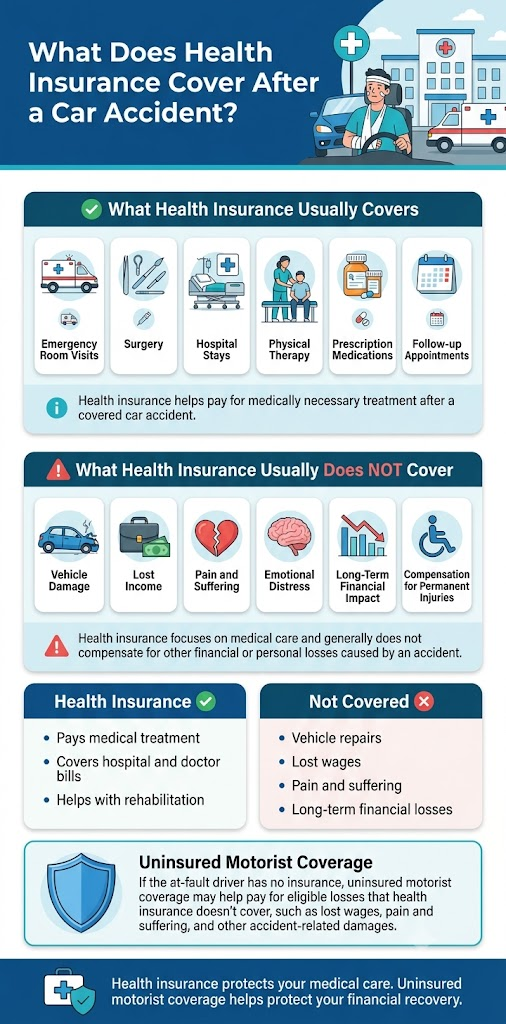
Health insurance is designed to cover medical care, regardless of how an injury happens. If you are injured in a car accident, your health insurance may pay for treatments such as:
- Emergency room visits
- Surgery
- Hospital stays
- Physical therapy
- Prescription medications
- Follow-up appointments
However, health insurance is primarily focused on medical treatment.
It usually does not cover many other accident-related losses, including:
- Vehicle damage
- Lost income beyond certain disability benefits
- Pain and suffering
- Emotional distress
- Long-term financial impact
- Compensation for permanent injuries
This is where uninsured motorist coverage can provide additional protection.
Health Insurance vs Uninsured Motorist Coverage: Key Differences
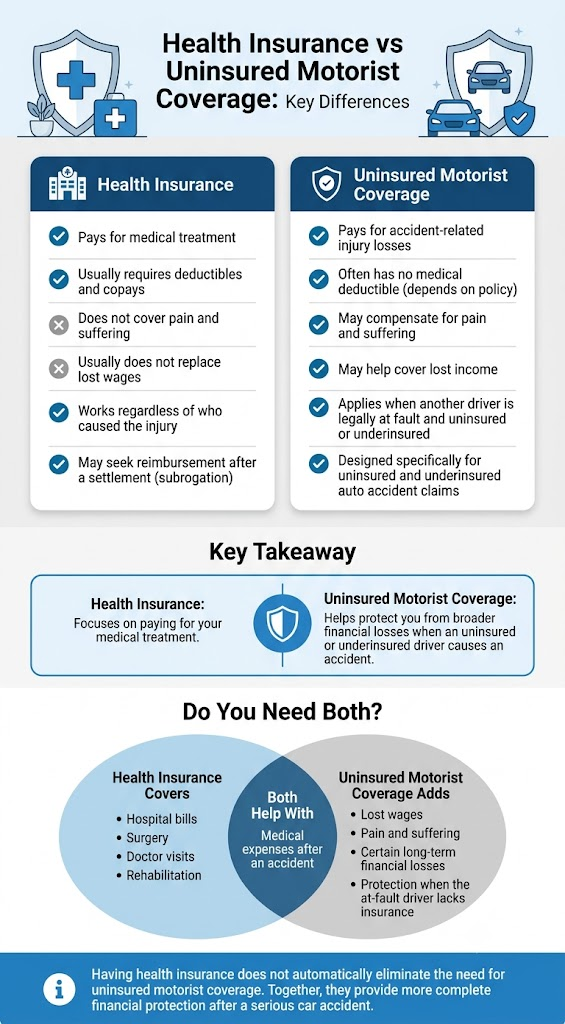
| Health Insurance | Uninsured Motorist Coverage |
|---|---|
| Pays for medical treatment | Pays for accident-related injury losses |
| Requires deductibles and copays | Usually no medical deductible |
| Does not cover pain and suffering | May compensate for pain and suffering |
| Does not pay for lost wages in most cases | May cover lost income |
| Works regardless of who caused the accident | Applies when another driver is at fault |
| May seek reimbursement after settlement | Designed specifically for auto accidents |
Both coverages serve different purposes.
Having health insurance does not automatically make uninsured motorist coverage unnecessary.
Why Health Insurance Alone May Not Be Enough
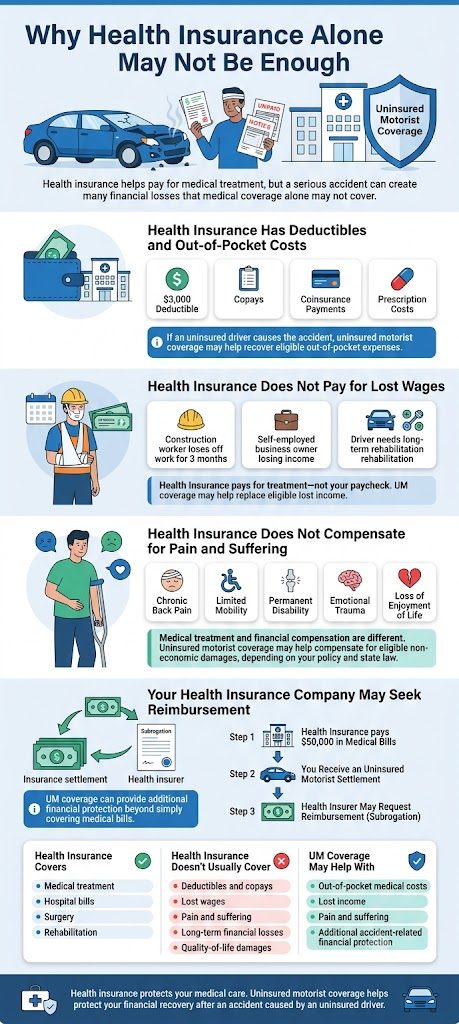
Many people assume that their health insurance will handle all costs after a serious accident. In reality, a major crash can create expenses far beyond medical bills.
Health Insurance Has Deductibles and Out-of-Pocket Costs
Most health insurance plans require you to pay some expenses yourself.
For example:
- $3,000 deductible
- Copays for appointments
- Coinsurance payments
- Prescription costs
If an uninsured driver causes your accident, uninsured motorist coverage may help recover these expenses.
Health Insurance Does Not Pay for Lost Wages
A serious accident can prevent you from working for weeks or months.
Health insurance may pay your medical bills, but it usually does not replace your paycheck.
Examples:
- A construction worker cannot work for three months
- A self-employed person loses business income
- A driver requires long-term rehabilitation
Uninsured motorist coverage may provide compensation for lost earnings depending on state laws and policy limits.
Health Insurance Does Not Compensate for Pain and Suffering
After an accident, injuries can affect your quality of life.
Examples include:
- Chronic back pain
- Limited mobility
- Permanent disability
- Emotional trauma
- Loss of enjoyment of activities
Health insurance pays for treatment but does not provide compensation for these personal losses.
Uninsured motorist coverage may help compensate for these damages.
Your Health Insurance Company May Seek Reimbursement
Many health insurance policies include a process called subrogation.
This means if another party is responsible for your injury and you receive a settlement, your health insurer may seek repayment for medical expenses they paid.
Example:
- Your health insurance pays $50,000 for accident treatment.
- You receive compensation from an uninsured motorist claim.
- Your insurer may request reimbursement from that settlement.
Uninsured motorist coverage can help provide additional funds beyond simply paying back medical costs.
When Is Uninsured Motorist Coverage Especially Worth It?
Uninsured motorist coverage may be especially valuable if you fall into certain situations.
You Drive Frequently
The more time you spend on the road, the greater your chance of encountering an uninsured driver.
People who:
- Commute daily
- Drive long distances
- Travel through busy areas
may benefit more from additional protection.
You Have Family Members Who Ride With You
Many uninsured motorist policies protect passengers in your vehicle.
If you frequently drive with:
- Your spouse
- Children
- Family members
UM coverage can provide additional financial protection if another driver causes an accident.
You Have Limited Disability or Income Protection
If you cannot work after an accident, medical coverage alone may not protect your finances.
Uninsured motorist coverage can help fill this gap.
You Own Valuable Assets
If an uninsured driver causes a serious accident, collecting compensation directly from them may be difficult.
Many uninsured drivers have limited assets.
Your own uninsured motorist coverage provides a more reliable source of protection.
When Uninsured Motorist Coverage May Not Be Necessary
Although uninsured motorist coverage provides valuable protection, it may not be equally important for every driver.
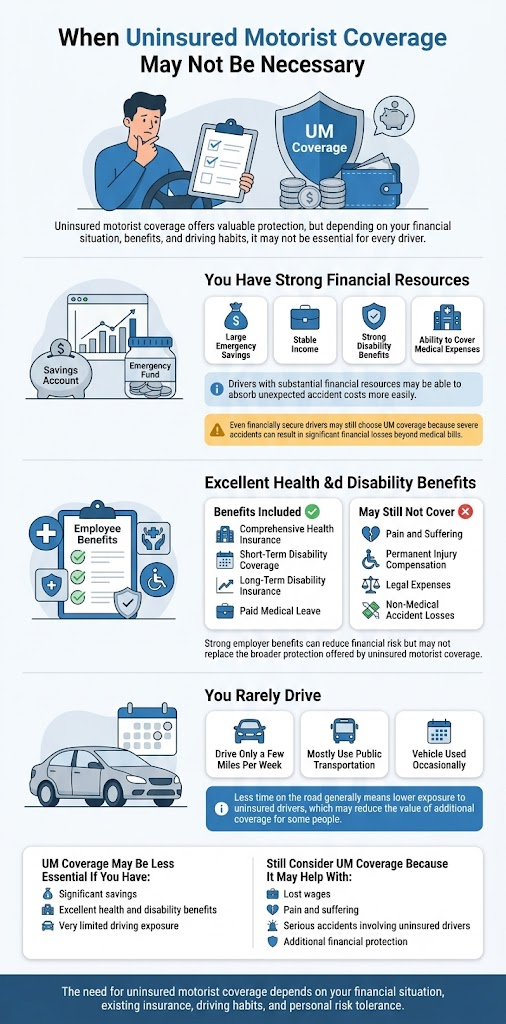
Some people may decide they do not need additional coverage depending on their financial situation, existing protections, and driving habits.
You Have Strong Financial Resources
If you have significant savings and can comfortably handle unexpected expenses, you may feel less dependent on uninsured motorist coverage.
For example, someone with:
- Large emergency savings
- Stable income
- Strong disability benefits
- Ability to cover medical expenses
may have less financial risk after an accident.
However, even financially secure drivers may choose UM coverage because serious injuries can create costs far beyond medical bills.
You Have Excellent Health and Disability Benefits
Some employer-provided benefit packages include:
- Comprehensive health insurance
- Short-term disability coverage
- Long-term disability insurance
- Paid medical leave
These benefits may reduce the financial impact of an accident.
However, they still may not cover:
- Pain and suffering
- Permanent injury compensation
- Legal expenses
- Non-medical accident losses
You Rarely Drive
If you rarely use your vehicle, your risk exposure may be lower.
For example:
- You only drive a few miles per week
- You primarily use public transportation
- Your vehicle is used occasionally
You may decide the additional premium is not worth it.
How Much Does Uninsured Motorist Coverage Cost?
The cost of uninsured motorist coverage varies depending on several factors, including:
- State regulations
- Coverage limits
- Your driving history
- Location
- Insurance company
- Vehicle type
In many cases, adding uninsured motorist coverage is relatively inexpensive compared with other auto insurance protections.
Many drivers can add meaningful protection for a small increase in their monthly premium.
The reason it is often affordable is because it protects you rather than other drivers.
Your insurance company is not covering damage you cause to someone else. Instead, it is providing financial protection if another driver is responsible.
How Much Uninsured Motorist Coverage Should You Buy?
The right amount of uninsured motorist coverage depends on your personal risk level.
A common recommendation is to match your uninsured motorist limits with your bodily injury liability limits.
For example:
If your auto policy includes:
- $100,000 per person bodily injury liability
- $300,000 per accident bodily injury liability
you may consider:
- $100,000 per person uninsured motorist coverage
- $300,000 per accident uninsured motorist coverage
Higher limits may make sense if you:
- Have a high income
- Have significant assets
- Drive frequently
- Have dependents
- Want stronger financial protection
Uninsured Motorist Coverage vs Underinsured Motorist Coverage
Many policies combine uninsured and underinsured motorist coverage.
While uninsured motorist coverage protects you when the other driver has no insurance, underinsured motorist coverage helps when the driver has some insurance but not enough.
Example:
You suffer serious injuries resulting in: $150,000 in medical bills and damages
The at-fault driver has: $50,000 bodily injury liability coverage
Their insurance pays $50,000, but there is still a $100,000 gap.
Underinsured motorist coverage may help cover the remaining losses up to your policy limits.
Because many drivers only carry minimum liability coverage, underinsured motorist protection can be just as important as uninsured motorist coverage.
Does Uninsured Motorist Coverage Pay Medical Bills Before Health Insurance?
The answer depends on your state and insurance policy.
In some situations:
- Your health insurance pays initial medical expenses.
- You pursue an uninsured motorist claim.
- Your auto insurer compensates you for eligible damages.
In other cases, your auto insurer may become involved earlier.
The process can depend on:
- State insurance laws
- Whether your state allows stacking coverage
- Your health insurance agreement
- Your policy terms
Always review your insurance policy or speak with your insurer to understand how claims are handled.
Is Uninsured Motorist Coverage Worth It If I Have Medicare?
Drivers with Medicare often ask whether they still need uninsured motorist coverage.
Medicare may cover certain medical expenses after an accident, but it does not replace the broader protection provided by UM coverage.
Medicare generally does not cover:
- Lost wages
- Pain and suffering
- Vehicle-related losses
- Compensation for permanent injuries
Uninsured motorist coverage can provide additional financial protection beyond healthcare costs.
Is Uninsured Motorist Coverage Worth It If I Have Medicaid?
Medicaid may help pay medical expenses, but relying only on Medicaid can leave significant gaps.
Potential issues include:
- Limited provider availability
- Coverage restrictions
- No compensation for non-medical damages
- No replacement for lost income
For many drivers, uninsured motorist coverage provides an additional layer of financial security.
Common Misconceptions About Uninsured Motorist Coverage
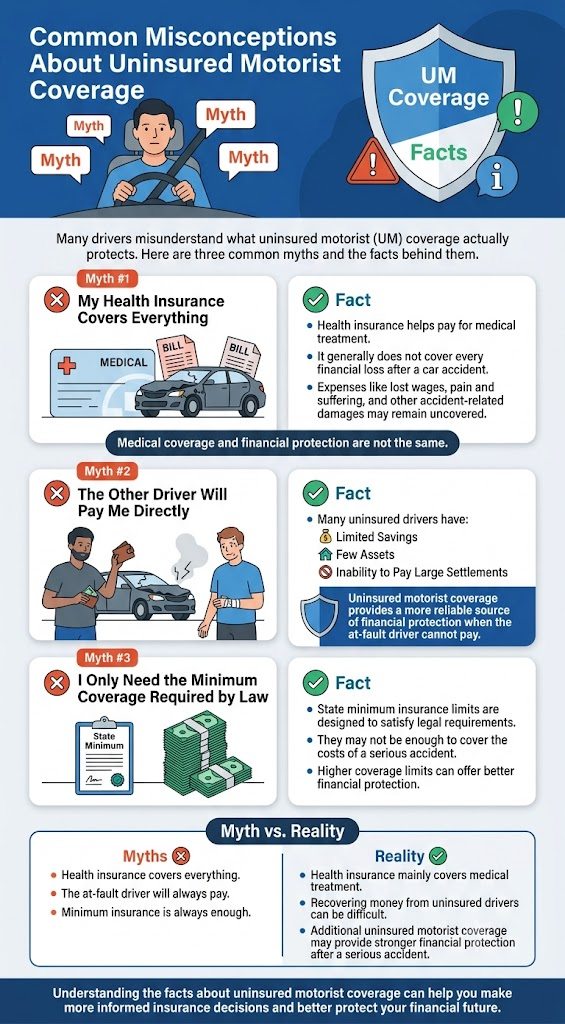
Misconception 1: “My Health Insurance Covers Everything”
Health insurance helps with medical treatment, but it does not replace all accident compensation.
A serious accident can create financial losses that health insurance does not address.
Misconception 2: “The Other Driver Will Pay Me Directly”
If an uninsured driver causes an accident, you may try to recover money from them personally.
However, many uninsured drivers:
- Have limited savings
- Have few assets
- Cannot afford large settlements
Your uninsured motorist coverage provides a more reliable option.
Misconception 3: “I Only Need the Minimum Coverage Required by Law”
Minimum insurance requirements are designed to meet legal requirements, not necessarily protect your financial future.
State minimums may be far below the cost of a serious accident.
Pros and Cons of Uninsured Motorist Coverage
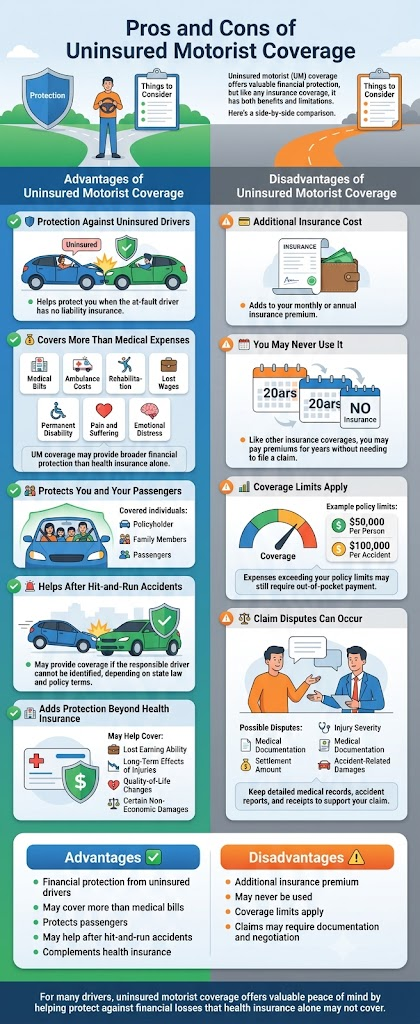
Before deciding whether uninsured motorist coverage is worth adding to your auto insurance policy, it helps to understand the advantages and disadvantages.
Advantages of Uninsured Motorist Coverage
Provides Protection Against Uninsured Drivers
One of the biggest benefits of uninsured motorist coverage is protection from drivers who break the law by driving without insurance.
Even though auto insurance is required in most states, millions of drivers remain uninsured.
Without UM coverage, you may have limited options after an accident caused by an uninsured driver.
Covers More Than Medical Expenses
Health insurance mainly focuses on medical care.
Uninsured motorist coverage may provide compensation for:
- Medical bills
- Ambulance costs
- Rehabilitation
- Lost wages
- Permanent disability
- Pain and suffering
- Emotional distress
This broader protection makes it different from health insurance.
Protects You and Your Passengers
Many uninsured motorist policies cover injuries to:
- The policyholder
- Family members
- Passengers in the insured vehicle
This can be especially valuable for people who frequently drive with loved ones.
Helps After Hit-and-Run Accidents
In many cases, a hit-and-run driver is treated similarly to an uninsured driver.
If someone hits your vehicle and leaves the scene, uninsured motorist coverage may help pay for your injuries if you meet your state’s requirements.
Without this coverage, recovering compensation may be difficult because the responsible driver cannot be identified.
Provides Protection Even With Good Health Insurance
Having health insurance does not eliminate the need for uninsured motorist coverage.
A good health insurance plan may cover hospital bills, but it usually does not provide compensation for:
- Lost earning ability
- Long-term effects of injuries
- Quality-of-life changes
- Non-economic damages
UM coverage fills these gaps.
Disadvantages of Uninsured Motorist Coverage
Additional Insurance Cost
The biggest disadvantage is the additional premium.
While UM coverage is often affordable, it still increases your monthly insurance bill.
Drivers with tight budgets may decide to skip optional coverage.
You May Never Use It
Insurance is designed to protect against unexpected events.
Some drivers pay for uninsured motorist coverage for years without ever filing a claim.
However, the same applies to many other insurance protections, such as:
- Comprehensive coverage
- Collision coverage
- Roadside assistance
The value comes from protection when a serious event happens.
Coverage Limits Apply
Uninsured motorist coverage has maximum payout limits.
For example:
A policy with:
- $50,000 per person limit
- $100,000 per accident limit
will not pay beyond those amounts.
If damages exceed your limits, you may still face out-of-pocket expenses.
Claim Disputes Can Occur
Because you are making a claim against your own insurance company, disagreements can sometimes happen.
Common disputes include:
- Whether injuries are related to the accident
- The severity of injuries
- The value of damages
- Settlement amounts
Keeping medical records and accident documentation can help support your claim.
Questions to Ask Before Buying Uninsured Motorist Coverage
Before adding UM coverage, consider these questions.
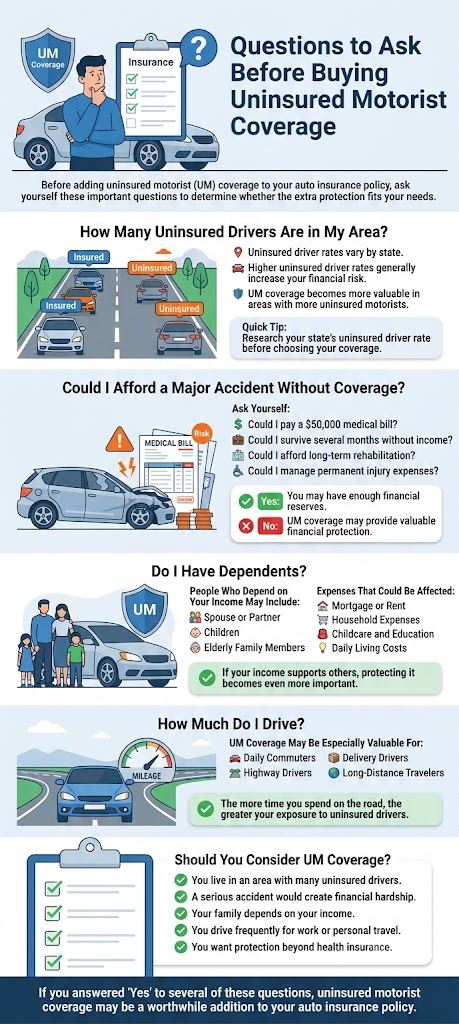
How Many Uninsured Drivers Are in My Area?
Some states have higher rates of uninsured drivers than others.
If you live in an area where many drivers lack insurance, UM coverage becomes more valuable.
Could I Afford a Major Accident Without Coverage?
Ask yourself:
- Could I pay a $50,000 medical bill?
- Could I survive several months without income?
- Could I afford long-term rehabilitation?
- Could I handle permanent injury costs?
If the answer is no, uninsured motorist coverage can provide important financial protection.
Do I Have Dependents?
If others rely on your income, protecting your ability to earn money becomes more important.
A serious accident could affect:
- Mortgage payments
- Household expenses
- Childcare costs
- Daily living expenses
How Much Do I Drive?
Drivers who spend more time behind the wheel face more exposure.
UM coverage may be especially useful for:
- Daily commuters
- Highway drivers
- Delivery workers
- Long-distance travelers
Situations Where Uninsured Motorist Coverage Can Be Extremely Valuable
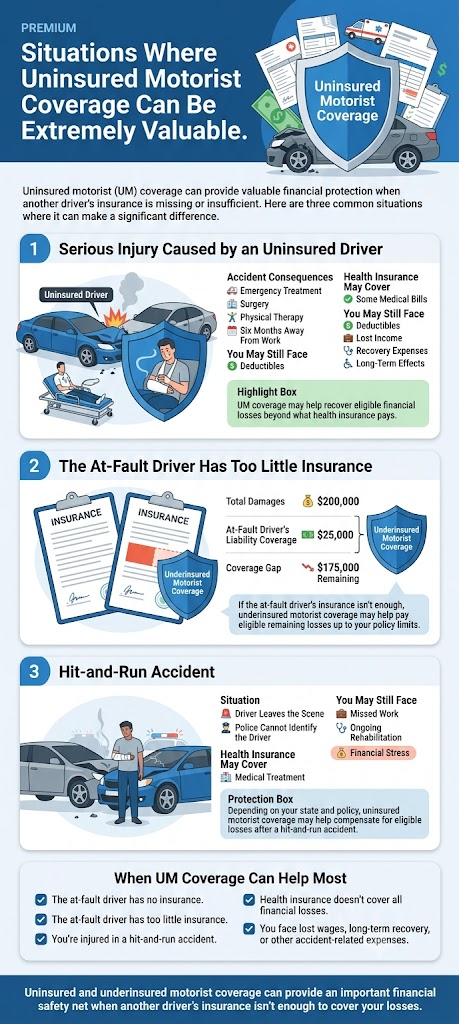
Example 1: Serious Injury With an Uninsured Driver
You are hit by a driver who has no insurance.
Your injuries include:
- Emergency treatment
- Surgery
- Physical therapy
- Six months away from work
Your health insurance covers some medical costs, but you still have:
- Deductibles
- Lost income
- Recovery expenses
- Long-term effects
Your uninsured motorist coverage may help recover these losses.
Example 2: Driver Has Too Little Insurance
A driver causes an accident but only carries minimum liability coverage.
Your damages:
$200,000
Their insurance:
$25,000
Without underinsured motorist coverage, you may have difficulty recovering the remaining amount.
Example 3: Hit-and-Run Accident
A driver hits you and escapes.
Police cannot identify the person responsible.
Your health insurance pays medical bills, but you still face:
- Missed work
- Ongoing treatment
- Financial stress
Uninsured motorist coverage may provide compensation.
State Laws About Uninsured Motorist Coverage
Uninsured motorist coverage rules vary depending on where you live.
Some states require insurers to offer uninsured motorist coverage, while others make it optional.
A few states require drivers to carry UM coverage as part of their auto insurance policy.
State laws may also affect:
- Minimum coverage limits
- Whether you can reject UM coverage
- Whether coverage can be stacked
- Whether passengers are protected
- How hit-and-run claims are handled
Because insurance regulations differ significantly, it is important to check your state’s specific requirements before making a decision.
What Does “Stacking” Mean With Uninsured Motorist Coverage?
Some states allow a practice called stacking, which can increase the amount of uninsured motorist protection available.
Stacking allows you to combine UM coverage from multiple vehicles or policies.
For example:
You have two vehicles:
- Vehicle 1: $50,000 uninsured motorist coverage
- Vehicle 2: $50,000 uninsured motorist coverage
If stacking is allowed, your available coverage may potentially increase.
However, many states restrict or prohibit stacking, so availability depends on local laws and your insurance policy.
How to Add Uninsured Motorist Coverage to Your Policy
Adding uninsured motorist coverage is usually a simple process.
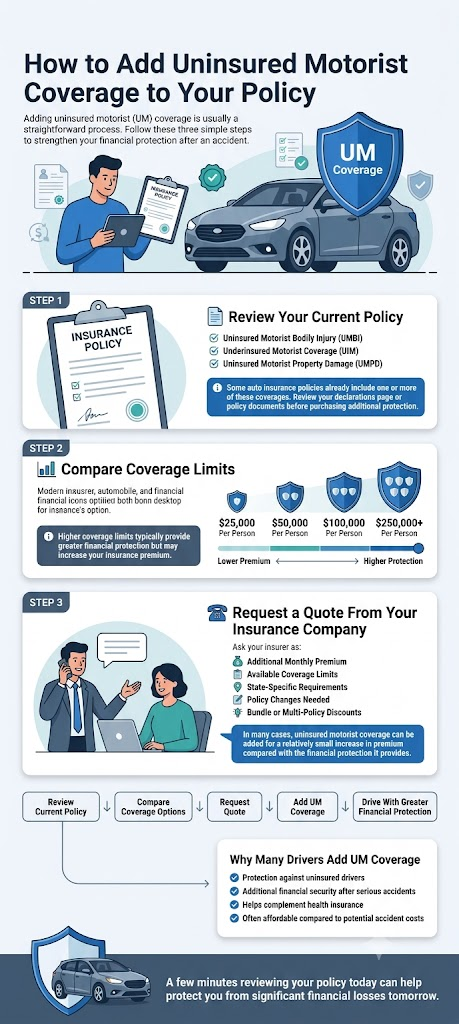
Step 1: Review Your Current Policy
Check whether your current auto insurance already includes:
- Uninsured motorist bodily injury coverage
- Underinsured motorist coverage
- UM property damage coverage
Some policies include these automatically.
Step 2: Compare Coverage Limits
Consider how much protection you need.
Common coverage options include:
- $25,000 per person
- $50,000 per person
- $100,000 per person
- $250,000 or higher limits
Higher limits generally provide stronger protection but may increase your premium.
Step 3: Ask Your Insurance Company for a Quote
Your insurer can tell you:
- Additional monthly cost
- Available coverage limits
- State-specific rules
- Policy changes required
Because UM coverage is often relatively inexpensive, many drivers find the added protection worthwhile.
Should You Drop Uninsured Motorist Coverage If You Have Health Insurance?
In most cases, having health insurance alone is not a strong reason to remove uninsured motorist coverage.
Before dropping it, consider what you would lose:
Without UM coverage, you may have no protection for:
- Lost wages
- Pain and suffering
- Permanent injuries
- Future medical costs
- Financial impact on your family
Health insurance and auto insurance serve different purposes.
One protects your healthcare needs.
The other protects your financial recovery after an accident.
Final Verdict: Is Uninsured Motorist Coverage Worth It If I Have Health Insurance?
For many drivers, uninsured motorist coverage is worth having even if they already have health insurance.
Health insurance can help pay for medical treatment, but it does not provide complete protection after a serious accident.
Uninsured motorist coverage can help cover gaps such as:
- Lost income
- High medical expenses
- Long-term injury costs
- Pain and suffering
- Hit-and-run accidents
- Accidents caused by uninsured drivers
The decision ultimately depends on your personal situation, budget, and risk tolerance.
However, because uninsured motorist coverage is often relatively affordable compared with the financial risk of a serious accident, many drivers choose to keep it as an additional layer of protection.