
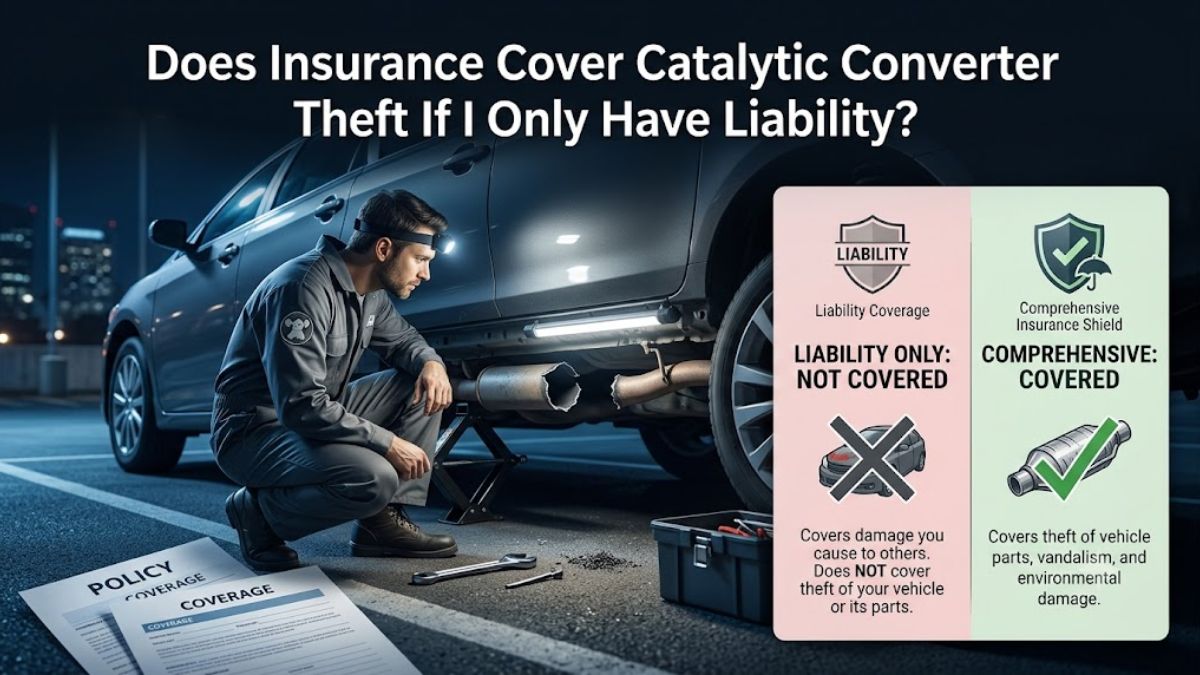

Catalytic converter theft has become a growing concern for many vehicle owners. Thieves often target catalytic converters because they contain valuable metals such as platinum, palladium, and rhodium, which can be sold for significant amounts of money.
Discovering that your catalytic converter has been stolen can be frustrating and expensive. The repair cost can range from hundreds to several thousand dollars depending on the vehicle model, parts availability, and labor costs.
One of the first questions many drivers ask after a theft is:
“Does insurance cover catalytic converter theft if I only have liability?”
The answer is generally no. Liability-only car insurance does not cover catalytic converter theft.
Liability insurance is designed to protect you financially when you cause damage or injury to another person. It does not typically pay for damage or theft involving your own vehicle.
To understand why, it is important to know the difference between liability coverage and comprehensive coverage.
What Is Liability-Only Car Insurance?
Liability insurance is the minimum coverage required in many states. It protects other people if you are responsible for an accident.
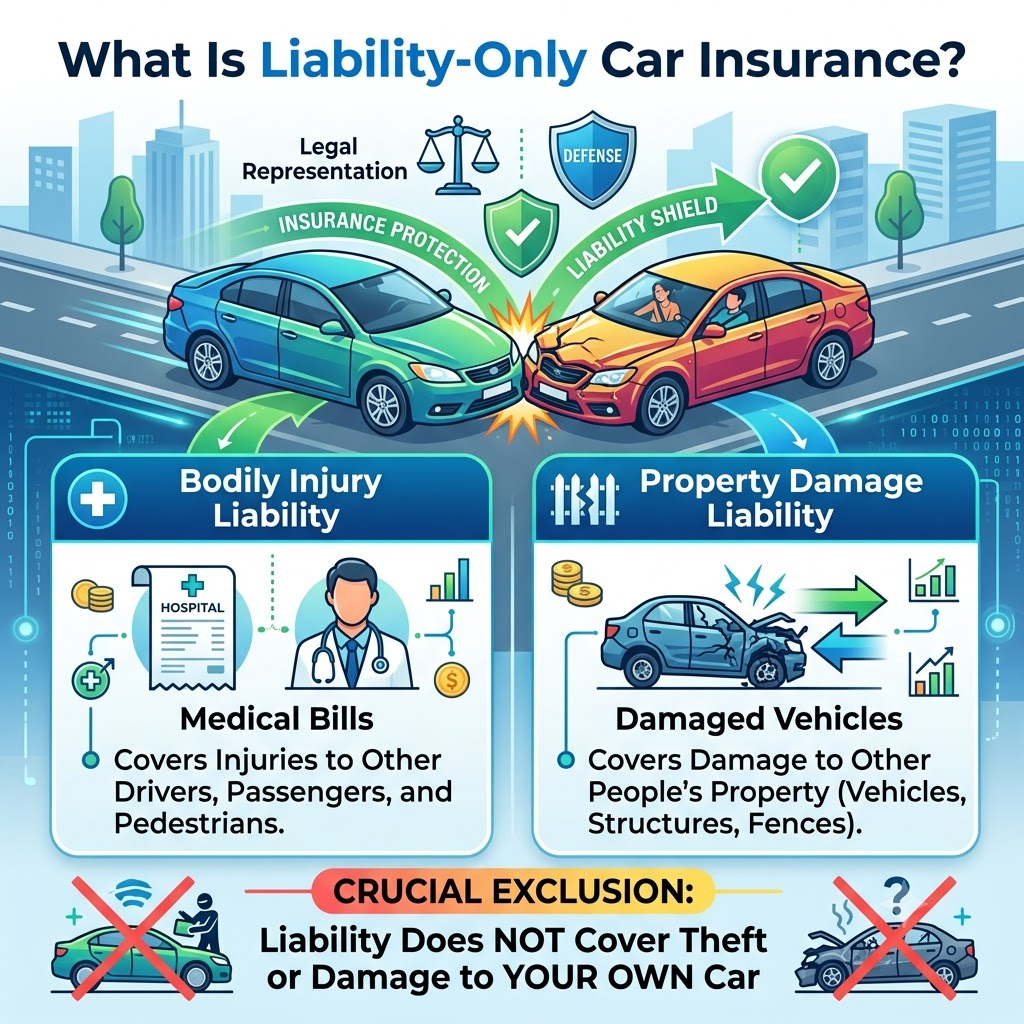
Liability coverage usually includes two main parts:
Bodily Injury Liability
This covers medical expenses and related costs if you injure another person in an accident where you are at fault.
Examples include:
- Hospital bills
- Medical treatment
- Lost wages
- Legal expenses
Property Damage Liability
This covers damage you cause to another person’s property.
Examples include:
- Repairing another driver’s vehicle
- Damaging a fence or building
- Other property damage caused by your vehicle
However, liability insurance does not protect your own vehicle from many types of damage, including:
- Theft
- Vandalism
- Fire damage
- Weather damage
- Animal damage
- Catalytic converter theft
Why Liability Insurance Does Not Cover Catalytic Converter Theft
Insurance companies classify catalytic converter theft as a type of vehicle theft or vandalism.
Since liability insurance only covers damage you cause to others, it does not provide protection for stolen parts from your own vehicle.
For example:
You park your car overnight and discover that thieves removed your catalytic converter.
With liability-only insurance:
- Your insurance company will usually not pay for the repair
- You must cover the replacement cost yourself
- You are responsible for towing and repair expenses
What Type of Insurance Covers Catalytic Converter Theft?
Catalytic converter theft is usually covered under comprehensive insurance coverage.
Comprehensive coverage protects your vehicle from non-collision events, including:
- Theft
- Attempted theft
- Vandalism
- Fire
- Falling objects
- Storm damage
- Animal-related damage
If your vehicle has comprehensive coverage and your catalytic converter is stolen, your insurer may help pay for:
- Replacement of the catalytic converter
- Related damage caused during theft
- Repairs needed to make the vehicle operational again
However, your deductible will usually apply.
Liability vs Comprehensive Coverage for Catalytic Converter Theft
| Coverage Type | Covers Catalytic Converter Theft? |
|---|---|
| Liability Only | ❌ No |
| Collision Coverage | ❌ No |
| Comprehensive Coverage | ✅ Usually Yes |
| Full Coverage Policy | ✅ Usually Yes |
A common misunderstanding is that having “full coverage” means every type of damage is covered automatically. In reality, catalytic converter theft falls under comprehensive coverage, not collision or liability insurance.
Example: Two Drivers With Different Coverage
Driver A: Liability-Only Insurance
John owns an older vehicle and chooses minimum liability coverage to save money.
One night, thieves remove his catalytic converter.
Repair cost:
- Replacement converter: $1,200
- Labor: $300
- Total: $1,500
Because John only has liability insurance:
❌ Insurance pays $0
✅ John pays the entire repair bill
Driver B: Comprehensive Coverage
Sarah has comprehensive coverage on the same type of vehicle.
Her catalytic converter is stolen.
Repair cost:
- Replacement converter: $1,200
- Labor: $300
- Deductible: $500
Insurance may cover:
$1,000 after deductible
Sarah pays:
$500 deductible
(The exact amount depends on the policy.)
Why Catalytic Converter Theft Is So Common
Catalytic converters are attractive targets because they contain precious metals.
Thieves can often remove them quickly using basic tools, sometimes in only a few minutes.
Vehicles commonly targeted include:
- SUVs
- Pickup trucks
- Hybrid vehicles
- Vehicles with higher ground clearance
Higher clearance vehicles allow easier access underneath the vehicle, making theft faster and easier.
Should You Upgrade From Liability to Comprehensive Coverage?
If you are worried about catalytic converter theft, consider factors such as:
- Your vehicle’s value
- Local theft rates
- Replacement cost
- Your ability to pay out-of-pocket repairs
Comprehensive coverage may be especially valuable if:
- Your vehicle has an expensive catalytic converter
- You park outside regularly
- You live in an area with frequent theft
- Repair costs would create financial stress
For older vehicles with very low market value, the added premium may not always be worthwhile.
Cost of Catalytic Converter Replacement, Insurance Payments, and Filing a Claim
A stolen catalytic converter can create a major financial burden, especially for drivers who only carry liability insurance. Understanding repair costs, insurance payments, and the claims process can help you decide whether additional coverage is worth the cost.
How Much Does It Cost to Replace a Stolen Catalytic Converter?
The cost of replacing a catalytic converter varies significantly depending on the vehicle make, model, year, and part availability.
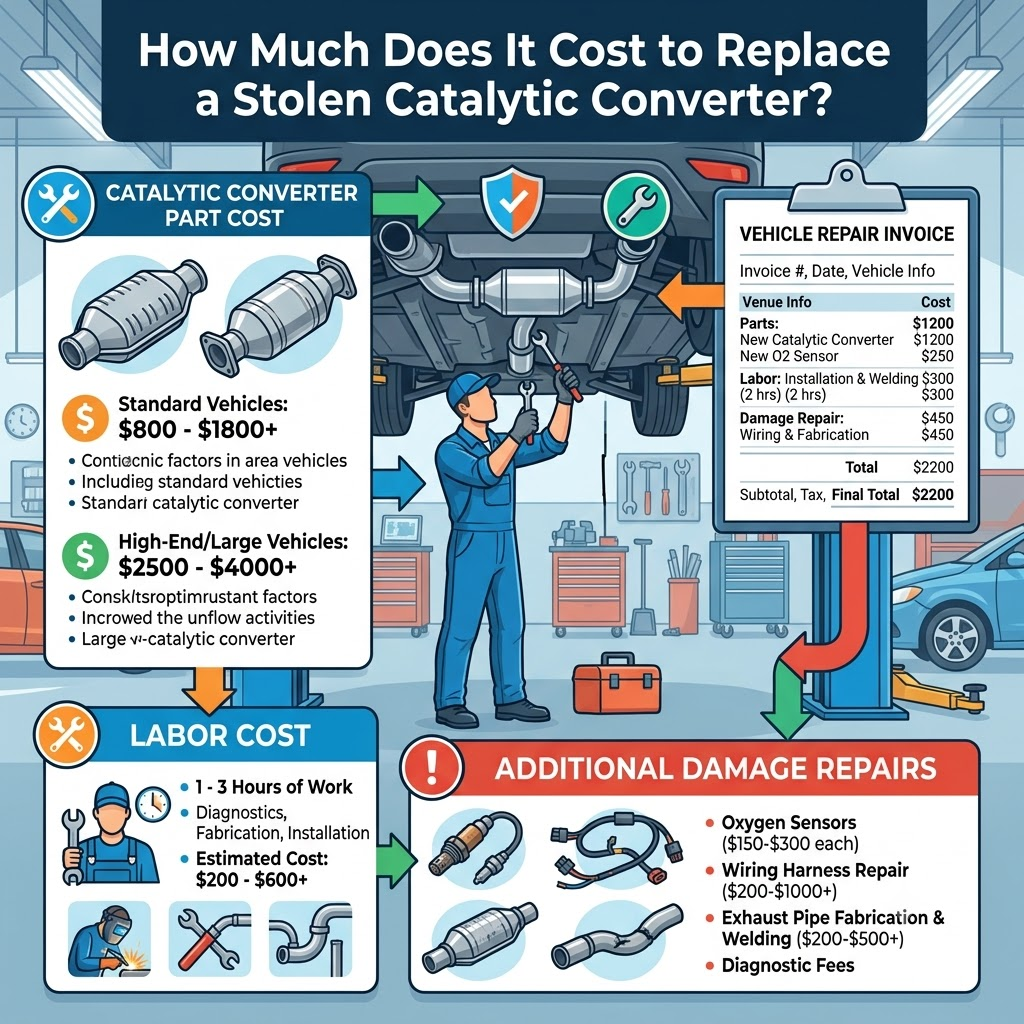
On average, replacement costs can range from:
- $500 to $3,000 or more for many vehicles
- Higher amounts for luxury vehicles, hybrids, or vehicles with expensive emissions systems
The total repair bill usually includes:
Replacement Part Cost
The catalytic converter itself is often the most expensive part of the repair.
Costs depend on:
- Original equipment manufacturer (OEM) parts
- Aftermarket alternatives
- Vehicle-specific requirements
- Availability of replacement parts
Labor Costs
Replacing a catalytic converter requires:
- Removing damaged components
- Installing the replacement part
- Checking exhaust system connections
- Testing vehicle operation
Labor costs vary depending on repair shop rates and how difficult the converter is to access.
Additional Damage Costs
Sometimes thieves damage other parts while removing the catalytic converter.
Additional repairs may include:
- Damaged exhaust pipes
- Cut wires or oxygen sensors
- Broken heat shields
- Exhaust system repairs
Comprehensive insurance may cover these related damages if theft is included in the policy.
Does Comprehensive Insurance Pay for the Entire Catalytic Converter Replacement?
Comprehensive insurance can help cover catalytic converter theft, but it usually does not pay the entire repair bill automatically.
Your payment depends on:
- Your deductible
- Repair cost
- Policy limits
- Insurance company approval
For example:
Repair cost: $2,000
Comprehensive deductible: $500
Insurance payment: $1,500
Your responsibility: $500 deductible
What Is a Comprehensive Insurance Deductible?
A deductible is the amount you agree to pay before insurance coverage applies.
Common comprehensive deductibles include:
- $100
- $250
- $500
- $1,000
A lower deductible usually means:
- Higher insurance premium
- Less money paid after a claim
A higher deductible usually means:
- Lower premium
- More out-of-pocket cost during a claim
When choosing comprehensive coverage, consider the replacement cost of your vehicle’s catalytic converter.
What Happens If the Repair Cost Is Less Than Your Deductible?
If the repair cost is lower than your deductible, insurance may not provide any payment.
Example:
Catalytic converter repair: $400
Your comprehensive deductible: $500
Insurance payment: $0
You pay: $400
This is why some drivers choose not to file smaller claims.
How to File an Insurance Claim for Catalytic Converter Theft
If your catalytic converter has been stolen and you have comprehensive coverage, follow these steps.
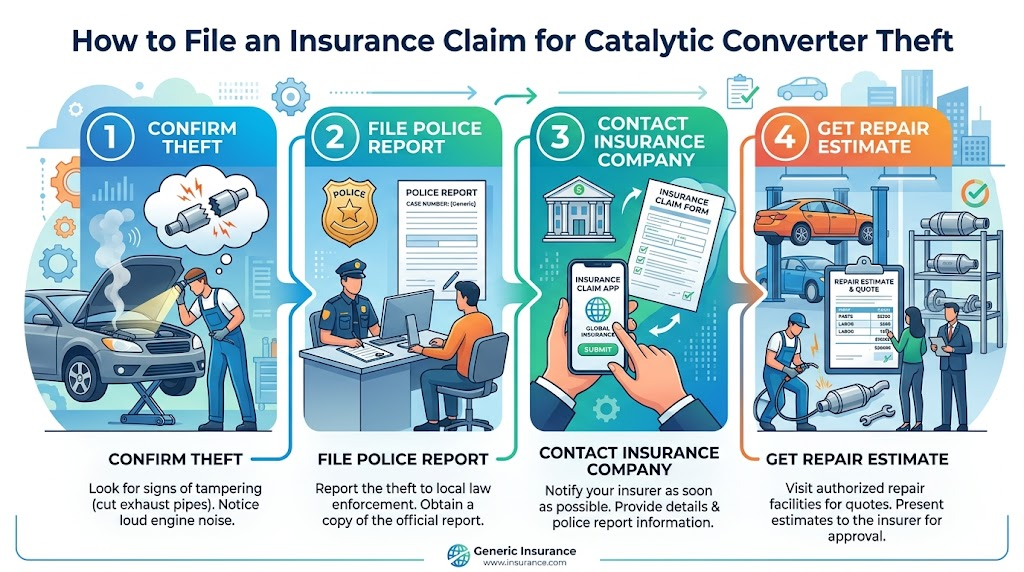
Step 1: Confirm the Theft
Look for signs such as:
- Loud exhaust noise
- Missing exhaust component
- Check engine light
- Visible cuts under the vehicle
Avoid driving the vehicle if it may cause additional damage.
Step 2: Contact the Police
Many insurance companies recommend filing a police report after theft.
Provide details such as:
- Location of theft
- Approximate time it occurred
- Vehicle information
- Visible damage
A police report can support your insurance claim.
Step 3: Contact Your Insurance Company
Notify your insurer as soon as possible.
Provide:
- Policy number
- Vehicle details
- Police report information
- Photos of damage
- Repair estimates
Your insurance company will explain the next steps.
Step 4: Get a Repair Estimate
The insurer may require:
- An inspection
- Approved repair shop estimate
- Photos of the damage
Some insurance companies may send an adjuster to review the vehicle.
Will Filing a Catalytic Converter Theft Claim Increase Insurance Rates?
Many drivers worry that making a theft claim will increase their premiums.
A comprehensive claim may affect rates differently depending on:
- Your insurance company
- Claim history
- Location
- State regulations
- Frequency of claims
Comprehensive claims are generally treated differently from at-fault accident claims because you did not cause the theft.
However, repeated claims in high-theft areas may influence future premiums.
Can You Drive Without a Catalytic Converter?
Technically, some vehicles may still start and move without a catalytic converter. However, driving without one can create problems.
Possible issues include:
- Loud exhaust noise
- Reduced vehicle performance
- Check engine light
- Failed emissions testing
- Legal violations in some areas
The vehicle may also release higher levels of harmful emissions.
It is better to repair the vehicle as soon as possible.
Does Liability Insurance Pay for Damage Caused During Catalytic Converter Theft?
No.
If thieves damage your vehicle while removing the catalytic converter, liability insurance generally does not cover those repairs.
Examples:
- Cut exhaust pipes
- Damaged sensors
- Broken brackets
- Other vehicle damage
These damages are usually covered only if you have comprehensive coverage.
Should You File a Claim for Catalytic Converter Theft?
Whether you should file a claim depends on the repair cost and your deductible.
Consider filing if:
- Repair costs are significantly higher than your deductible
- Your vehicle has expensive parts
- Additional damage occurred
- You have comprehensive coverage
You may consider paying yourself if:
- The repair cost is close to your deductible
- You want to avoid a claim history
- The vehicle has low value
Which Vehicles Are Most Targeted for Catalytic Converter Theft?
Thieves often target vehicles based on three main factors:
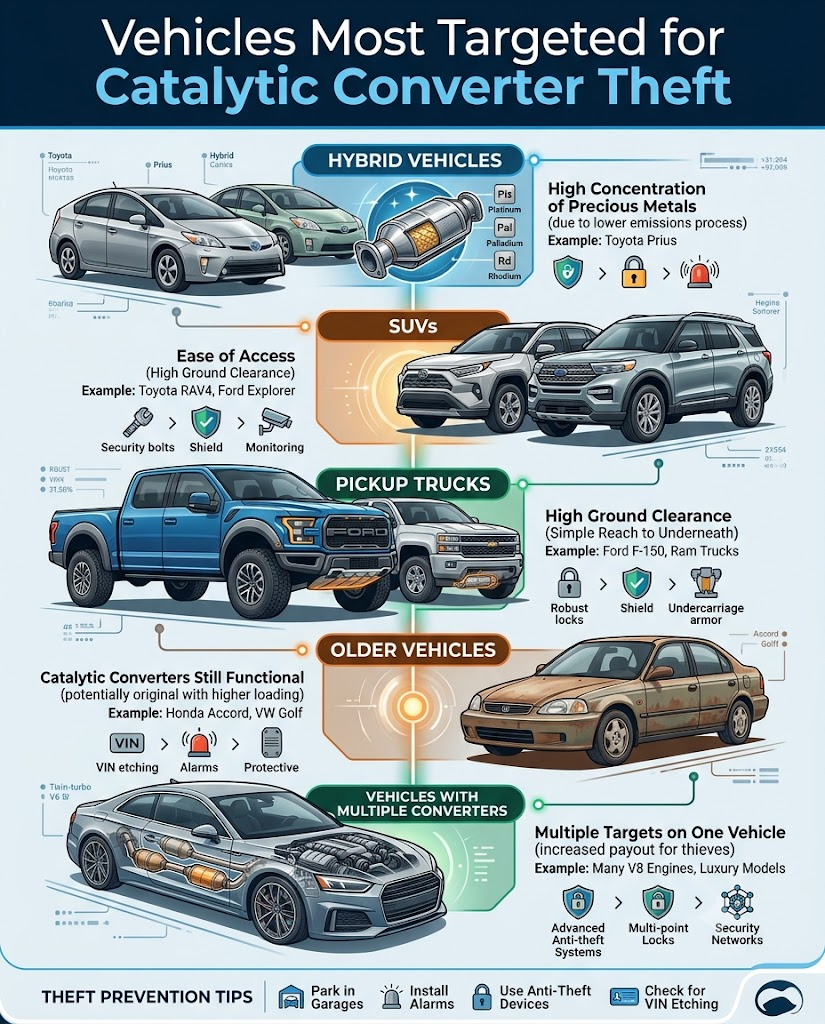
- The value of metals inside the catalytic converter
- How easy the converter is to access
- The number of converters installed on the vehicle
Hybrid Vehicles
Hybrid vehicles are among the most commonly targeted vehicles because their catalytic converters often contain higher amounts of precious metals.
Because hybrid engines produce fewer emissions and the catalytic converter experiences less wear, the metals inside may remain more valuable.
Examples of commonly targeted hybrids include:
- Toyota Prius
- Hybrid SUVs
- Other popular hybrid models
SUVs and Pickup Trucks
SUVs and trucks are attractive targets because their higher ground clearance gives thieves easier access underneath the vehicle.
A thief can often slide under the vehicle and remove the converter faster compared with lower cars.
Commonly targeted categories include:
- Pickup trucks
- Full-size SUVs
- Work vehicles
- Fleet vehicles
Older Vehicles
Older vehicles may be targeted because:
- Their catalytic converters may contain valuable materials
- Replacement parts can be expensive
- Security systems may be less advanced
Some older models also have converters that are easier to remove.
Vehicles With Multiple Catalytic Converters
Some vehicles have more than one catalytic converter, increasing their value to thieves.
Vehicles with larger engines or complex exhaust systems may have multiple converters, making them more attractive targets.
How to Prevent Catalytic Converter Theft
While no prevention method can guarantee complete protection, several steps can reduce the chance of theft.
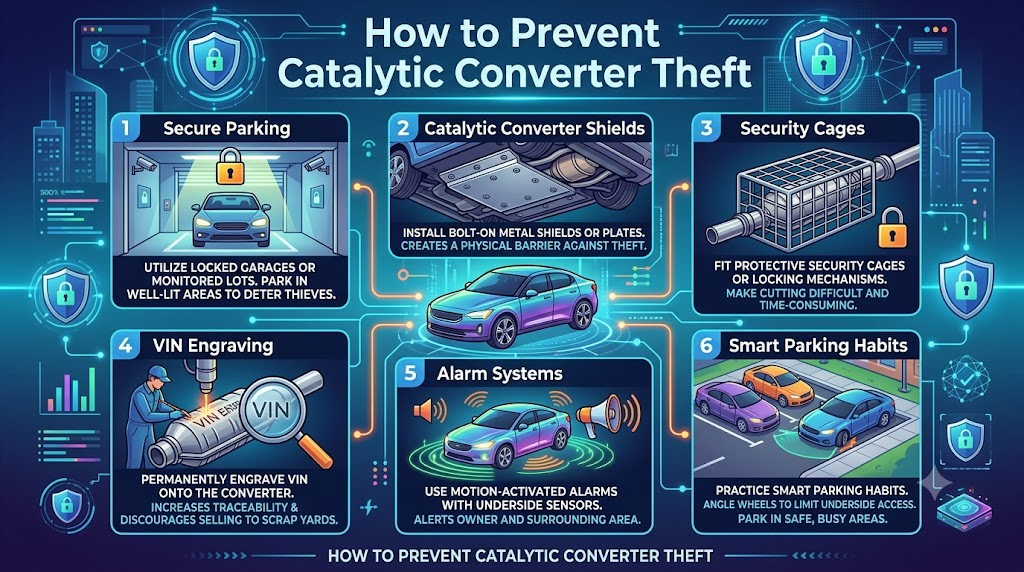
Park in Secure and Visible Locations
Where you park plays an important role in theft prevention.
Safer parking choices include:
✅ Inside a locked garage
✅ Near security cameras
✅ Under bright lighting
✅ In busy areas with regular activity
Avoid leaving your vehicle in isolated locations for long periods whenever possible.
Install a Catalytic Converter Shield
A catalytic converter shield is a protective metal plate installed around the converter.
It can make theft more difficult by:
- Blocking access
- Increasing removal time
- Making noise during attempted removal
- Discouraging quick theft attempts
While shields do not make theft impossible, they can act as a strong deterrent.
Consider a Catalytic Converter Security Cage
Security cages provide additional physical protection around the catalytic converter.
They are designed to:
- Prevent easy access
- Require additional tools to remove
- Increase the time needed for theft
Longer removal times often discourage thieves.
Engrave Your Vehicle Identification Number (VIN)
Some owners choose to mark their catalytic converter with their VIN or another identifying number.
Benefits include:
- Helping law enforcement identify stolen parts
- Making the part harder to resell
- Supporting ownership verification
Some dealerships and local programs offer free engraving events.
Install an Alarm System or Motion Sensor
Some aftermarket security systems can detect unusual activity near your vehicle.
Options include:
- Motion-sensitive alarms
- Tilt sensors
- Under-car vibration sensors
A loud alarm may scare away thieves before they complete the theft.
Adjust Your Parking Habits
Small changes can reduce risk.
Consider:
- Parking close to walls where thieves cannot access underneath easily
- Parking near security cameras
- Avoiding long-term street parking
- Using well-lit areas
For businesses with multiple vehicles, secure fleet parking areas can help reduce theft.
Does a Catalytic Converter Shield Prevent Theft Completely?
No security device can guarantee complete protection.
A shield may:
- Slow down thieves
- Require more tools
- Increase effort and risk
However, determined criminals may still find ways to remove protected converters.
The best approach is combining multiple protections:
- Secure parking
- Physical protection
- Insurance coverage
- Vehicle monitoring
What If You Only Have Liability Insurance and Your Converter Is Stolen?
If you only have liability insurance, you generally have limited options after catalytic converter theft.
Your steps should include:
File a Police Report
Even without insurance coverage, reporting the theft can help:
- Track theft patterns
- Support investigations
- Create documentation
Get Multiple Repair Estimates
Replacement costs can vary significantly.
Compare:
- Dealership pricing
- Independent repair shops
- Aftermarket options
Check for Other Assistance Programs
Some vehicle manufacturers, dealerships, or local programs may offer:
- Security discounts
- Anti-theft programs
- Repair assistance
Availability depends on your location and vehicle.
Consider Adding Comprehensive Coverage
After repairing the vehicle, you may consider adding comprehensive coverage if:
- Your vehicle is valuable
- Theft is common in your area
- You park outside frequently
Keep in mind that insurance usually does not cover a loss that happened before the policy started.
Can You Add Comprehensive Coverage After Catalytic Converter Theft?
If your catalytic converter has already been stolen, adding comprehensive coverage afterward will not cover that existing damage.
Insurance policies generally cover future events, not previous losses.
For example:
Monday:
- Catalytic converter stolen
Tuesday:
- You add comprehensive insurance
The Monday theft would not be covered.
However, future theft or damage may be covered according to your policy terms.
Liability vs Comprehensive Coverage: Quick Comparison
| Situation | Liability Insurance | Comprehensive Insurance |
|---|---|---|
| Damage you cause to another vehicle | ✅ Covered | ✅ Covered |
| Injuries to another driver | ✅ Covered | ✅ Covered |
| Catalytic converter theft | ❌ Not Covered | ✅ Usually Covered |
| Vehicle vandalism | ❌ Not Covered | ✅ Usually Covered |
| Theft of vehicle parts | ❌ Not Covered | ✅ Usually Covered |
| Fire damage | ❌ Not Covered | ✅ Usually Covered |
Final Checklist After Catalytic Converter Theft
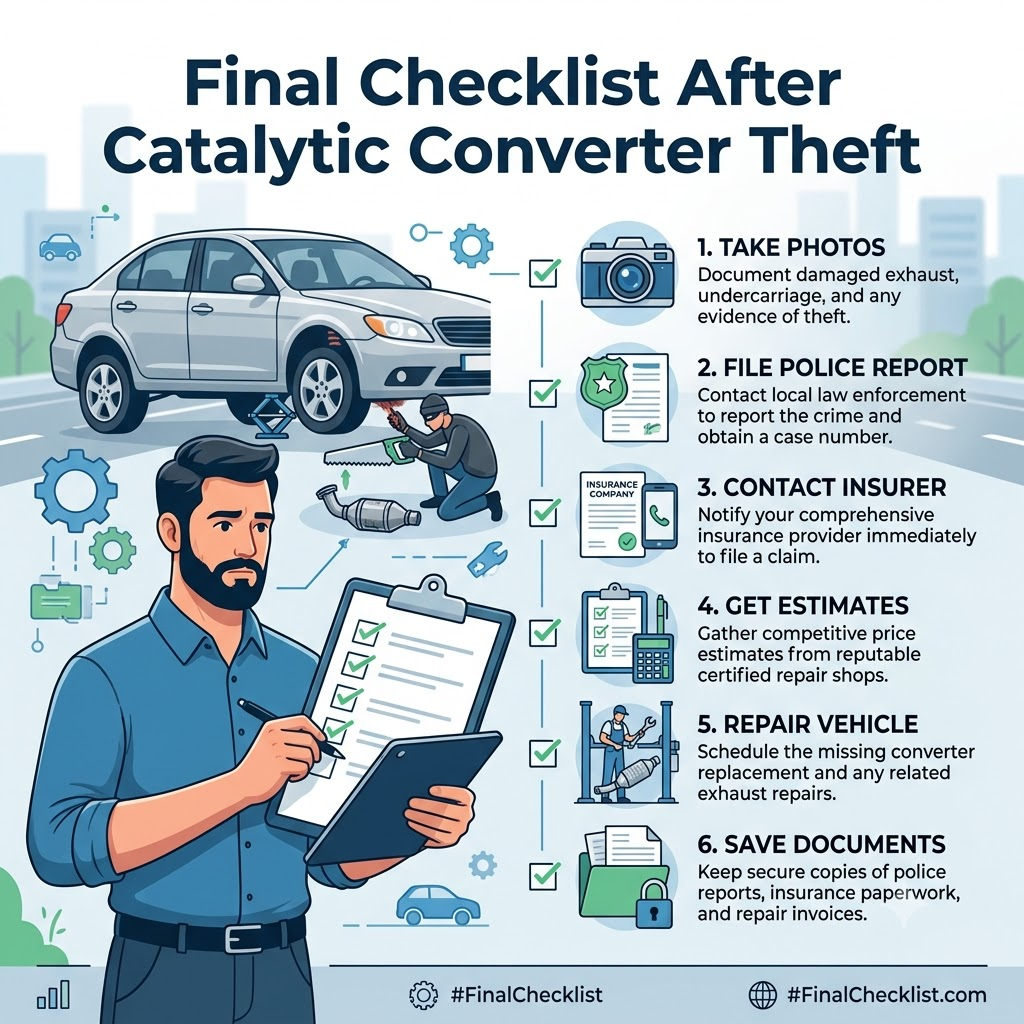
If your catalytic converter is stolen:
✅ Move the vehicle to a safe location
✅ Take photos of the damage
✅ File a police report
✅ Contact your insurance company if you have comprehensive coverage
✅ Get repair estimates
✅ Compare replacement options
✅ Keep all receipts and documents
Final Thoughts
If you only have liability insurance, catalytic converter theft is usually not covered because liability protects other people from damage you cause, not your own vehicle losses.
To protect against catalytic converter theft, you generally need comprehensive coverage. While adding extra coverage increases your premium, it can provide valuable financial protection against theft, vandalism, and other unexpected events.
Before choosing insurance coverage, consider your vehicle’s value, theft risk in your area, and how much you could afford to pay out of pocket after a major repair.