
Vehicle insurance is an important part of owning and driving a car. It protects you financially from unexpected situations such as accidents, theft, vehicle damage, injuries, and liability claims.
However, many drivers purchase insurance without fully understanding what their policy covers, why premiums change, or how to choose the right protection.
A good vehicle insurance policy is not only about finding the cheapest price. It is about getting the right balance between cost and coverage so that you are financially protected when you need it most.
Insurance costs and coverage options can vary depending on factors such as:
- Type of vehicle
- Driving history
- Location
- Coverage limits
- Deductible amount
- Insurance provider
- Vehicle usage
- Driving experience
Understanding these basics helps you make smarter decisions, avoid unnecessary expenses, and choose a policy that matches your needs.
Whether you are buying insurance for a new vehicle, renewing an existing policy, or trying to reduce your premium, knowing the key points about vehicle insurance can help you save money and avoid coverage problems.
In this guide, we will discuss the top 5 points about vehicle insurance that every driver should understand.
The Top 5 Points About Vehicle Insurance
Vehicle insurance can sometimes feel complicated, but understanding these five important points can help you choose better coverage, reduce costs, and stay protected on the road.
Point 1: Understanding Different Types of Vehicle Insurance Coverage
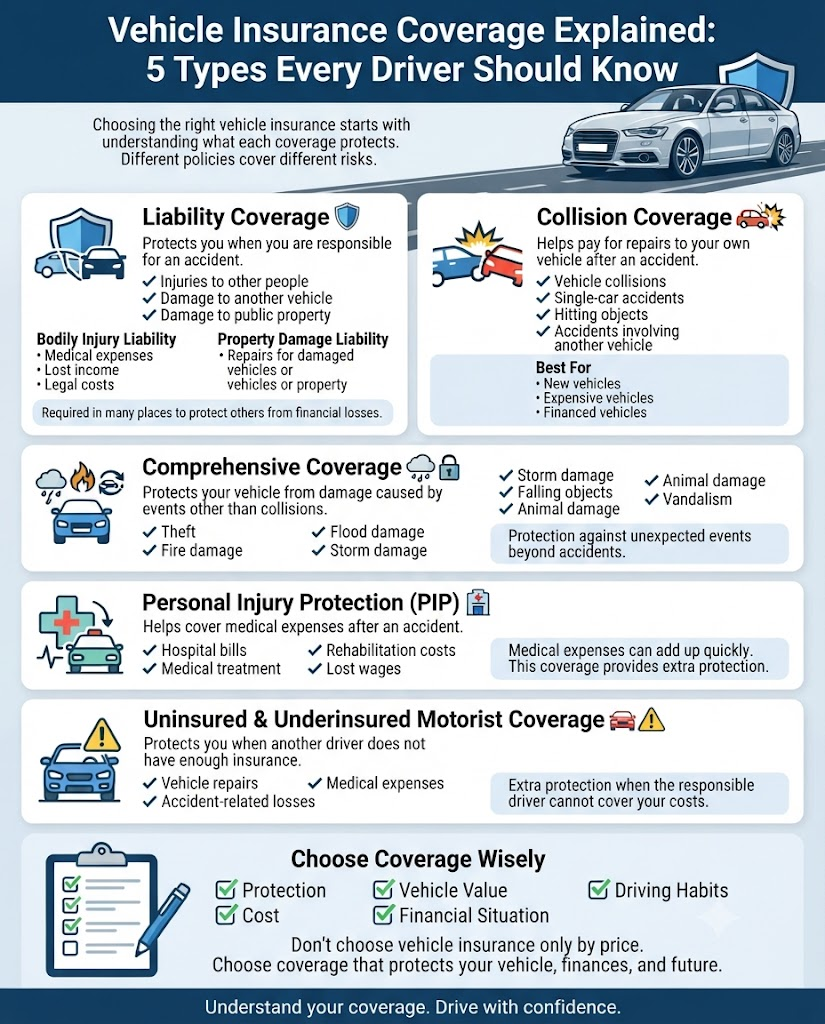
The first step in choosing the right vehicle insurance is understanding the different types of coverage available.
Each type of coverage protects against different risks, and selecting the right combination can help ensure you have proper financial protection.
Liability Coverage
Liability coverage protects you if you are responsible for causing an accident that results in:
- Injuries to another person
- Damage to another vehicle
- Damage to public property
For example, if you accidentally hit another car and the other driver needs medical treatment or vehicle repairs, liability coverage can help pay those expenses.
Liability coverage usually includes two main parts:
Bodily Injury Liability
This covers costs related to injuries caused to other people in an accident where you are responsible.
It may include:
- Medical expenses
- Lost income
- Legal costs
- Settlement expenses
Property Damage Liability
This helps cover repair costs when you damage another person’s vehicle or property.
Liability insurance is required in many places because it protects other drivers from financial losses caused by accidents.
Collision Coverage
Collision coverage helps pay for repairs to your own vehicle after an accident.
It may cover damage caused by:
- Vehicle collisions
- Hitting another object
- Single-car accidents
- Accidents involving another vehicle
For example, if you lose control of your car and hit a roadside barrier, collision coverage may help pay for repair costs after your deductible is applied.
Collision coverage is especially useful for:
- New vehicles
- Expensive vehicles
- Vehicles with active loans or financing
Comprehensive Coverage
Comprehensive coverage protects your vehicle from damage caused by events other than collisions.
It may cover:
- Vehicle theft
- Fire damage
- Flood damage
- Storm damage
- Falling objects
- Animal-related damage
- Vandalism
- Natural disasters
For example, if your vehicle is stolen or damaged by a severe storm, comprehensive coverage can provide financial protection.
Personal Injury Protection (PIP) or Medical Coverage
Some insurance policies provide coverage for medical expenses after an accident.
Depending on the policy, it may help cover:
- Hospital expenses
- Medical treatment
- Rehabilitation costs
- Lost wages
Medical costs after an accident can become expensive quickly, making this coverage valuable for many drivers.
Uninsured and Underinsured Motorist Coverage
Not every driver carries enough insurance to cover accident expenses.
Uninsured and underinsured motorist coverage protects you if another driver causes an accident but does not have sufficient insurance.
It may help pay for:
- Vehicle repairs
- Medical expenses
- Accident-related losses
This coverage provides additional financial security when the responsible driver cannot fully cover your damages.
Why Choosing the Right Coverage Matters
Many drivers choose insurance only based on the lowest premium. While saving money is important, insufficient coverage can create serious financial problems after an accident.
For example:
- A basic policy may not cover damage to your own vehicle.
- Low liability limits may leave you paying expenses from your own pocket.
- Skipping comprehensive coverage may create problems after theft or natural disasters.
The right vehicle insurance policy should balance:
- Protection
- Cost
- Vehicle value
- Financial situation
- Driving habits
Before buying or renewing a policy, review what each coverage type provides and choose options that match your needs.
Point 2: Factors That Affect Vehicle Insurance Premiums
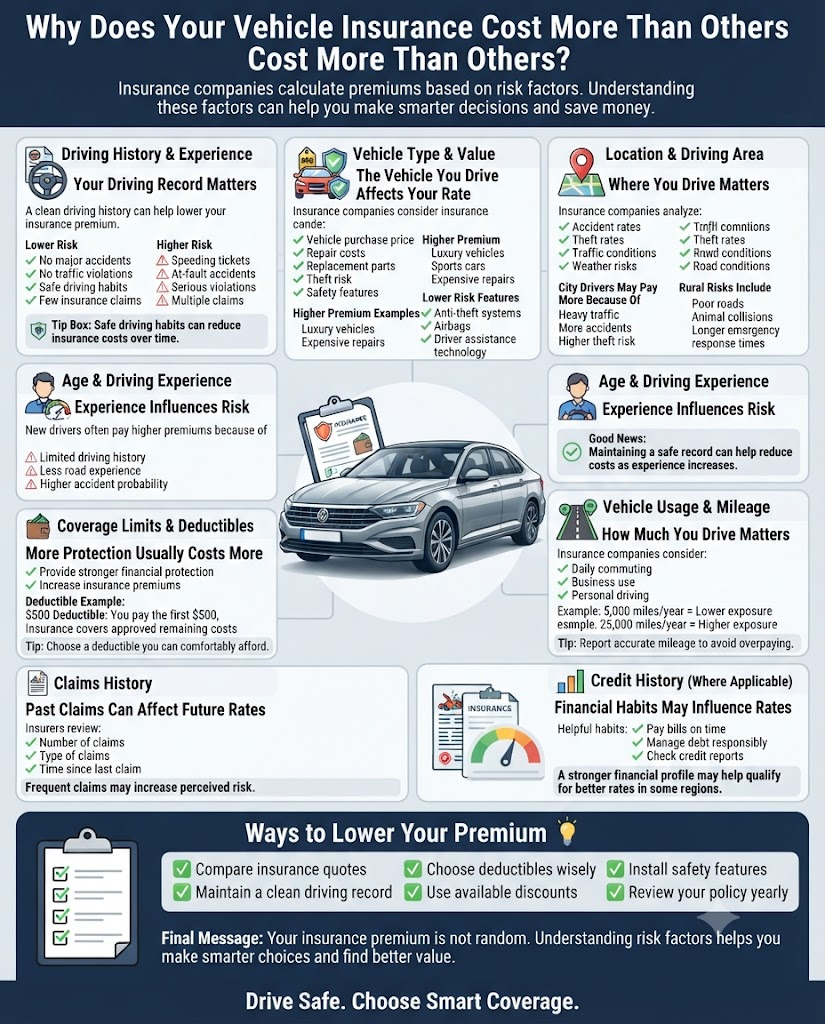
One of the most common questions drivers ask is:
“Why does my vehicle insurance cost more than someone else’s?”
The answer depends on how insurance companies calculate risk.
Insurance providers consider several factors to estimate the likelihood of accidents, claims, and financial losses. Drivers with higher risks usually pay higher premiums, while safer drivers may qualify for lower rates.
Understanding these factors can help you make better decisions and find ways to reduce your vehicle insurance costs.
Driving History and Experience
Your driving record is one of the biggest factors affecting your insurance premium.
Insurance companies review your past driving behavior to understand your risk level.
A clean driving record with:
- No major accidents
- No traffic violations
- No reckless driving incidents
- Few or no insurance claims
can help you qualify for lower insurance rates.
On the other hand, your premium may increase if you have:
- Speeding tickets
- At-fault accidents
- Serious traffic violations
- Multiple insurance claims
Drivers with a history of unsafe driving are generally considered more likely to file future claims.
How to Improve Your Driving Record
You can improve your insurance profile by:
- Following traffic rules
- Avoiding distracted driving
- Maintaining safe driving habits
- Driving carefully in difficult conditions
- Taking defensive driving courses where available
A safer driving record can help reduce insurance costs over time.
Vehicle Type and Value
The vehicle you drive has a major impact on your insurance premium.
Insurance companies consider factors such as:
- Vehicle purchase price
- Repair costs
- Replacement part availability
- Safety features
- Theft risk
- Engine performance
Generally, expensive vehicles cost more to insure because repairs and replacements are more costly.
For example:
Luxury Vehicles
Luxury cars often have higher insurance costs because:
- Parts are expensive
- Repairs require specialized service
- Replacement costs are higher
Sports Vehicles
Performance vehicles may have higher premiums because they are often associated with higher driving risks.
Safety-Focused Vehicles
Vehicles with strong safety features may receive better insurance rates because they can reduce the severity of accidents.
Features that may help lower insurance costs include:
- Anti-theft systems
- Airbags
- Automatic emergency braking
- Lane assistance systems
- Collision warning technology
Location and Driving Area
Where you live and drive can significantly affect your vehicle insurance premium.
Insurance companies analyze local risks, including:
- Accident rates
- Vehicle theft rates
- Traffic conditions
- Weather risks
- Road conditions
- Population density
Drivers in crowded cities may pay higher premiums because of:
- Heavy traffic
- Higher accident chances
- Increased theft risk
Drivers in smaller towns or rural areas may sometimes receive lower rates due to fewer vehicles and less traffic.
However, rural areas can also have risks such as:
- Poor road conditions
- Longer emergency response times
- Animal collisions
Age and Driving Experience
Age and driving experience are important factors when calculating insurance costs.
New drivers often pay higher premiums because they have:
- Limited driving history
- Less experience handling risky situations
- Higher accident probability
Young drivers may face higher insurance costs until they build a strong driving record.
As drivers gain experience and maintain safe habits, premiums may gradually decrease.
Experienced drivers may also qualify for discounts depending on:
- Driving history
- Insurance provider
- Available programs
Coverage Limits and Deductibles
The amount of protection you choose directly affects your insurance premium.
Higher coverage limits usually mean higher premiums because the insurance company takes on more financial responsibility.
For example:
A policy with higher liability limits provides greater protection but may cost more.
A policy with lower limits may be cheaper but could leave you responsible for large expenses after a serious accident.
Understanding Deductibles
A deductible is the amount you pay before your insurance coverage begins.
For example:
- A $500 deductible means you pay the first $500 of a covered repair.
- Your insurance company pays the remaining approved amount.
Choosing a higher deductible can reduce your premium because you accept more financial responsibility.
However, make sure the deductible amount is affordable if you need to file a claim.
Vehicle Usage and Annual Mileage
How you use your vehicle can influence your insurance cost.
Insurance companies may consider:
- Daily commuting distance
- Personal use
- Business use
- Annual mileage
Drivers who spend more time on the road generally have more exposure to accidents.
For example:
- Someone driving 5,000 miles per year may have lower risk than someone driving 25,000 miles annually.
Accurately reporting your mileage and vehicle usage helps ensure you are paying the correct premium.
Insurance Claims History
Your previous insurance claims can affect future premiums.
Insurance companies may review:
- Number of claims
- Type of claims
- Claim costs
- Time since your last claim
Drivers who frequently file claims may be considered higher risk.
However, not every claim automatically causes a major premium increase. The impact depends on:
- Claim type
- Claim amount
- Insurance company policies
- Individual circumstances
Credit History (Where Applicable)
In some regions, insurers may consider credit-based insurance scores when calculating premiums.
A strong financial record may sometimes help drivers qualify for better rates.
Helpful financial habits include:
- Paying bills on time
- Managing debts responsibly
- Checking credit reports regularly
Where credit-based pricing is allowed, maintaining good financial habits may help reduce insurance costs.
How to Lower Your Vehicle Insurance Premium
Drivers can often reduce insurance costs by:
- Comparing quotes from different insurers
- Maintaining a clean driving record
- Choosing suitable deductibles
- Installing safety and security features
- Asking about available discounts
- Bundling insurance policies
- Reviewing coverage every year
Key Takeaway
Vehicle insurance premiums are based on multiple risk factors. Your driving record, vehicle type, location, coverage choices, mileage, and claims history all influence how much you pay.
Understanding these factors helps you make smarter insurance decisions and find better value without sacrificing important protection.
Point 3: Choosing the Right Vehicle Insurance Coverage for Your Needs
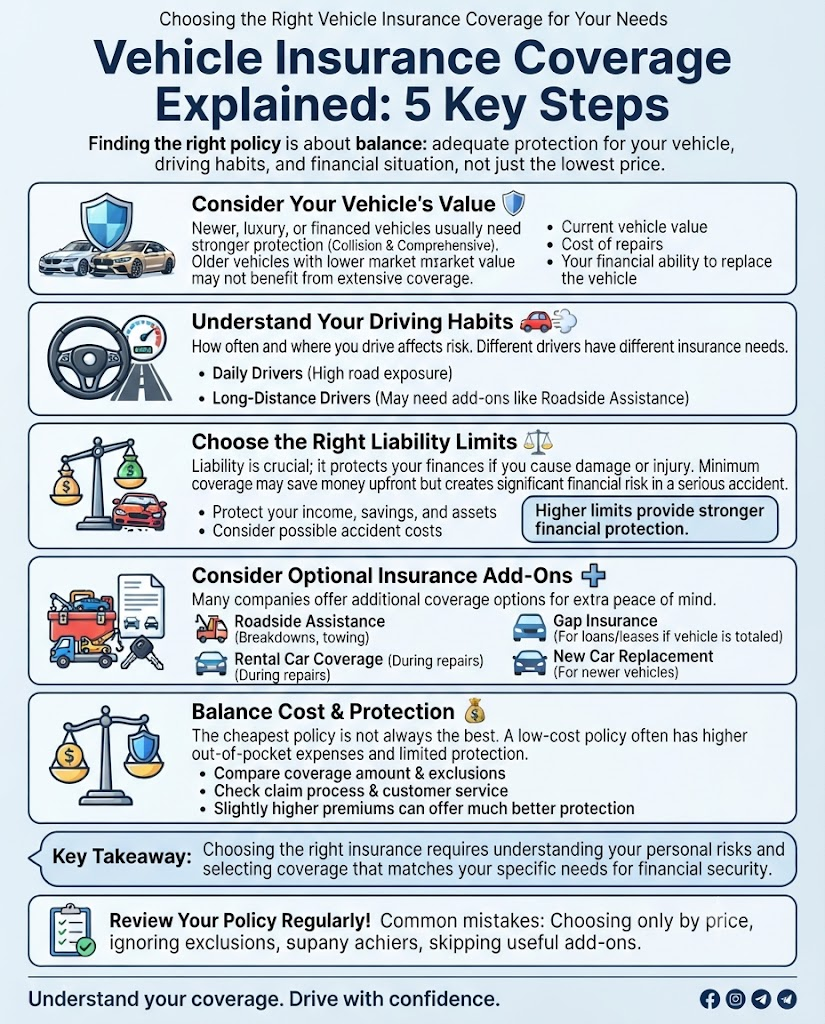
Choosing the right vehicle insurance policy is not just about finding the lowest price. The best policy is one that provides enough protection based on your vehicle, driving habits, financial situation, and personal requirements.
Many drivers make the mistake of either buying too little coverage to save money or paying for extra coverage they may never need.
A balanced insurance policy should provide proper protection while keeping costs manageable.
Consider Your Vehicle’s Value
The value of your vehicle plays an important role when choosing insurance coverage.
Newer and more expensive vehicles usually require stronger protection because repairs or replacement costs can be high.
You may want broader coverage if you own:
- A new vehicle
- A luxury vehicle
- A vehicle with expensive parts
- A financed vehicle
- A vehicle you depend on every day
For older vehicles with lower market value, extensive coverage may not always be the most cost-effective option.
Before choosing coverage, consider:
- Current vehicle value
- Cost of repairs
- Insurance premium amount
- Your ability to replace the vehicle if it is damaged
The right decision depends on your financial situation and how much risk you are comfortable accepting.
Understand Your Driving Habits
Your daily driving habits should influence the type of vehicle insurance you choose.
Consider questions such as:
- How often do you drive?
- Do you use your vehicle for commuting?
- Do you take frequent road trips?
- Do you drive in high-traffic areas?
- Where do you park your vehicle?
Different drivers have different insurance needs.
Daily Drivers
People who drive every day may benefit from stronger coverage because they spend more time on the road and have greater exposure to accidents.
Occasional Drivers
Drivers who use their vehicles less frequently may have different coverage requirements compared with daily commuters.
Long-Distance Drivers
People who frequently travel highways or long distances may benefit from additional protection such as roadside assistance.
Choose the Right Liability Coverage Limits
Liability coverage is one of the most important parts of vehicle insurance because it protects your finances if you cause damage or injuries to others.
Choosing only the minimum required coverage may reduce your premium, but it can create financial risks.
A serious accident can result in:
- Medical expenses
- Vehicle repair costs
- Legal fees
- Compensation claims
If these costs exceed your policy limits, you may have to pay the remaining amount yourself.
When selecting liability limits, consider:
- Your income
- Your savings
- Your assets
- Your financial responsibilities
- Possible accident costs
Higher liability limits generally provide stronger financial protection.
Consider Optional Insurance Add-Ons
Many insurance companies offer additional coverage options that can provide extra protection.
These add-ons can be useful depending on your vehicle and lifestyle.
Roadside Assistance
Roadside assistance helps when you face unexpected vehicle problems.
It may provide support for:
- Vehicle breakdowns
- Flat tires
- Dead batteries
- Lockouts
- Emergency towing
This coverage can be especially useful for drivers who frequently travel or depend on their vehicle for daily activities.
Rental Car Coverage
If your vehicle needs repairs after a covered accident, rental car coverage can help pay for a temporary replacement vehicle.
This can be helpful for people who need transportation for:
- Work
- Family responsibilities
- Daily commuting
Gap Insurance
Gap insurance can help protect drivers who have a vehicle loan or lease.
If your vehicle is declared a total loss, insurance usually pays the current market value of the vehicle. However, the remaining loan amount may be higher.
Example:
- Remaining loan balance: $25,000
- Vehicle value after accident: $20,000
- Insurance payment: $20,000
- Remaining difference: $5,000
Gap insurance may help cover this difference.
New Car Replacement Coverage
New car replacement coverage is designed for newer vehicles.
If your vehicle is totaled, this coverage may help replace it with a similar new vehicle instead of only paying the depreciated value.
This can be valuable because new vehicles lose value quickly after purchase.
Balance Cost and Protection
The cheapest insurance policy is not always the best option.
A low-cost policy may have:
- Lower coverage limits
- Higher out-of-pocket expenses
- Fewer benefits
- Limited protection
Instead of focusing only on price, compare:
- Coverage amount
- Policy exclusions
- Claim process
- Customer service
- Additional benefits
A slightly higher premium may provide much better financial protection during a major accident.
Review Your Policy Regularly
Your insurance needs can change over time.
A policy that worked well in the past may not provide the right protection today.
Review your vehicle insurance when:
- You buy a new vehicle
- Your vehicle value changes
- Your driving habits change
- You move to a new location
- You add or remove drivers
- Your financial situation changes
Regular policy reviews help you avoid paying for unnecessary coverage and prevent gaps in protection.
Common Mistakes When Choosing Vehicle Insurance
Avoid these common mistakes when selecting a policy:
Choosing Only Based on Price
The cheapest policy may not provide enough protection when you need it most.
Ignoring Policy Exclusions
Every policy has exclusions. Understanding them helps prevent surprises during claims.
Selecting Very Low Coverage Limits
Minimum coverage may leave you financially vulnerable after a serious accident.
Not Updating Policy Information
Incorrect details about your vehicle, address, or usage can create claim issues.
Skipping Useful Add-Ons
Some optional coverages can provide valuable protection depending on your situation.
Key Takeaway
Choosing the right vehicle insurance requires understanding your risks and selecting coverage that matches your needs.
The ideal policy should provide:
- Adequate protection
- Affordable cost
- Suitable coverage options
- Financial security during unexpected events
By considering your vehicle value, driving habits, and personal situation, you can choose a policy that offers better protection without unnecessary expenses.
Point 4: How to Reduce Vehicle Insurance Costs Without Reducing Important Coverage
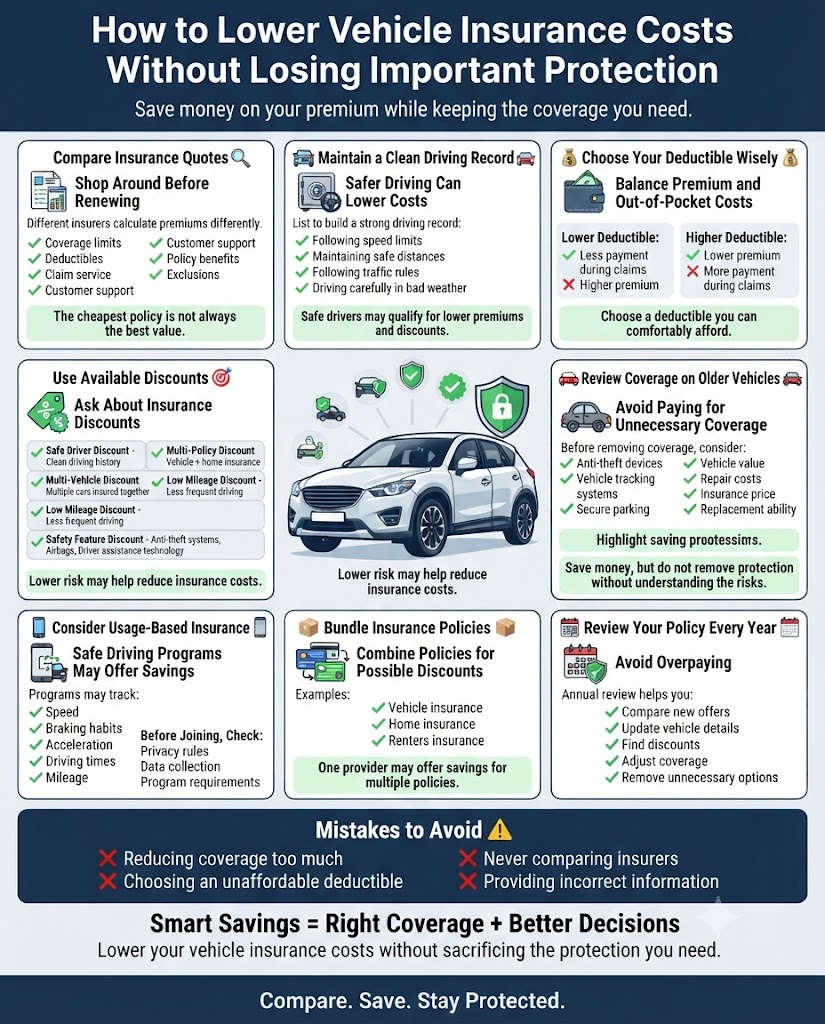
Vehicle insurance is an important expense for every driver, but that does not mean you have to overpay for coverage.
Many drivers try to save money by reducing coverage limits or removing important benefits. However, this approach can create financial problems if an accident or unexpected event occurs.
A better strategy is to reduce unnecessary costs while keeping the protection you actually need.
Here are some practical ways to lower your vehicle insurance premium.
Compare Vehicle Insurance Quotes
One of the easiest ways to save money is by comparing quotes from multiple insurance companies.
Insurance providers calculate premiums differently, so the same driver may receive different prices from different insurers.
When comparing policies, do not look only at the premium. Also check:
- Coverage limits
- Deductible amount
- Claim process
- Customer service
- Policy benefits
- Exclusions
A cheaper policy is not always the best option if it provides limited protection.
Reviewing your options before renewal can help you find better value.
Maintain a Clean Driving Record
Safe driving is one of the best ways to reduce insurance costs.
Insurance companies generally reward drivers who have a lower risk of accidents and claims.
You can maintain a good driving record by:
- Following speed limits
- Avoiding distracted driving
- Maintaining safe distances
- Following traffic rules
- Driving carefully in bad weather conditions
A history of safe driving may help you qualify for lower premiums and safe driver discounts.
Choose Your Deductible Carefully
Your deductible directly affects your insurance premium.
A deductible is the amount you pay yourself before insurance covers the remaining approved costs.
For example:
- A lower deductible means you pay less during a claim but usually have a higher premium.
- A higher deductible means you pay more during a claim but may receive a lower premium.
Increasing your deductible can reduce your insurance cost, but make sure you can afford the amount if you need to file a claim.
Choose a deductible that provides savings without creating financial stress.
Take Advantage of Insurance Discounts
Many drivers miss out on discounts because they do not ask their insurance provider about available savings.
Common vehicle insurance discounts include:
Safe Driver Discount
Drivers with:
- No accidents
- No major violations
- A clean driving history
may qualify for lower rates.
Multi-Policy Discount
Combining multiple insurance policies with the same company may reduce your overall cost.
Examples include:
- Vehicle insurance
- Home insurance
- Renters insurance
Multi-Vehicle Discount
If you insure multiple vehicles with the same provider, you may receive a discount.
Low Mileage Discount
Drivers who use their vehicles less frequently may qualify for lower premiums.
This can benefit people who:
- Work remotely
- Use public transportation
- Drive only occasionally
Safety Feature Discount
Vehicles equipped with safety and security features may receive discounts.
Examples include:
- Anti-theft systems
- Airbags
- Automatic emergency braking
- Driver assistance technology
Improve Vehicle Security
Reducing the chances of theft or damage can sometimes help lower insurance costs.
Security features that may help include:
- Anti-theft devices
- Vehicle tracking systems
- Alarm systems
- Secure parking locations
Parking your vehicle in a garage or protected area may also reduce certain risks compared with street parking.
Remove Unnecessary Coverage on Older Vehicles
As vehicles age, their market value decreases.
For older vehicles, some coverage options may no longer provide enough financial benefit compared with their cost.
Before removing coverage, consider:
- Current vehicle value
- Repair costs
- Insurance premium
- Your ability to replace the vehicle
For example, paying a high premium for extensive coverage on a very old vehicle may not always be practical.
However, avoid removing important protection without carefully evaluating your risks.
Consider Usage-Based Insurance Programs
Some insurance companies offer usage-based insurance programs that monitor driving behavior through:
- Mobile apps
- Connected devices
- Vehicle tracking systems
These programs may evaluate:
- Driving speed
- Braking habits
- Acceleration patterns
- Driving times
- Mileage
Drivers with safe habits may receive discounts.
Before joining such programs, review:
- Privacy policies
- Data collection practices
- Program rules
- How driving information affects your premium
Make sure the program fits your comfort level.
Bundle Insurance Policies
Many insurers provide discounts when customers purchase multiple policies from the same company.
Bundling may include:
- Vehicle insurance
- Home insurance
- Other personal insurance products
Insurance companies often offer discounts because managing multiple policies for one customer is more convenient.
Review Your Coverage Every Year
Many drivers automatically renew their insurance without checking whether their policy still fits their needs.
An annual review allows you to:
- Compare new insurance offers
- Update vehicle information
- Check available discounts
- Adjust coverage limits
- Remove unnecessary options
Your insurance needs can change over time, so regular reviews can help prevent overpaying.
Mistakes to Avoid When Trying to Save Money
Saving money is important, but avoid these mistakes:
Reducing Coverage Too Much
A cheaper policy may leave you financially exposed after a serious accident.
Choosing a Very High Deductible
A high deductible may lower your premium but create difficulty when you need repairs.
Staying With the Same Insurer Without Comparing
Loyalty does not always guarantee the lowest price.
Providing Incorrect Information
Incorrect details about mileage, vehicle usage, or drivers can create problems during claims.
Key Takeaway
Reducing vehicle insurance costs is not about buying the cheapest policy. It is about finding the right balance between affordability and protection.
You can lower your premium by:
- Comparing quotes
- Maintaining safe driving habits
- Using available discounts
- Choosing deductibles wisely
- Reviewing your policy regularly
Smart insurance decisions can help you save money while keeping the coverage you need.
Point 5: Understanding Vehicle Insurance Claims, Renewals, and Policy Management
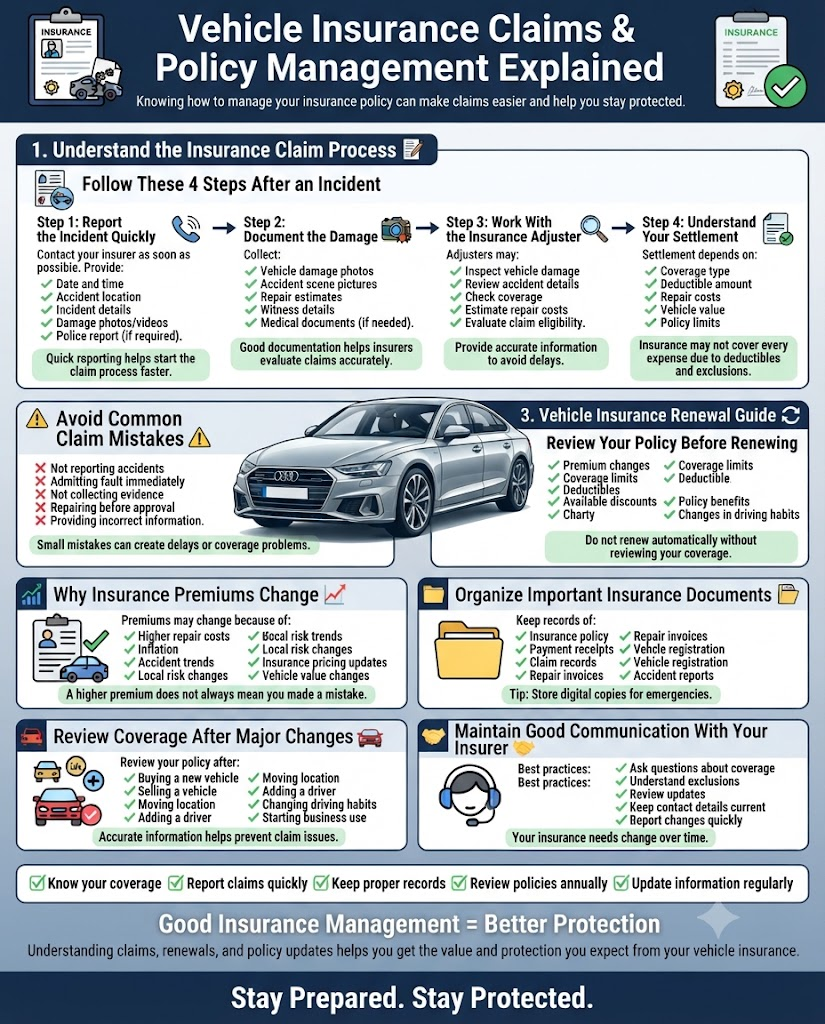
Buying vehicle insurance is only the first step. Understanding how to manage your policy, file claims correctly, and renew your coverage on time is equally important.
Many drivers only think about insurance after an accident happens. However, knowing how your policy works before an emergency can make the claims process easier and help you get the protection you paid for.
Proper policy management can also help you avoid coverage gaps, unnecessary expenses, and claim-related problems.
Understanding the Vehicle Insurance Claims Process
A vehicle insurance claim is a formal request submitted to your insurance company for financial assistance after a covered loss.
Claims may be filed for situations such as:
- Vehicle accidents
- Theft
- Fire damage
- Natural disasters
- Vandalism
- Other covered incidents
The claims process usually involves several steps.
Step 1: Report the Incident Quickly
After an accident or damage event, contact your insurance company as soon as possible.
Provide important information such as:
- Date and time of the incident
- Location of the accident
- Description of what happened
- Photos or videos of the damage
- Contact details of involved parties
- Police report information, if required
Reporting quickly helps your insurer begin the investigation and process your claim faster.
Step 2: Document the Damage
Good documentation can make the claim process smoother.
Collect evidence such as:
- Photos of vehicle damage
- Pictures of the accident scene
- Repair estimates
- Witness information
- Police reports
- Medical documents, if injuries occurred
Clear evidence helps the insurance company understand what happened and evaluate your claim accurately.
Step 3: Work With the Insurance Adjuster
After you submit a claim, an insurance adjuster reviews the details.
The adjuster may:
- Inspect vehicle damage
- Review accident information
- Check policy coverage
- Estimate repair costs
- Determine claim eligibility
Providing accurate information and cooperating with the adjuster can help avoid unnecessary delays.
Step 4: Understand Your Claim Settlement
If your claim is approved, the insurance company provides payment according to your policy terms.
The final settlement may depend on:
- Type of coverage
- Deductible amount
- Repair costs
- Vehicle value
- Policy limits
- Claim circumstances
Remember that insurance may not cover every expense. Deductibles, exclusions, and coverage limits can affect the amount you receive.
Common Vehicle Insurance Claim Mistakes to Avoid
Many claim problems happen because drivers make simple mistakes.
Not Reporting an Accident
Even minor accidents can create problems later if hidden damage or injuries appear.
Admitting Fault Immediately
Avoid accepting responsibility before the insurance investigation is complete.
Provide accurate details, but allow the insurer to determine fault based on evidence.
Not Collecting Evidence
Without photos, reports, or witness details, it can become harder to prove what happened.
Repairing the Vehicle Before Approval
Some insurers require an inspection before repairs begin. Starting repairs too early may create complications.
Providing Incorrect Information
Incomplete or inaccurate details can delay claim processing.
Understanding Vehicle Insurance Renewals
Vehicle insurance policies need to be renewed regularly to maintain continuous protection.
Renewal is an opportunity to review whether your current policy still meets your needs.
Before renewing, check:
- Premium changes
- Coverage limits
- Deductible amount
- Available discounts
- Policy benefits
- Changes in your driving habits
Avoid automatically renewing without reviewing your policy details.
Why Vehicle Insurance Premiums Change During Renewal
Many drivers are surprised when their renewal premium increases even if they did not file a claim.
Insurance costs may change due to factors such as:
- Rising repair costs
- Inflation
- Increased accident rates
- Changes in local risk
- Updated insurance pricing
- Changes in vehicle value
A higher premium does not always mean you made a mistake. Insurance companies regularly adjust rates based on overall risk factors.
However, if your premium increases significantly, comparing other insurance options may help you find better value.
Keep Your Policy Information Updated
Your insurance company should always have accurate information about your vehicle and driving situation.
Inform your insurer about changes such as:
- Change of address
- New drivers using your vehicle
- Vehicle modifications
- Change in vehicle usage
- Increased or reduced mileage
- Business use of the vehicle
Incorrect information can create problems during claims and may affect your coverage.
Keep Important Insurance Documents Organized
Maintaining proper records makes insurance management easier.
Keep copies of:
- Insurance policy documents
- Payment records
- Claim details
- Repair invoices
- Vehicle registration
- Accident reports
Digital copies stored securely can be useful during emergencies.
Review Your Coverage After Major Changes
Your insurance needs may change throughout vehicle ownership.
Review your policy after situations such as:
- Buying a new vehicle
- Selling your vehicle
- Moving to a different location
- Adding a new driver
- Changing your daily driving habits
- Using your vehicle for business purposes
Regular reviews help ensure you have the right level of protection.
Maintain Good Communication With Your Insurance Provider
A good relationship with your insurer can make policy management easier.
Helpful practices include:
- Asking questions about unclear coverage
- Understanding policy exclusions
- Reviewing policy updates
- Keeping contact information current
- Reporting changes quickly
Understanding your policy before an emergency can prevent confusion during stressful situations.
Final Thoughts: The Top 5 Points About Vehicle Insurance
Vehicle insurance is more than just a legal requirement or yearly expense. It is an important financial protection tool that helps drivers manage unexpected risks.
The five most important points every driver should understand are:
Understand Your Coverage Options
Knowing the difference between liability, collision, comprehensive, and additional coverage helps you choose better protection.
Know What Affects Your Premium
Your driving history, vehicle type, location, coverage choices, and claims history influence your insurance costs.
Choose Coverage Based on Your Needs
The right policy should match your vehicle value, driving habits, and financial situation.
Reduce Costs Smartly
Comparing quotes, maintaining safe driving habits, using discounts, and reviewing your policy can help lower expenses.
Manage Claims and Renewals Carefully
Understanding the claims process and keeping your policy updated ensures you receive the protection you need.
A well-managed vehicle insurance policy provides financial security and confidence when unexpected situations occur.
By understanding these five key points, drivers can make informed decisions, avoid common mistakes, and get better value from their vehicle insurance coverage.
8win55vip, sounds exclusive! I’m hoping for some serious perks and top-notch service if I’m playing VIP. Show me the winning and the rewards! 8win55vip
Alright alright alright! sumclubweb seems pretty cool. The site is clean and easy to navigate. Plus, they got a solid selection of games. I am already enjoying the game, Give sumclubweb a look see, you might find something you like!
Alright, checked out up777game! Not bad, pretty standard stuff, but seems legit. Good selection of games. Give it a whirl, ya might like it! Check it out here: up777game
This platform has a great variety of games and the bonuses are actually useful. I’ve had a great time exploring vn39bet6com lately.
Hey, just wanted to drop a line about 622betapp. Gives it a shot, it’s got some pretty interesting bits. I think it’s solid. 622betapp
Alright fam, Has anyone give the lucky100apk download a try? I’d love to hear about it before downloading, I want some real talk! lucky100apk
Heard about bet333cassino from a friend, decided to check it out. Seems legit, got some nice bonuses to start. Gonna see how it goes Fingers crossed! Check them out here -> bet333cassino
Really impressed with the game variety here. It is my go-to spot for relaxing and winning some extra cash. Visit idjuragan88 now.
I’ve tried a few platforms lately but this one really stands out. The interface is super smooth and the payouts are fast. Definitely my new go-to spot! bdmostplaybet
Finally found a reliable source for these games! The download speed is impressive and the interface is very user friendly. Highly recommend yy7gamedownload for all gamers.
The bonuses here are actually worth it. I managed to hit a decent win last night using the welcome credit. 90jiliclublogin
The VIP treatment here is genuinely noticeable and daily reloads keep my bankroll feeling fresh. Navigation is so clean that even my mom could find her way around. Hands down the best gaming spot I have visited this year. jilihhvip
Just downloaded the app and it works like a charm. The installation process was super quick and it doesn’t lag at all. Definitely check out in777download if you prefer playing on mobile.
Best experience so far! The bonuses are actually fair and the withdrawal process is smooth as butter. Highly recommend for anyone looking for a reliable site. pkbaji888
Great platform with a very professional feel. I appreciate the security measures they have in place for deposits. bdk7777vip is definitely a five star choice for me.
The login process is secure and fast. I never have issues accessing my account and the updates are frequent. jili4login is the way to go.
My friends told me about this place and it did not disappoint. Very fair odds and a great community. bd6777det is my new favorite.
I love how straightforward the registration is. No endless forms, just get straight into the action. Cheers to www444bet for keeping it simple!
Everything from registration to the first deposit was handled professionally. I am very happy with the welcoming bonus I received. Get started with 38jililoginregister
Finally found a platform that actually delivers on its promises. The game variety is impressive and I had a great experience with the support team. Highly recommend krmegawins
Finally a site that doesn’t lag during the big moments. The login process is a breeze and everything works as promised. Glad I found pklucky33login.
The slot variety is insane! I spent hours trying different games and they all look stunning. Big wins are actually possible at jilicashslot
I was skeptical at first but this site really delivers. The game variety is amazing and I had no issues with my first withdrawal. Love krawin68 so far!
Really enjoying the selection of games here. Everything is well organized and the mobile version works like a charm. Check out phxgjili.
Really impressed with the customer service on this platform. They answered my deposit query in minutes. Proper legit gaming experience at phbet888net.
I have tried many sites across the region but this one stands out for its reliability and fair gameplay. Deposits reflect instantly and the game selection keeps getting updated with fresh titles. The mobile version is optimized and runs without any lag on lower bandwidth connections. I always feel safe and valued as a member here. Join the growing community today casinocasongo
Fast withdrawals and a very professional layout. I have tried many sites but this one stands out for its reliability. Love the energy at bdnaga777
The interface is so user friendly and the promos are actually worth it. If you are looking for a stable platform, phjiligo is the way to go.
This is the go-to spot for Jili fans. The games are always updated and the lag is non-existent. Big love to phjilibay.
A very professional setup with a huge selection of tables. I love the atmosphere and the transparency of the games. I will definitely keep coming back to krevocasino.
If you are looking for big wins and exciting slots, this is the place. I just hit a decent jackpot this morning! Highly recommend mambawinslot
The APK installation was a breeze and the app runs perfectly on my phone. Much better than the mobile web version. Check out plus777asiaapk.
Great variety of games and the betting options are very flexible. It is a perfect spot for anyone who loves excitement. Give 7pwinbet a try.
Found this site through a friend and I am glad I did. The customer support is very responsive and the winning streaks are real. Check out bdgv999 if you want a great experience.
Super fast deposits and withdrawals which is all I really care about. Great service and great games at jili168phcom.
The app is a game changer! It is way faster than using the browser. If you want a seamless experience, just go for l444winappapk and enjoy the games on the go.
I really enjoy the variety of games here. The customer service is very responsive and helpful whenever I have questions. Highly recommend idlumbung88
Pretty satisfied with the overall layout and the speed of the site. Everything just works perfectly without any glitches. Check out phea4266f2 for a top notch experience.
The graphics are great and the gameplay is lag-free. Definitely one of my favorite spots now. Visit vn33win88
Absolutely loving the vibe and the winning streaks I’ve had here. Definitely my new favorite spot. Visit pkxxxx555 for some action!
The graphics are amazing and the gameplay is very addictive. I spend a lot of my free time here and I’m always winning. Try mc888slot
I used to struggle with heavy apps that drained my battery but this lightweight wonder runs perfectly on my data plan the odds update in real time and cashing out feels instant I genuinely enjoy how stress free the whole process is it is like having a personal betting buddy that always shows up when I need it best app update in my book 3300betapp
Really impressed with the interface here. Everything loads fast and the experience is super smooth. Definitely my new go-to spot. Check out y7777status for more info.
Best collection of slots I have seen in a while. Everything loads fast and the gameplay is very addictive. jili00games
The game variety is top notch and the interface is very user friendly. I really enjoy the daily bonuses. Highly recommend br55win
Logging in is a breeze and the dashboard is very intuitive. I’ve had some lucky streaks here recently. Go to luckywingamelogin and see for yourself.
Really impressed with the loading speed and the overall design. It is very intuitive even for beginners. My go-to is pkkk77
Finally a login page that actually works without any glitches. Very clean design and very responsive. I suggest using pkbajiapplogin for a better experience.
If you are looking for high win rates, this is the place to be. I just hit a nice jackpot and the withdrawal was instant. slotgacor777 is legit.
I’ve tried a few sites lately, but this one really stands out. The interface is smooth and the payouts are fast. Definitely my new go-to spot! idcoklat777
Love the variety of games here. I had a great run last night and the withdrawal was processed almost instantly. Check out brbbcwin for some real excitement.
Fast loading times and a very user-friendly layout. I’ve had a blast exploring the different game modes. Keep it up guys! Love gb777login
Alright lads, PokerStars in Europe can be a bit of a pain with all the regulations. But this pokerstarseu link sorted me right out. Got my account sorted and ready to grind. Cheers!
I have tried many platforms but this one feels the most fair. The bonuses are actually usable and the wins feel real. Cheers to pk777as.
Super easy to navigate and the graphics are top notch. I’ve had some great wins here recently. Cheers to ku9iapp for the great service.
Super easy to navigate and the customer service is on point. I feel safe depositing my funds here. Keep it up krwego88!
If you are looking for the real deal without any glitches the original version is the way to go. The graphics are crisp and the gameplay is fair. Get winlislotsgamedownloadoriginal now
The graphics are amazing and the gameplay is very addictive. I spend way too much time on pkgamespk lately, but I love it.
Love the layout and the overall vibe of the site. It feels very user friendly even for beginners. I’m really enjoying my time on slot977.
I’ve been trying out a few sites lately and this one really stands out. The interface is smooth and the payouts are fast. Definitely worth a shot! 393bet777
I’ve been looking for a reliable spot like this for a while. The interface is super smooth and the experience is just top-notch. Highly recommend phsayaph to everyone!
I love how straightforward the login and deposit system is. No unnecessary stress, just pure gaming. ck4444betlogin is my go-to now.
Just hit a decent jackpot and the withdrawal was processed in no time. This place is legit and trustworthy. Visit phlwinnerph now!
I’ve tried a few sites lately, but the interface here is just so smooth. Really enjoying the gameplay so far. Definitely check out brwinpg if you want a reliable experience.
Really impressed with the bonus offers for new members. It gave me a great head start. I’m really enjoying my experience with idcaricuan so far.
Quick deposits and even quicker wins! I love how straightforward everything is on this site. Definitely visiting bet393 more often.
Downloading the app made everything so much easier. I can bet on the go and the performance is rock solid. betnacionalbaixar is the way to go.
Really impressed with the bonus offers here. It gave me a great head start when I first signed up. The slots are fair and the graphics are top notch. Give abjilicasino a try if you love big wins!
Reliable site with a great selection of slots. I feel safe depositing here. Give vip777clublogin a try
Really impressed with the variety of options available here. It feels professional and secure, which is exactly what I need. bar222plataforma is definitely top-tier.